How to Undercut a Door Jamb with an Oscillating Tool for New Flooring
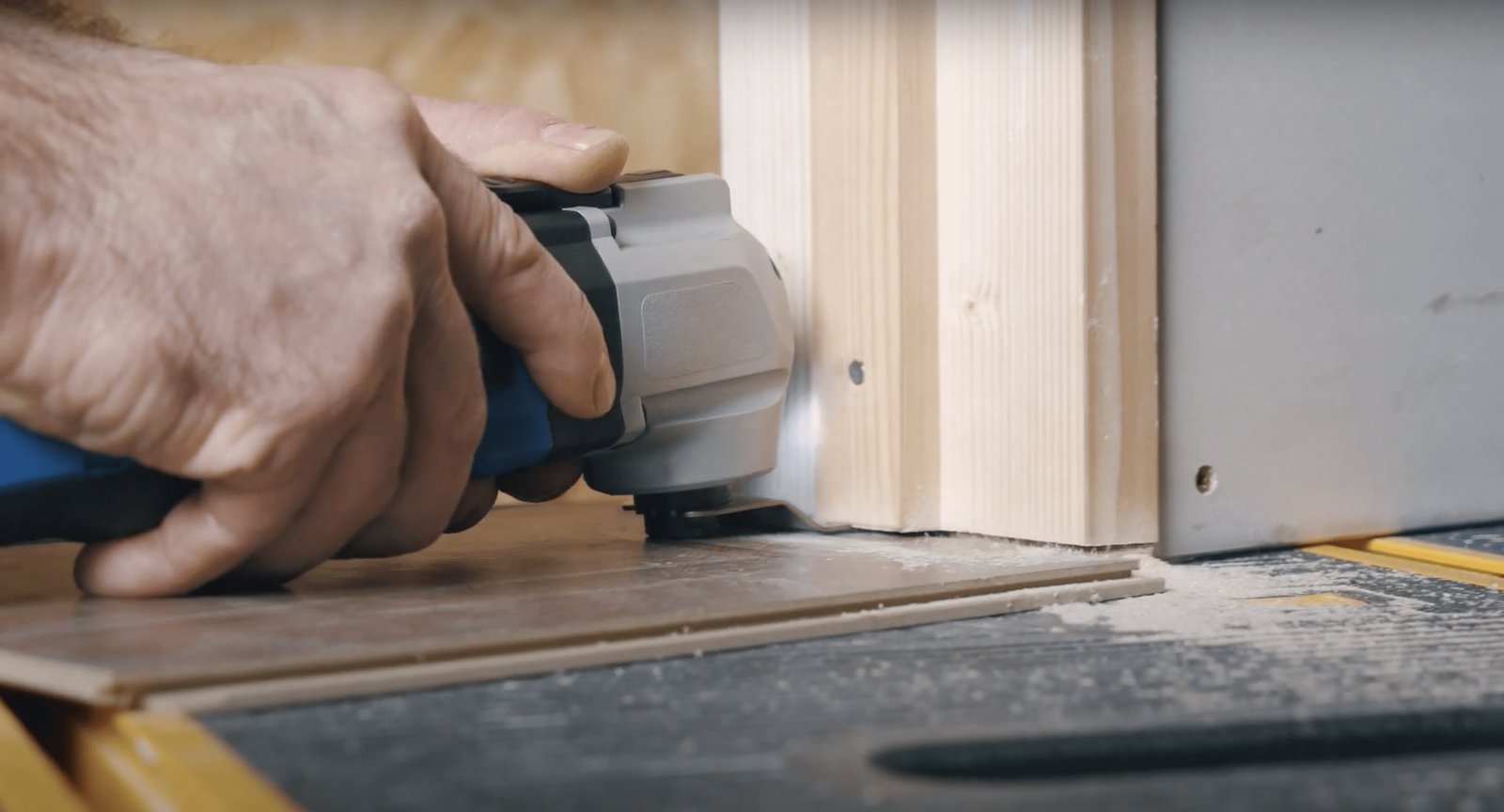
To undercut a door jamb with an oscillating tool, you’ll first place a scrap piece of your new flooring against the jamb, mark the height, and then use a wood-cutting plunge blade to cut horizontally across the wood. This process creates a clean gap that allows your new flooring to slide underneath for a professional, finished look.
Safely Undercutting the Door Jamb
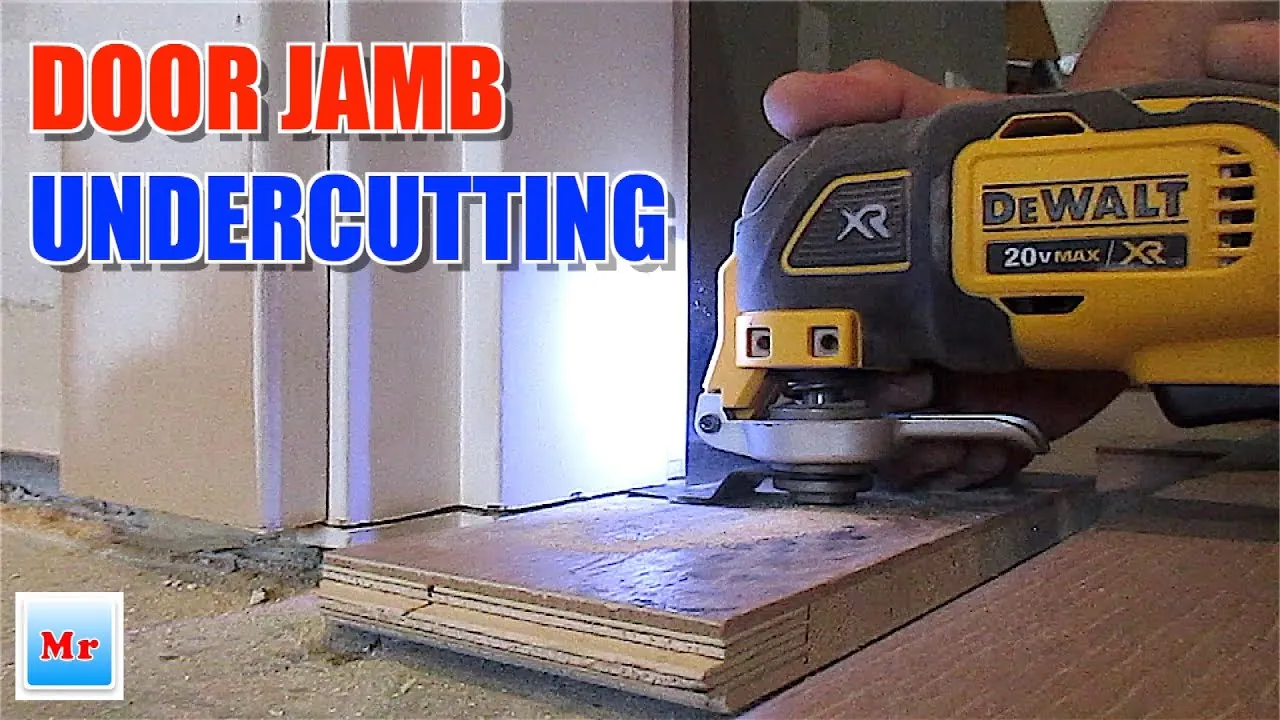
You’ll need an oscillating multi-tool, a wood-cutting plunge blade, a scrap piece of your new flooring, and a pencil. Before starting, ensure your tool is unplugged or the battery is removed while you attach the blade.
- Test the height. Place your scrap piece of flooring against the door jamb to act as a height guide for your blade.
- Mark the line. Use your pencil to draw a faint line along the top of the flooring scrap onto the door jamb to show exactly where you need to cut.
- Position the tool. Set the oscillating tool on a flat, stable surface with the blade teeth resting against the jamb, aligned exactly with your pencil mark.
- Begin the plunge. Turn the tool on at a medium speed and apply light pressure, letting the blade teeth pull the tool into the wood slowly.
- Check the depth. Keep the blade moving steadily until you reach the back of the jamb, ensuring you don’t cut into the wall framing behind it.
- Remove the wood. Once you’ve cut through the thickness of the jamb, gently pry out the loose wood piece with a flathead screwdriver or chisel.
- Clean the gap. Use a vacuum to remove any sawdust from the new opening, then slide your flooring scrap back in to ensure it fits easily.
Tip: Always place a thin piece of scrap cardboard or metal between the blade and the subfloor to prevent the tool from accidentally scarring your existing floor surface.
Essential Timing and Tool Settings
The time required to complete this task depends on the material of your door jamb and the number of doors you’re finishing. Most standard wood jambs take very little time, but hardwood or metal-clad jambs require extra caution.
| Door Jamb Material | Estimated Time per Jamb | Recommended Speed Setting |
|---|---|---|
| Softwood (Pine) | 2–3 minutes | Medium (3–4) |
| Hardwood (Oak/Maple) | 4–6 minutes | Low-Medium (2–3) |
| MDF (Composite) | 1–2 minutes | Medium (4) |
| Painted/Heavy Finish | 5–8 minutes | Low (1–2) |
If you encounter stubborn, multi-layered paint, reduce your speed to the lowest setting. Rushing this step causes friction heat, which melts finish into the wood grain and ruins your sanding pads.
Always test your speed on an inconspicuous bottom corner before moving to the visible face. If the tool leaves swirl marks, your speed is too high for the density of the wood. If the tool feels like it’s stalling or dragging, increase the speed by one increment. Professionals track their progress by the color of the dust; fine, white powder indicates you’re at the correct depth, while heavy, dark shavings suggest you’re cutting too deep into the substrate.
Common Mistakes to Avoid
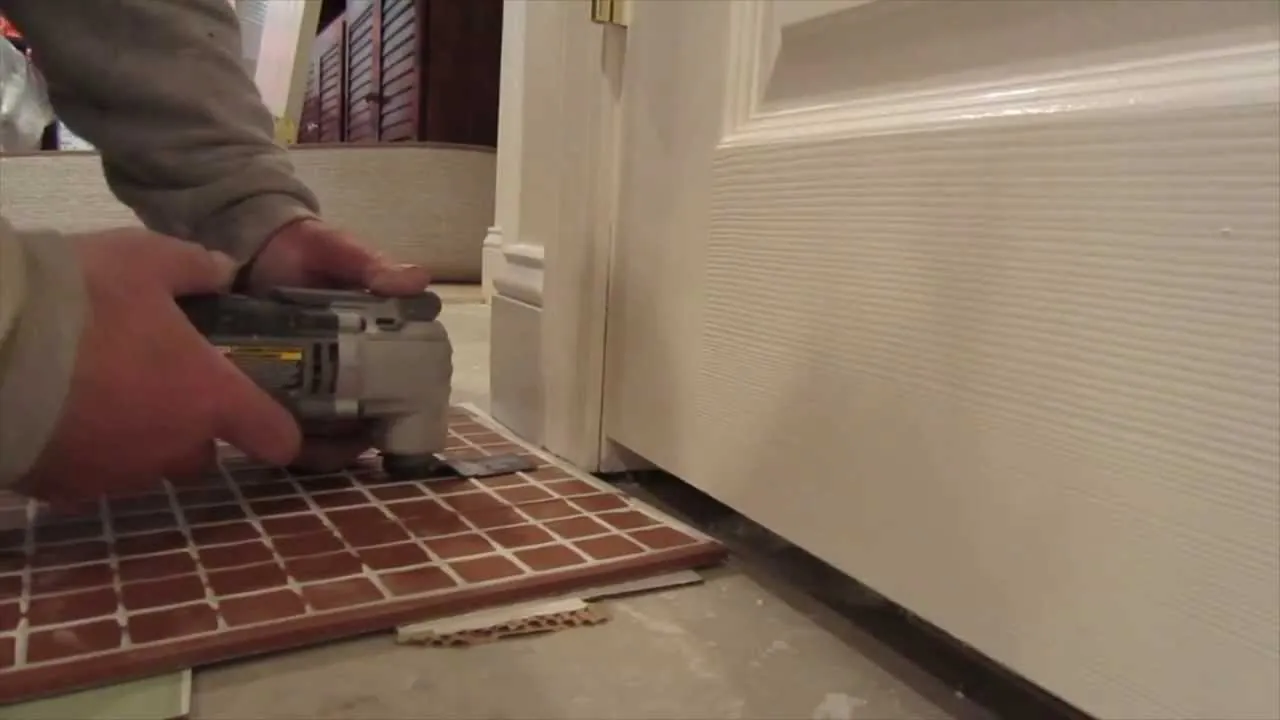
Many people rush the cut, which often leads to splintering the wood or damaging the wall behind the jamb. Avoid applying too much forward force; let the vibration of the oscillating tool do the work for you. If you push too hard, the blade may jump out of the cut and scratch the surrounding trim.
Another common error is failing to account for the thickness of the underlayment. If you only measure the height of the flooring board itself, the final installation might be too tight. Always stack your flooring board and any required underlayment together when marking your guide line.
What if the jamb is metal?
You can’t use a standard wood-cutting blade on a metal door jamb. You must switch to a bimetal or carbide-tipped blade designed for cutting through metal, and you should move much slower to avoid overheating the tool.
Should I remove the door first?
Removing the door isn’t strictly necessary, but it gives you much more room to maneuver the tool comfortably. If the door is in your way or you feel cramped, take it off the hinges to prevent accidental nicks to the door surface.
Is it safe to cut into the wall?
You should only cut as deep as the thickness of the door jamb itself. If you push the blade too far into the wall, you risk hitting hidden electrical wires or plumbing pipes that might run through the wall framing.
Frequently Asked Questions
Can I use a hand saw instead of an oscillating tool?
Yes, a manual pull saw or a jamb saw works well if you don’t have an oscillating tool. It takes longer and requires more physical effort, but it often provides better control and creates less dust in the room.
What happens if I cut the gap too wide?
If the gap is slightly too large, you can hide the opening with color-matched wood filler or a thin bead of caulk after the flooring is installed. If the gap is significantly oversized, you may need to install a small piece of matching trim to cover the space.
Does this work on exterior doors?
It works on interior door jambs, but you should be very careful with exterior doors. These often have weather stripping or thresholds that are structural, and cutting them could compromise the seal or security of your home.
Conclusion
Before you start, double-check that your blade is securely tightened to the tool head to prevent it from vibrating loose during the cut. Always practice on a scrap piece of lumber first to get a feel for how the tool handles the wood.