Best Cordless Rotary Hammers for Concrete: What to Look For
A note before we start: some links below are Amazon affiliate links. We earn from qualifying purchases as an Amazon Associate, and you pay no more for it.
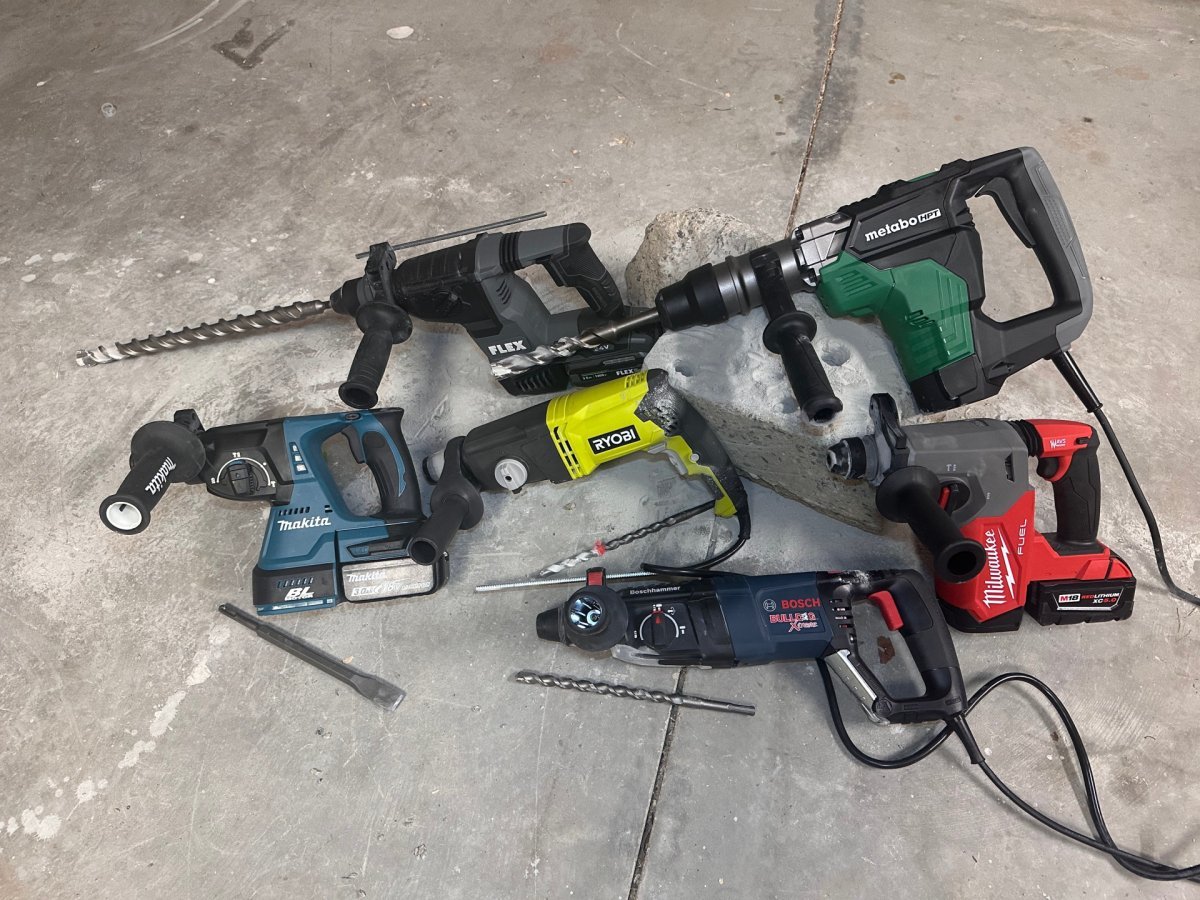
Choosing the right tool for concrete work is often difficult because listings focus on marketing terms rather than how a tool feels in your hand. The Best Cordless Rotary Hammers for Concrete: What to Look For helps you cut through that noise. We look at power, weight, and safety features to help you decide which model fits your specific projects. The Milwaukee M18 Fuel is a top choice because it balances drilling speed with a large, established battery system.
What Actually Matters
Impact Energy
This is the most important number for drilling speed. Measured in Joules, it tells you how hard the tool hits the concrete. A higher number means the bit moves through hard material faster. If you drill large holes or work in very dense concrete, you want a higher Joule rating. For smaller anchors or light masonry work, a lower number is often enough and keeps the tool lighter. Always check the Joule rating on the box before you buy to ensure it matches your heaviest expected task.
Vibration Control
Rotary hammers create a lot of energy that can travel into your hands and arms. Many brands now include “Active Vibration Control” to reduce this. This feature is vital if you use the tool for long periods, as it helps prevent fatigue and keeps you steady. Check if the handle moves independently of the motor, as this is a simple way to see if the tool has built-in vibration protection.
Safety Clutches
When a drill bit hits a piece of rebar or gets stuck in concrete, the tool can kick back suddenly. A mechanical or electronic clutch senses this bind-up and stops the rotation instantly to protect your wrists. Look for terms like “Kickback Control” or “Auto-stop” in the listing, as these features are the primary way to avoid common jobsite injuries.
Battery Ecosystem
You aren’t just buying a tool; you’re buying into a battery system. If you already own tools from a specific brand, staying with that brand is usually the smartest move. It lets you share batteries between your drill, your saw, and your rotary hammer. Some models are sold as “bare tools” without batteries, which is great if you already have them, while others come as full kits. Check if your current batteries are compatible before you click buy.
1. Milwaukee 2912-20 M18 Fuel 18V 1″ Sds Plus Brushless Rotary

Best for: Most users needing reliable, fast drilling.
This rotary hammer prioritizes productivity through its high-speed drilling capabilities. The integrated AUTOSTOP Control provides a critical safety buffer by sensing bind-ups the moment they occur. This prevents the tool from jerking, which protects your wrists during demanding masonry work.
The tool belongs to the M18 System, which currently supports over 200 different solutions. If you already own other Milwaukee cordless tools, this unit integrates seamlessly into your existing battery ecosystem, allowing you to use your current power sources.
However, check your current inventory before buying. If you’re a casual homeowner tackling a single, small project, this professional-grade investment may be overkill. In that case, a simpler, corded tool often suffices.
Pros
- Fast drilling speed boosts daily productivity.
- AUTOSTOP feature senses and prevents bind-ups.
- Compatible with the large M18 battery system.
Cons
- Requires existing M18 battery investment.
2. DEWALT DCH293B 20V Max XR Brushless 1-1/8” L-Shape SDS

Best for: Heavy-duty concrete drilling power.
This tool delivers 3.5 Joules of impact energy, matching the performance of corded models without the tether of an extension cord. It’s designed for demanding jobs where runtime and raw force are the primary requirements.
The integrated E-Clutch provides essential safety by stopping the tool during bind-up situations. If you feel the bit snag, the clutch immediately cuts power to prevent wrist injury. Meanwhile, the SHOCKS Active Vibration Control isolates the handles from the motor, significantly reducing fatigue during long shifts.
Choose this model if your work involves continuous drilling in hardened concrete. If you’re drilling into softer masonry or require a tool for overhead work, the added mass of this German-engineered motor may lead to unnecessary strain. Always pair this unit with the D25304DH dust management system to keep your workspace clear.
Pros
- High 3.5 Joules of impact energy.
- Includes E-Clutch for bind-up protection.
- SHOCKS system reduces vibration at handles.
- German engineering for increased durability.
Cons
- Heavier design due to high power.
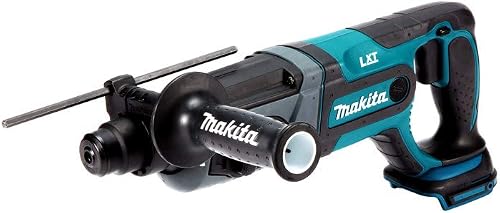
3. Makita XRH04Z 18V LXT® Lithium-Ion Cordless 7/8″ Rotary Hammer
Best for: Compact and versatile drilling.
This model features a 3-mode operation, letting you switch between rotation only, hammering with rotation, or hammering only. It uses a torque-limiting clutch to protect the gears if the bit binds. The handle is shock-absorbent, which helps protect the battery housing during drops.
It’s a balanced tool for general masonry work. It isn’t intended for heavy, continuous demolition, as its compact design is better suited for drilling holes than breaking large slabs. If you’re drilling into standard brick or concrete, use the synchronized RPM and BPM settings for the fastest results. If the bit binds, stop immediately to allow the clutch to reset.
Pros
- Three distinct operation modes.
- Torque-limiting clutch protects gears.
- Shock absorbent handle protects battery.
Cons
- Less impact force than larger models.
- Not built for heavy demolition.
- Limited to SDS-PLUS bits.
4. DEWALT 20V MAX SDS Rotary Hammer Drill

Best for: Versatile mounting and light construction.
With 2.1 Joules of impact energy, this tool is well-suited for repetitive tasks like rod hanging or strut mounting. The SHOCKS system makes it comfortable for overhead work. It’s also OSHA Table 1 compliant when paired with the DWH303DH On Board Extractor.
Use the rotating dial to toggle between drill, hammer drill, or chip modes. If you’re mounting cable trays or rail systems, the brushless motor ensures efficient runtime. If you’re drilling into thick concrete foundations, choose a heavier tool, as this model is designed for precision rather than heavy demolition.
Pros
- Lightweight design for overhead work.
- SHOCKS system reduces user fatigue.
- Compatible with OSHA-compliant dust extractors.
- German-engineered mechanism for durability.
Cons
- Limited power for heavy demolition.
- Bare tool only; batteries and extractors sold separately.
5. Bosch GBH18V-22N 18V Brushless SDS-plus® Bulldog™ 3/4 In. Rotary Hammer

Best for: Precision drilling in tight spaces.
This model weighs just 5.1 lbs, making it exceptionally maneuverable for overhead or cramped tasks. The brushless motor maximizes battery runtime, ensuring you stay productive during extended sessions. Its 1.4 ft.-lbs. of impact energy is optimized for standard concrete work rather than heavy-duty demolition.
Use the variable-speed trigger to initiate holes with precision, preventing the bit from walking on hard surfaces. If the bit binds, the integrated Kickback Control technology immediately reduces the risk of sudden, dangerous tool reactions.
You should choose this tool when portability and control are your primary requirements. If your job demands drilling large-diameter holes in thick concrete, the lower impact energy will lead to slow progress and increased bit wear. In those heavy-duty scenarios, opt for a larger, corded or higher-voltage hammer.
Pros
- Lightweight design for easy handling.
- Kickback Control prevents sudden reactions.
- Variable-speed trigger for accurate starts.
Cons
- Limited impact energy for large holes.
6. Makita XRH06ZB 18V LXT Lithium-Ion Sub-Compact Brushless Cordless 11/16″ Rotary

Best for: Sub-compact portability.
This sub-compact model measures just 10-3/4 inches in length. It weighs 4.6 lbs with a battery, a design choice specifically intended to reduce operator fatigue during long days of overhead or repetitive work. The brushless motor automatically adjusts torque and RPM to match the changing demands of the application.
Use this tool when drilling in cramped corners or narrow framing where a full-size rotary hammer can’t physically fit. If your task involves large-diameter holes in cured concrete, choose a heavier-duty model instead. This tool is built for efficiency and maneuverability, not for high-torque, heavy-duty drilling. Relying on this compact motor for industrial-scale masonry work will only lead to premature stalling or motor strain.
Pros
- Very compact for tight spaces.
- Lightweight to reduce operator fatigue.
- Brushless motor adjusts to demand.
Cons
- Not suitable for heavy-duty applications.
- Limited impact energy compared to full-size hammers.
7. DEWALT ATOMIC 20V MAX* Cordless Rotary Hammer Kit (DCH172D2)

Best for: Lightweight, fast drilling.
Part of the ATOMIC line, this tool prioritizes a small, compact frame while delivering 1.4 Joules of impact energy. It’s specifically engineered for rod hanging, concrete forming, and mounting cable trays, struts, or clips.
The brushless motor and German-engineered mechanism ensure efficient performance during repetitive tasks. If you’re mounting railings or performing overhead work, the lightweight design reduces fatigue over long shifts. You should choose this model when portability and precision in concrete are your primary requirements.
However, avoid this tool if your project demands heavy demolition. It isn’t built for breaking large slabs or thick masonry. While the SHOCKS Active Vibration Control system minimizes feedback at the handles, the tool’s output is calibrated for specialized mounting rather than brute force. If your work involves drilling holes larger than the capacity of standard clips or brackets, you’ll need a more robust rotary hammer.
8. VEVOR Rotary Hammer Drill

Best for: Heavy-duty concrete demolition.
This tool uses an SDS-Max chuck, which is larger than the standard SDS-Plus. With 7J of impact energy and 600W of load power, it’s built for breaking up concrete and heavy masonry. It comes with two 20V 4.0Ah batteries to keep your workflow continuous.
If you’re removing tiles or breaking concrete, use the adjustable chisel angle for precise control. If you’re drilling, switch the knob to the hammer drilling mode to utilize the 2700BPM impact rate.
It’s a beast for demolition work. It isn’t for a hobbyist who only needs to hang a few pictures or drill small holes, as it’s quite large and heavy for light tasks. Using this tool for minor repairs will only lead to unnecessary fatigue.
Pros
- High 7J impact energy.
- Two batteries for extended runtime.
- SDS-Max chuck for heavy bits.
Cons
- Too heavy for light duty work.
9. Seesii 1″ Cordless SDS-Plus Rotary Hammer Drill
Best for: Complete kit for DIY projects.
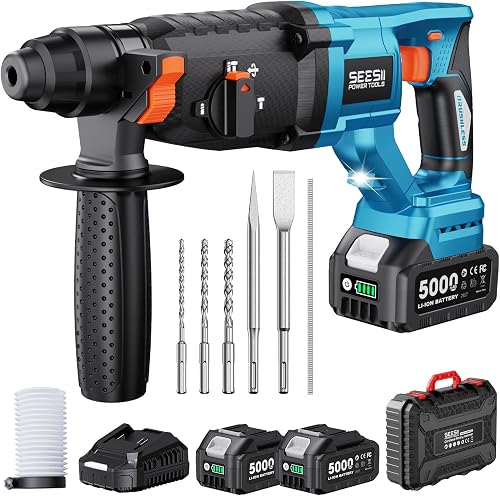
This kit provides everything required to start immediately: the drill, two 5.0Ah batteries, a charger, bits, and chisels. It delivers 3.2 Joules of impact energy, making it capable of drilling 1-inch holes in concrete or 1-3/16-inch holes in wood. The integrated dust protection system seals internal components to prevent premature wear during masonry work.
Choose this tool if you need a versatile 4-in-1 system for drilling, hammer drilling, or light demolition. If you already own Ma-kita batteries, you can use them here, as the tool is compatible with that platform. However, avoid this if you require a specific professional-grade brand ecosystem not supported by this unit. Users often mistake this for a light-duty drill, but the safety clutch is essential for managing the 4450 BPM output. Always use the 360° adjustable handle to maintain control and prevent wrist fatigue during extended sessions.
Pros
- Complete kit with batteries and bits.
- High 3.2 Joules impact energy.
- Includes dust protection system.
Cons
- Battery compatibility limited to Ma-kita.
10. Greenworks 24V Cordless Rotary Hammer
Best for: General brushless performance.
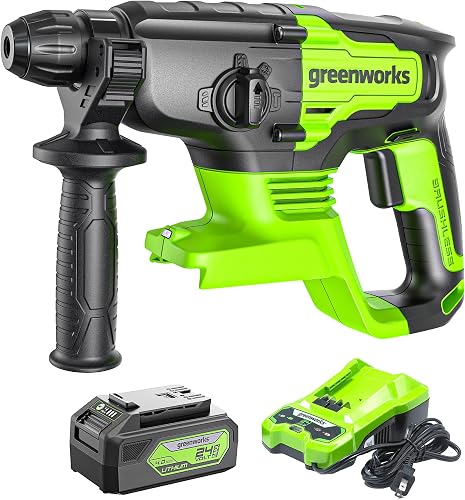
This tool offers 2 Joules of impact energy and a 4-mode selector. It’s balanced and compact, making it a good middle-ground tool for general concrete and masonry tasks.
At 5.44 lbs, the unit is light enough for overhead work. Use the hammer drill mode for masonry and concrete, but switch to the chisel rotation lock for precise demolition tasks. The SDS plus chuck allows for one-handed bit changes, saving you time on the job site.
If you’re drilling into standard residential concrete, this 24V battery system provides the necessary fade-free power. However, avoid using this for deep, large-diameter holes in reinforced industrial slabs, as the motor will struggle. You know you need a larger tool if the bit binds repeatedly in the material. Professionals should stick to corded models for continuous, heavy-duty demolition.
Who Should Buy Which
If you’re a professional contractor, the Milwaukee M18 Fuel is the safest bet because it integrates into an extensive, established ecosystem of power tools. If you’re a homeowner tackling a basement remodel or fence project, the Seesii Cordless SDS-Plus offers the best value. It includes two 5.0Ah batteries, a charger, chisels, and bits in one box, providing everything needed to start immediately.
For those working in tight, cramped areas like under cabinets or in small crawl spaces, the Makita XRH06ZB is the superior choice. Its sub-compact frame weighs only 4.6 lbs with a battery, significantly reducing operator fatigue. If you have heavy concrete demolition, the VEVOR SDS-Max provides 7 Joules of impact energy, a level of power smaller SDS-Plus tools can’t match.
Finally, if you do significant overhead work, such as rod hanging or bracket mounting, choose the DEWALT ATOMIC DCH172D2. Its lightweight design and active vibration control system are specifically engineered to prevent arm strain during repetitive, elevated tasks.
Mistakes That Catch Buyers Out
Many buyers judge a tool by its size, assuming a larger tool is always better, even when a smaller, lighter one would be more efficient for their specific job. Choosing a heavy-duty SDS-Max tool for simple home projects often leads to unnecessary fatigue. If your work involves rod hanging or mounting struts, a lightweight, compact model is superior.
Users often ignore the battery platform, buying a tool that isn’t compatible with their existing chargers, leading to extra expense and clutter. Always verify if your current batteries can power the new unit. If you’re already invested in a specific brand system, staying within that ecosystem ensures you can share batteries across your entire tool collection.
Some buyers choose a tool based on the maximum possible impact energy, not realizing they will never need that much power for simple tasks. A tool delivering 1.2 to 2.1 Joules is often sufficient for standard concrete masonry. Only move toward higher Joule ratings if you’re tackling heavy-duty demolition or large-scale structural drilling.
Many shoppers take marketing claims like “fastest drilling” at face value without checking the actual Joule rating or safety features. Look for specific bind-up protection systems, such as an E-Clutch or Kickback Control, which are vital for safety.
Frequently Asked Questions
What is the difference between SDS-Plus and SDS-Max?
SDS-Plus is the standard for most small to medium rotary hammers and is best for holes of a moderate diameter. SDS-Max is a larger, more robust system used for heavy-duty demolition and large-diameter drilling. You should choose SDS-Plus for general home projects and construction mounting, while SDS-Max is reserved for heavy concrete breaking.
Can I use these tools for wood or metal?
Yes, most rotary hammers have a “rotation only” mode that allows you to use standard drill bits for wood or metal. However, these tools are heavier and less precise than a dedicated drill-driver. Use the rotary hammer mode only for concrete and masonry to get the best results and keep your bits from wearing out too fast.
Do I need to buy extra dust extraction?
While many tools are “dust management ready,” the actual extraction attachment is often sold separately. If you’re working indoors, especially in a finished home, you should invest in an extractor to keep the air clean. Check the listing carefully to see if the extractor is included or if you need to purchase it as a separate accessory.
How do I know if the battery is compatible?
Battery compatibility is brand-specific. A Milwaukee battery won’t work in a DEWALT or Makita tool without an adapter, which is rarely recommended. Always stick to the same brand for your tools and batteries to ensure safety and consistent performance. If you’re starting fresh, choose a brand with a wide range of tools you might want to buy in the future.
How often should I grease the drill bits?
You should apply a small amount of SDS-Plus grease to the shank of your drill bits before inserting them into the chuck. This keeps the mechanism running smoothly and prevents the bit from seizing inside the hammer. A tiny dab of grease every time you change bits is enough to significantly extend the life of both your bits and the tool’s chuck.
Conclusion
Finding the right tool shouldn’t feel like a chore. Once you’ve picked a model that fits your grip and your battery collection, you’ll be ready to tackle those tough masonry jobs with confidence. Head to your local hardware store this weekend to test a few handles yourself; you won’t regret it.