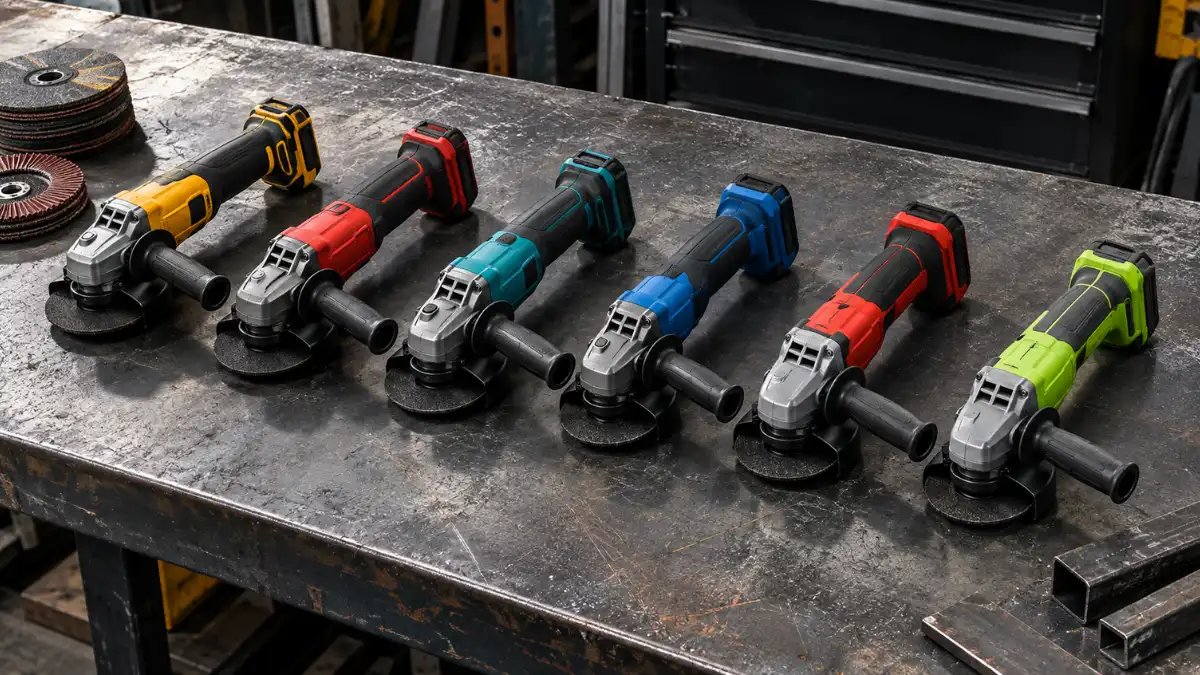
10 Best Cordless Angle Grinders: Our Top Battery Platform Picks
As an Amazon Associate, we earn from qualifying purchases. This post contains affiliate links – if you buy through them, we may earn a commission at no extra cost to you.
Choosing a cordless angle grinder comes down to your specific power needs and the battery platform you already own. These tools differ mainly in their motor technology, safety features like kickback brakes, and whether they offer variable speed control for different materials. Finding the right match depends on your workload.
Best overall: Milwaukee M18 Fuel Grinder provides a reliable brushless motor and an electronic clutch for kickback protection, making it a well-rounded choice for most users who need consistent power and safety.
Most durable: Makita LXT Brushless Grinder features active feedback-sensing technology and a brushless motor designed to run cooler and more efficiently, which helps extend the tool’s lifespan during heavy-duty tasks.
Best safety: Makita LXT Electric Brake includes a specialized brake system that stops the wheel in two seconds or less, offering a significant safety advantage for those who prioritize control and quick stops.
This guide is for anyone looking to add a cordless grinder to their workshop or job site collection.
How We Picked
We compared 48 different Amazon listings to find the top cordless angle grinders currently available. To earn a spot in our recommendations, each product had to clearly state its motor type, key safety features, and battery compatibility. We removed any products that lacked clear technical specifications or failed to provide details on their unique selling points like braking systems or variable speed settings. Our selection focuses on the facts provided by the manufacturers to ensure you have the information needed to make an informed decision.
1. Milwaukee 2880-20 M18 Fuel Brushless Lithium-Ion 4-1/2 in. / 5

Best for: Professionals needing a reliable, daily-use tool.
The Milwaukee M18 Fuel Grinder stands out due to its electronic clutch designed for kickback protection. This feature manages sudden stalls instantly, preventing the tool from jerking during high-torque applications. It’s fully compatible with the existing M18 battery lineup, allowing you to use power packs you might already own.
This tool is built with overload protection to maximize motor life during demanding jobs. It includes an anti-vibration side handle that keeps the tool steady and comfortable during extended use. If you’re grinding heavy steel or cutting thick masonry, the 5/8″-11 spindle ensures you can mount common industry accessories without adapters.
If you already own M18 batteries, this tool integrates seamlessly into your workflow. However, if you require variable speed control for delicate finishing work, this model won’t suffice. The no-lock paddle switch requires a constant grip to operate, ensuring the tool stops immediately when released.
Pros
- Electronic clutch for kickback protection.
- Overload protection for motor longevity.
- Compatible with all M18 batteries.
Cons
- Lacks variable speed settings.
2. Makita XAG04Z 18V LXT® Lithium-Ion Brushless Cordless 4-1/2” / 5″

Best for: Users seeking a long-lasting, efficient motor.
The Makita LXT Brushless Grinder utilizes a brushless motor that eliminates carbon brushes, allowing it to run cooler and more efficiently. This design choice helps the tool last longer while optimizing battery energy for extended run times. The brushless motor is electronically controlled to optimize battery energy use for up to 50% longer run time per charge.
The inclusion of active feedback-sensing technology is a standout feature. It automatically shuts off the motor if the wheel rotation is suddenly forced to stop. This provides a critical safety buffer during heavy-duty cutting or grinding tasks where a wheel might catch.
This grinder is designed to adjust its speed and torque during operation, which helps maintain performance across different tasks. It uses electronic controls to match RPM to the changing demands of the application. It’s a solid choice for those who value efficiency and motor durability over extra features like variable speed.
If your task requires consistent torque under varying loads, this tool’s automatic speed change technology ensures you maintain optimum performance. However, this model isn’t the right fit for users who require a specialized electric brake or those who prefer a non-brushless motor setup.
Pros
- Brushless motor for efficient operation.
- Active feedback-sensing technology for safety.
- Automatic speed change optimizes torque.
Cons
- No variable speed control.
3. DEWALT 20V MAX XR Brushless Cordless Angle Grinder

Best for: Craftsmen who work with various materials.
The DeWalt 20V MAX XR Variable offers the flexibility of variable speed control, which is essential when you need to switch between different grinding and cutting tasks. Its brushless motor delivers high power, and the tool is designed to be relatively lightweight for easier handling during long work sessions. You can also connect it to the Tool Connect app for better asset tracking if you purchase the separate chip.
The anti-rotation system is built into the tool to help maximize control, which is helpful when dealing with the higher torque of a brushless motor. This grinder is perfect for someone who needs to adjust the wheel speed for specific materials. It might not be the best choice for a beginner who only needs a basic, fixed-speed tool or someone who exclusively uses a different battery brand.
Pros
- Variable speed for material versatility.
- Lightweight design for extended use.
- Tool Connect chip ready for tracking.
Cons
- Tool Connect chip sold separately.
4. DEWALT FLEXVOLT 60V MAX* Angle Grinder with Kickback Brake

Best for: Heavy-duty, high-torque industrial applications.
The DeWalt FlexVolt 60V Grinder is built for power, offering a 13-amp motor equivalent to handle the most demanding jobs. It’s designed to accommodate larger 6-inch wheels, which allows for deeper cuts and faster material removal. You can reach 9,000 rpm no-load speed when utilizing these 6-inch wheels.
The integrated kickback brake and E-Clutch are critical safety features. The E-Clutch activates in less than a tenth of a second when a pinch or stall is detected, shutting down the motor instantly. If you release the trigger, the brake engages to stop a standard 4-1/2-inch bonded abrasive wheel in just 1.5 seconds.
This tool is a powerhouse intended for those who need maximum performance on site. It delivers up to 30% more power than the previous DCG414 model. Because it’s part of the 60V line, it’s significantly heavier than standard 18V or 20V options. Use this tool for heavy grinding or deep cutting where torque is the priority. If your work requires overhead maneuvers or delicate precision, choose a lighter, more compact model to avoid fatigue.
Pros
- 13-amp motor equivalent power.
- Fast-acting kickback and electric brakes.
- Compatible with 6-inch grinding wheels.
Cons
- Heavy for smaller, precise tasks.
5. Makita XAG11Z 18V LXT® Lithium-Ion Brushless Cordless 4-1/2” / 5″
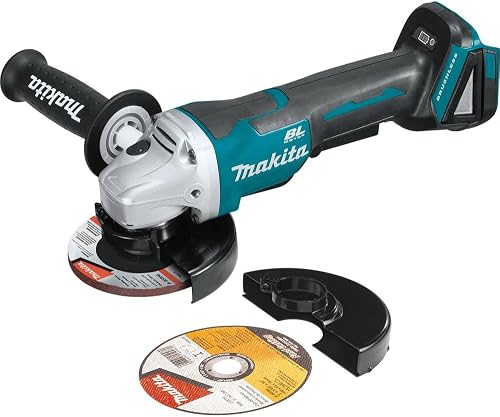
The Makita LXT Electric Brake is engineered to halt the grinding or cut-off wheel in two seconds or less. This feature maximizes productivity by eliminating the long spin-down time common in traditional grinders. If you frequently start and stop your cuts throughout the day, this brake saves significant time.
The tool incorporates Active Feedback-sensing Technology (AFT) to protect the operator. If the wheel is suddenly forced to stop during operation, the system cuts the motor instantly. This prevents the tool from kicking back toward the user.
The brushless motor design eliminates carbon brushes, allowing the tool to run cooler and more efficiently. You can expect up to 50% longer run time per charge compared to brushed alternatives. The motor delivers a consistent 8,500 RPM for most tasks.
Use the Automatic Speed Change technology to handle varying materials. It adjusts speed and torque in real time to maintain optimum performance. If you’re performing heavy-duty grinding that requires constant peak power, note that this unit prioritizes efficiency over raw, sustained torque. Rely on this model when your workflow demands frequent tool resetting and high-level safety features.
Pros
- Electric brake stops wheel in 2 seconds.
- Active feedback-sensing technology prevents kickback.
- Brushless motor extends battery life by 50%.
Cons
- 8,500 RPM limit.
6. CRAFTSMAN V20 4 1/2 Cordless Angle Grinder

Best for: DIY enthusiasts looking for a reliable value.
The Craftsman V20 Brushless Grinder provides 8,500 RPM, making it a capable tool for a wide range of common grinding and cutting projects. Its tapered, ergonomic handle is designed to be comfortable to hold, which is a big plus for DIYers working on weekend projects. It also features a wrench storage space built directly into the handle, which makes changing discs much more convenient.
This tool is known for its balance of power and comfort. It includes a cutting guard and wheel to get you started on various applications right away. The brushless motor provides up to 65% more power.
However, don’t mistake this for a heavy-duty shop tool. It isn’t intended for industrial use or for professionals who require advanced electronic safety features like kickback brakes. If you prioritize safety sensors and high-frequency daily operation, look toward professional-grade models instead. This unit is best suited for the user who values a lightweight, ergonomic design for intermittent DIY tasks.
Pros
- Ergonomic handle for better control.
- Integrated wrench storage for convenience.
- Includes essential cutting accessories.
Cons
- Lacks advanced electronic kickback brakes.
7. Milwaukee 2888-20 18V Cordless 4.5″/5″ Grinder w/Variable Speed (Tool Only)
Best for: Users needing specific speed control for finishing.
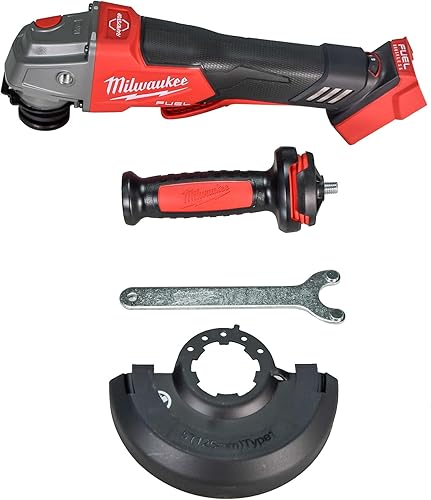
The Milwaukee 2888-20 offers five distinct speed settings, giving you surgical control over your material finish. If you’re polishing stainless steel or removing light oxidation, select a lower speed to prevent heat discoloration. Use the higher settings only when you need the motor’s maximum output for standard grinding tasks.
The integrated electric brake stops the wheel in two seconds or less. This feature prevents accidental damage to your workpiece and keeps the tool from spinning while you set it down. It’s a critical safety upgrade for any operator switching frequently between different surface treatments.
This tool is a specialized companion for the M18 battery system. It excels at precision work where speed management matters more than raw torque. If you find yourself stalling the motor, you’re likely pushing too hard for a tool of this class; ease up to let the disc do the work.
Pros
- Five variable speed settings.
- Integrated brake stops wheel quickly.
- Consistent performance across settings.
Cons
- Fewer safety sensors than Fuel series.
- Not built for heavy-duty material removal.
8. BOSCH GWS12V-30N 12V Max Brushless 3 In. Cordless Angle Grinder

Best for: Tight spaces and precision cutting.
The Bosch 12V Max Grinder is a micro-sized tool designed for difficult cuts in places where a standard 4-1/2 inch or 5-inch grinder simply won’t fit. It produces 19,500 RPM, which is impressive for such a small tool, and it’s engineered to fit perfectly in the palm of your hand. It features a spindle-clip release for very fast wheel changes.
This is a specialized tool for light-duty cutting, such as working with threaded rod, conduit, or tile. Use this grinder when you need to navigate confined areas where maneuverability outweighs raw power. If you attempt heavy grinding or long-duration material removal, you’ll likely trigger the built-in overload protection, which shuts the tool down to prevent motor damage.
The tool includes restart protection to prevent accidental startups when swapping batteries. If the wheel doesn’t stop immediately upon release, check your battery connection; the system is engineered to halt the wheel in less than a second. Avoid using this for large-scale stock removal, as the 12V platform prioritizes portability over the brute force required for heavy fabrication.
Pros
- Highly compact for tight spaces.
- Very fast wheel stop time.
- High RPM for small cuts.
Cons
- Limited to light-duty applications.
9. Craftsman V20 Small Grinder
Best for: Simple, straightforward grinding tasks.
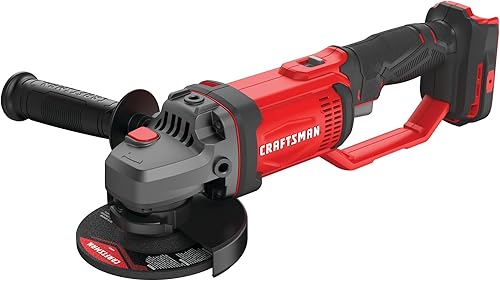
The Craftsman V20 Small Grinder is a no-nonsense tool that’s easy to operate for basic jobs. It features a cast metal gear housing that helps dissipate heat during longer use, keeping the tool running smoothly. The 3-position handle gives you flexibility in how you hold the tool, and the tool-free guard adjustment makes it easy to set up for different angles.
If you’re performing aggressive applications, the high-speed motor provides the necessary power. Use the side handle positions to maintain control when working in tight corners or overhead. If you find the tool getting hot, pause briefly to let the metal housing shed that heat; failing to do so may shorten the lifespan of your internal components.
This grinder is perfect for the user who wants a reliable tool without the complexity of electronic brakes or variable speed settings. It’s covered by a limited lifetime warranty, providing added confidence in your purchase. It isn’t for users who require advanced safety features like electronic kickback protection.
Pros
- Simple, tool-free guard adjustment.
- Durable cast metal gear housing.
- Three-position handle for versatility.
Cons
- Lacks brushless motor technology.
10. RYOBI PCL445B 18V Cordless 4-1/2 in. Angle Grinder (Tool Only)

Best for: DIYers starting their collection who prioritize essential features and a comprehensive warranty.
The Ryobi 18V Cordless Grinder is a solid entry-level choice that provides 9,000 RPM for quick material removal. It features a 3-position handle for better control and a die-cast metal gear case for added durability. The spindle lock is easy to use, making accessory changes simple even for beginners.
This tool is a great starting point if you’re already using the Ryobi 18V One+ battery system. It’s a basic, effective grinder that covers the essentials without the complexity of advanced electronics. It isn’t the right choice for heavy-duty industrial work or for users who need specialized safety features.
Pros
- Reliable 9,000 RPM motor.
- Simple spindle lock for changes.
- Durable metal gear case construction.
Cons
- No advanced safety sensors.
The DEWALT Angle Grinder Tool Cordless is a strong alternative if you prefer a paddle switch design with a reliable brake. The DEWALT ADVANTAGE MAX* Angle Grinder is worth considering if you want a tool that can take advantage of higher-capacity batteries for longer run times. Finally, the Greenworks Brushless 4-1/2″ Angle Grinder offers a brushless motor and an aluminum gear box, which is a good choice if you’re already invested in the Greenworks 24V system.
How to Choose in Sixty Seconds
Does the battery platform matter more than the tool?
Yes, the battery platform is the most important factor. You should always choose a grinder that matches the batteries you already own. Most manufacturers, such as Milwaukee, Makita, and DeWalt, have specialized battery systems that aren’t interchangeable. Buying a tool that matches your current batteries saves you from having to purchase new chargers and packs, which can be a significant investment. Always confirm that the “Tool Only” listing you’re looking at is compatible with your specific battery voltage. If you’re starting fresh, look at the ecosystem of other tools offered by the brand, as you’ll likely want to add more tools that use those same batteries later.
What safety features should a beginner look for?
A beginner should prioritize tools with electronic kickback protection and electric brakes. These features help prevent accidents by shutting down the motor if the wheel binds or stalls, which is a common occurrence when learning to control the tool. Additionally, features like “soft start” or “restart protection” prevent the tool from jumping or turning on unexpectedly when you insert a battery. These features make the learning process safer and help you build confidence as you become more comfortable handling the grinder.
Is variable speed necessary for my projects?
Variable speed is only necessary if you plan to work with multiple materials. For simple tasks like cutting steel or grinding welds, a fixed-speed grinder is usually sufficient and often more durable because there are fewer electronic parts. However, if you need to polish stainless steel, cut tile, or work with plastics, variable speed is essential to prevent burning the material or melting the surface. If you only perform one type of job, a fixed-speed grinder is sufficient. If you’re a versatile DIYer or a professional doing various types of finishing work, the ability to adjust your RPM is a feature you’ll quickly appreciate.
Frequently Asked Questions
What does “Tool Only” mean when buying a grinder?
“Tool Only” means the package includes the grinder but excludes a battery and charger. This format allows users to utilize existing batteries from the same manufacturer. Ensure you own compatible batteries for the brand before purchasing, as they must be acquired separately to operate the tool.
How do I know if my grinder needs a brushless motor?
A brushless motor is more efficient, runs cooler, and lasts longer than a traditional brushed motor. These motors provide superior battery life for long periods of use or daily professional work. Brushed motors remain suitable for occasional, light-duty DIY tasks where the tool is used infrequently.
What is the most common part to fail on an angle grinder?
The most common points of failure on a cordless angle grinder are the trigger switch and the motor brushes. In brushless models, the electronic controller is the most sensitive component. Keep vents clear of dust and debris to prevent short circuits and avoid stalling the motor under extreme stress.
Is a 6-inch grinder better than a 4-1/2 inch model?
A 6-inch grinder provides deeper cuts and faster material removal, though it is heavier and less maneuverable. Most standard tasks are easier to handle with a compact model, which offers better ergonomics and control. Choose the smaller size unless you have a recurring need for extra cutting depth.
Conclusion
Before you make your final purchase, head to your local hardware store to hold a few models in your hands. You’ll quickly see which tool feels balanced and comfortable for your grip. Once you’ve picked your favorite, you’ll be ready to tackle those tough cutting and grinding projects with ease.