10 Best Pneumatic Die Grinders for Auto Repair and Metalworking
The Ingersoll Rand 5108MAX is the best all-around pneumatic die grinder for auto repair and metalworking, while the Sunex Tools SX5210 offers maximum power for difficult jobs. Choosing between them depends on your specific workspace needs, such as whether you prioritize a lightweight frame for long shifts or a high-torque motor for tough grinding.
As an Amazon Associate, we earn from qualifying purchases. This post contains affiliate links – if you buy through them, we may earn a commission at no extra cost to you.
1. Ingersoll Rand 5108MAX 1/4″ Collet Air Die Grinder

Best for: A professional needing a reliable, daily-use tool for various shop tasks.
This tool is built for those who spend hours grinding and polishing. Its 0.4 hp motor provides consistent power without the dropoff often found in smaller units, making it ideal for standard auto shop maintenance. The low-profile throttle and 1.0-pound build help reduce fatigue when you’re working on a long project. If you feel your hand cramping after a long session, the reduced vibration design is the primary feature that will keep you working through the afternoon.
The composite housing adds durability, while the rear exhaust keeps debris away from your immediate workspace. This model is engineered for those who want a blend of comfort and steady output. It isn’t for users who need extreme high-speed porting, as its 25,000 RPM limit is best suited for general grinding rather than specialized micro-finishing. Always verify your air compressor capacity before starting, as the tool is sold individually without a power source.
Good if:
- You work in auto shops or industrial settings.
- You need a tool that reduces vibrations.
- You prefer a lube-free design for a cleaner shop.
Skip it if:
- You require a high-speed pencil grinder for tiny parts.
- You need a specialized extended shaft for deep engine work.
- You lack an existing air compressor system, as this unit is sold as a standalone tool.
2. AIRCAT 6280 .75 HP Angle Die Grinder with Spindle Lock

Best for: Someone working in a shared shop who needs quiet, high-power performance.
The non-stall motor provides significant torque for tough jobs, while the patented silencing technology keeps noise levels down to 79 dBA. This helps maintain a better environment in busy shops where multiple tools might be running at once. The speed control is placed at the top of the grip, which allows for quick adjustments during operation.
Because of the non-stall motor, this unit handles heavy resistance well without slowing down. If you’re removing thick welds or heavy burrs, the motor maintains its 18,000 RPM output to prevent stalling. It’s a robust choice for metalworking where you must remove material quickly.
If you’re performing delicate, one-handed detail work, this tool is likely too heavy and bulky for your needs. The Erickson-style precision collet ensures your accessories stay secure, but the composite handle adds mass. Use this tool when you have a firm two-handed grip and need consistent, aggressive power.
Good if:
- You need high torque for heavy-duty metal grinding.
- You want a quieter workspace.
- You prefer precision collets for secure accessory holding.
Skip it if:
- You need a lightweight tool for long, overhead tasks.
- You have very limited space that requires a slim profile.
3. Astro Pneumatic Tool 218 1/8″ Pencil Type Die Grinder
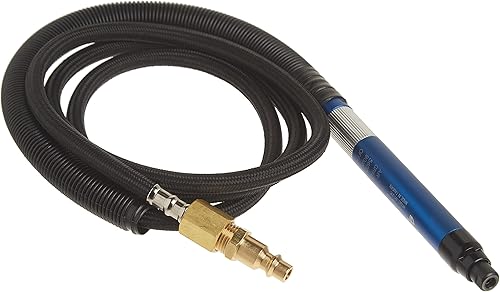
Best for precision work on small parts, rotors, or backing plates.
This pencil-type grinder is designed for high-speed porting and finishing where control is everything. Its 56,000 RPM speed allows for extremely fine work on surfaces that larger, bulkier grinders would damage. The twist throttle provides variable speed, which is essential when you’re trying to reach tight corners on engine components.
The lightweight design makes it easy to hold like a pen, providing natural movement. It’s specifically meant for detailing and cleaning, not for heavy metal removal. If you’re looking for a tool to grind down welds or cut through thick steel, this isn’t the right fit for your needs. You’ll only cause premature tool wear or stall the motor if you apply heavy pressure.
Use this tool when you need to clean dies, rotors, backing plates, or brake pads. If your task requires removing large amounts of material, switch to a more robust, low-speed pneumatic tool.
Good if:
- You perform brake pad or rotor cleaning.
- You need to reach into very tight engine spaces.
- You require high speed for fine finishing.
Skip it if:
- You need to remove large amounts of metal.
- You’re looking for a general-purpose shop grinder.
- You require high torque instead of high-speed precision.
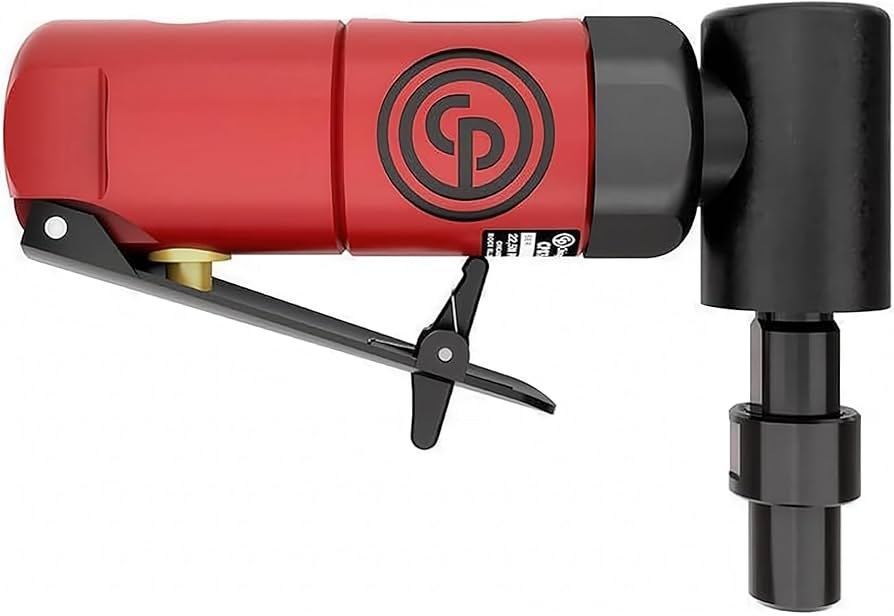
4. Chicago Pneumatic CP875
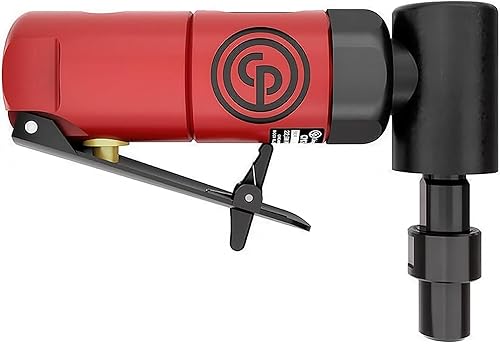
Best for: A mechanic who frequently works in confined engine bays.
This 90-degree angle grinder is compact, measuring only 4.88 inches in length. It’s designed to fit where your hands cannot, making it a favorite for deburring and contouring in tight areas. The safety throttle lever prevents accidental starts, which is a necessary feature when working in crowded, sharp-edged engine compartments.
The aluminum housing provides a sturdy feel, while the composite over-sleeve improves grip and comfort. It offers 22,500 RPM, which is plenty for light chamfering and general maintenance. If you’re performing heavy-duty material removal, look elsewhere; the 0.3 HP motor is optimized for precision rather than brute force.
Use this tool when you must reach into cramped spaces where a straight-line grinder would physically hit an obstruction. If you have enough clearance to hold a straight tool, choose that instead to maintain better leverage and control over the workpiece.
Good if:
- You need to reach into cramped engine bays.
- You prioritize safety features like a locking throttle.
- You want a balance of power and compact size.
Skip it if:
- You need a straight tool for long, continuous grinding.
- You’re dealing with extremely heavy-duty, thick metal.
- You require high torque output for aggressive grinding tasks.
5. Sunex Tools SX5210 1/4″ Drive 1HP Super Die Grinder

Best for: Heavy-duty fabrication tasks that require high torque.
With a full 1 hp motor, this grinder is made to power through the toughest jobs without stalling. The Erickson industrial collet is a standout feature, as it secures your grinding accessories firmly even under high-torque conditions. It’s built to last in demanding environments where other tools might fail.
Despite the power, it uses a composite housing to keep the weight manageable for the operator. If you’re grinding thick steel or removing heavy welds, the composite handle provides the control needed to maintain precision. This tool is clearly for the professional fabricator who faces heavy grinding every day.
It isn’t designed for the casual hobbyist or someone needing a delicate touch. The raw power can be difficult to control for beginners, leading to gouged surfaces or damaged bits.
Good if:
- You work with very thick or hard metals.
- You need a secure collet for heavy accessories.
- You require maximum power for industrial-grade grinding.
Skip it if:
- You’re a beginner with pneumatic tools.
- You only perform light, occasional finishing work.
- You require a tool for delicate, fine-detail surface preparation.
6. Astro 217 ONYX 13-Inch Extended Shaft Die Grinder

The 13-inch extended shaft is the primary reason to choose this model. It allows you to access hard-to-reach places, such as deep inside a chassis or behind complex machinery.
If you’re working in tight, open spaces, the length becomes a liability rather than an asset. The extra reach creates a longer lever arm, which makes the tool harder to stabilize during precise grinding.
It features all-ball-bearing construction, which is meant to ensure long tool life even when the tool is used in awkward, extended positions. The lever throttle allows for positive speed control, which is helpful when you’re working at a distance from the point of contact.
Operate at the full 20,000rpm free speed only when the grinding burr is fully engaged with the material. This is a specialized tool for specific maintenance tasks. It isn’t for general-purpose grinding, as the long shaft can be harder to stabilize for long periods.
Good if:
- You need to reach deep into automotive frames.
- You prefer a long-reach tool for specialized repairs.
- You want a tool with durable ball-bearing construction.
Skip it if:
- You want a versatile tool for everyday, general shop use.
- You need maximum maneuverability in tight, open spaces.
7. JET 1/8-Inch Pneumatic Micro Die Grinder

Best for: Micro-finishing and high-speed jewelry or metal detail work.
This micro grinder hits 70,000 RPM, the highest speed in this group. It’s designed for fine-detail work where you need to remove material at a microscopic level without leaving heavy marks. The Kevlar rotor vanes help extend the life of the tool, reducing the frequency of maintenance.
The steel housing keeps the unit under half a pound, making it incredibly easy to handle for long sessions. If you’re working on delicate surfaces, the tool’s weight prevents hand fatigue. The overhose feature is particularly useful, as it pushes exhaust away from your workspace and helps manage noise at 81 dB.
Use the included 9mm wrenches to swap bits quickly between tasks. This isn’t a tool for structural repair or heavy-duty grinding; it’s for precision and finishing only.
Good if:
- You need the highest RPM for fine detail.
- You prefer a very lightweight, pencil-style tool.
- You want to keep exhaust away from your face.
Skip it if:
- You need to grind down thick welds or rough metal.
- You’re looking for a standard 1/4-inch collet grinder.
- You require a trigger-style grip instead of the twist throttle.
8. Chicago Pneumatic CP860

Best for: General maintenance and body shop tasks needing a straight tool.
This straight grinder is built for versatility, handling everything from polishing to deburring. The square handle design improves control, and the 5.75-inch length remains manageable for most hand sizes. It features a lock-off safety lever, a vital addition for preventing accidental activation in a busy shop.
The 0.54 hp motor provides a balance of power for daily MRO maintenance. It uses an aluminum body with a composite over-sleeve, a standard approach for durability. However, if your work requires reaching into deep corners or around obstructions, choose a right-angle tool instead. The straight body requires significant clearance to align the collet with your workpiece.
Use the adjustable speed regulator to match the 24,000 RPM output to the material density.
Good if:
- You need a general-purpose, straight-line grinder.
- You want a balance of power and weight.
- You need a safe, lock-off throttle for daily use.
Skip it if:
- You need to reach into corners or tight, angled spaces.
- You require a micro-grinder for tiny, intricate parts.
9. NEIKO 30060A 1/4” Air Right Angle Die Grinder

Best for: Someone who wants the ergonomics of a pistol grip.
The pistol-grip design is the main advantage here, as it offers a natural hold that feels like a standard power drill. This makes it much easier to keep the tool steady while applying pressure for weld prep or sanding. It’s a right-angle tool, which gives you the flexibility to work in tight spaces while maintaining that comfortable, ergonomic grip.
It uses a paddle lever throttle, which allows for smooth speed feathering. The built-in regulator is easy to adjust with a flathead screwdriver or the included hex key, allowing you to tailor the output to the job at hand. By using only 4 CFM of air, this tool delivers high-performance output.
If you struggle with hand fatigue, the lightweight build of this grinder is a significant benefit. However, the pistol handle increases the tool’s overall dimensions compared to pencil-style tools. If your work requires reaching deep into narrow engine bays or recessed corners, the handle may obstruct your movement. Use this tool when you have enough clearance to grip the handle comfortably; if you’re working in extremely tight, restricted gaps, a slim inline model will be more effective.
Good if:
- You find standard inline grinders tiring to hold.
- You want a tool that feels like a drill.
- You need a right-angle head for compact spaces.
Skip it if:
- You need to fit the tool into very narrow gaps.
- You prefer a slim, lightweight body for one-handed maneuvers.
10. WORKPRO Pneumatic Straight Die Grinder

Best for: A first-time buyer needing a versatile, compact tool.
This grinder includes both 1/4-inch and 1/8-inch collets, making it highly versatile for different types of bits. Its slim, featherweight body is perfect for someone just starting out who needs a tool that’s easy to manage with one hand. It also includes a child safety lock on the trigger, which is an extra layer of protection for home shops.
The rear exhaust is a nice touch, as it keeps the air away from your face while you work. With 25,000 RPM, it’s capable of most general machining and polishing tasks. It isn’t for the heavy-duty professional who needs to run a grinder for eight hours a day on thick industrial steel, as it’s designed more for general home fabrication.
Before you begin, remove the dust plug from the inlet. You must use sealant tape on the connections to prevent air leakage, as the tool requires 90 psi to reach its full speed. If your compressor is too small to maintain 3 cfm, the grinder will lose power during heavy cuts. Always add the included lubricant before use to protect the internal components.
Good if:
- You’re a beginner and need a versatile collet range.
- You want a lightweight, easy-to-control tool.
- You need a simple, reliable tool for basic fabrication.
Skip it if:
- You’re a professional doing heavy, constant metal grinding.
- You need an angle-head grinder for corner access.
Choosing Pneumatic Die Grinders for Auto Repair and Metalworking
In the world of pneumatic grinding, many models share common DNA. The Ingersoll Rand 5108MAX and the Chicago Pneumatic CP860 are quite close in their intended use, both serving as reliable workhorses for general shop maintenance. If you’re choosing between these two, the main difference is the handle shape; the 5108MAX offers a classic, low-profile design, while the CP860 uses a square handle that some operators find easier to index in their palm.
Similarly, the WORKPRO Pneumatic Straight and the Ingersoll Rand 5108MAX overlap in the straight-grinder category. The primary difference is the collet versatility; the WORKPRO includes both 1/4-inch and 1/8-inch options out of the box, which makes it a slightly more flexible pick for a newcomer who doesn’t yet know exactly which bits they will use most.
For the right-angle category, the Chicago Pneumatic CP875 and the NEIKO 30060A are both excellent, but they’re built for different hand preferences. The CP875 is a traditional, slim-profile right-angle grinder, while the NEIKO 30060A uses a pistol grip. The choice here comes down to your personal comfort—if you prefer the feel of a drill, the NEIKO is the obvious move, but if you need to squeeze into the tightest possible gaps, the slim CP875 is the winner.
Still Not Sure?
How often will I really use it?
If you only need a grinder for occasional home repairs or small hobby projects, you don’t need the heavy-duty power of the Sunex Tools SX5210. Instead, look for a tool that offers versatility, such as the WORKPRO Pneumatic Straight. It handles a wide range of bits and is easy to store and maintain. However, if you’re in a shop environment where you use a grinder for several hours every single day, you should invest in a more robust unit designed specifically for long-term, continuous duty cycles.
What do I already own that this has to work with?
Before you buy, check your air compressor’s capacity. A high-output tool like the AIRCAT 6280 will need a compressor that can keep up with its air consumption. If your compressor is smaller, you might be better off with a tool like the NEIKO 30060A, which is designed to be efficient with lower CFM requirements. Always ensure your air supply meets the Occupational Safety and Health Administration standards for safe pneumatic tool operation to prevent accidental pressure surges or equipment damage.
What am I most likely to regret choosing?
The most common regret is buying a tool that’s physically too large for the work you do. If you buy a long-shaft tool like the Astro 217 ONYX for simple surface grinding, you’ll quickly find that the extra length makes it difficult to control and maneuver. Conversely, buying a micro-grinder like the JET JAT-410 for heavy-duty metal removal will leave you frustrated because the tool lacks the torque to get the job done. Match the tool size and speed to your most frequent task, not the occasional one.
If you need a reliable tool for general auto repair, this high-performance model is a great choice. If you’re doing heavy-duty metal fabrication and need raw power, the Sunex Tools SX5210 is the one to pick. Take a moment to check your air compressor specs before you finalize your choice, as this will ensure your new tool performs exactly as expected.