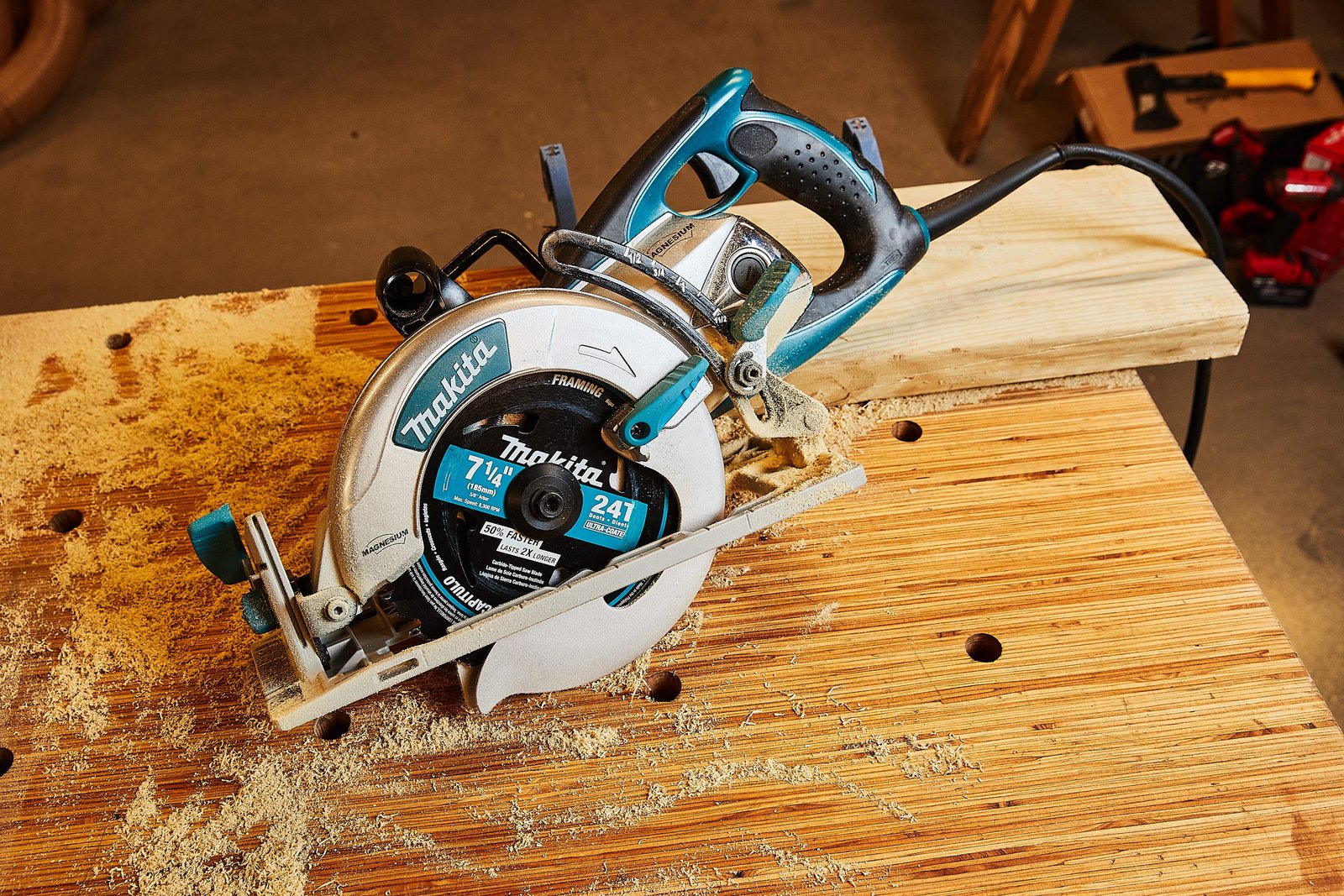
10 Best Circular Saw for Beginners Picks and Expert Verdicts
Choosing the right circular saw for beginners involves matching the tool to your project size and comfort level with power equipment. Whether you prefer the power of a 7-1/4 inch corded model like the SKIL 5280-01 or the compact design of the DEWALT DWE575, your decision should depend on your specific cutting needs and frequency of use.
1. SKIL 15 Amp 7-1/4 Inch Circular Saw with Single Beam
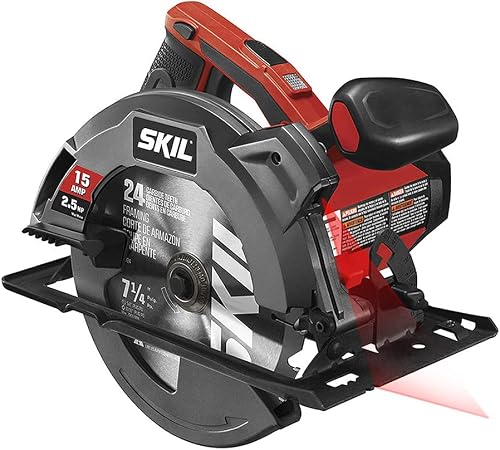
Best for: Someone who wants a reliable, full-sized saw for home projects.
This saw is built for users who need a standard 7-1/4 inch blade to handle common lumber. It features a 15-amp motor that reaches 5,300 RPM, giving you enough power to cut through thick boards without much effort. The included dust blower is helpful for beginners, as it keeps your pencil line clear while you work.
The laser guide adds a layer of precision that helps keep your cuts straight, which is a common hurdle for new users. This saw isn’t for someone looking for a cordless tool or a specialized compact unit for small, intricate tasks. Its size and weight are designed for stability rather than portability.
Good if:
- You want a laser guide to assist with straight cuts.
- You need a standard blade size for most home DIY tasks.
- You appreciate having a clear line of sight.
Skip it if:
- You have no access to a power outlet nearby.
- You find larger, corded tools too heavy to hold steady.
2. DEWALT DWE575 Circular Saw

Best for: Someone who wants a professional-grade saw that’s easy to lift.
At 8.8 lbs, this model is designed for those who find standard circular saws too heavy or tiring to maneuver. The 15-amp motor ensures you don’t lose power just because the tool is lighter than others in its class. It also features a 53-degree bevel capacity, which is useful if you plan to do more than just straight 90-degree cuts.
The anti-snag lower guard is a thoughtful feature, as it ensures the blade moves smoothly even when you’re cutting through uneven wood. This saw isn’t for someone who prefers a compact, one-handed saw, as it still requires two-handed operation for safety and control.
Good if:
- You want a lightweight tool that doesn’t sacrifice power.
- You need a high bevel capacity for angled work.
- You prefer a durable, aluminum base for consistent accuracy.
Skip it if:
- You specifically need a battery-operated tool for travel.
- You’re looking for a small, handheld saw for light crafts.
3. Genesis GCS445SE 4.0A 4-1/2-Inch Compact Circular Saw

Best for: First-time buyers who need a compact tool for smaller projects.
This saw uses a 4-1/2 inch blade, making it much smaller and easier to control than a full-sized circular saw. The barrel grip is designed for one-handed operation, which is perfect if you’re working on small pieces of wood or tight spaces. It still has enough power to cut through standard 2x material, so you don’t have to worry about the tool being too weak for basic home repairs.
Because it’s so compact, it doesn’t have the depth capacity of a 7-1/4 inch saw. If your main goal is building large structures like a deck, this tool will likely feel too small for the job.
Good if:
- You want a tool that is easy to maneuver and control.
- You’re working on smaller craft or home repair projects.
- You need something lightweight for easy storage.
Skip it if:
- You plan to cut very thick or large-scale lumber.
- You prefer the stability of a larger, two-handed saw.
4. SKILSAW SPT67WL-01 15 Amp 7-1/4 In. Sidewinder Circular Saw

Best for: Users who want a professional sidewinder saw that’s easy to carry.
This is a sidewinder saw, which means the motor is positioned to the side of the blade, providing a different balance than other models. At 8.6 pounds, it’s quite light for a 15-amp saw, making it easy to maneuver across sheet materials. The dual-field motor is built to dissipate heat, which helps it stay cool during long sessions of cutting.
The 56-degree bevel gives you a wide range of angles, which is great for complex DIY builds. However, this is a professional-style tool; if you’re only making one or two simple cuts a year, the extra features might feel like more than you actually need.
Good if:
- You want a professional-grade saw that’s easy to lift.
- You need a wide bevel range for angled cuts.
- You prefer a 10-foot cord for better reach on large sheets.
Skip it if:
- You aren’t comfortable with a professional-style sidewinder design.
- You want a tool with the simplest possible setup.
5. Bosch CS10 7-1/4 In. Circular Saw

Best for: Someone who prioritizes tool durability and long-term use.
The Bosch CS10 is built with a magnesium footplate and upper guard, which makes it feel sturdy and durable. It’s designed to withstand harsh job sites while keeping the total weight at 10.2 lbs. The bevel louvers are a unique touch, as they direct the dust blower output to ensure your line of sight stays clean during every cut.
It also includes a saw hook for storage, which is very helpful when you need to set the tool down mid-project. If you frequently cut small pieces, the anti-snag lower guard prevents the blade from catching. This ensures smooth operation where other saws might bind or jump.
If you notice the motor power fading after years of heavy use, you can replace the brushes yourself by removing the end cap.
This saw focuses on heavy-duty construction for deep cuts up to 2-7/16 inches at 90 degrees.
Good if:
- You want a tool made from durable, high-quality materials.
- You need easy access to the brushes for future maintenance.
- You want a comfortable soft-grip handle.
Skip it if:
- You find a 10-lb tool too heavy for long periods of use.
- You’re looking for a basic, entry-level saw.
6. Milwaukee M18 BRUSHLESS 7-1/4″ CIRCULAR SAW

Best for: Someone who already owns other tools in the M18 battery system.
This is a brushless saw, which generally offers more efficiency and power management than brushed models. The integrated LED light is a great feature for beginners, as it illuminates your cut line in darker corners or shadows. The electric brake is another safety-focused feature that stops the blade quickly after you release the trigger.
Because this is a “bare” tool, you must already own the specific batteries and charger to use it. If you do not have the M18 power source, you will need to purchase those items separately before you can operate the saw.
The magnesium upper and lower guards provide a durable frame that resists impact without adding excessive weight. Use the integrated rafter hook to hang the tool on a joist or ladder during work breaks. If you find yourself frequently clearing sawdust from your workspace, attach a vacuum hose directly to the integrated dust port on the guard.
Good if:
- You want the efficiency of a brushless motor.
- You need an LED light for better visibility.
- You prefer the safety of an electric blade brake.
Skip it if:
- You don’t own compatible batteries and want a plug-in tool.
- You’re looking for an all-in-one kit with a battery included.
7. CRAFTSMAN CMES500 Circular Saw

Best for: A beginner who wants a straightforward, easy-to-use corded saw.
This saw is designed with simplicity in mind. It features a 13-amp motor and a contoured handle that makes it comfortable to hold for extended periods. The spindle lock is easy to access, which makes changing the blade a simple task for someone who has never used a circular saw before.
The 5,300 RPM motor provides the speed necessary for fast cuts, while the 7-1/4 inch 18T carbide tipped blade ensures improved cutting performance right out of the box. If you’re tackling standard home projects, this combination provides the power you need without unnecessary complexity.
It’s a basic, reliable tool that covers the essentials. If you require advanced bevel ranges beyond the standard 45° capacity or demand precision add-ons like laser guides, you may find this model too simple for your specific needs.
Good if:
- You want a basic tool that’s easy to learn on.
- You prefer a comfortable, over-molded handle.
- You need a reliable saw for standard home cuts.
Skip it if:
- You want advanced features like laser guides or LED lights.
- You need a bevel capacity exceeding 45° for complex angles.
- You’re looking for a professional-grade saw with specialized settings.
8. WORX Electric Compact Circular Saw

Best for: Precision work and users who prefer one-handed control.
The WORX WX439L is a compact saw that uses a 4-1/2 inch blade for high maneuverability when making rip cuts or working on small lumber. Its lever-based depth adjustment is straightforward for beginners learning to set up their cuts.
It also features a dust port that you can attach to a vacuum, which is excellent for keeping your workshop clean. Because of its size, it isn’t the right tool for cutting through very thick timber or doing heavy-duty framing. If you’re cutting stock thicker than 2 inches, choose a larger circular saw to avoid stalling the motor.
The 4100 RPM motor allows this tool to slice through 2x4s as effectively as larger models. Use the spindle lock and hex key to swap blades quickly when moving between materials. If you need to make artistic end pieces, adjust the base to 45 degrees for clean bevel cuts.
Good if:
- You want a tool that is simple to operate without needing both hands.
- You need to connect a vacuum to keep dust down.
- You’re doing mostly small-scale DIY or craft projects.
Skip it if:
- You’re building large outdoor structures or heavy furniture.
- You need a tool that can handle full-sized 7-1/4 inch blades.
9. Ryobi One P505 18V Lithium Ion Cordless 5 1/2″ 4

Best for: A beginner who is ready to go cordless with a compatible battery system.
The Ryobi P505 is a great starter cordless saw, featuring a transparent guard that helps you see exactly where the blade is hitting the wood. The side handle provides extra control, which is very helpful if you’re still getting used to the feel of a power saw. The GripZone overmold makes the tool feel secure in your hands, even if they’re a bit sweaty.
Like other cordless models, the battery is sold separately. If you don’t have the Ryobi 18V One+ system, this won’t work out of the box. It’s a good choice for someone who plans to expand their collection with other Ryobi tools in the future.
Good if:
- You want a transparent guard to see your cut line.
- You want a cordless tool for better mobility.
- You’re starting a collection of Ryobi 18V tools.
Skip it if:
- You don’t own any Ryobi batteries.
- You need a saw with more power for heavy-duty construction.
10. Makita 5007F 7-1/4″ Circular Saw

Best for: Someone who wants a high-performance, reliable saw for heavy work.
This Makita model is built for performance, with a 15-amp motor that spins at 5,800 RPM. The two built-in LED lights are excellent for visibility, and the all-ball-bearing construction is engineered for a long tool life. It’s well-balanced, which helps you maintain control even when making narrow or angled cuts.
If you’re struggling to maintain a straight path, rely on the LED illumination to guide your blade. The lower guard design specifically improves performance during bevel and narrow cuts, preventing the binding that often ruins precision work.
It is a robust machine that performs well on jobsites and is built for long-term durability. Because of its weight, it is best suited for users who are comfortable handling heavier power tools during extended tasks.
The AC/DC switch allows for use with alternative power sources, a critical feature if your jobsite lacks standard outlets. If you require deep cuts, this saw handles 2-3/8 inches at 90 degrees or 1-3/4 inches at 45 degrees.
Good if:
- You want a powerful, high-speed saw for tough work.
- You need LED lights for accurate cutting.
- You want a durable, well-balanced tool for long-term use.
Skip it if:
- You prefer a lightweight, compact tool.
- You’re only doing light hobby work.
Where These Overlap
Many of the 7-1/4 inch corded saws on this list, such as the SKIL 5280-01, the DEWALT DWE575, and the Makita 5007F, share very similar performance specs. They all use 15-amp motors and are designed to handle standard lumber for home projects. The choice between these often comes down to small details: do you prefer the laser guide of the SKIL, the lightweight frame of the DEWALT, or the LED lights and all-ball-bearing construction of the Makita? These features don’t change the fundamental job the saw does, but they change how you feel while doing it.
Conversely, the compact saws like the Genesis GCS445SE and the WORX WX439L are in a different category entirely. They aren’t built for the same heavy-duty framing tasks as the standard full-sized models. Instead, they’re built for agility and precision on smaller boards, allowing for quick, nimble operation. If you’re comparing these to the larger saws, you’re really choosing between two different ways of working: the heavy-duty, two-handed approach of a standard saw or the quick, one-handed approach of a compact model. For safety, always ensure you follow power tool safety guidelines when operating any of these saws, regardless of the size or brand you choose.
Still Not Sure?
How often will I really use it?
If you only plan to cut a few boards for a small shelf or craft project once or twice a year, a smaller, compact saw like the WORX WX439L is likely all you need. It’s easier to store and takes up much less space in a closet or garage. However, if you have a list of home renovations or big outdoor projects like building a garden bed or a deck, you’ll quickly outgrow a compact saw. In that case, a full-sized, corded model like the SKIL 5280-01 will save you time and frustration.
What do I already own that this has to work with?
This is the most important question for cordless users. If you already have a collection of batteries for a specific brand, like Milwaukee or Ryobi, you should stick to that brand. Buying a “bare” tool like the Milwaukee M18 is a great way to save space and money if you already have the chargers and batteries ready to go. If you’re starting from zero and have no batteries, buying a corded saw like the CRAFTSMAN CMES500 is often the best way to get started without needing to invest in a battery system.
What am I most likely to regret choosing?
Most beginners regret buying a tool that’s too heavy for them to handle safely. If you aren’t used to the weight of a 15-amp saw, you might find the Makita 5007F or Bosch CS10 intimidating to use for long periods. If you’re worried about the weight, look for a lightweight model like the DEWALT DWE575. It gives you the power you need for most projects while keeping the weight manageable. Choosing a tool that feels good in your hands is the best way to ensure you actually enjoy using it for your DIY tasks.
Most beginners are split between the need for a full-sized, corded saw for heavy projects and the convenience of a compact, lightweight saw for quick repairs. If you have large jobs ahead, look at the SKIL 5280-01 for its balance of power and helpful features. If you’re focused on small, occasional tasks, the WORX WX439L is the better choice for its portability. Once you know which type of project you’re tackling, you can pick the model that best fits your workspace. Your next step is to measure the thickness of the material you plan to cut most often.
Frequently Asked Questions
Which circular saw is easiest for a beginner to control?
The WORX WX439L is the easiest saw for a beginner to control due to its compact design and lighter weight. Its smaller blade is less prone to jumping during startup, making it ideal for smaller projects. Note that this tool is limited to smaller cutting capacities than full-sized saws.
Do I need a laser guide to make straight cuts?
A laser guide, such as the one on the SKIL 5280-01, provides a constant visual reference to help beginners align the blade with their pencil marks. It builds confidence during initial cuts by showing the intended path. However, lasers are not a substitute for proper technique and can occasionally require recalibration.
Can I use a circular saw for all my home projects?
A circular saw is primarily designed for making straight cross or rip cuts in wood. It is an excellent tool for framing, furniture building, and general repairs. It is not a replacement for a miter saw if your projects require highly precise, repeating angle cuts.
What is the advantage of a brushless circular saw?
A brushless saw like the Milwaukee M18 is more efficient than a traditional brushed motor because it lacks brushes that create friction. This design allows the motor to run cooler and provide more consistent power. Note that these saws require an investment in a specific battery system.
As an Amazon Associate, we earn from qualifying purchases. This post contains affiliate links – if you buy through them, we may earn a commission at no extra cost to you.
Conclusion
Once you’ve picked your tool, don’t just store it away. Grab some scrap wood and practice making straight cuts until you feel truly steady. You’ll gain confidence quickly, and soon you’ll be ready to start that first big project you’ve been dreaming about. It’s time to get building and enjoy the process.