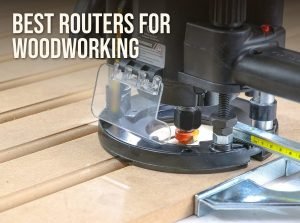
Best Plunge Routers for Woodworking: Models for Mortises, Grooves and Inlays
Plunge routers are essential woodworking models for cutting mortises, grooves, and inlays, with performance varying based on motor power and depth control. The Bosch 1617EVSPK serves as a versatile all-around performer, while the Festool OF 1400 EQ prioritizes precision and dust management.
As an Amazon Associate, we earn from qualifying purchases. This post contains affiliate links – if you buy through them, we may earn a commission at no extra cost to you.
1. Bosch 1617EVSPK 2.25 HP Combination Plunge- and Fixed-Base Router

Best for: Woodworkers who want a single, reliable tool for multiple workshop tasks.
This model is built to handle a wide range of jobs, from simple edge work to complex joinery. Its 12-amp motor provides consistent power, and the inclusion of both fixed and plunge bases means you can switch between handheld routing and table-mounted work easily. The rounded hardwood handles are designed to keep your grip steady during long sessions.
The microfine bit-depth adjustment feature is a major advantage for tasks requiring high accuracy, such as inlays or mortises. The dust-sealed switch helps keep the internal electronics clean, which is helpful for longevity in a workshop environment. It isn’t ideal for someone who needs massive, industry-level horsepower for deep, repetitive cuts in hardwood, as the 2.25 HP motor is tailored for general shop use rather than heavy production.
Good if:
- You need to switch between table and handheld use frequently.
- You appreciate precise, adjustable depth controls.
- You want a motor that handles start-up torque smoothly.
Skip it if:
- You’re looking for the absolute highest horsepower available.
- You require a cordless setup for work away from power outlets.
2. Triton TRA001 3-1/4 HP Dual Mode Precision Plunge Router

Best for: Users who need high power for heavy-duty routing and deep cuts.
The 3-1/4 HP motor in this unit is designed to handle demanding tasks that push smaller routers to their limits. A unique feature is the ability to switch between plunge and fixed-base modes with a single button, which saves time when you’re moving between different types of cuts. The automatic spindle lock allows for one-wrench bit changes, which simplifies setup.
The micro-winder lets you adjust the depth continuously through the full plunge range. This is useful for fine-tuning your work without having to release the plunge lock. However, this is a large, heavy tool, and it may feel cumbersome for someone who primarily does light edge trimming or small, delicate craft work.
Good if:
- You perform heavy-duty routing on dense hardwoods.
- You prefer a tool that changes modes quickly.
- You need fine depth adjustment across the full plunge range.
Skip it if:
- You do mostly light, decorative, or small-scale hobby work.
- You prefer a compact, lightweight tool that’s easy to maneuver.
3. DEWALT 20V MAX XR 2-1/4 Peak HP Plunge Router

Best for: Professionals or hobbyists who need to work without being tethered to a cord.
This cordless model is designed to handle tough applications while providing the convenience of battery power. It includes an anti-rotation system that senses excessive motion and shuts the tool down, which is a helpful safety addition. The integrated dust collection is compatible with AIRLOCK systems, helping you maintain a cleaner workspace.
The tool-free plunge lock lever allows you to keep your hands on the handles while you work, which maintains better control. The adjustable turret stop makes quick work of repetitive depth settings. Because it relies on battery power, it isn’t the right choice for someone who does all-day, non-stop production routing, as you would need to manage battery charging cycles.
Good if:
- You frequently work on job sites without easy access to electricity.
- You want modern safety features like the anti-rotation system.
- You value a tool-free adjustment system for faster setup.
Skip it if:
- You perform continuous, heavy-duty routing that requires constant power.
- You don’t already own the necessary batteries and chargers.
4. SKIL 14 Amp Plunge and Fixed Base Router Combo

Best for: Beginners or hobbyists who want a complete kit for various projects.
This combo kit features a 14-amp, 2.5 HP motor that comes with both fixed and plunge bases, offering good value for a variety of tasks. The standout feature is the LCD speed display, which helps you choose the right speed based on the material and bit you’re using. The soft-start feature ensures the router doesn’t jump when you first turn it on.
The electronic feedback helps the motor maintain its RPM even when the wood puts up resistance, which makes for a smoother cut. This is a very capable all-around tool, but it isn’t intended for someone who needs specialized, heavy-duty features.
Good if:
- You’re a beginner looking for a versatile starter set.
- You find an LCD display helpful for selecting speeds.
- You want a soft-start feature for better control.
Skip it if:
- You’re an advanced cabinet maker requiring professional-grade precision.
- You don’t need a fixed base and only want a dedicated plunge tool.
5. Makita RP2301FC 3-1/4 HP* Plunge Router

Best for: Craftsmen who need a robust, heavy-duty tool for long-term use.
This router features a powerful 15-amp motor that delivers smooth performance even under heavy loads. It includes electronic speed control to maintain a constant RPM, which is essential for consistent results in dense materials. The electric brake is a productivity booster, as it stops the bit quickly after you switch the tool off.
The soft-start feature helps prevent the tool from jolting at startup, which is important for maintaining accuracy. Like other heavy-duty models, this router is quite substantial in size and weight. It isn’t the best choice for someone who needs a light, nimble tool for intricate inlay work or small edge details.
Good if:
- You work with large bits and heavy-duty materials.
- You want the safety and convenience of an electric brake.
- You need constant speed under load for professional finishes.
Skip it if:
- You’re looking for a compact router for small wood projects.
- You have difficulty managing heavier power tools.
6. BOSCH GOF13-25 1-3/4 HP Mid-Size Plunge Router

Best for: Fine woodworking and cabinetry tasks requiring a mid-sized machine.
This mid-sized router provides 1-3/4 HP, which is a great balance between power and maneuverability. Its slim design and ergonomic handles make it very comfortable for long sessions, reducing fatigue. It comes with a full set of accessories, including a parallel guide and a roller guide, which are excellent for precise edge work.
The eight-stop depth scale is very useful for projects that require multiple passes at different depths. While it’s powerful for fine work, it lacks the raw horsepower of the larger 3-1/4 HP models, meaning it isn’t the right tool for deep, aggressive material removal in very hard wood.
Good if:
- You do delicate cabinetry or fine woodworking.
- You appreciate an ergonomic design for comfortable use.
- You need a variety of accessories included in the box.
Skip it if:
- You need to remove large amounts of material in a single pass.
- You’re working on heavy timber framing projects.
7. WORKPRO 6.5 Amp Compact Router Combo Kit

Best for: DIY enthusiasts who want a versatile, compact tool for light tasks.
This compact router includes both a fixed and a plunge base, making it a flexible option for trimming and grooving. The 6.5-amp motor is well-suited for light woodworking, handicraft making, and edge planing. It includes a variety of accessories like template guides and router bits, which is a nice bonus for a first-time buyer.
The rack-and-pinion depth adjustment is smooth and easy to operate. Because this is a compact unit, it isn’t designed for heavy-duty, large-scale furniture production. It’s best suited for light DIY work rather than continuous, high-torque industrial demands.
Good if:
- You’re a DIYer interested in light woodworking and crafts.
- You want a complete set that includes bits and guides.
- You need a compact tool that’s easy to store and carry.
Skip it if:
- You’re building large furniture pieces from dense hardwood.
- You require a router with high horsepower for deep grooves.
8. VEVOR Compact Router 1.25HP With Fixed Base

Best for: Makers who need maximum versatility in a small package.
The inclusion of three different bases—fixed, plunge, and tilt—makes this router one of the most adaptable tools on the list. The 1.25 HP motor is compact but capable, and the soft-start feature keeps it steady when you begin your cut. The variable speed dial allows for a wide range of RPMs to match different materials.
The cast aluminum housing helps reduce vibration, which is great for comfort. While the tilt base is a unique advantage for specific decorative cuts, this tool is still a compact model. It isn’t meant for the heavy, deep-plunge work that a 3-1/4 HP machine would handle with ease.
Good if:
- You need a tilt base for specialized routing angles.
- You want a compact tool that offers multiple base options.
- You work in small spaces and need high maneuverability.
Skip it if:
- You need a heavy-duty, high-horsepower motor for deep cuts.
- You don’t have a need for a tilt base.
9. Festool 578951 OF 1400 EQ-F-Plus Plunge Router

Best for: Woodworkers who prioritize absolute precision and clean work environments.
This 1400W router is designed for those who need fine control, offering precision depth adjustments down to 1/256″. The dual-sided guide column clamping provides exceptional stability, ensuring your cuts stay perfectly aligned throughout the entire operation. The integrated LED dust hood is highly effective for keeping your cut line visible and your shop clean.
The ratcheting spindle lock makes changing bits fast and simple. This tool includes features tailored for precision. It isn’t the right fit for a casual DIYer who only needs to perform basic, occasional edge routing, as the advanced feature set may exceed their needs.
Good if:
- You need the highest levels of precision for fine joinery.
- You want excellent dust extraction for a cleaner shop.
- You use templates and guide systems regularly.
Skip it if:
- You’re a casual hobbyist with simple, occasional projects.
- You don’t need professional-grade depth adjustment precision.
10. Makita RF1101KIT2 2-1/4 HP* Router Kit

Best for: Users who want a reliable, proven kit with a plunge base.
This mid-range router is a solid choice that balances power with ease of use. It features soft-start and electronic speed control to keep the motor running smoothly even when you hit a knot in the wood. It runs at 81dB and features low vibration for operator comfort.
It is a straightforward tool. While it’s a great all-around performer, it lacks the extra-large motor power of heavy-duty units and the specific advanced convenience features of some newer, modern models.
Good if:
- You want a reliable, long-lasting motor for general tasks.
- You prefer a tool with low noise and vibration.
- You need a dependable kit that includes a plunge base.
Skip it if:
- You’re looking for a modern, feature-packed router with digital controls.
- You require the power of a heavy-duty model for demanding tasks.
Choosing Plunge Routers for Woodworking Mortises, Grooves and Inlays
Most of these plunge routers share fundamental features like soft-start technology, variable speed controls, and rack-and-pinion depth adjustment. The Bosch, Makita RF1101KIT2, and DEWALT DW618PKB are all in the same power class, making them direct competitors for the average woodworker who needs a versatile, mid-sized tool. If you’re choosing between these, the decision often comes down to brand preference, the feel of the handles, and which dust collection system aligns with the shop vacuum you already own.
On the other hand, the heavy-duty models like the Triton TRA001 and Makita RP2301FC are clearly in a different league. They’re significantly heavier and more powerful, designed for those who push their tools hard. Conversely, the WORKPRO and VEVOR models are in the compact class. They aren’t meant to replace the heavy-duty routers but rather to complement them for smaller, lighter, or more intricate work.
Still Not Sure?
How often will I really use this router?
If you plan to use the router once or twice a year for small home projects, a compact combo kit like the WORKPRO Compact Router is likely all you need. These kits include everything to get started without a large investment. However, if you’re building furniture every weekend, you’ll quickly regret a smaller tool that struggles with deep cuts. For frequent, serious woodworking, invest in a more robust model like the Bosch 1617EVSPK.
What do I already own that this must work with?
Think about your existing shop accessories. Do you already have a collection of Festool guide rails or templates? If so, the Festool OF 1400 EQ is the only logical choice, as it integrates perfectly with those systems. If you have a specific router table, check the base plate mounting patterns of your top choices. Most routers have standardized patterns, but some specialized models may require an extra adapter plate to fit your table.
What am I most likely to regret choosing?
The most common regret is buying a tool that’s either too heavy or too weak for the task. If you buy the massive Triton TRA001 for light edge trimming, you’ll likely find it too heavy and frustrating to use for hours. If you buy a compact router for deep mortising in oak, you’ll likely burn out the motor. Be honest about your project size. If you’re doing general shop work, the Makita RF1101KIT2 is a safe, balanced choice that avoids the extremes.
Frequently Asked Questions
How do I ensure my router bit fits the collet?
Most routers include a 1/4″ or 1/2″ collet, and some models provide both. You must match your bit shank diameter to the collet size to ensure a secure fit. Using the incorrect size creates a significant safety risk due to potential bit vibration or loosening during operation.
What is the advantage of a plunge base over a fixed base?
A plunge base allows you to lower the spinning bit directly into the center of the wood, which is essential for mortises, stopped grooves, and inlays. A fixed base is generally better for edge routing where you start from the outside of the board. If you do a mix of both, a combo kit like the SKIL RT1322-00 gives you the best of both worlds without needing two separate machines.
Do I need a separate dust collection system?
While many routers like the DEWALT 20V MAX XR and Festool OF 1400 EQ have integrated dust hoods, they work best when connected to a shop vacuum. Without a vacuum, the dust hood mostly just directs the chips downward. If you’re working in a small, enclosed space or for long periods, connecting a vacuum is highly recommended to keep the air clean and your cut line visible.
How does variable speed affect my woodworking?
Variable speed is essential because different bits and materials require specific RPMs to prevent burning. Larger bits like those for raised panels require lower speeds for safety, while smaller bits perform best at higher speeds. Models like the Bosch GOF13-25 feature an adjustable dial to ensure clean results.
Conclusion
For those getting started with woodworking, selecting the right plunge router is a major step toward better project quality. If you want a reliable, all-purpose machine that covers most workshop needs, this model is an excellent choice. Ensure you have the correct bits and a steady hand to begin your next project.