8 Best Circular Saws for Framing: Top Picks for Dimensional Lumber
As an Amazon Associate, we earn from qualifying purchases. This post contains affiliate links – if you buy through them, we may earn a commission at no extra cost to you.
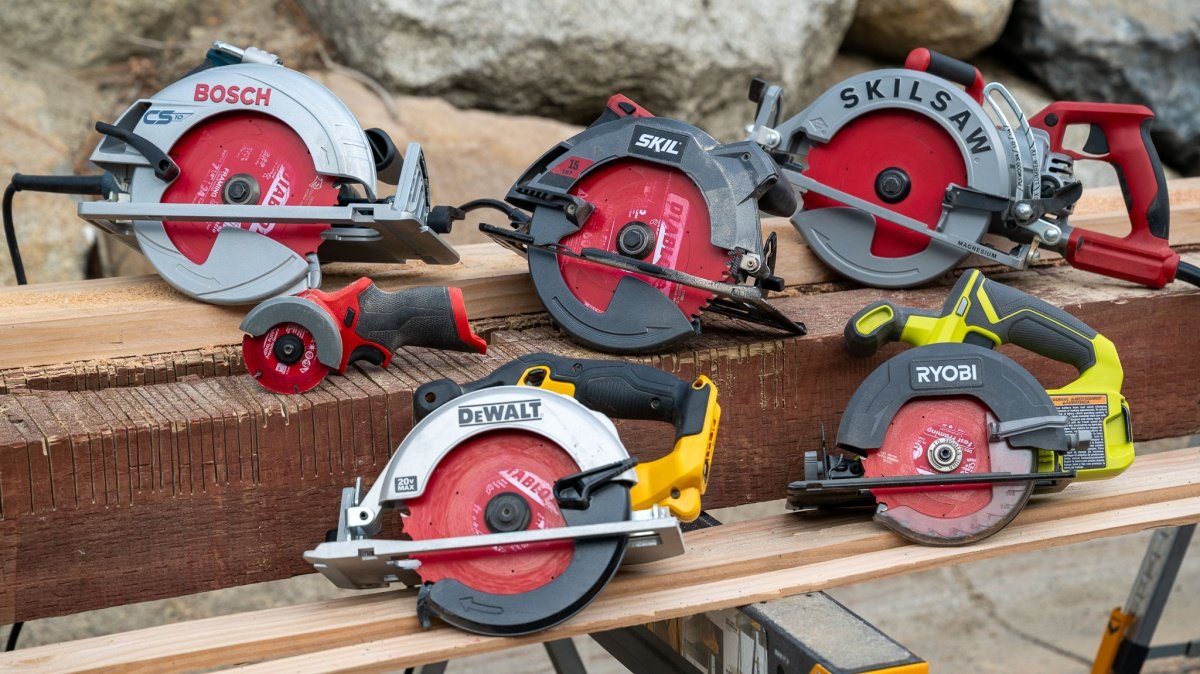
Selecting circular saws for framing requires matching your habits and the dimensional lumber you are cutting to the right tool. No single model is best for everyone, but motor power, weight, and blade orientation determine which pick suits your needs. We compare these options based on their build and features to help you find a match. If you need maximum portability, you might look at the DEWALT FLEXVOLT DCS577B or the Milwaukee M18 FUEL, while those who prefer corded power often gravitate toward the DEWALT DWE575 or the Makita 5007Mg.
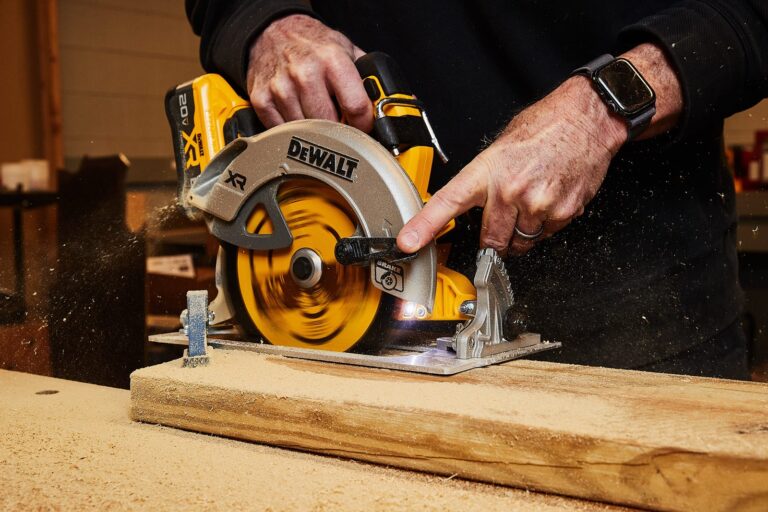
1. DEWALT FLEXVOLT 60V MAX* Circular Saw

Best for: Someone needing professional cordless power for heavy-duty framing tasks.
This saw is designed with the blade on the left of the motor and the handle at the rear, which provides a clear line of sight for accurate cuts. It uses a brushless motor for efficiency and includes an electronic brake to stop the blade quickly after you release the trigger.
The magnesium shoe adds durability, while the integrated dust blower keeps your cut line visible. It features a 53-degree bevel capacity with stops at 45 and 22.5 degrees. When you need to cut deep, this tool achieves a 2-7/16-inch depth at 90 degrees.
If you’re working on a ladder or a roof, use the integrated rafter hook to hang the tool securely between cuts. This keeps your workspace organized and prevents accidental drops.
This model isn’t for a hobbyist who only makes occasional cuts, as the heavy-duty design is built for constant, demanding site use. If you find yourself frequently changing blades, take advantage of the onboard wrench storage to keep your tools close.
Good if:
- You prioritize a clear line of sight.
- You need a rafter hook for jobsite convenience.
- You prefer a rear-handle configuration.
Skip it if:
- You have no compatible battery ecosystem.
- You only need a lightweight tool for light trim work.
2. SKILSAW SPT77WML-01 15-Amp 7-1/4-Inch Lightweight Worm Drive Circular Saw

Best for: Users who want the power of a worm drive without the extra weight.
This saw uses magnesium construction to stay light, which helps reduce fatigue during long days on the job. It features a 15-amp motor that provides the torque needed to rip through lumber quickly. If you’re framing, the high-torque output lets you cut more boards in less time than a standard motor.
The cut-ready depth system allows for fast and accurate measurements, while the 53-degree bevel capacity offers versatility for complex cuts. The anti-snag lower guard ensures smooth operation, especially when cutting small scraps.
Choose this model if you prioritize power-to-weight ratios. It isn’t intended for those who strictly prefer sidewinder-style saws, as the worm drive design changes the balance and handling feel. If you’re accustomed to a right-blade tool, the left-blade orientation will require a brief adjustment period to maintain your sight lines.
Good if:
- You want a lightweight worm drive.
- You need high-torque performance for framing.
- You value fast, accurate depth settings.
Skip it if:
- You struggle with the balance of left-blade saws.
- You need a cordless option for remote areas.
3. Milwaukee M18 FUEL 7-1/4 Inch Rear Handle Circular Saw

Best for: Professionals already invested in the M18 battery system.
The Milwaukee M18 FUEL features a segmented brushless motor designed to provide 20% more power and 20% faster application speed than standard models. It offers a 2-5/8 inch cut capacity, which allows you to slice through 3x material in a single pass.
Use the depth detents at 1/2, 3/4, and 1-1/2 inches for precise, repeatable settings. When working with angles, rely on the bevel detents at 22.5 and 45 degrees to lock in your cut quickly. The unit also features a rotatable dust port with an included adapter for vacuum attachment.
This is a bare tool, meaning it ships without a battery or charger. If you don’t already own compatible power sources, you must purchase them separately. If you’re using the M18 REDLITHIUM FORGE HD12.0 battery, expect up to 700 cuts per charge.
Good if:
- You already own M18 REDLITHIUM batteries.
- You need to cut 3x dimensional lumber in one pass.
- You want high-speed application performance.
Skip it if:
- You want a kit that includes a battery.
- You’re on a tight budget and can’t afford to buy batteries and chargers separately.
4. Makita 5007Mg Magnesium 7-1/4-Inch Circular Saw

Best for: Someone who wants a balanced, durable corded saw with extra visibility.
This saw stands out for its magnesium components, which keep the weight at 10.6 pounds while maintaining jobsite toughness. Its 15-amp motor delivers 5,800 RPM, which is helpful for high-performance cutting.
Two built-in LED lights illuminate the cut line, improving accuracy in dim conditions. If you’re working in a dimly lit corner or a basement, these lights remove the need for an extra task light.
It offers a 2-1/2 inch cutting capacity at 90 degrees and a bevel capacity up to 56 degrees. Use the positive stops at 22.5 and 45 degrees for quick, repeatable adjustments during framing. If your project requires precise compound angles, these stops save you from manual measuring errors.
It isn’t suitable for those who require the freedom of cordless operation, as it requires a power outlet. If you’re working on a roof or a site without reliable power, the cord will become a constant frustration.
Good if:
- You need built-in lights for better visibility.
- You prefer a wide bevel capacity range.
- You want a well-balanced corded tool.
Skip it if:
- You need to move around a jobsite without cords.
- You want the lightest possible corded option.
5. DEWALT 7-1/4-Inch Circular Saw

Best for: A user who wants a lightweight, reliable corded saw for daily framing.
At only 8.8 lbs, this is one of the lightest saws in its class. Its weight makes it easy to handle for long periods without fatigue. The 15-amp motor provides enough power for the toughest applications, while the high-grade aluminum base ensures a smooth surface for accurate cuts.
The saw features an anti-snag ball-bearing lower guard for consistent operation in harsh environments. Its “Toughcord” system is specifically engineered to resist cord pull-outs, preventing the common frustration of power loss during heavy use. With a 2-9/16 inch depth of cut, it handles standard dimensional lumber with ease.
If you’re working on complex angles, the bevel capacity reaches 53 degrees. Use the integrated stops at 45 and 22.5 degrees for fast, repeatable adjustments. If your cut line is obscured by debris, the integrated dust blower clears the path to maintain visibility.
This tool is optimized for standard lumber. It isn’t for users who need to cut extremely thick beams exceeding its depth capacity.
Good if:
- You want a lightweight, portable corded tool.
- You need extra durability against cord damage.
- You appreciate a simple, proven design.
Skip it if:
- You prefer the torque of a worm-drive saw.
- You require a battery-powered unit.
6. BOSCH 7-1/4-Inch Worm Drive Circular Saw CSW41

Best for: Those who need worm-drive precision for framing and finish work.
The Bosch CSW41 uses a worm-drive design to provide high torque and precision. The left-side blade placement gives you a clear view of the line, and the magnesium construction keeps the tool manageable at 13.2 lbs.
If you’re cutting small pieces, the anti-snag lower guard prevents the blade from catching, ensuring smooth operation. When you need to swap blades or adjust levers, the on-board multi-function wrench keeps your tools close. Rely on the built-in hook to hang the saw securely between cuts rather than setting it on the ground.
While the high-output motor delivers 5,300 no-load rpm for heavy tasks, the soft-grip handle helps manage fatigue during long sessions. If you’re performing overhead work, the weight of a worm-drive tool may prove taxing compared to direct-drive alternatives. Use this saw when you prioritize power and visibility over the lightest possible frame.
Good if:
- You need the accuracy of a worm drive.
- You want a clear view of the cut line.
- You need a tool with an on-board wrench.
Skip it if:
- You find worm-drive saws difficult to maneuver.
- You need a very light tool for light-duty tasks.
7. DEWALT ATOMIC 20V MAX* Circular Saw

Best for: Users needing a compact saw for light-duty framing and panel cutting.
This is a 4-1/2 inch saw, making it much smaller than the others on this list. It uses a brushless motor and is designed to cut through 3/4 inch OSB or 2x material at 90 degrees. When using the DCB205 battery, you can expect to cut up to 369 linear feet of 3/4 inch OSB on a single charge.
The auxiliary handle is removable for better control, and it includes an oversized trigger for a “choke-up” grip. Use this grip when you need extra stability for precise, smaller cuts. If you’re working on overhead tasks, the integrated hang hook keeps the tool secure and ready.
An electronic blade brake stops the blade quickly after the trigger is released, which improves both safety and productivity during repetitive cuts. The on-board blade key storage ensures you never lose the tool needed for quick blade changes.
Good if:
- You need a very compact, portable tool.
- You mostly cut 2x material or sheet goods.
- You want a tool that’s easy to maneuver.
Skip it if:
- You need to make deep cuts in thick lumber.
- You’re looking for a primary, heavy-duty framing saw.
8. SKILSAW SPT70WM-01 15 Amp 10-1/4″ Magnesium SAWSQUATCH Worm Drive Circular

Best for: Professionals who regularly need to cut 4x lumber in one pass.
This is a large-format saw with a 10-1/4 inch blade, specifically engineered to cut 4x material cleanly. It features a 15-amp Dual-Field motor designed for relentless power. If you’re working with thick timber, this tool eliminates the need to flip the board or make multiple passes.
The magnesium construction ensures durability despite the larger size. It offers a 51-degree bevel capacity for a variety of angles. Use this saw when your project demands deep, clean cuts through heavy beams. Avoid it for standard 2x framing, as the weight and size become a liability rather than an asset.
Good if:
- You need to cut 4x lumber in one pass.
- You want a powerful, specialized framing tool.
- You prioritize durability in a large saw.
Skip it if:
- You only cut 2x dimensional lumber.
- You want a compact or lightweight saw.
Where These Overlap
The choice between these saws often comes down to motor type and blade orientation rather than raw cutting capability. Many corded options, like the DEWALT DWE575 and the Makita 5007Mg, provide similar power profiles for standard framing. Similarly, worm-drive models from Skil and Bosch are engineered for high torque and accuracy. Choosing between them is often a matter of personal preference regarding handle ergonomics, weight, and specific features like integrated LED lights or rafter hooks.
If you’re already in a battery ecosystem, the choice is usually made for you. Switching brands means acquiring new batteries and chargers, which increases the number of tools and accessories you must store. For those not platform-locked, the decision rests on whether you prefer the traditional balance of a corded sidewinder or the rear-handle feel of a worm-drive unit.
Cordless options have reached a performance level where they can replace corded tools for most framing tasks. However, you must account for battery capacity. If you choose a bare tool, you must purchase the required battery and charger separately. If you don’t already own compatible power sources, the upfront investment is higher. Always verify the cut capacity against your specific needs; some models, like the Milwaukee M18 FUEL, offer the capacity to cut 3x material in a single pass.
Still Not Sure?
How often will I really use this?
If you’re framing a house or working on a jobsite daily, you need a tool that can handle constant wear, such as the DEWALT FLEXVOLT DCS577B or the Milwaukee M18 FUEL. If you only pick up a saw on weekends for small projects, a lighter corded option like the DEWALT DWE575 provides all the power you need without the maintenance of battery charging.
What do I already own?
Take stock of your current battery chargers and spare batteries. If you already own a set of compatible batteries, stick to that brand to reduce clutter. Milwaukee users will find the Milwaukee M18 FUEL to be a natural fit, while those with DEWALT batteries will likely find the DEWALT FLEXVOLT DCS577B or the compact DEWALT ATOMIC DCS571B more convenient to add to their collection.
What am I most likely to regret?
The most common regret is choosing a saw that’s too heavy for your specific tasks, leading to fatigue. If you’re doing a lot of overhead work, a lighter model like the DEWALT DWE575 or the Makita 5007Mg is much more comfortable. Conversely, if you need to cut 4x lumber and buy a standard 7-1/4 inch saw, you’ll regret not getting the SKILSAW SAWSQUATCH SPT70WM-01, which handles large material in one pass.
Related guides
Frequently Asked Questions
How do I know which blade size I need for my framing work?
Most standard framing requires a 7-1/4 inch blade, which handles 2x lumber with ease. If your work involves standard dimensional lumber, the Occupational Safety and Health Administration provides guidance on tool safety and operation that applies to these common sizes. If you’re specifically cutting 4x timbers, you’ll need a larger saw like the SKILSAW SAWSQUATCH SPT70WM-01, while smaller 4-1/2 inch saws like the DEWALT ATOMIC DCS571B are meant for thinner materials.
Does the blade orientation (left vs. right) really change my accuracy?
Blade orientation changes where you look while cutting. A left-blade saw, like the DEWALT FLEXVOLT DCS577B or the BOSCH CSW41, puts the blade on the side of the saw closest to your body, which provides a clearer view of the line. Right-blade saws are the traditional standard for many, but your choice should depend on which side feels more natural for your dominant hand and your specific line-of-sight needs.
What is the difference between a sidewinder and a worm-drive saw?
Worm-drive saws, such as the SKILSAW SPT77WML-01 and the BOSCH CSW41, use a different gearing system that provides higher torque and is generally preferred for heavy-duty ripping and framing. Sidewinder saws, like the Makita 5007Mg or the DEWALT DWE575, are more compact and easier to maneuver for general-purpose cuts. Your choice depends on whether you prioritize raw torque for tough lumber or light weight for all-day portability.
Can I use a cordless saw for all-day framing?
Yes, provided you have enough high-capacity batteries to rotate through. Models like the Milwaukee M18 FUEL are specifically designed for high-demand use, offering hundreds of cuts per charge with larger batteries. If you don’t want to manage batteries or if you’re working in a location with consistent power, a corded saw like the DEWALT DWE575 ensures you never have to stop for a charge, making it a reliable choice for continuous work.
Conclusion
For heavy-duty framing, the DEWALT FLEXVOLT DCS577B offers excellent performance and line of sight, while those needing a lighter, more portable corded option should look at the DEWALT DWE575. Evaluate your battery platform and the thickness of the lumber you cut most often to decide which tool fits your daily routine. Your next step should be to check your existing battery supply to see if you can integrate a cordless model or if a corded saw is better.