
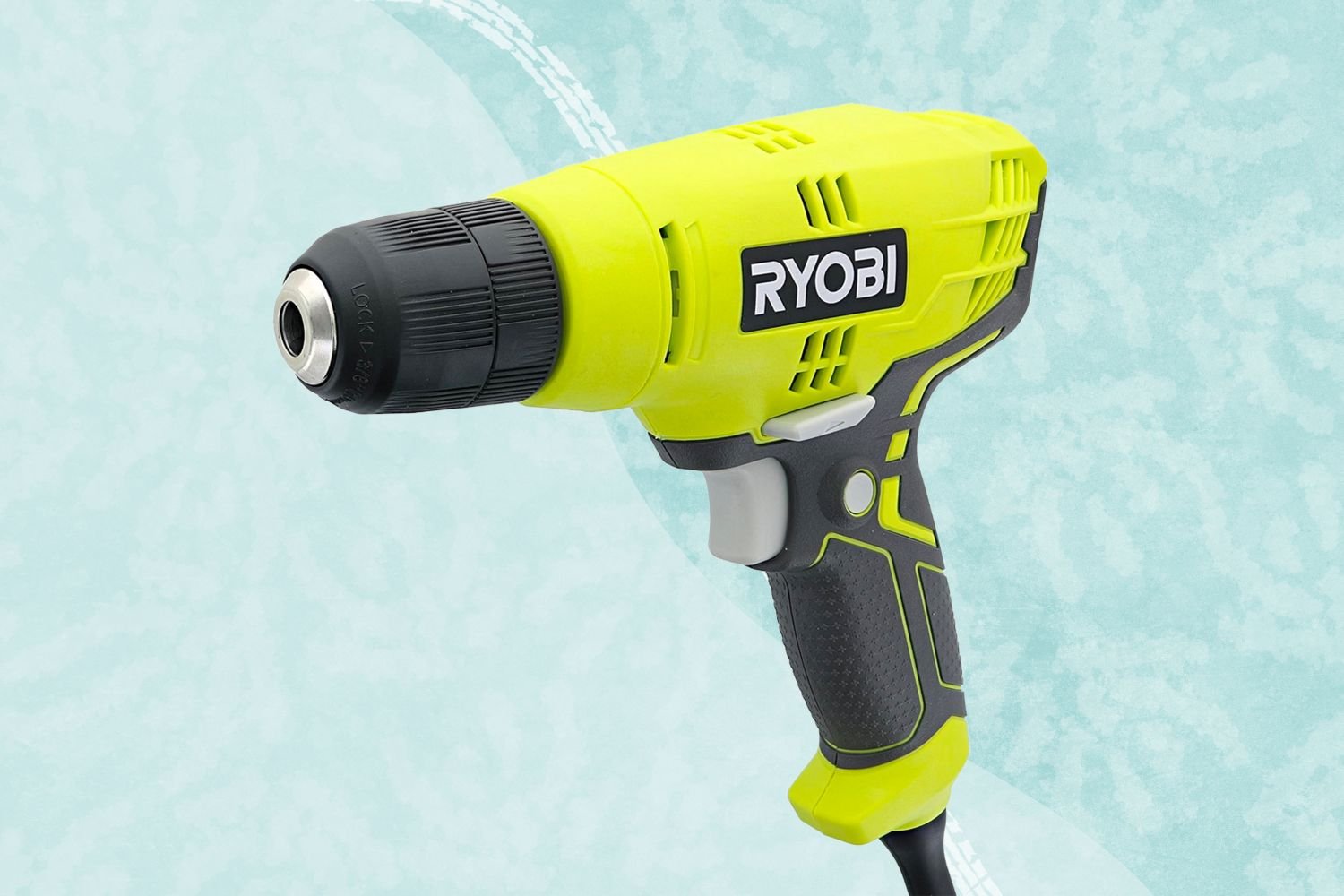
10 Best Corded Drills: Top Picks for Home and Workshop Use
Finding the right drill is about matching the machine to your specific projects. There’s no single “best” corded drill, as the right choice depends on whether you’re doing light home repairs, heavy-duty construction, or precise metalwork. These tools vary by motor amperage, chuck type, and specialized features like hammer modes or impulse settings. Choosing the right one comes down to your primary task: if you need brute force for masonry, you want a hammer drill, but if you value control for delicate assembly, a standard variable-speed drill is better.
As an Amazon Associate, we earn from qualifying purchases. This post contains affiliate links – if you buy through them, we may earn a commission at no extra cost to you.
1. DEWALT DW235G Corded Drill

Best for: A homeowner who wants one reliable tool for all-around drilling.
This drill is built for users who want durability and comfort for everyday tasks. It features helical-cut steel gears that are heat-treated, which helps with long-term reliability during frequent use. The metal gear housing adds a layer of toughness, making it a solid choice for someone who needs a tool that can survive being stored in a busy workshop.
The two-finger trigger is designed to reduce hand strain during long periods of use. You also get a 360-degree side handle, which is helpful when you need extra leverage for drilling into tougher materials. It isn’t designed for hammer-drilling applications, so it isn’t the right fit if your main goal is to bore holes into concrete or brick.
Good if:
- You need a comfortable, ergonomic grip.
- You want a tool with a durable metal gear housing.
- You prefer a standard drill for wood and metal work.
Skip it if:
- You need to drill into masonry or concrete.
- You want a keyless chuck for fast bit changes.
2. DEWALT DW511 Hammer Drill
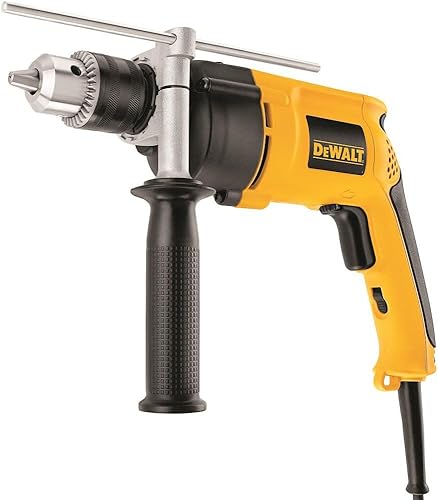
Best for: Someone who frequently works with masonry, brick, or stone.
This model serves two purposes: it acts as a standard drill for wood or steel, and it switches to a hammer mode for masonry applications. Its 7.8-amp motor is balanced to provide enough power for these harder surfaces while keeping the weight at 4.3 lbs. This weight makes it manageable for extended use, which is helpful if you’re installing many anchors or brackets.
The variable speed trigger allows you to start slowly, which is vital for precise hole placement on hard surfaces that might otherwise cause a bit to slip. Because it includes a depth rod, you can set an exact depth for your holes, ensuring consistency.
Good if:
- You need to drill into brick or concrete.
- You want a depth rod for consistent hole accuracy.
- You need a lightweight tool for overhead work.
Skip it if:
- You only ever work with wood or plastic.
- You need a tool for high-torque, slow-speed hole sawing.
3. BLACK+DECKER 7.0 Amp 1/2 in. Electric Drill/Driver Kit (DR560)

Best for: A first-time DIY user tackling a variety of home projects.
This drill is designed for versatility, handling wood, metal, and plastic with ease. Its 7-amp motor provides a good balance of power for typical home repairs, and the keyed chuck ensures that bits stay firmly in place during use. The compact design allows you to reach into tight spaces, like inside cabinets or under furniture, where larger drills might struggle.
The variable speed can be adjusted up to 900 RPM, giving you better control when driving large fasteners. It also features a reversing brush system to maintain power when backing out screws.
Good if:
- You need to reach into tight or awkward spaces.
- You want a tool that handles both drilling and driving.
- You need a secure, all-metal keyed chuck.
Skip it if:
- You need high RPMs for small-diameter metal drilling.
- You’re a contractor needing a tool for daily, high-stress use.
4. Makita DP4020 1/2″ Drill

Best for: A user who needs a lightweight, precise tool for repetitive drilling.
Weighing just 3.7 lbs., this drill is excellent for reducing fatigue during long work sessions. Its in-line handle design is meant to provide better accuracy by keeping your hand directly behind the bit. The 5.5-amp motor features all-ball bearing construction for durability and longer tool life.
With a variable speed range up to 3,000 RPM, this drill is very capable for drilling smaller holes in a wide variety of materials. The large trigger and lock-on button make it simple to operate for long periods.
Good if:
- You prioritize a low-weight design for comfort.
- You need high RPMs for smaller bits.
- You value an in-line handle for better control.
Skip it if:
- You need to drill large-diameter holes in dense wood.
- You need hammer-drilling capabilities for concrete.
5. Metabo HPT Corded Drill 9.6 AMP

Best for: Professional metalworkers and maintenance pros needing high torque.
This is a high-performance tool built for demanding environments. Its 9.6-amp motor and two-speed gearbox provide significant torque for tough materials, while the impulse mode helps you back out damaged screws or start holes on smooth surfaces without the bit slipping. It also includes a mechanical safety clutch that stops the drive if the bit suddenly binds, protecting both the tool and the user.
The VTC electronics keep the speed constant under load, ensuring a clean bore through metal. It even features a hexagonal spindle recess for screwdriver bits, allowing you to use it without a chuck for a more compact profile. This drill is significantly more powerful than standard DIY models, so it may be overkill for someone doing simple home assembly.
Good if:
- You work frequently with tough metal.
- You need an impulse mode for damaged screws.
- You want a safety clutch to prevent binding.
Skip it if:
- You’re a casual DIY user with light needs.
- You want a lightweight, compact tool for small jobs.
6. SKIL DL181901 7.5 Amp 1/2″ Corded Drill

Best for: A beginner who values built-in guides for accuracy.
This drill includes a horizontal bubble level, which is a helpful feature for ensuring your holes are perfectly straight or level. Its 7.5-amp motor provides plenty of power for most home projects, and the 1/2-inch keyed chuck accepts a wide range of larger bits. The two-finger trigger makes it easier to maintain steady pressure.
The side assist handle is included to help with accuracy and safety during heavy-duty tasks. It’s a straightforward tool that focuses on the basics of drilling and driving.
Good if:
- You want a bubble level to help with accuracy.
- You prefer a large trigger that allows for a more comfortable, controlled grip.
- You need a reliable tool for general home projects.
Skip it if:
- You need a keyless chuck for frequent bit swaps.
- You require specialized features like hammer mode.
7. Makita DS4011 1/2″ Spade Handle Drill

Best for: Someone who needs to drill large holes with high torque.
Designed specifically for torque, this spade-handle drill is the go-to for heavy-duty boring. The 600 RPM speed is lower than many standard drills, which allows for better control when using large hole saws or auger bits. The spade handle provides a wide surface area to brace against, helping you maintain control even when the drill encounters resistance.
It uses all-ball bearing construction for durability and includes a rocker switch for quick changes between forward and reverse. This tool is a specialist; it isn’t meant for small-diameter drilling or precision driving. If your projects involve installing large plumbing or electrical lines, this is the tool for the job.
Good if:
- You need to drill large, wide holes.
- You want a spade handle for better leverage.
- You need high-torque performance for tough materials.
Skip it if:
- You need a tool for small, delicate tasks.
- You need a high-speed drill for metalwork.
8. Bosch 1191VSRK 120-Volt 1/2-Inch Single-Speed Hammer Drill

Best for: A professional who needs a high power-to-weight ratio.
This hammer drill is engineered for performance in a compact frame. Its 7-amp motor provides impact power for small-diameter masonry drilling. The 360-degree auxiliary handle and quick-release depth gauge allow for quick adjustments, which is helpful when moving between different tasks on a job site.
You can switch between rotation-only and hammer-drill modes with a simple selector. It’s a professional-grade tool built to handle the rigors of daily work.
Good if:
- You need a compact, professional-grade hammer drill.
- You work primarily with small-diameter masonry anchors.
- You need quick-release depth adjustments.
Skip it if:
- You need to drill large-diameter holes in heavy concrete.
- You’re looking for a basic, entry-level DIY tool.
9. CRAFTSMAN 3/8-in Electric Drill/Driver (7 Amp) (CMED731)

Best for: A user who wants fast bit changes and easy control.
This drill features a keyless chuck, which is a big advantage if you frequently switch between different drill bits and driver heads. The 7-amp motor provides enough power for most home drilling and driving tasks, and the variable speed trigger allows you to ramp up to 2,500 RPM. The lock-on trigger is great if you have a long, repetitive task where you want to maintain a constant speed.
It’s a slim, ergonomic tool that’s easy to handle. While it lacks the side handle found on heavier-duty models, it’s perfectly suited for light-to-medium residential projects.
Good if:
- You prefer a keyless chuck for fast bit changes.
- You want a lightweight, ergonomic drill for home use.
- You need a lock-on trigger for constant-speed tasks.
Skip it if:
- You need to drill into concrete or masonry.
- You need a side handle for heavy-torque applications.
10. DOVAMAN 7.5A Corded Hammer Drill

Best for: A DIYer who wants a complete accessory kit included.
This hammer drill is a great all-in-one package because it includes a wide variety of bits, hole saws, and a carrying case. Its 7.5-amp motor and variable speed trigger give you the power and control needed for wood, metal, and light masonry. The anti-vibration design is intended to reduce user fatigue, which is a nice touch for long afternoon projects.
The 360-degree handle and metal depth gauge help you stay accurate and consistent. Like other hammer drills, it offers a dual-mode switch for standard drilling or hammer drilling. It’s an excellent starter kit for someone who doesn’t yet own a collection of drill bits, though professional users may eventually want to upgrade to higher-end bits.
Good if:
- You want a comprehensive accessory kit in one purchase.
- You need a tool for both standard drilling and light masonry.
- You want a rugged carrying case included.
Skip it if:
- You already own a large collection of high-quality drill bits.
- You’re a professional needing heavy-duty industrial tools.
Where These Overlap
Many of these drills serve similar roles, which can make choosing difficult, as they all provide enough power for standard home workshop tasks. The DEWALT DW235G and the SKIL DL181901 are both excellent general-purpose drills for the home workshop, offering similar 7-amp plus motors and 1/2-inch chucks. If you’re torn between them, the choice often comes down to the extra features: the SKIL offers a bubble level for accuracy, while the DEWALT provides a more traditional, robust metal gear housing.
Similarly, the DEWALT DW511, Bosch 1191VSRK, and DOVAMAN hammer drills all target the masonry-drilling niche. The Bosch stands out for its professional-grade power-to-weight ratio, while the DOVAMAN is clearly aimed at the DIY market by including a massive accessory kit. Unless you have a specific brand preference or require a specific ergonomic feature, many of these models will perform the same basic drilling tasks with equal efficiency.
Still Not Sure?
How often will I really use it?
If you only need a drill for occasional picture hanging or furniture assembly, you don’t need a heavy-duty tool. The CRAFTSMAN CMED731 features a keyless chuck for bit changes. If you plan to work on projects every weekend, look for a more durable model like the DEWALT DW235G, which is built to handle frequent, long-term use.
What do I already own that this must work with?
Think about your existing drill bit collection. If you already have a set of masonry bits, you might want the DEWALT DW511 to get the most out of them. However, if you’re starting from zero, the DOVAMAN Corded Hammer Drill provides everything you need right in the box. Choosing a tool that complements what you have ensures you don’t end up with redundant accessories or a drill that doesn’t fit your current bits.
What am I most likely to regret choosing?
The biggest regret usually comes from buying a tool that’s too weak or too specialized. If you buy a small, high-speed drill like the Makita DP4020 for heavy construction, you’ll likely find it lacks the torque you need. Conversely, buying a massive spade drill like the Makita DS4011 for light home assembly will feel clumsy. Always match the tool’s intended use—torque for heavy work, speed for light work—to your primary project goals.
To ensure you use these power tools safely, always follow the Occupational Safety and Health Administration guidelines for hand and power tools, which provide critical advice on guarding, grounding, and personal protective equipment.
The DEWALT DW235G remains the top choice for a reliable, general-purpose drill for the average homeowner, while the Metabo HPT BEV 1300-2 is the clear pick for metalworkers needing industrial-grade torque and safety features. If you’re still deciding, consider the frequency of your projects and whether you need to drill into masonry. For most users, starting with a standard-duty motor and a 1/2-inch chuck will cover almost every task in a typical workshop.
Related guides
- 10 Best Cordless Drill for Apartment Use Picks for Home Repairs
- 10 Best Cordless Drill for Assembling Furniture Picks
- 10 Best Cordless Drill Drivers for Beginners: Our Top Picks
Frequently Asked Questions
Which corded drill is best for drilling into concrete?
For concrete and masonry, you need a drill with a hammer mode, such as the DEWALT DW511 or the Bosch 1191VSRK. These tools use an impact mechanism to help the bit chip away at hard surfaces, which a standard drill can’t do efficiently.
What is the difference between a keyed and keyless chuck?
A keyed chuck, found on models like the DEWALT DW235G, uses a small metal tool to tighten the jaws, which provides a very secure grip for heavy-duty work. A keyless chuck, like the one on the CRAFTSMAN CMED731, allows you to tighten the jaws by hand, making it much faster to swap bits between tasks. Choose a keyed chuck for high-torque applications and a keyless chuck for general convenience.
Can I use a corded drill for driving screws?
Yes, most variable-speed corded drills are excellent for driving screws, especially larger ones that would drain a battery quickly. The key is to use the variable speed trigger to start slowly and increase speed as the screw bites into the material. Models with a reversing feature, such as the BLACK+DECKER DR560, are essential because they allow you to easily back out screws if they go in crooked or need adjustment.
Why does my drill have a side handle?
A side handle provides extra leverage and stability, which is necessary when the drill encounters high resistance. When drilling large-diameter holes or using a hammer drill on concrete, the tool may try to twist in your hand if the bit binds. The side handle allows you to use your second hand to brace the drill, giving you better control and reducing the risk of the tool spinning out of your grip.
Conclusion
Before you make your final choice, head to your local hardware store to hold a few models in your hands. You’ll quickly see which grip feels most comfortable for your projects. Once you’ve found that perfect fit, you’re ready to tackle those repairs and build something you’re truly proud of.
2 Comments