
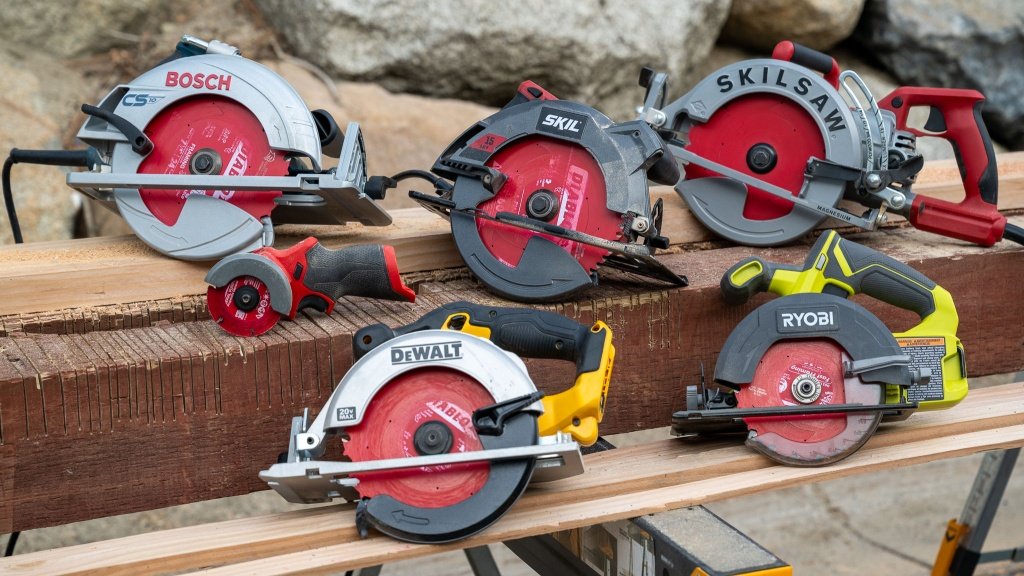
10 Best Circular Saws: Our Expert Picks for Every Project
As an Amazon Associate, we earn from qualifying purchases. This post contains affiliate links – if you buy through them, we may earn a commission at no extra cost to you.
Choosing the best circular saw comes down to how you work. You’re deciding between corded models that offer constant power and cordless versions that provide freedom from outlets. The real difference lies in the motor type, the weight of the materials used in the frame, and the depth capacity for your specific projects.
Best overall: SKILSAW SPT77WML-01, because its lightweight magnesium build and worm drive design provide a balance of power and ease of handling that works for most general construction tasks. Best for heavy-duty work: SKILSAW SAWSQUATCH, which features a massive 10-1/4 inch blade capacity specifically built to cut through thick 4x material in a single pass without needing to flip the wood. Best for portability: DEWALT ATOMIC 20V, as its compact size and brushless motor make it the ideal choice for users who need to perform overhead cuts or work in tight spaces.
The rest of this guide is for woodworkers and contractors who need a reliable tool tailored to their specific jobsite demands.
How We Picked
We compared 48 different circular saw listings to find the most capable tools currently available. To earn a place here, a listing had to clearly state its motor specifications, cutting capacity, and material construction. We focused on tools that provided specific bevel detents and safety features like electric brakes or anti-snag guards. Products were excluded if they lacked clear data on their cutting depth or if the listing failed to define their primary intended use.
1. SKILSAW SPT77WML-01 15-Amp 7-1/4-Inch Lightweight Worm Drive Circular Saw

Best for: General construction and framing professionals.
This saw features a magnesium construction that keeps the tool lightweight to reduce fatigue during long days on the job. The 15-amp motor delivers consistent power for ripping through lumber, while the cut-ready depth system helps you adjust your measurements quickly.
The anti-snag lower guard is a standout feature, as it ensures smooth operation when you’re cutting small pieces of wood. This tool isn’t for users who require cordless mobility, as it must be plugged into an outlet at all times.
Pros
- Lightweight magnesium construction reduces fatigue.
- Powerful 15-amp motor for fast cuts.
- Anti-snag guard ensures smooth operation.
Cons
- Requires a constant power outlet.
2. DEWALT 20V MAX XR Brushless Cordless 7-1/4 in. Circular Saw

Best for: Users who need maximum cordless power.
This model is designed for tough applications, delivering up to 1,700 MWO with its brushless motor. It offers a high level of versatility with a 2-9/16 inch depth of cut at 90 degrees, allowing you to handle a wide range of materials. You can achieve a 2-inch depth when beveling at 45 degrees.
The motor reaches speeds of 5,500 RPM under no-load conditions. This speed allows for fast, clean cuts through dense lumber. You can expect up to 368 cuts per charge when paired with a high-capacity battery.
The inclusion of an automatic electric brake is important for precision. It stops the blade from coasting once you release the trigger, which prevents the blade from marring your finished work. If you notice the blade spinning after the trigger is released, you’re likely not engaging the brake system fully.
This tool is designed for users who already own compatible 20V MAX batteries, as the battery and charger are sold separately. Check your existing inventory before selecting this tool-only model.
Pros
- Brushless motor offers high power.
- Electric brake stops blade quickly.
- Large cutting capacity for its class.
Cons
- Battery and charger not included.
3. Makita 5007Mg Magnesium 7-1/4-Inch Circular Saw

Best for: Users needing high visibility and accuracy.
The magnesium components in this saw make it both durable and well-balanced for daily jobsite use. At 10.6 pounds, the build manages to stay lightweight without sacrificing the toughness required for professional work. It features two built-in LED lights that illuminate your cut line, which significantly helps with accuracy when you’re working in dim conditions.
The saw offers a wide bevel capacity up to 56 degrees with positive stops at 22.5 and 45 degrees. This allows for rapid, precise angle adjustments on the fly. Its 15.0 AMP motor delivers 5,800 RPM, providing the power needed for consistent performance.
You should choose this tool if you prioritize raw cutting speed and constant power over portability. It isn’t for those who prefer a cordless platform, as this is a corded tool that relies on a constant electrical supply. If you require a tool that never needs a battery swap during a long shift, this is your best option.
Pros
- Built-in LED lights improve accuracy.
- Durable magnesium components.
- Wide bevel capacity with stops.
Cons
- Limited to corded operation.
4. Milwaukee M18 FUEL 7-1/4 Inch Rear Handle Circular Saw

Best for: Users already invested in M18 batteries.
This rear-handle saw uses a segmented brushless motor that provides 20% more power and 20% faster speed than standard models. It has a 2-5/8 inch cut capacity, which is enough to cut through 3x material in a single pass.
If you’re new to the ecosystem, remember that this is a “bare tool.” You must purchase batteries and chargers separately, or the unit won’t function. If you already own M18 batteries, you can achieve up to 700 cuts per charge when using the M18 REDLITHIUM FORGE HD12.0 battery.
The tool includes a rotational dust port and a vacuum adaptor for a cleaner workspace. To ensure precision, use the built-in bevel detents at 22.5 and 45 degrees. You can also utilize the depth detents at 1/2″, 3/4″, and 1-1/2″ for consistent results.
Pros
- Fast application speed for framing.
- Large 2-5/8 inch cut capacity.
- Includes convenient dust port adapter.
Cons
- Batteries and chargers sold separately.
- Requires existing M18 power sources for immediate use.
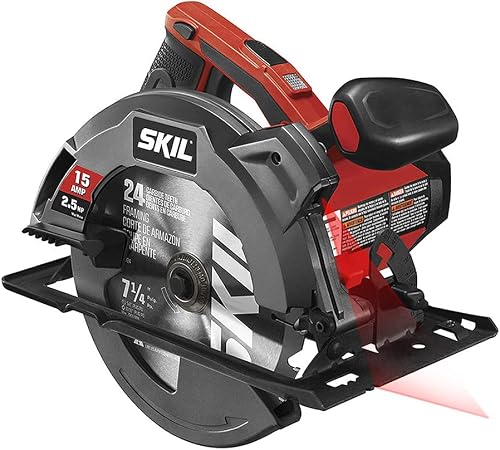
5. SKIL 15 Amp 7-1/4 Inch Circular Saw with Single Beam
Best for: Beginners or home projects.
This corded saw delivers high-speed performance from its heavy-duty motor, providing the speed needed for fast cuts. It includes a dust blower that clears sawdust away from your line of sight, which is helpful for keeping your cuts straight.
Use the 51° bevel capacity for angled work, but rely on the positive stop at 45° for standard framing tasks. If you’re making repetitive cuts, stop at the 45° mark to ensure consistent accuracy without measuring every angle.
The saw comes with a carbide-tipped blade and features a spindle lock for quick blade changes. Always engage the spindle lock before loosening the bolt to avoid damaging the housing. It isn’t for professionals who require advanced features like complex bevel detents or brushless motor technology.
Safety is managed through a guarded trigger and a power-on indicator. If the indicator light remains dark while plugged in, check your power source before assuming the tool is faulty.
Pros
- Dust blower improves line visibility.
- Includes a carbide-tipped blade.
- Easy blade changes with spindle lock.
Cons
- Lacks advanced brushless motor features.
6. DEWALT ATOMIC 20V MAX* Circular Saw

Best for: Compact and overhead cutting tasks.
The ATOMIC line focuses on a compact form factor, featuring a removable auxiliary handle for better control. It includes a hang hook, which makes it easy to store the saw on a rafter or ladder between cuts. You can rely on the brushless motor to clear 369 linear feet of 3/4-inch OSB when paired with a DCB205 battery.
The 1-1/2 inch finger trigger is a unique design choice that allows you to choke up on the tool for better leverage. Use the bevel lever for 45-degree cuts on 1x dimensional lumber, or rely on the bevel gear to slice through 2x material at 90 degrees. If you’re working in tight spaces, the electronic blade brake stops the tool immediately to improve safety.
This saw isn’t for users who need to cut deep into thick dimensional lumber, as it’s optimized for 4-1/2 inch blades. Avoid the mistake of forcing this tool through heavy stock, which only wastes battery life and risks overheating the motor.
Pros
- Removable handle for better control.
- Built-in hang hook for storage.
- Compact design for tight spaces.
Cons
- Designed for thinner material cuts.
7. Makita 5377MG 7-1/4″ Magnesium Hypoid Saw

Best for: Users who prioritize low maintenance.
This hypoid saw uses oil-bath technology with a sealed gear housing to ensure constant lubrication for the gears. This design helps the tool last longer by preventing the premature wear often seen in traditional bronze-alloy worm drive gears. If your projects require heavy, consistent cutting, the heat-treated hypoid steel gears provide a significant durability advantage over softer alternatives.
The reinforced power cord is built to withstand the typical abuse found on busy jobsites. While the magnesium components create a well-balanced frame, the tool weighs 13.2 lbs. If you’re performing overhead work for extended periods, this weight may lead to fatigue compared to lighter composite saws.
The saw offers a large cutting capacity of 2-3/8″ at 90°. You can rely on the positive stops at 22.5°, 45°, and 51.5° to maintain accuracy during complex bevel cuts.
Pros
- Oil-bath technology reduces gear maintenance.
- Heat-treated gears for long life.
- Reinforced cord for jobsite durability.
Cons
- Heavier than other models.
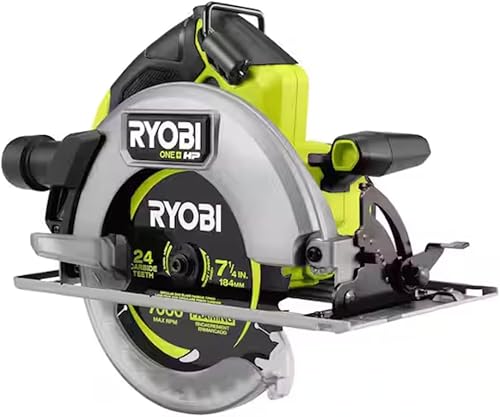
8. RYOBI ONE+ HP 18V Brushless Cordless 7-1/4 in. Circular Saw
Best for: DIY enthusiasts already invested in the Ryobi 18V platform.
This brushless model delivers 5,000 RPM, providing three times faster cutting speeds than standard cordless alternatives. It handles up to 370 cuts per charge, making it a reliable choice for demanding projects. You get a maximum cutting depth of 2-9/16 inches at 0 degrees and 1-13/16 inches at 45 degrees.
If you’re framing or performing complex trim work, rely on the multiple bevel detents at standard increments including common fractional angles. These allow for quick, accurate angle adjustments without manual measurement. Avoid this tool if your material exceeds the 2-9/16 inch depth limit, as forcing the blade will stall the motor and damage the cut quality.
The integrated pommel handle provides extra stability during long sessions. Use the vacuum dust port adapter, which fits 1-1/4 inch to 1-7/8 inch hoses, to maintain a clear sightline. Always check that the rafter hook is securely engaged before storing the saw between cuts.
Pros
- Brushless motor for efficient performance.
- Multiple bevel detents for precision.
- Includes LED worklight and vacuum port.
Cons
- Battery not included.
9. Evolution S185CCSL

Best for: Metal fabrication and steel cutting.
This saw is specifically engineered to cut through mild steel, providing cool-to-the-touch, burr-free edges. The high-output motor and 40-tooth TCT blade allow for fast, clean work without the sparks associated with traditional metal cutting.
If you’re performing overhead work or repetitive tasks, the 11.4-pound frame prevents fatigue and maintains high productivity. Use the paddle levers to adjust your bevel between 0 and 45 degrees, or set your cutting depth to accommodate thick stock for precise metal roofing and framing.
Always check the blade viewing window and ensure the channeled airflow is clear before starting. This maintains visibility, which is vital for safe, controlled passes.
This tool isn’t for woodworkers needing a general carpentry saw. If your primary material is wood, the TCT blade won’t perform as intended. Stick to mild steel to ensure the edges remain instantly workable for welding.
Pros
- Cool, burr-free cuts in steel.
- Lightweight for all-day productivity.
- Clear blade viewing window.
Cons
- Optimized for metal, not wood.
10. SKILSAW SPT70WM-01 15 Amp 10-1/4″ Magnesium SAWSQUATCH Worm Drive Circular

Best for: Framing thick 4x lumber.
The SAWSQUATCH is a large-capacity tool designed specifically to cut 4x material cleanly in a single pass. You should choose this model when your project requires consistent, deep cuts that standard circular saws can’t complete in one motion. Its 15-amp dual-field motor provides relentless power for these demanding framing tasks.
The magnesium construction ensures the tool remains durable despite its large size. However, this isn’t for users who prioritize portability. If you need a compact saw for overhead work or tight spaces, the weight of this unit will become a significant liability. It’s intended for heavy, stationary-style framing where depth of cut is your primary requirement.
Use the 51-degree bevel capacity to complete a wider variety of angled cuts than standard saws allow. The anti-snag lower guard also provides smooth operation when you’re handling small cut-off pieces. If you’re struggling with jagged edges on thick stock, switch to this saw to ensure a clean finish.
How to Choose in Sixty Seconds
Which motor type should I pick?
Brushless motors, like those found in the DEWALT 20V MAX XR or RYOBI ONE+ HP, are energy-efficient and provide high power output. Corded tools with high-draw motors, such as the SKILSAW SPT77WML-01, offer constant power without the need for batteries, making them ideal for heavy-duty, stationary work.
If you already own a collection of batteries and chargers from a specific brand, choose a “bare tool” model like the Milwaukee M18 FUEL. This allows you to utilize your existing power sources. If you do not own the required battery and charger, you must purchase them separately.
Does the blade size matter?
Blade size determines the maximum depth of cut your saw can achieve. A standard 7-1/4 inch blade is the most common size and is sufficient for most framing and general construction needs. If you need to cut through thicker material, such as 4x beams, a larger saw like the 10-1/4 inch SKILSAW SAWSQUATCH is necessary. Conversely, compact saws like the DEWALT ATOMIC 20V use small-diameter blades to reach tight spots.
Before ordering, consider the thickest material you plan to cut regularly. If you mostly work with 2x lumber, a standard 7-1/4 inch saw is more than enough. If your projects involve metal, ensure you choose a saw specifically rated for steel, like the Evolution S185CCSL. Using a standard wood blade on steel won’t yield the burr-free, cool-to-the-touch finish required for fabrication.
Why do some saws cost more?
Saws with magnesium frames, integrated LED lighting, or advanced dust collection systems offer enhanced durability and precision. Magnesium is preferred for its lightweight and rugged properties, which help reduce user fatigue. Other features like electric brakes and bevel detents provide faster, safer adjustments during operation.
Cordless models feature advanced motor technology and high-capacity battery compatibility. If you are a casual user, a basic corded saw like the SKIL 5280-01 may be sufficient. Professionals should look for indicators of longevity, such as the oil-bath technology in the Makita 5377MG, which provides continuous gear lubrication.
Related guides
Frequently Asked Questions
What maintenance does a circular saw require?
Regular maintenance involves keeping motor vents clear of dust and ensuring the lower blade guard moves freely. For saws like the Makita 5377MG, the sealed gear housing minimizes internal maintenance requirements. Always disconnect the power or remove the battery before cleaning the baseplate or performing any blade changes.
Can I use a metal cutting saw for wood?
Metal cutting saws like the Evolution S185CCSL are not recommended for wood because their blade geometry and RPM are specifically engineered for the hardness of steel. Using a metal blade on wood will result in poor cut quality and increased motor strain. Always match your blade and saw to the specific material.
What causes a circular saw to kick back?
Kickback occurs when the blade binds in the material, causing the saw to jump toward the user. To minimize this risk, ensure your blade is sharp, the depth is set no more than 1/4 inch below the material, and the wood is properly supported. Proper technique is the most important factor in prevention.
Is the simplest corded saw enough for home use?
A corded saw like the SKIL 5280-01 provides consistent, high-torque power for ripping through standard lumber. These models offer the essential features needed for straight, accurate cuts. A corded saw is a reliable choice for DIY enthusiasts who do not require the portability of a battery-powered platform.
Closing
For most users, the SKILSAW SPT77WML-01 remains the top choice due to its excellent power-to-weight ratio. If you prefer the cordless route, the DEWALT 20V MAX XR provides the power needed for serious projects without being tied to an outlet.
Before you make your final selection, check your existing battery platform. If you already own batteries and chargers, choosing a “bare tool” version, such as the Milwaukee M18 FUEL or the DEWALT ATOMIC 20V, allows you to use your existing power sources. However, if you don’t own the required power source, you must purchase those components separately, which increases your initial investment.
When choosing between models, consider your specific material needs. If you’re cutting 3x lumber, look for a 2-5/8″ cut capacity like the Milwaukee M18 FUEL. If you’re cutting 4x material, the 10-1/4″ SKILSAW SAWSQUATCH is designed for that specific depth.
Once you have your saw, keep the baseplate clean and ensure your blades are sharp. If you notice the motor struggling or the cut line becoming obscured, check for sawdust buildup or a dull blade. These habits ensure your tool lasts through many projects.
3 Comments