
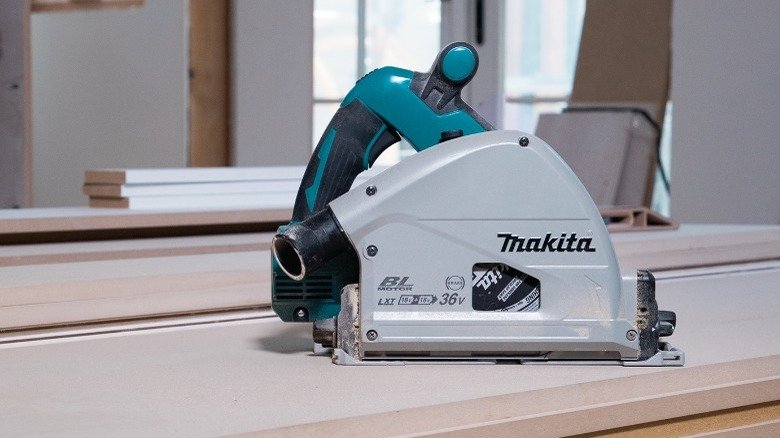
Best Track Saws: What to Look for Before You Buy
As an Amazon Associate, we earn from qualifying purchases. This post contains affiliate links – if you buy through them, we may earn a commission at no extra cost to you.
Choosing the right track saw can be frustrating because many models look identical while hiding different motor specs and rail systems. If you pick the wrong one, you might find yourself stuck with a tool that doesn’t fit your existing tracks or lacks the power for your specific materials. This guide cuts through the noise by focusing on best Track Saws: what to Look for Before You Buy and helping you avoid the most common traps. We start with the mistakes that lead to returns, followed by a shortlist of the few reliable options that actually hold up under pressure. The biggest mistake is buying a saw that isn’t compatible with your workspace, so we focus on the Festool TS 55 FEQ as the top choice for those who want to avoid compatibility headaches.
What Buyers Get Wrong
Buying the wrong rail system
Many users assume all tracks are universal, but that’s rarely the case. Brands like WEN, Kreg, and Festool often require specific rail systems to maintain the tight tolerances needed for splinter-free cuts. If you already own tracks, check for compatibility before you buy. Mixing brands frequently leads to loose fits or wobbling, which ruins your precision. If you’re starting from scratch, prioritize a system like the Scheppach PL75 or the WEN CT1065 that includes the rail in the kit, as this guarantees the saw and track were engineered to work in unison.
Ignoring the motor power needs
Buyers often choose a saw based on blade size alone, forgetting to check the motor amperage or battery voltage. A 10-amp motor, like that on the WEN CT1065, may struggle with dense hardwoods that a 15-amp motor, such as the Evolution R185CCSX, would handle effortlessly. Always match the motor’s power to the density of the materials you plan to cut most often. If you’re ripping thick stock, look for models with constant electronic speed control, which maintains power under load to prevent the blade from bogging down or stalling mid-cut.
Overlooking dust collection efficiency
A common complaint is a messy workspace, yet many ignore how the saw handles sawdust. A well-designed dust port keeps the line of sight clear and the air cleaner. If you don’t check how the port attaches to your vacuum, you might end up with an incompatible connection that creates a constant headache. For instance, the Milwaukee M18 FUEL is specifically designed to be compatible with 1-7/8″ vacuum hoses. If your existing shop vacuum uses a different diameter, you’ll need an adapter, or you’ll spend your time cleaning up debris rather than cutting.
Focusing on speed over precision
It’s easy to be impressed by high RPM counts, but precision is what matters in a track saw. A saw that cuts fast but wobbles on the rail is useless for fine finish work. Look for features like the adjustable cam system on the Milwaukee M18 FUEL, which allows you to dial in the track-to-rail fitment for laser-straight cuts. If you require absolute consistency, prioritize models with positive stops, such as the Makita SP6000J1 or the Milwaukee M18 FUEL, which feature fixed stops at 22.5, 45, and 48 degrees. These ensure your cuts remain square and accurate every single time, regardless of how often you adjust the bevel.
What Did Not Make the List
1. Festool Plunge-Cut Track Saw TS 55 FEQ-F-Plus-FS with 55-Inch (1400mm)

The Festool TS 55 FEQ is built for those who prioritize a total system approach. Its ability to maintain a consistent cutting edge from 90° to 47° makes it a favorite for complex joinery where high-precision results are essential. The attachable splinter guard ensures clean edges on both sides of the cut, which saves time on secondary sanding or finishing.
This saw is designed for woodworkers who want a high-end system that integrates seamlessly with a wide range of accessories. It isn’t for the casual DIYer who only needs a basic tool for occasional, rough cuts, as the investment in the ecosystem is significant.
If you’re cutting veneers or finished plywood, always engage the splinter guard. It eliminates the need for masking tape or scoring the line with a knife first. If you’re performing repetitive cross-cuts, use the riving knife to prevent kickback. It keeps the kerf open and allows for safer, more controlled positioning in existing joints.
The saw delivers concentrated torque that allows for work progress up to twice as fast as standard circular saws. The engineering provides an increased saw blade service life, provided you match the feed rate to the material density.
Don’t mistake this for a tool that requires constant recalibration. Because the cutting edge remains fixed during beveling, you can switch from square cuts to 47° angles without shifting your guide rail. If your project demands high-angle precision, this feature prevents the common error of misaligning the track to compensate for blade tilt.
Decide based on your volume of work. If you process sheet goods daily, the efficiency gains pay for the system within the first year.
Pros
- Virtually splinter-free cuts on both sides.
- Maintains cut line during beveling.
- Includes a riving knife for safety.
Cons
- Requires investment in specific accessories.
- Not intended for occasional, light-duty use.
2. Makita SP6000J1 6-1/2″ Plunge Circular Saw Kit

The Makita SP6000J1 avoids the trap of choosing a motor that can’t handle variable loads. Its 12-amp motor features electronic speed control, which maintains a constant blade velocity even when you encounter dense material. You won’t experience the common drop in power that causes jagged edges or stalled blades when cutting through tough knots.
The variable speed dial allows you to adjust the motor between 2,000 and 5,200 RPM. Use the lower end of this range when working with plastics to prevent melting the material from friction. Shift to the higher settings when you need a clean, high-speed cut through standard hardwood or plywood.
This model is a reliable workhorse for contractors who need consistent performance throughout the day. It delivers a splinter-free, mirror finish that eliminates the need for secondary sanding. If your primary task involves standard sheet goods or boards, this tool provides the precision you require.
You should choose a different tool if you need to cut massive timber. Its 2-3/16″ cutting depth at 90° is specifically optimized for standard stock. If you attempt to exceed this depth, you’ll quickly reach the physical limit of the 6-1/2″ blade.
The bevel capability ranges from -1° to 48°, providing flexibility for unique joinery. You can rely on the positive stops at 22.5° and 45° to lock in your angles quickly. This saves time during repetitive tasks where exact alignment is essential.
The kit includes a 55″ guide rail and a stackable tool case. These additions ensure you’re ready to start working immediately with a stable setup. Because this is a corded unit, you gain consistent power without worrying about battery life during long shifts.
Pros
- Constant speed control under load.
- Variable speed dial for material matching.
- Large cutting capacity for standard stock.
- Precision bevel adjustments with positive stops.
Cons
- Limited to a 6-1/2 inch blade size.
- No cordless flexibility in this specific model.
- Depth restricted to 2-3/16″ at 90° and 1-9/16″ at 45°.
3. DEWALT Circular Saw

Avoids the trap of kickback issues during heavy-duty plunge cuts.
The DEWALT DWS520K is engineered for heavy-duty tasks with a 12-amp, 1300W motor. It features a continuous anti-kickback mechanism and a riving knife, which are vital for safety when working with hard woods. The low-profile blade guard is particularly useful when you’re working in tight spaces where other saws might not fit.
If you’re cutting thick hardwoods, rely on the 12-amp motor to power through material up to 2-1/8 inches thick. When you need a perfect finish, the zero-clearance track system ensures splinter-free results. Use the dual-edged tracks to make straight cuts in both directions without repositioning your setup.
Check your depth requirements before you begin. The saw offers an on-track cut depth of 2-1/8 inches at 90 degrees and 1-5/8 inches at 45 degrees. The integrated depth scale is calibrated to account for the track thickness, so you don’t need to perform manual subtractions.
Many users fail to account for the track’s height when setting their initial plunge depth. This oversight often leads to shallow cuts or damage to the underlying workbench. Always verify the scale reading against your specific material thickness to ensure the blade clears the bottom surface.
This saw is ideal for professionals who need a durable, corded tool that can handle daily, repetitive work. It isn’t suitable for users who prioritize cordless mobility, as this is a strictly corded unit.
Pros
- Continuous anti-kickback mechanism for safety.
- Low-profile guard for tight spaces.
- Depth scale accounts for track thickness.
Cons
- Strictly a corded power tool.
- Heavier than some compact cordless models.
4. Milwaukee M18 FUEL 6 1/2 Inch Plunge Track Saw

Avoids the trap of: needing a power outlet in every workspace.
The Milwaukee M18 FUEL offers the freedom of cordless operation without sacrificing the power of a brushless motor. It includes an adjustable cam system that lets you dial in the fit between the saw and the rail, ensuring laser-straight cuts. The quick-locking blade change system makes it easy to switch blades without fumbling with complex tools.
This saw is perfect for mobile woodworkers or site carpenters who need to move around a job site without dragging cords. It isn’t the right choice for a shop-bound user who prefers the unlimited runtime of a corded tool.
Pros
- Cordless mobility with brushless power.
- Adjustable cam for perfect rail fit.
- Quick blade change system.
Cons
- Bare tool only, requires battery purchase.
- Dependent on battery charge levels.
5. BOSCH Tools Track Saw

Avoids the trap of losing precision during bevel cuts.
The BOSCH GKT13-225L is designed for those who value precision above all else. Its single bevel pivot point allows the track to be positioned the same way for both bevel and non-bevel cuts, which significantly speeds up setup time. By maintaining the same track position, you eliminate the guesswork often required when switching between cut types.
Constant electronics maintain speed under load, preventing the motor from bogging down during demanding cuts. If you find the blade slowing down while pushing through dense wood or thick plywood, you’re likely pushing too hard; the electronics are designed to handle the resistance for you. Overload protection also guards the motor from overheating during these heavy applications.
This saw suits cabinet makers and finish carpenters who need repeatable, exact results on wood and laminated sheet goods. It isn’t for the user who wants a simple, no-frills saw, as the advanced features require a bit of a learning curve. If you’re working with delicate materials, the plunge action provides the control needed to start cuts exactly where marked.
Efficient dust extraction is standard when connected to a suitable vacuum. The swiveling hose port keeps the vacuum line out of your way, preventing it from snagging on the track or the workpiece. If your workspace remains covered in debris, check that the hose is properly swiveled to allow for full movement.
The blade-change system uses a three-step process with an on-board hex key and spindle lock. If you struggle to swap blades, ensure the spindle lock is fully engaged before turning the hex key.
Pros
- Single pivot point for easy setup.
- Constant speed under heavy load.
- Efficient dust extraction with swivel port.
Cons
- Track must be purchased separately.
- Advanced setup requires some familiarity.
6. Festool TS 75 EQ-F-Plus-FS Plunge Cut Circular Track Saw

Avoids the trap of: struggling with thick stock.
The Festool TS 75 EQ is the big brother of the TS 55, built specifically for larger stock. It features a slip clutch that minimizes kickback risk and protects the motor, gear case, and blade from wear. The FastFix system makes changing blades safe and quick, which is a major benefit when you’re switching between different materials.
This is the tool for professionals cutting thick slabs or large-scale materials. It’s overkill for the user who only works with standard 3/4-inch plywood.
Pros
- Capable of cutting extra-thick stock.
- Slip clutch prevents motor damage.
- FastFix blade change system.
Cons
- Significantly larger and heavier than standard saws.
- Overkill for thin material work.
7. WEN CT1065 10-Amp 6.5-Inch Plunge Cut Sidewinder Circular Track Saw

The WEN CT1065 offers a practical alternative to a table saw for those working with boards up to 2-1/3 inches thick. By utilizing a track system, it delivers clean, splinter-free edges that are difficult to achieve with a standard circular saw.
If you’re performing internal plunge cuts, this tool provides the necessary control to start your cut precisely in the middle of a board. You can also create 45-degree bevel cuts on material up to 1-5/8 inches thick.
The saw comes equipped with a 6.5-inch, 24-tooth carbide-tipped blade featuring a 20 mm arbor. This blade is optimized for the power output of the 10-amp motor.
To ensure stability during operation, rely on the WEN CT992F track saw clamps. These secure your workpiece firmly to the WEN CT9502 100-inch track. If you attempt to use third-party tracks, you’ll likely encounter alignment issues that compromise the accuracy of your cuts.
This model is built for the hobbyist or DIYer who prioritizes value over advanced electronic features. If your workflow demands constant speed electronics or complex micro-adjustments, this unit will feel restrictive. Professionals who rely on these high-end features should look elsewhere, as the CT1065 is designed for straightforward, reliable performance in a home shop setting.
Avoid the mistake of assuming this saw is universal. It’s specifically engineered for compatibility with the WEN track ecosystem. Attempting to force compatibility with other brands will result in uneven cuts. Stick to the WEN CT9502 track to maintain the precision this tool is capable of delivering.
This saw is an ideal starting point for anyone looking to test the benefits of track-guided cutting without a massive investment. It strips away unnecessary complexity, leaving you with a functional, intuitive tool for ripping and plunge cutting. Use it when you need a clean finish on basic projects, but keep your expectations aligned with its entry-level design.
8. Evolution Power Tools R185CCSX Multi-Material Circular Track Saw Kit

The Evolution R185CCSX eliminates the common bottleneck of stopping work to swap blades when moving between different materials. Because the saw uses a single TCT blade to cut through wood, plastic, and metal, you avoid the downtime and the risk of using the wrong blade for the job.
The 15-amp, hi-torque motor provides the necessary force to maintain consistent cutting speeds across these varying densities. You can set the depth up to 2-1/2 inches, which is sufficient for most framing and general construction tasks. If your project involves heavy-duty materials like mild steel, keep your feed rate steady to ensure the motor doesn’t labor.
Use the 0-45 degree bevel tilt to manage angled cuts. The included 40-inch track provides the stability required for long, straight rips. If your cut line exceeds 40 inches, you must reposition the track carefully to maintain accuracy, as the saw lacks the continuous support of a full-length rail system.
This tool is built for the job site, not the cabinet shop. If you’re framing walls, installing flooring, or cutting conduit, this saw saves hours of labor. However, if your work demands the surgical precision required for fine furniture joinery, a dedicated wood saw remains the correct choice. Using a multi-material blade on hardwoods can leave a rougher finish than a high-tooth-count woodworking blade.
Always utilize the dust extraction port and adaptor to keep the track clear of debris. Buildup under the base plate will cause the saw to drift, ruining the accuracy of your cut. If you find the saw binding, check that the track is securely clamped and free of metal shavings from previous cuts.
9. Kreg 20V Ionic Drive 6 1/2″ Plunge Cut Track Saw

Avoids the trap of poor visibility during cutting.
The Kreg 20V Ionic features an industry-exclusive blade-left design, which provides superior visibility for right-handed users. This allows you to see exactly where your cut is going without leaning over the rail. The cordless design is compact and includes an integrated blade brake for added control.
If you’re accustomed to standard blade-right saws, expect a learning curve. The orientation change feels unfamiliar at first, requiring you to adjust your stance to maintain the same level of comfort. If you prioritize precision over habit, the blade-left configuration is worth the transition.
Use this tool when working on carpentry, construction, or DIY projects that demand high accuracy. It’s specifically designed to work with the Kreg 62″ Guide Track, which you must purchase separately. Without the track, you lose the ability to make the precise, straight cuts required for solid wood and plywood.
Many users make the mistake of assuming the saw functions identically to a standard circular saw. Failing to account for the track requirement or the blade-left orientation early on will compromise your initial cuts. Always verify your track compatibility before starting your project to ensure you can bridge the gap between your idea and the final outcome.
Pros
- Blade-left design improves visibility.
- Compact and cordless power.
- Integrated blade brake for safety.
Cons
- Requires adjustment for blade-right users.
- Track sold separately.
10. Scheppach PL75 Plunge Saw

Avoids the trap of needing a separate machine for flooring work. You can use the shadow gap capability to make precise cuts up to 16 mm, which is essential for professional floor installation.
The Scheppach PL75 features a 1600W motor that handles wood, laminate, MDF, and plastics with ease. Its 210 mm, 36T blade delivers smooth, breakout-free results across these materials. If you need to cut at an angle, the saw offers a 45° tilt with a 55 mm depth.
The kit includes two 700 mm guide rails, a connector, and tilt protection. These components ensure your cuts remain straight and safe throughout the project. The enclosed blade guard also provides effective dust extraction, keeping your workspace cleaner.
Use this saw if your work requires high-capacity cutting and frequent flooring tasks. If you prioritize portability or have limited workshop storage, the weight and bulk of this tool may become a burden. It’s built for power rather than light, mobile utility.
Pros
- High 75 mm cutting capacity for thick materials.
- Complete guide rail system included in the box.
- Shadow gap feature simplifies precision flooring work.
Cons
- Heavy motor assembly impacts overall portability.
- Bulky frame requires significant storage space.
If you’re performing general carpentry alongside flooring, the PL75 replaces the need for specialized equipment. However, assess your storage capacity first. If you struggle to maneuver heavy tools, the weight of this 1600W system can lead to fatigue during long sessions. Always ensure the rail connector is tightened before starting a long rip cut. This prevents the rails from shifting, which would otherwise ruin the accuracy of your finish. Use the tilt protection feature whenever you set the saw to 45°, as this prevents the machine from tipping off the track during an angled pass.
Before You Order
Measure your workspace to ensure you have enough room to lay out the full length of the track plus the saw. Check the thickness of the materials you cut most often to ensure the saw’s depth capacity is sufficient. Confirm if your existing vacuum hose will fit the dust port or if you need an adapter. Verify the rail length requirements for your largest projects to avoid having to buy extra tracks later.
The biggest trap in this category is ignoring compatibility with your current tools or future needs. If you prioritize a complete, reliable ecosystem, look at systems like the Festool track saw, which integrates with a wide variety of accessories. If you need to cut diverse materials like metal or plastic, prioritize models such as the Evolution R185CCSX or Scheppach PL75, which are designed for multi-material use.
Match your motor requirements to your workload. If you’re cutting hardwoods up to 2-1/8 inches thick, the DEWALT DWS520K provides the high-torque power necessary to handle the resistance. If you require portability, choose a cordless model like the Milwaukee M18 FUEL or Kreg 20V Ionic, but ensure you have the necessary batteries.
Check the bevel capacity before buying. Most saws offer 45-degree cuts, but models like the Makita SP6000J1 offer up to 48 degrees with positive stops at 22.5 degrees. If you’re performing precision flooring work, a model with shadow gap capability, such as the Scheppach PL75, is essential.
Finally, verify the rail system. Some brands, like WEN, require specific tracks and clamps. Others, like the Bosch GKT13-225L, use a single pivot point that allows you to maintain the same track position for both bevel and non-bevel cuts. Always confirm if the guide rail is included in the kit or if it must be purchased separately, as seen with the Makita XPS01PTJ. Buying the wrong rail system is a mistake that limits your future expansion.
Frequently Asked Questions
Is the simplest one on this list enough?
The WEN CT1065 is an ideal choice for standard wood ripping and plunge cuts. It provides essential straight, splinter-free performance without the complexity of proprietary ecosystems. If your projects involve basic furniture building or home repairs, this model will likely meet your needs perfectly.
What if it turns out to be the wrong one?
If the saw does not fit your needs, check the return policy immediately. Many manufacturers offer support or trade-in programs, but you should verify rail compatibility and motor power before ordering. If the tool is not the right fit, document the issues and contact the retailer to discuss options.
What gives out or runs out first?
The splinter guard and saw blade are the first items to show signs of wear. The splinter guard is a consumable part that protects material from tear-out and should be replaced periodically to maintain precision. Blades will also dull over time, especially when cutting dense hardwoods or abrasive materials.
Which trap catches most people twice?
The most common mistake is buying a saw without verifying track compatibility. Many users purchase a saw, realize it does not fit their existing tracks, and then buy an incompatible adapter. Always verify the rail system and the saw’s mounting mechanism before making a final decision.
Conclusion
Investing in the right tool is a big decision, but it shouldn’t feel like a gamble. Once you’ve settled on a model that fits your needs, head to your local shop to test the rail’s grip in person. You’ll find that a little hands-on time makes all the difference before you commit.



One Comment