10 Best Oscillating Multi-Tools for DIYers and Pros Reviewed
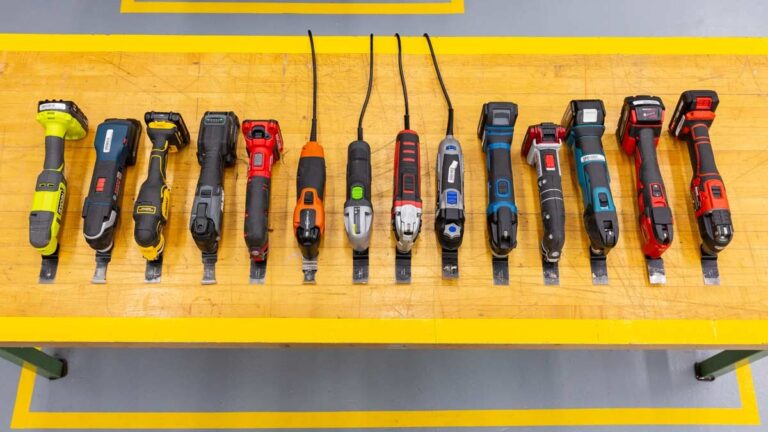
Selecting the right oscillating multi-tool for diyers and pros depends on your specific needs, as no single model suits everyone. Your choice typically relies on battery compatibility, the preference for cordless freedom versus corded consistency, and project intensity. These tools differ mainly in motor power, oscillation range, and accessory change mechanisms.
As an Amazon Associate, we earn from qualifying purchases. This post contains affiliate links – if you buy through them, we may earn a commission at no extra cost to you.
1. DEWALT 20V MAX XR Oscillating Tool Kit with Blades

Best for: Someone who wants a reliable, all-in-one kit for daily tasks.
This tool is designed for users who need a balance of power and runtime. The brushless motor offers an efficiency boost, while the three-speed selector lets you match the tool to the material you’re cutting.
The quick-change system removes the need for tools, which helps when you have several cuts to make in a row. It’s a solid choice for those already invested in the 20V system. It may not be the right fit for someone who needs a specialized, ultra-light tool for overhead work.
Good if:
- You want a battery and charger included.
- You need to switch blades frequently.
- You work in dimly lit areas.
Skip it if:
- You have no other 20V batteries.
- You need the absolute smallest tool available.
2. Milwaukee 2626-20 M18 18V Lithium Ion Cordless 18

Best for: Professionals who need a durable tool for heavy-duty daily use.
The all-metal gear case is built to withstand impacts on a busy job site. With 12 speed settings, you can adjust the output for everything from delicate sanding to aggressive cutting. You should dial the speed toward 11,000 OPM for precision work, while pushing toward 18,000 OPM for heavy-duty material removal.
The tool uses REDLINK technology to manage power and prevent overheating. By monitoring the connection between the battery and the motor, the system eases power delivery when it detects excessive heat. This protects the internal components during long sessions. It’s a robust option for those who already own M18 batteries, but it isn’t ideal for a hobbyist who only makes occasional, light cuts.
Good if:
- You work in rough, high-impact environments.
- You need a wide range of speed settings.
- You prefer a rubberized grip for better handling.
Skip it if:
- You need a kit that includes a battery.
- You have small hands and prefer a thinner grip.
- You need a tool smaller than 11-7/8 inches.
3. Makita XMT03Z 18V LXT® Lithium-Ion Cordless Multi-Tool

Best for: Users who prioritize comfort and a slim, ergonomic handle.
This tool features a small-diameter barrel grip measuring only 2-3/8 inches, making it easy to hold for long periods. The 3.2° oscillation angle is engineered for faster, more aggressive performance during demanding tasks. You can adjust the variable speed control dial between 6,000 and 20,000 OPM to match the specific material you’re cutting or sanding.
The large slide switch includes a lock-on button, which reduces finger fatigue during extended sanding sessions. If you already own Makita 18V Lithium-Ion batteries marked with a Star symbol, this unit integrates seamlessly into your existing kit. However, because the tool is sold without a battery, you must ensure your current power source is compatible before purchasing.
While the included adapters allow you to fit most competitive accessories, the design lacks a tool-less blade change mechanism. If your workflow requires frequent, rapid accessory swaps, this manual setup may slow your progress. Choose this model when ergonomics and grip comfort are your primary requirements for sustained, repetitive cutting or sanding work.
4. 2526-20 M12 Brushless 12-Volt Lithium-Ion Cordless Oscillating Multi-Tool (Tool-Only)

Best for: A user who needs to reach into tight, confined spaces. The compact build of this 12-volt tool makes it easy to maneuver where larger models can’t fit. It’s built for portability and precision in small areas.
Use this tool when your work requires finesse in cramped quarters, such as trimming door casings or cutting drywall in narrow bays. If you’re already invested in the M12 ecosystem, the battery compatibility makes this a seamless addition.
It isn’t intended for heavy-duty, long-duration cutting tasks that require maximum power output. If your job involves deep plunge cuts through hardwoods or thick metal, the 12-volt motor will struggle.
Good if:
- You work in very tight corners.
- You want a lightweight, portable option.
Skip it if:
- You have large, high-torque projects.
- You prefer the power of an 18V system.
5. Dremel MM50-01 Multi-Max™ Oscillating Tool Kit

Best for: Someone who needs high precision for detailed project work.
The angled body design improves control during flush cuts, while the 5-amp motor provides high power for its class. The front end is 30% more compact than standard models, allowing you to reach tight, hard-to-access spots.
The kit includes a storage bag and 30 accessories for cutting and sanding wood, drywall, or metal. You can swap these attachments quickly using the tool-less system: simply twist the knob, push it down, and insert your new blade.
If you’re working on door jambs, trim, or baseboards, the 5-amp motor provides the steady force required for clean results. Use the 7-foot rubber cord to gauge your workspace; if your project requires movement across large areas, the cord may become a physical tether.
Good if:
- You prioritize low vibration and high precision.
- You need a wide range of starter accessories.
- You prefer a consistent, corded power supply.
Skip it if:
- You need to move around a job site without cords.
- You have a very small workspace where a cord would be in the way.
6. FLEX 24V Brushless Cordless Oscillating 20

Best for: Users who need maximum power and rapid charging.
This tool features a sensor-free brushless motor designed for high efficiency and speed. The 3D Starlock connection is built to maximize power transfer from the motor to the blade.
The keyless blade eject system is a major convenience, as it lets you change attachments without touching a hot blade. It’s a powerful choice for demanding pros. If you already own other FLEX 24V tools, this kit integrates seamlessly because the battery and charger are cross-compatible across the entire line.
However, avoid this tool if you’re already committed to a different battery platform. Buying into a new ecosystem requires purchasing additional batteries and chargers if you don’t plan to expand your collection.
Good if:
- You need the highest possible power output.
- You want fast-charging battery capabilities.
- You need to change blades quickly and safely.
Skip it if:
- You have no other FLEX 24V tools.
- You’re looking for a lightweight, entry-level tool.
7. DEWALT Corded Oscillating

Best for: A user who wants consistent power without worrying about batteries.
The 3-amp motor provides reliable performance for steady, long-term cutting and sanding. The guide system is a helpful addition for setting depth and repeatability. If you need to make identical cuts across multiple boards, use the guide to lock in your depth. This ensures every piece matches without manual measuring.
It’s a durable, corded solution for workshop use where power is always accessible. It isn’t suitable for someone who needs to move freely around a large area or climb ladders. If your project requires frequent movement, the cord will snag or limit your reach. Stick to stationary bench work to avoid these frustrations.
Good if:
- You want to avoid battery maintenance.
- You need depth-control features for accuracy.
- You want a complete 29-piece accessory kit.
Skip it if:
- You need to work away from a power outlet.
- You dislike managing a power cord while working.
- You require the tool-free freedom of a cordless model.
8. AVID POWER Oscillating Tool

Best for: Someone who wants a wider oscillation angle for faster cutting.
The 4.5-degree oscillation angle allows for faster material removal compared to standard tools. You can expect to cut wood four to five times faster and metal tubes two to three times faster than with a typical oscillating tool. The included auxiliary handle provides the extra stability needed for these longer or more difficult cuts.
It’s a versatile tool that comes with a range of accessories, including a quick-change system that lets you swap blades without a wrench. Use the six-speed switch to match the output to your specific task, whether you’re scraping, sanding, or polishing.
It isn’t designed for someone who needs a compact, lightweight tool for delicate, fine-detail work. If you require a tool that fits into tight, confined spaces, the added handle and larger motor housing may prove cumbersome.
Good if:
- You want faster cutting speeds.
- You need an auxiliary handle for control.
- You want a variety of included blades.
Skip it if:
- You need a highly compact, low-vibration tool.
- You prefer a cordless setup.
9. CRAFTSMAN V20 Cordless Oscillating Tool Kit Battery and Charger (CMCE501D1)

Best for: A beginner who wants an all-inclusive starter kit.
This kit provides everything a new user needs to start working immediately. You receive the tool, a 2.0Ah battery, a charger, two blades, a sanding platen, and four sheets of sandpaper. The variable speed dial allows you to adjust the oscillation rate to match the specific material you’re cutting or sanding.
Because this tool uses a universal attachment system, you can swap blades quickly without needing extra tools. The built-in LED work light is essential for visibility when working in dark corners or under cabinets.
It’s part of the V20 system, making it easy to share batteries across other CRAFTSMAN power tools and outdoor equipment. If you already own tools from a different brand, you’ll need to invest in new batteries to use this system. Pros who require maximum torque for heavy-duty daily demolition should look elsewhere, as this model is designed for repair and restoration tasks.
You get a 3-year limited warranty to ensure long-term support for your purchase. Use the VERSATRACK clip if you want to hang the tool on a wall storage track.
10. WEN Oscillating Multi-Tool Kit

Best for: A homeowner who needs a simple, straightforward tool.
This kit is designed for common household tasks like cutting drywall, deburring jagged edges, or sanding wood. The quick-release head makes switching between these tasks simple, as you can swap blades and bits without needing extra tools.
It’s a no-frills option that gets the job done for occasional DIY projects. Use the lower end of the 10,000 to 20,000 oscillations per minute range for delicate sanding. Switch to the higher end when you need to saw through wood or remove stubborn rust. It isn’t intended for heavy-duty industrial use or extreme-precision tasks.
Good if:
- You need a tool for basic household repairs.
- You want a fast, tool-free blade change system.
- You prefer a simple, easy-to-use design.
Skip it if:
- You need a cordless tool for remote work.
- You have heavy-duty, professional-grade requirements.
- You require a specific oscillation range outside of the standard 3.7-degree setting.
Where These Overlap
Many of these tools share a common goal: providing a versatile way to cut, sand, and scrape in tight spaces. For most home DIYers, the differences between the DEWALT 20V MAX XR, CRAFTSMAN V20 Cordless, and WEN Oscillating Kit are minimal regarding basic functionality. Each offers variable speed control and a quick-change system for blades. The real divide occurs between the corded models and the cordless ones. The corded DEWALT Corded Oscillating and Dremel Multi-Max MM50 provide constant power, while the cordless models offer mobility. If you already own batteries for a specific brand like Makita, Milwaukee, or DEWALT, that factor often outweighs the minor differences in motor specs. The tools are generally similar in their ability to use universal accessories, meaning you’re rarely locked into one brand for your blades and sanding pads. Your decision should be based on your existing battery ecosystem and your preference for corded versus cordless.
Still Not Sure?
How often will I really use it?
A simpler kit like the WEN Oscillating Kit or the CRAFTSMAN V20 Cordless is more than enough for occasional repairs. If you’re a professional or a serious DIYer who works every weekend, you’ll appreciate the features of the Milwaukee M18 Multi-Tool or the power of the FLEX 24V Brushless.
What do I already own that this has to work with?
This is the most important question for any cordless buyer. If you have a garage full of Makita batteries, the Makita 18V LXT is the most logical choice. Buying a tool that works with the batteries you already own saves money and space. If you’re brand new to cordless tools, consider the DEWALT 20V MAX XR or CRAFTSMAN V20 Cordless, as these brands have vast systems of other tools you might want in the future.
What am I most likely to regret choosing?
Most people regret choosing a tool that’s too heavy or too bulky for their specific workspace. If you mostly work in tight cabinets or under sinks, a large, heavy tool will quickly become frustrating. In those cases, the Dremel Multi-Max MM50 or the Milwaukee M12 Brushless are much better choices. Avoid buying a corded tool if you know you’ll be working on a ladder or in a yard where a cord will constantly snag on obstacles.
Related guides
- 10 Best Nail Gun for Roofing Picks for Pros and DIYers
- Circular Saw vs Miter Saw: Which Tool Should You Use
- Hammer Drill vs Impact Driver: Which Tool Do You Need
Frequently Asked Questions
Do these oscillating tools use the same blades?
Most tools listed include a universal adapter, allowing for a wide variety of aftermarket accessories. Manufacturers often follow ANSI standards to ensure these accessories remain interchangeable across different platforms. Note that some brands, such as the FLEX 24V Brushless, may still utilize proprietary connection systems.
Why does my tool have different speed settings?
Different materials require different speeds to prevent burning or damage. For example, sanding wood often requires a lower speed to avoid heat buildup, while cutting through metal or PVC pipe may require a higher speed for efficiency. Tools like the Milwaukee M18 Multi-Tool offer many settings to give you this control. Always check the material you’re working on to ensure you’re using the right oscillation speed for the task at hand.
How do I know if I need a corded or cordless model?
A cordless model is best if you need to move around a lot or work in areas without easy access to a wall outlet. They provide high portability for quick jobs. A corded model, like the DEWALT Corded Oscillating, is best if you’re working in a workshop where you have a permanent station and want the assurance that you’ll never run out of battery power during a long, continuous task.
Are these tools safe for beginners?
Oscillating tools are generally safe for beginners because they lack the kickback risk associated with spinning blades. They do vibrate significantly, which can lead to user fatigue during extended use. Always wear safety glasses and hearing protection while operating these tools to ensure your personal safety.
Conclusion
Once you’ve settled on the perfect model, head to your local hardware store to hold a few in person. Feeling the weight and grip in your own hands makes a huge difference. You’ll be ready to tackle your first project with confidence, so don’t hesitate to start that renovation today.