Impact Driver vs Hammer Drill: Key Differences and Best Uses
The key differences between an impact driver and a hammer drill involve their specific uses for fastening and masonry. An impact driver drives screws with rotational force, while a hammer drill bores into stone by pounding the bit forward. For most home projects, the impact driver is the better tool because it drives fasteners faster with less wrist strain, but the hammer drill is necessary for concrete, brick, or stone.
Impact driver vs hammer drill
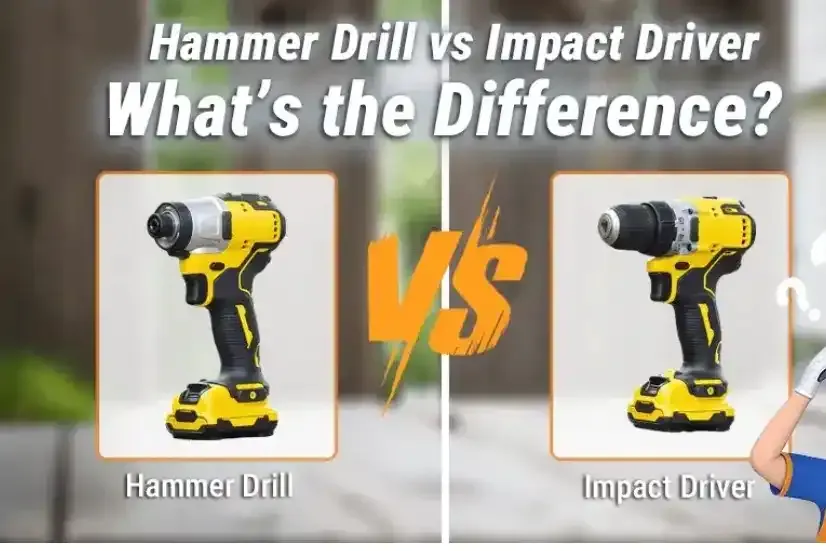
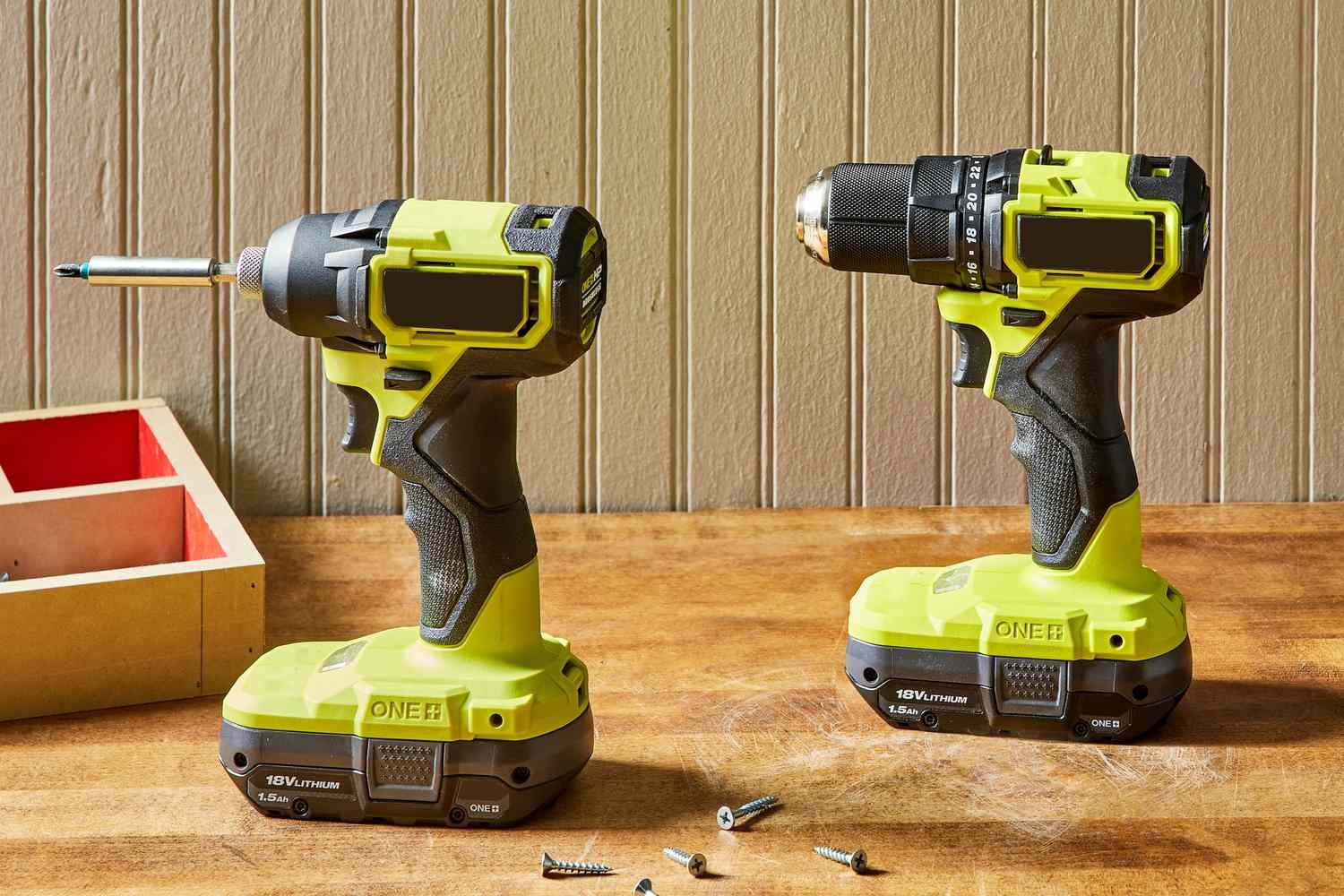
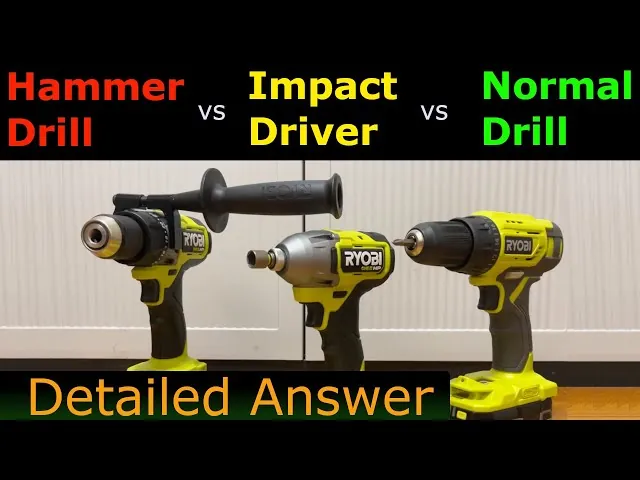
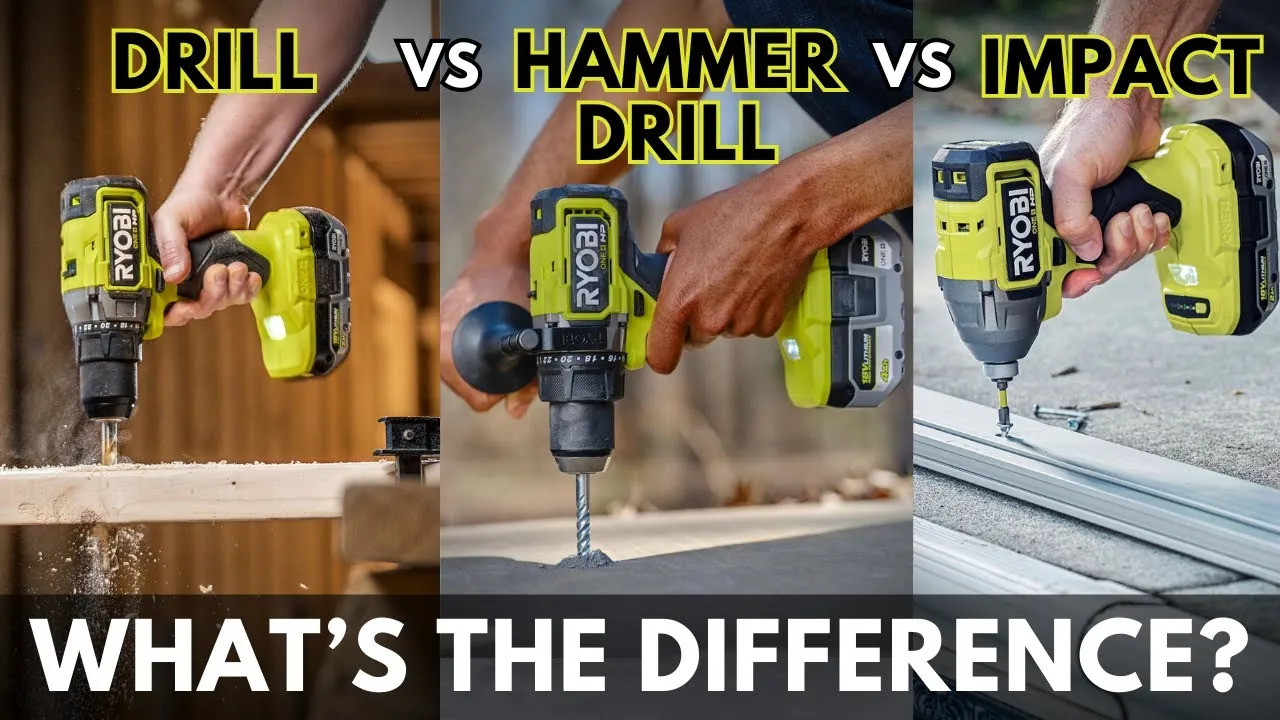
These two tools look similar, but they do different jobs. The table below puts them side by side.
| Method | How long | Effort | Cost | Best for |
|---|---|---|---|---|
| Impact driver | Seconds per screw | Low | Medium | Driving long screws, bolts, and lag fasteners into wood or metal |
| Hammer drill | Minutes per hole | Medium | Medium | Drilling holes in concrete, brick, or stone |
| Standard drill/driver | Seconds to minutes per task | Low | Medium | Light drilling and driving in wood, drywall, or plastic |
An impact driver uses a hammer-and-anvil mechanism inside the chuck to deliver rapid rotational taps, so it drives screws without stripping heads or twisting your wrist. A hammer drill adds a forward hammering action to the spinning bit, which chips away masonry as the bit turns. Neither tool replaces the other: using a hammer drill to drive screws usually strips them, and an impact driver can’t bore a clean hole in concrete.
Using an impact driver
Insert a hex-shank driver bit into the quick-release chuck until you hear a distinct click. Pull the bit slightly to ensure it’s locked securely.
Set the direction switch to forward for driving screws. Press the bit firmly into the screw head before pulling the trigger to prevent the bit from slipping and stripping the fastener. Release the trigger the instant the screw head sits flush with the surface.
This tool excels at driving long screws, deck fasteners, and lag bolts into dense wood or metal without cam-out. If you’re driving into brittle material, use the lowest speed setting to avoid snapping the screw head.
Its weakness is drilling. It lacks the torque control needed for clean, accurate holes. Avoid using it for masonry, as the high-impact vibration will quickly shatter your drill bits.
Using a hammer drill
- Insert a masonry bit into the keyless chuck and tighten it.
- Switch the mode selector to hammer drill.
- Mark your spot, press the bit against the surface, and start drilling.
- Apply steady pressure and let the hammering action do the work.
A hammer drill bores holes in concrete, brick, and block that a standard drill can’t touch. Its weakness is driving screws: the pounding action and high speed make it easy to strip fastener heads or overdrive screws.
Which tool should you choose?
For driving screws and bolts, choose the impact driver: it seats fasteners quickly and saves your wrist. For your first tool purchase, choose a standard drill/driver: it handles light drilling and driving in one affordable package. For the best possible result on masonry, choose the hammer drill: only its forward hammering action breaks up concrete as it cuts. The trade-off is specialization versus versatility — one tool does one job brilliantly, while the other does several jobs acceptably.
Safety and setup for either tool
Wear eye protection and hearing protection before you pull the trigger on either tool. Check the battery charge and inspect the bit for damage first. Partway through, stop and clear dust from the hole or debris from the fastener recess.
When you finish, release the trigger fully, remove the bit, and store the tool in its case. Both tools throw debris and create noise, so never skip protection. If you’re unsure about a specific task, check the manufacturer’s safety guidance or ask a qualified tradesperson.
Related guides
- 10 Best Impact Drivers for Automotive Work: Our Expert Picks
- Best Impact Drivers for DIYers: Picks for Different Jobs
Frequently asked questions
Can I use an impact driver to drill holes?
No. An impact driver is built to drive fasteners, not to drill clean holes. Use a drill or hammer drill for holes instead.
Can I use a hammer drill to drive screws?
No. A hammer drill’s pounding action strips screw heads and overdrives fasteners. Use an impact driver or standard drill/driver for screws.
How long does an impact driver last?
There’s no fixed lifespan; it depends on how often you use it and how well you maintain it. Check the battery and chuck regularly for wear.
Is it safe to use a hammer drill on concrete?
Yes, if you wear eye and hearing protection and use a masonry bit rated for concrete. Let the tool’s hammering action do the work rather than forcing it.
What happens if I use the wrong tool?
You’ll strip screws, ruin bits, or fail to make a clean hole. Match the tool to the material before you start.
Conclusion
Choose the impact driver for driving, the hammer drill for masonry, and a standard drill/driver if you only need one tool for light work around the home.