
Impact Driver vs Impact Wrench: Key Differences and Uses
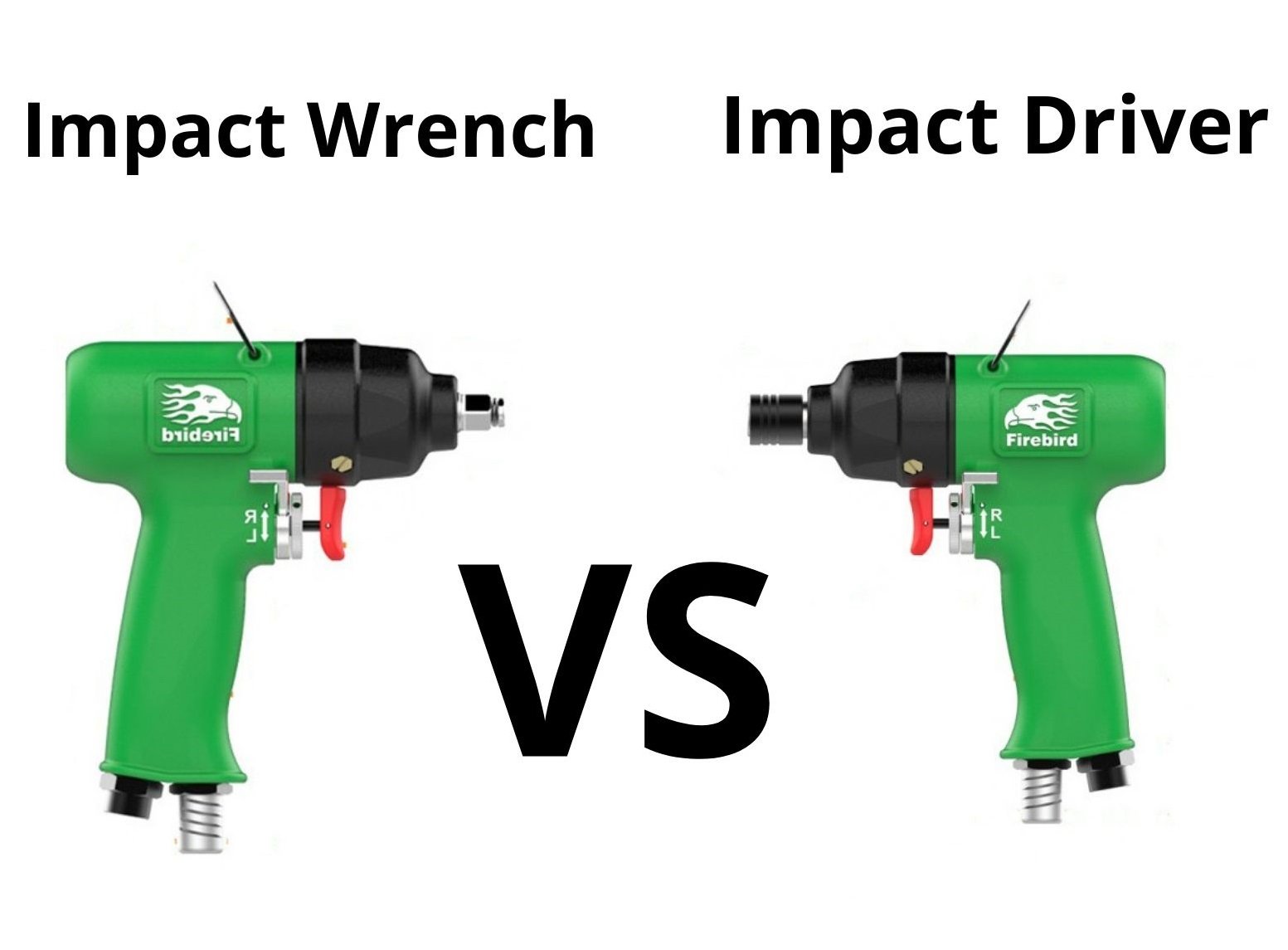
An impact driver drives screws and small bolts quickly, while an impact wrench loosens and tightens lug nuts and heavy fasteners. The difference is the drive: impact driver vs impact wrench comes down to whether you need speed or turning force. For home projects and furniture assembly, the driver wins. For car wheels and suspension work, only the wrench has enough torque.
Impact driver vs impact wrench compared
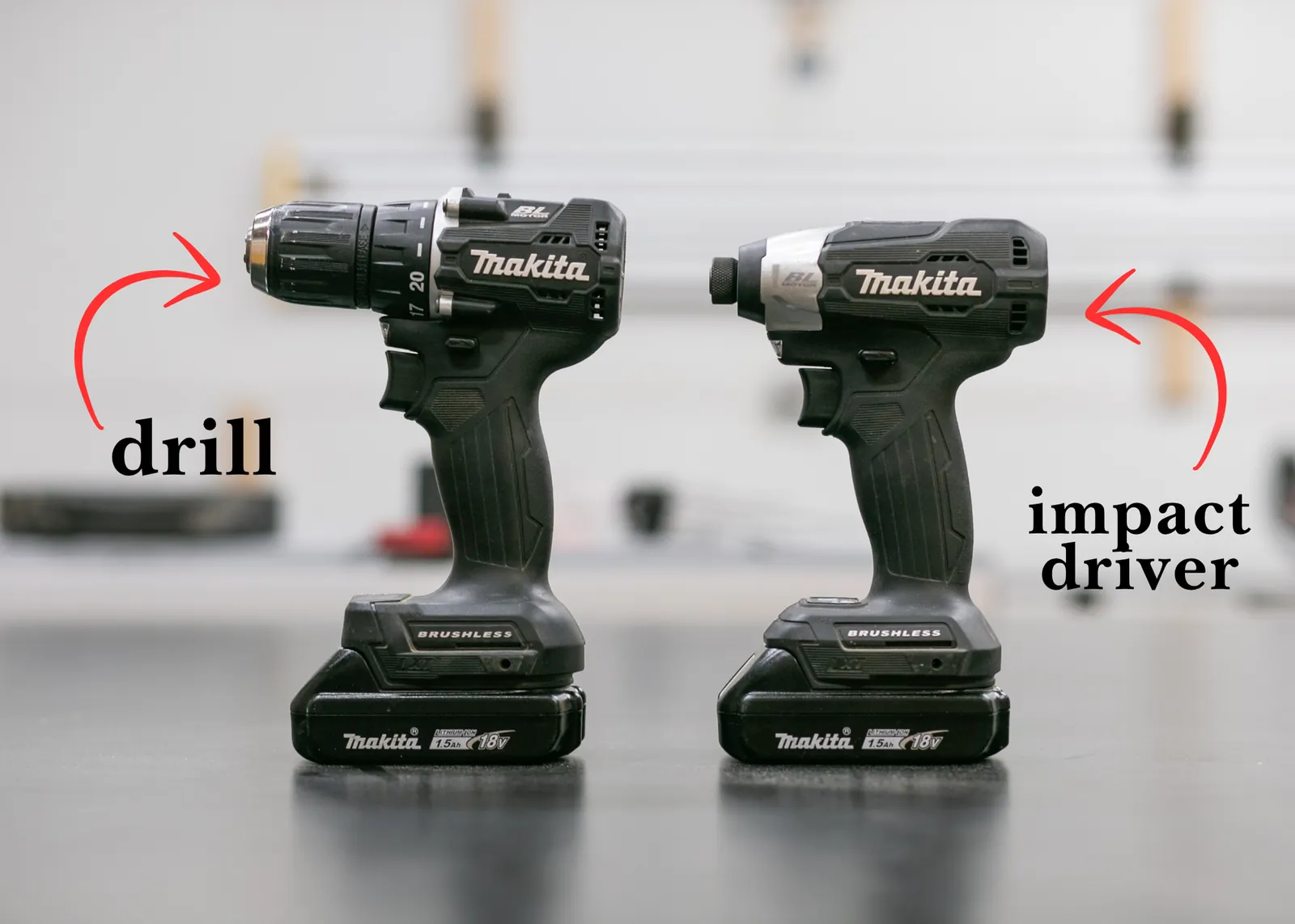
This table puts the two tools side by side so you can see where each one fits.
| Method | How long | Effort | Cost | Best for |
|---|---|---|---|---|
| Impact driver | Fast for screws | Low | Low | Decking, furniture, cabinetry |
| Impact wrench | Fast on lug nuts | Low | Medium | Car wheels, suspension, heavy bolts |
| Standard drill/driver | Slower | Medium | Low | Drilling holes, light screwdriving |
No tool wins every column. The driver is cheaper and easier to control, but it can’t break rusted axle nuts loose. The wrench delivers far more twisting force, yet it can snap a small screw head off if you aren’t careful.
Impact driver
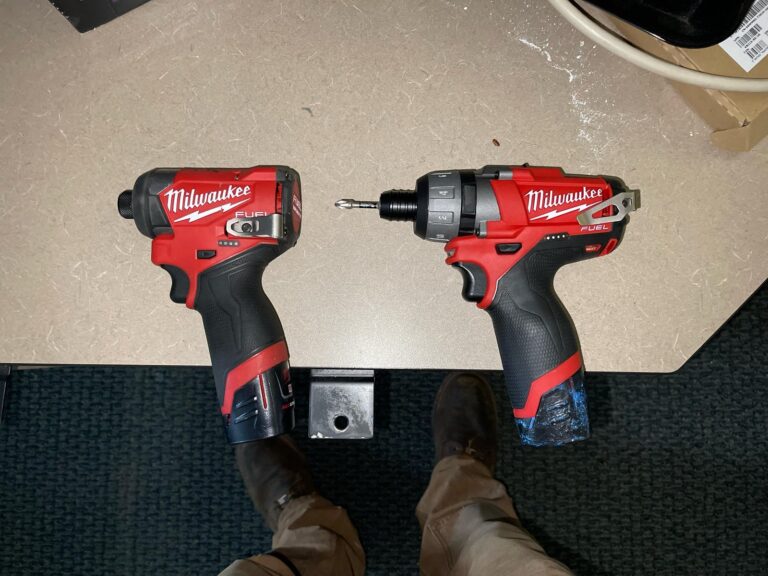
An impact driver spins a hex-shank bit and adds sharp hammering blows as it turns, which drives long screws into wood without stalling. It accepts 1/4-inch hex bits and works best with impact-rated driver bits.
- Fit a 1/4-inch hex driver bit into the chuck.
- Set the drill to forward for driving, reverse for removal.
- Pull the trigger gently to start, then squeeze harder as the screw seats.
- Stop when the bit clicks or the screw head is flush.
It’s great for decks, furniture, and drywall because it’s compact and rarely strips screw heads. Its weakness is torque: it won’t budge a seized wheel nut. Because it kicks hard, hold it with both hands on long fasteners, and wear eye protection since bits can snap.
Impact wrench
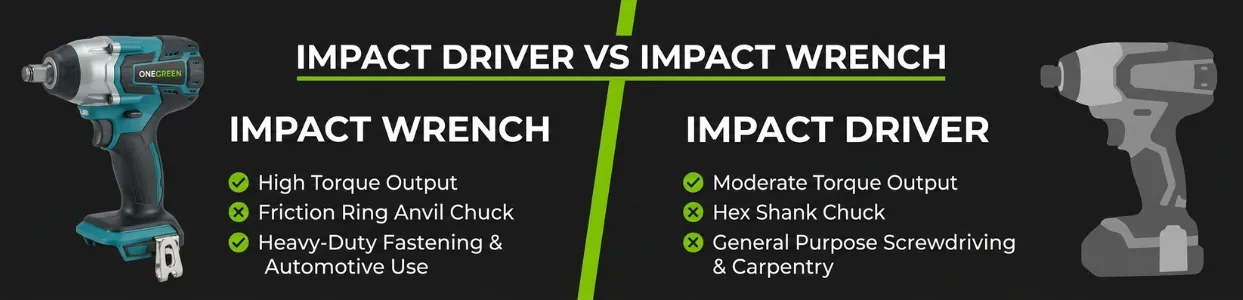
An impact wrench uses a square anvil, usually 1/2-inch, to deliver heavy bursts of twisting force that break rusted nuts free. It’s built for automotive and mechanical work, not delicate assembly.
- Socket the fastener with the correct size impact socket.
- Set forward to tighten or reverse to loosen.
- Press the trigger in short bursts until the nut turns.
- Finish tightening by hand or with a torque wrench to the correct spec.
It handles lug nuts, suspension bolts, and anchor bolts that a driver can’t touch. The downside is size and power: it’s heavier, louder, and far too strong for furniture screws. Use only impact-rated sockets, never chrome ones, because chrome sockets can crack under the hammering force and send pieces flying.
Which tool should you choose?
The driver wins when you’re in a hurry because it drives screws in seconds and fits in tight spaces. For your first tool, buy the driver: it handles most home repairs and costs less.
When you want the best result whatever it takes, own both—the wrench for the car and the driver for everything else. The trade-off is simple: speed and control versus raw twisting force, and you can’t get both from one tool.
If your project involves driving fasteners into soft pine, use the driver to avoid stripping the wood. If you’re working with rusted bolts on a vehicle, the wrench provides the necessary torque to break them free without snapping the head. Beginners often assume the driver can handle heavy automotive tasks, but this mistake frequently results in broken bits and stripped threads.
Safety and setup for either tool
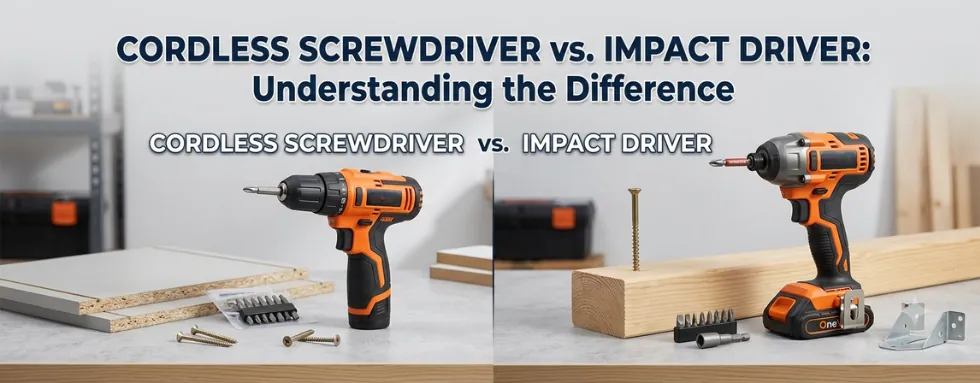
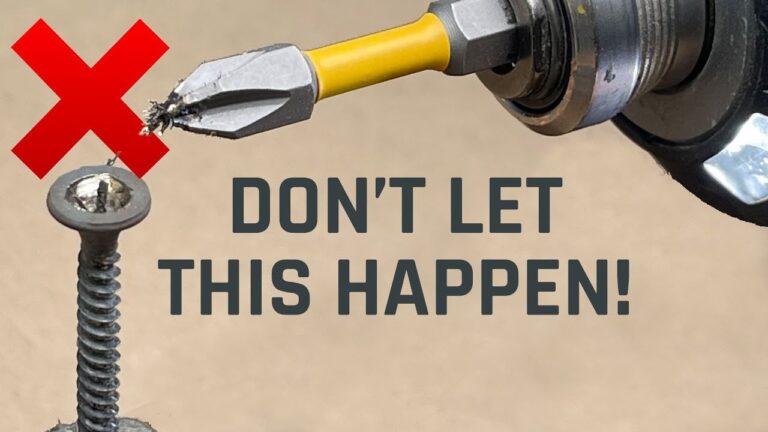
Charge the battery fully before you start, and match the bit or socket to the fastener exactly. Check the tool partway through a long job to make sure the bit isn’t slipping or rounding the head. At the end, release the trigger fully before you set the tool down.
Both tools throw noise and vibration, so wear hearing protection and gloves. If you’re working on a vehicle, support it on jack stands — never rely on a jack alone — and consult your vehicle manufacturer’s official service information for torque specifications.
Related guides
Frequently asked questions
Can I use an impact driver to remove lug nuts?
No. An impact driver lacks the torque to break most wheel nuts loose, and trying can strip the nut or damage the tool.
How long does an impact driver battery last?
About two to four hours of intermittent use on a full charge, assuming a standard 2.0 Ah battery pack; larger packs run longer.
Is it safe to use chrome sockets on an impact wrench?
No. Chrome sockets can crack under impact force; use impact-rated sockets only.
What happens if I over-tighten with an impact wrench?
You can stretch or snap the bolt, or warp a wheel hub, so finish critical fasteners with a torque wrench.
Why does an impact driver feel like it’s hammering?
That hammering action is what drives screws without stalling; it’s normal and not a fault.
How often should I replace impact driver bits?
Replace them when the tip shows wear or rounds off, which depends on how much you use them; check the tip before each job.
Conclusion
Choosing the right tool depends on the job waiting in your garage or workshop. If you’re still unsure, grab a wrench to test the resistance of those stubborn bolts first. Once you’ve identified your needs, you’ll be ready to pick the perfect companion for your next big project. It’s time to get building.
3 Comments