Sidewinder vs Worm-Drive Circular Saws: Key Differences Explained
Selecting the right circular saw is a fundamental decision for any carpenter, contractor, or dedicated DIY enthusiast. Sidewinder and worm-drive saws represent two distinct engineering philosophies designed for different framing and construction tasks. While both tools spin a blade to cut lumber, their internal motor orientation, weight distribution, and handling characteristics vary significantly. Understanding these nuances helps you match the tool to your specific workflow, whether you are building a deck or framing a house.
Key Takeaways

- Sidewinders feature a direct-drive motor mounted to the side of the blade, making them lighter and easier to handle for overhead tasks.
- Worm-drive saws utilize a gear-driven mechanism that provides higher torque, ideal for dense hardwoods or wet pressure-treated lumber.
- The blade position on a sidewinder is typically on the right side, while worm-drive saws place the blade on the left, offering better visibility for right-handed users.
- Maintenance requirements differ; worm-drive gears require periodic lubrication, whereas sidewinders are generally maintenance-free sealed units.
- Choose a sidewinder for portability and repetitive light-duty work, and a worm-drive saw for heavy-duty, long-term construction projects.
How Do These Saws Work?
The fundamental difference lies in the transmission of power from the motor to the blade. A sidewinder saw uses a motor mounted directly to the side of the blade arbor. This design allows for a simple, compact gear setup that transfers power efficiently while keeping the tool’s profile slim. Because the motor is inline with the blade, the tool can be shorter and more balanced for one-handed operation.
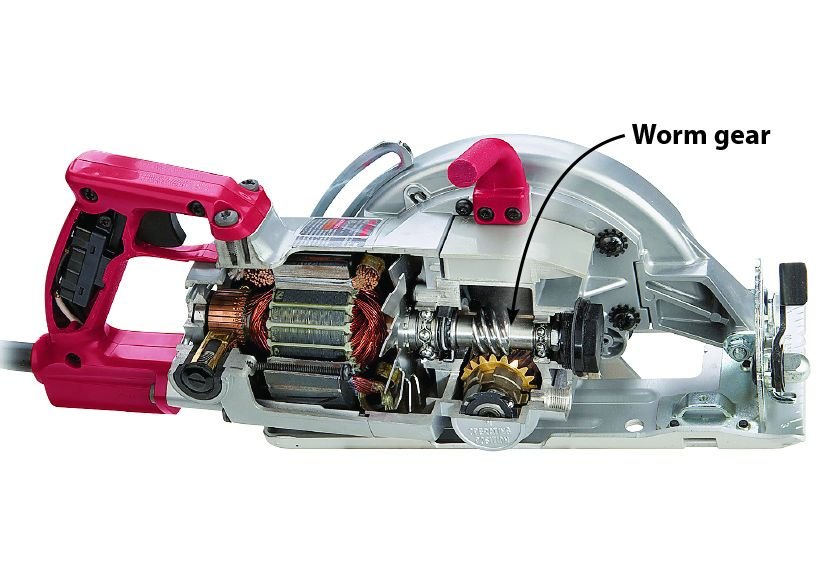
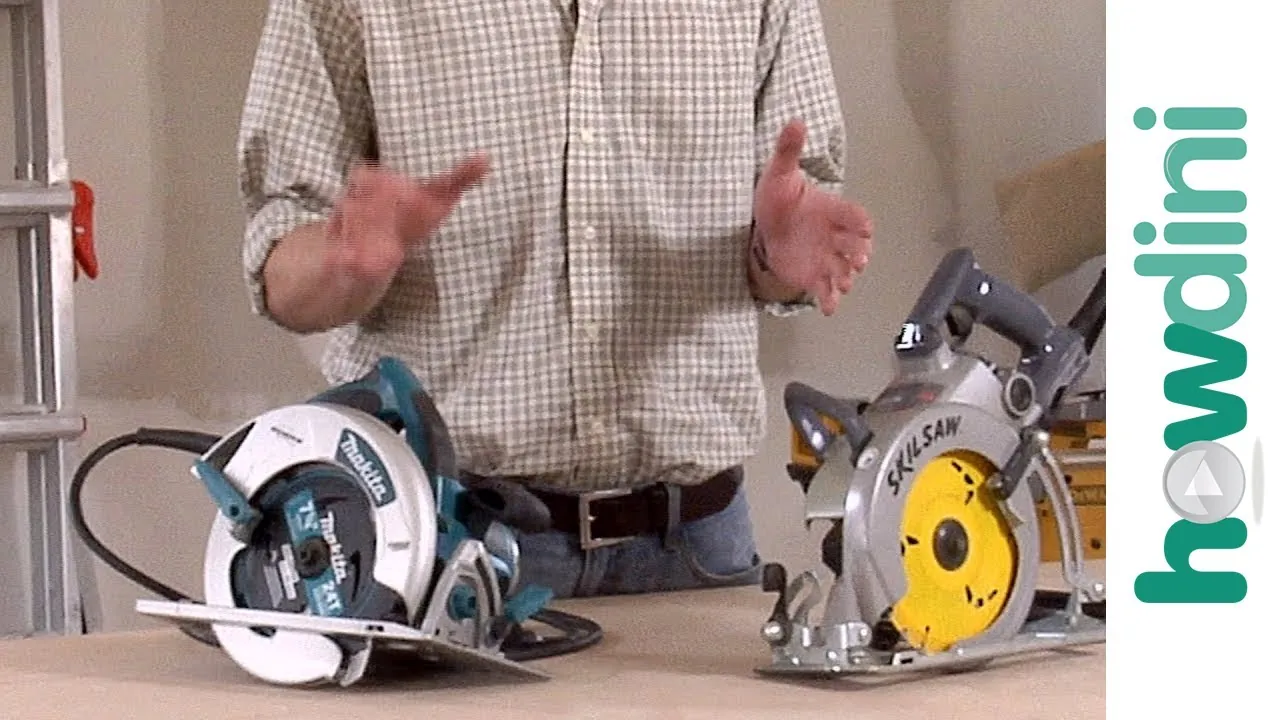
In contrast, a worm-drive saw positions the motor at the rear of the tool. It uses a pair of gears—a worm and a worm gear—set at a 90-degree angle to transfer rotational energy to the blade shaft. This configuration allows the motor to be longer and thinner, shifting the weight balance forward. This design is rugged and built for continuous, high-torque applications where keeping the tool stable through a thick board is critical for professional results.
Comparing Key Specs of Sidewinder and Worm-Drive Circular Saws
| Feature | Sidewinder (Direct Drive) | Worm-Drive |
|---|---|---|
| Motor Type | Inline / Direct Drive | Rear-Mounted Worm Gear |
| Weight | 8 to 12 Pounds | 14 to 17 Pounds |
| Blade Side | Usually Right | Usually Left |
| Torque Output | Moderate | High |
| Maintenance | Minimal / Sealed | Periodic Oil Changes |
Why Does Blade Position Matter?
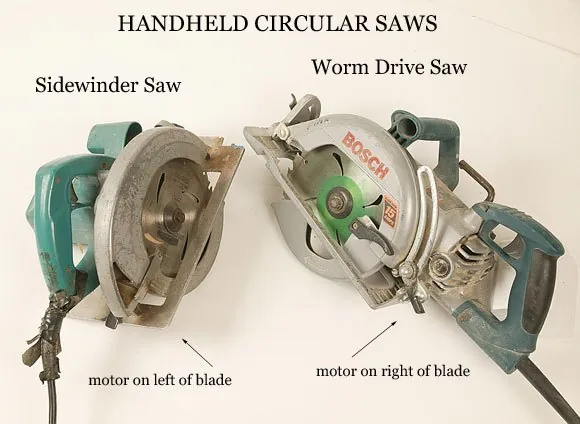
Blade position is the most immediate difference you’ll notice when picking up these tools. Most sidewinders are designed with the blade on the right, which is the traditional standard. This setup allows a right-handed user to see the cutting line clearly if they’re standing on the left side of the blade. However, this also means the user is potentially more exposed to the sawdust discharge.
Worm-drive saws almost exclusively feature the blade on the left. For a right-handed user, this provides a clear, unobstructed line of sight to the blade as it enters the wood. This visibility is a major factor for framers who need to make precise, repetitive cuts. Blade visibility is a primary reason many professionals prefer the worm-drive configuration for framing walls or trimming studs where accuracy is paramount.
Handling and Weight Considerations
Weight is a significant factor in user fatigue. A lightweight sidewinder is much easier to manage when you’re working on a ladder or making vertical cuts. The reduced mass means you can move the saw quickly and reposition it without straining your muscles. If you’re doing general home improvement or light renovation work, the ease of handling provided by a sidewinder is often superior.
Worm-drive saws are heavier, which can be a disadvantage for short, quick cuts. However, that extra weight works in your favor during heavy-duty cutting. The mass of the tool helps it stay pressed against the lumber, reducing vibration and “chatter” during deep cuts in thick materials.
Maintenance and Longevity
The internal mechanics of these saws dictate their lifespan and upkeep. Sidewinders are “direct drive,” meaning the motor is connected to the blade via simple spur gears. These are usually enclosed in a grease-sealed housing that requires no routine maintenance. You simply plug them in and cut until the brushes wear out or the motor eventually reaches its end-of-life cycle.
Worm-drive saws are distinct because their gear set requires oil. You must periodically check the oil level in the gear housing and change it according to the manufacturer’s schedule. While this sounds like a hassle, it’s a hallmark of the tool’s durability. The worm-gear design is incredibly robust, often allowing these saws to survive decades of daily abuse on rough, dusty job sites where a cheaper, sealed sidewinder might fail.
Which Saw Should You Choose?
Pro Tip: If you’re primarily performing DIY projects, deck building, or indoor remodeling, a high-quality sidewinder is likely the most practical choice. Its balance, weight, and ease of use make it the standard for non-professional settings.
Warning: Always ensure your circular saw is equipped with the correct blade for the material you’re cutting, as using a dull or incorrect blade can lead to kickback regardless of the motor type.
Choose a worm-drive if you’re a professional framer or a serious woodworker who regularly cuts wet lumber, engineered beams, or dense hardwoods. The high torque output of the worm-drive mechanism ensures that the blade won’t bog down when you’re pushing through thick material, saving you time and reducing the risk of burning the wood or stalling the motor.
Related guides
- 8 Best Circular Saws for Cutting Plywood and Sheet Goods
- Circular Saw Blades Explained: Types, Tooth Counts, and Uses
Frequently Asked Questions
Can I use a worm-drive saw for basic DIY projects?
Yes, you can use a worm-drive saw for any project, but the extra weight may feel cumbersome for small tasks. It’s overkill for cutting plywood or thin trim, but it will handle those jobs perfectly well if you don’t mind the heavier tool.
Are sidewinder saws less powerful than worm-drives?
Sidewinders aren’t necessarily less powerful, but they deliver power differently. They have high RPM but lower torque compared to the gear-reduction system of a worm-drive. For standard dimensional lumber, a modern sidewinder has more than enough power to make fast, clean cuts without stalling.
Is the left-side blade better for everyone?
Left-side blades are generally preferred by right-handed users because they keep the line of sight clear. However, it’s a personal preference. Some users who are accustomed to right-side blades find the switch to a worm-drive awkward at first. It usually takes a few hours of practice to get comfortable with the change in visibility and tool balance.
Do worm-drive saws really last longer?
Worm-drive saws are built for high-stress, continuous use, which is why they’re favored in industrial construction. Because they’re serviceable, you can replace the oil and maintain the gears, which often extends the life of the tool compared to sealed sidewinder units that are essentially disposable once the gears strip.
What is the typical price range for these saws?
You can expect to pay anywhere from $90 to $160 for a reliable entry-level sidewinder. For a professional-grade worm-drive saw, the price typically ranges from $180 to $280 depending on the brand and included features like magnesium housings or laser guides.
Conclusion
To determine the best fit for your workshop, consider how often you work with thick, wet lumber versus finished stock. If you value comfort and portability for general tasks, start by testing a standard sidewinder model. If your upcoming work involves heavy framing or professional-grade material, rent or borrow a worm-drive saw to feel the difference in torque before making your final purchase.