Electric Screwdriver Not Working? Common Causes and Safe Checks
A depleted or incorrectly seated battery is the most common reason for an electric screwdriver not working, often accounting for the majority of power-related issues. You can confirm this by checking the connection points for debris or testing the battery in a compatible charger to see if it holds a charge as specified by the manufacturer.
Why your electric screwdriver stopped working

Most issues with handheld power tools are simple to fix without professional help. The table below ranks these problems by how often they occur during daily use.
| Cause | How common | How to confirm it | Fix it yourself? |
|---|---|---|---|
| Dead battery | Very common | Check battery indicator | Yes |
| Loose battery | Common | Ensure it clicks | Yes |
| Jammed bit | Common | Inspect chuck area | Yes |
| Worn brushes | Occasional | Listen for sparks | No |
| Faulty switch | Occasional | No trigger response | No |
| Damaged cord | Rare | Inspect for cuts | No |
Depleted or loose battery packs
The battery is the heartbeat of your device, and it’s frequently the first thing to fail. If your tool has no power, the battery may simply be unseated or fully drained. Always check that the pack is pushed firmly into the housing until it clicks into place. If it still fails to engage, place the battery into its dedicated charging cradle to observe the indicator lights.
If the light shows a fault code or stays dark after an hour of charging, the cell may have reached the end of its life. Different models require different charging times, so check your manual for the exact duration. If the battery is cold to the touch, let it sit at room temperature for 30 minutes before attempting to charge it again.
Obstructions in the chuck
A jammed or misaligned drill bit often prevents the motor from spinning, which can mimic a complete power failure. If you pull the trigger and hear a faint hum but no rotation, the chuck is likely blocked by debris or a stuck bit. Always disconnect the battery before you attempt to clear any material from the front of the tool.
Use a pair of needle-nose pliers to pull out any wood chips, metal shavings, or broken screw fragments that might be wedged inside the jaws. If the chuck teeth don’t move when you twist the collar, apply a small amount of machine oil to loosen the mechanism. If the jaws remain frozen after cleaning, you should avoid forcing them, as this can damage the internal gearing.
Trigger and switch issues
When the battery is full and the chuck is clear, the internal switch might be the culprit. A faulty switch often feels loose, sticks in one position, or fails to provide a tactile click when pressed. If you notice that the tool only works when you hold the trigger at a specific angle, the electrical contacts inside the handle are likely worn or dirty.
Never attempt to open the casing to clean or replace the trigger assembly yourself. If the trigger is the source of the problem, you must take the tool to an authorized service center for a professional repair.
Rare mechanical and motor failures
Worn carbon brushes: If the motor emits a sharp, acrid burning smell or throws visible sparks from the vents, the internal brushes have reached their limit. Replace these immediately to prevent permanent commutator damage. If you wait until the motor loses torque, the repair cost often doubles as you must replace the entire armature.
Internal gear stripping: A loud, rhythmic grinding noise without any output movement suggests stripped plastic gears. This failure usually occurs after forcing the tool through a stall. Because these housings are factory-sealed to maintain alignment, you must replace the entire transmission unit rather than individual gears.
Failed motor winding: If the tool remains completely silent despite a fresh, tested battery, the internal copper windings have likely fused. At this stage, the labor cost for a professional rewind exceeds the price of a new unit.
Control board damage: In brushless models, a fried circuit board prevents power flow. If the unit pulses once and dies, the board has detected a short. Don’t attempt a DIY bypass; this risks a battery fire.
What a professional repair involves
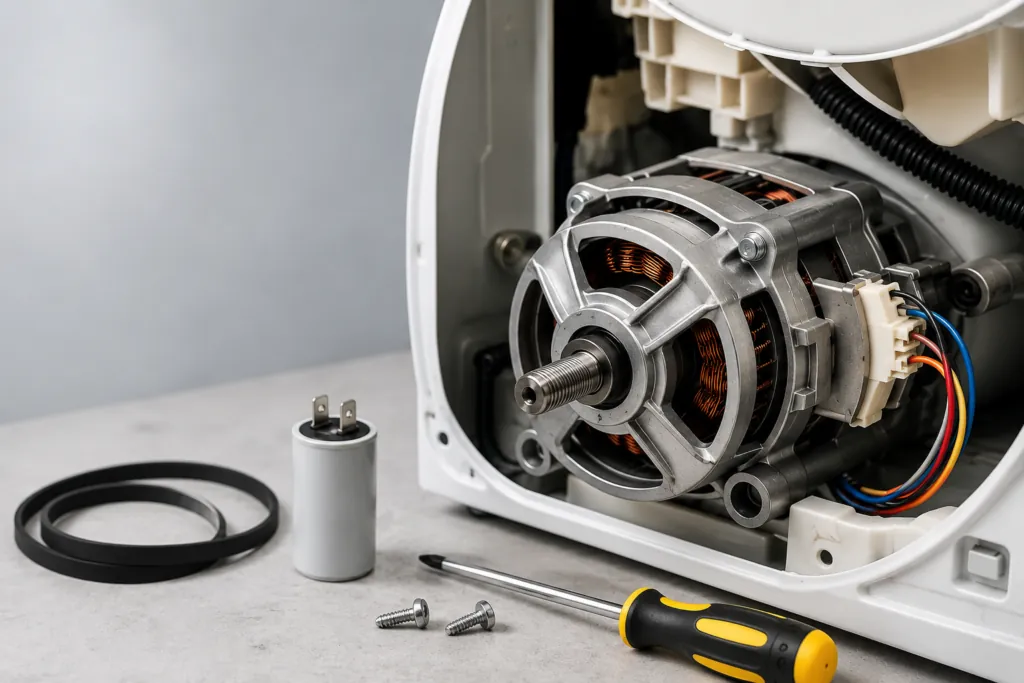
Fixing a major mechanical failure usually requires specialized tools and technical knowledge that most home users don’t possess. If the motor or internal electronics are broken, the repair process involves disassembling the entire housing, sourcing proprietary parts, and recalibrating the torque settings. This is often as involved as rebuilding a small appliance from scratch.
The cost of these repairs depends on the age of the tool and the availability of parts. If the cost of parts and labor exceeds half the price of a new model, it’s usually better to replace the unit. You can get a real quote by taking the tool to a local repair shop and asking for an estimate before they begin any work.
Related guides
Frequently asked questions
How long should a battery last?
A high-quality lithium-ion battery typically lasts between 300 and 500 charge cycles, assuming it’s stored in a cool, dry environment. You can check your specific usage by tracking how many times you fully drain and recharge the pack throughout the year.
Is it safe to use a screwdriver with a frayed cord?
It isn’t safe to use any power tool with a damaged cord because of the risk of electric shock or fire. You should stop using the device immediately and have the cord replaced by a certified professional to ensure the safety of your home wiring.
What happens if I drop my tool?
Dropping the tool often results in a misaligned internal motor or a cracked casing, which can cause the device to stop working or run unevenly. You should inspect the body for cracks and listen for unusual rattling sounds, which indicate that internal components have shifted out of their proper position.
Does it matter if I use a different charger?
It matters significantly, as using an incompatible charger can permanently damage the battery cells or cause a fire hazard. Always use the charger that came with your tool or a manufacturer-approved replacement that matches the voltage and amperage requirements listed on your battery label.
Why does my tool spark?
Minor sparking at the brushes is normal for brushed motors, but large or continuous sparks indicate that the brushes are worn or the motor is failing. You should stop using the tool if the sparks are accompanied by a burning smell or loud grinding noises to prevent permanent motor damage.
How do I know if the motor is burned out?
A burned-out motor is confirmed when the tool is completely silent and unresponsive despite a fully charged battery and a clean, clear chuck. You can smell a faint, acrid odor from the vents if the internal windings have shorted out, which means the motor unit requires a professional replacement.
Conclusion
If your tool still won’t start after these checks, it’s likely time to reach out to the manufacturer’s support team. They’ll help you determine if there’s an internal electrical fault that isn’t worth fixing yourself. Don’t force it, as you shouldn’t risk damaging the motor or hurting your hands while working.