8 Best Worm-Drive Circular Saws for Framing and Heavy-Duty Cuts
As an Amazon Associate, we earn from qualifying purchases. This post contains affiliate links – if you buy through them, we may earn a commission at no extra cost to you.
Choosing the right tool for heavy-duty framing depends entirely on your specific needs, as no single model fits every job site. The best best Worm-Drive Circular Saws for Framing and Heavy-Duty Cuts for you is decided by three main factors: your preference for cordless freedom, the thickness of the material you cut most often, and how much weight you’re willing to carry all day. These saws differ significantly in their power delivery systems and motor designs, ranging from standard worm drive to specialized hypoid gears. If you need a lightweight daily driver, the SKILSAW SPT77WML-01 is a common starting point, while those tackling massive timber often look toward the specialized capacity of the SKILSAW SPT70V-11.
1. SKILSAW SPT77WML-01 15-Amp 7-1/4-Inch Lightweight Worm Drive Circular Saw

Best for: Someone who wants a lightweight saw for all-day framing work.
This saw is built for users who move around the job site constantly and need to reduce fatigue. Its magnesium construction keeps the weight down without sacrificing the durability needed for heavy-duty cuts. The 15-amp motor provides enough power for most framing tasks, while the anti-snag guard ensures the blade moves smoothly when you’re working with smaller off-cuts.
The depth of cut system is designed for quick adjustments, which helps keep your workflow moving during busy days. This tool is a solid choice for standard framing, but it isn’t built for oversized materials or specialized deep-cut applications. If you’re regularly cutting beams thicker than what a standard 7-1/4-inch blade can handle, you’ll need a different tool.
Good if:
- You prioritize a lower weight for all-day use.
- You need a reliable saw for standard framing lumber.
- You prefer a magnesium build for durability.
Skip it if:
- You need to cut large structural timbers.
- You require a cordless power source.
2. DEWALT FLEXVOLT 60V MAX* Circular Saw

Best for: Professionals who want cordless convenience without losing traditional rear-handle power.
This cordless saw is designed for those who need to move freely without a cord. It features a brushless motor that offers high efficiency and a long runtime. The rear-handle design and left-side blade placement provide a clear line of sight, which is vital for making accurate, straight cuts.
The electronic brake helps stop the blade after the trigger is released. You can achieve a 2-7/16-inch depth of cut at 90 degrees. If you need to adjust for complex angles, the tool offers a 53-degree bevel capacity with specific stops at 45 and 22.5 degrees.
An integrated dust blower clears your path while cutting, ensuring you never lose your mark. A built-in rafter hook lets you hang the tool on framing members between cuts, while onboard wrench storage keeps blade changes quick.
This is a tool-only purchase, meaning you must already own compatible batteries. If you work on jobsites where you can’t easily access power outlets, the battery-powered mobility is a significant advantage. However, if you’re performing heavy, continuous production work, keep a spare battery charged to avoid downtime. It isn’t for someone who prefers the consistent, uninterrupted power of a plug-in cord.
Good if:
- You need the freedom of a cordless tool.
- You want a clear line of sight for accuracy.
- You value safety features like an electronic brake.
Skip it if:
- You don’t own compatible high-capacity batteries.
- You prefer the constant power of an electric cord.
3. BOSCH 7-1/4-Inch Worm Drive Circular Saw CSW41

Best for: The professional who needs a balance of precision and comfort.
The Bosch CSW41 is engineered for those who demand high accuracy during long shifts. Its worm drive design provides the torque needed for tough materials, while the magnesium body keeps the weight manageable at 13.2 lbs. The soft grip handle provides comfort for all-day use.
The on-board wrench storage is a thoughtful touch for changing blades or making adjustments on the fly. This saw is a professional-grade tool, but it isn’t intended for users who only need a saw for occasional home repairs. If you aren’t a frequent user, the specialized features may be more than you require.
If you’re cutting small pieces, the anti-snag lower guard ensures smooth operation where other saws might catch. Use the left-side blade design to maintain a clear view of your cut line. This orientation is a significant advantage for right-handed users who need to track the blade path precisely.
Good if:
- You need high torque for a variety of framing tasks.
- You want a comfortable grip for all-day use.
- You value on-board storage for your adjustment tools.
Skip it if:
- You only need a saw for occasional, light tasks.
- You want the lightest possible option regardless of power.
4. Makita 5377MG 7-1/4″ Magnesium Hypoid Saw

Best for: Users who prefer the specific performance of hypoid gears.
This saw utilizes oil-bath hypoid gear technology, designed for longevity and less maintenance than traditional worm drive gears. The heat-treated hypoid steel gears avoid the premature wear common in bronze-alloy worm drives. At 13.2 lbs, the magnesium components keep the tool lightweight and well-balanced for all-day use. A built-in fan and sealed gear housing ensure 100% oil surface coating, which protects internal parts under heavy loads.
The saw offers a large cutting capacity of 2-3/8″ at 90°. You can switch between common angles using positive stops at 22.5°, 45°, and 51.5°. If your work requires frequent bevel changes, these stops save time and ensure accuracy. The reinforced power cord is specifically built to withstand the rigors of a harsh job site.
It’s a tough, well-balanced tool, but it isn’t for someone who requires the massive depth of a large-format saw. If you strictly prefer traditional worm drive gearing, look elsewhere.
Good if:
- You want the long-term durability of hypoid gears.
- You need quick bevel adjustments with positive stops.
- You prefer a balanced, lightweight design.
Skip it if:
- You strictly prefer traditional worm drive gearing.
- You need to cut material deeper than its maximum capacity.
5. SKILSAW SPT70WM-01 15 Amp 10-1/4″ Magnesium SAWSQUATCH Worm Drive Circular

Best for: Framing contractors who work with 4x lumber regularly.
The Sawsquatch is built for a specific purpose: cutting thick materials in a single pass. Its 15-amp Dual-Field motor is designed for relentless power, which is necessary when you’re pushing through heavy 4x timber. The magnesium construction ensures that even this larger tool remains durable enough for harsh job site environments.
This saw is specialized for heavy structural work, so it isn’t the best choice for standard 2x framing. If you primarily work with thinner boards, the extra size and weight of this tool will likely feel unnecessary and cumbersome. You can identify if this is the right tool by your primary material; if your cuts consistently require a 10-1/4″ blade to clear a 4x beam, this saw is the correct investment. If you’re only cutting 2x stock, the added bulk will only slow your production speed.
The tool also features an anti-snag lower guard. This is specifically useful when you’re making small cut-off pieces, as it prevents the guard from catching and stalling the blade. With a 51-degree bevel capacity, you can tackle complex angled cuts that standard saws can’t reach.
Good if:
- You need to cut 4x lumber in one pass.
- You require a motor designed for high-torque applications.
- You work in environments that demand heavy-duty durability.
Skip it if:
- You primarily cut standard 2x lumber.
- You want a compact, lightweight saw for easy handling.
6. Metabo HPT Circular Saw

Best for: Heavy-duty framing tasks where consistent power is mandatory.
This saw features a 15-amp motor that produces 5,000 RPM, giving you the speed needed to move through building materials efficiently. The soft, non-slip grip improves control, which is important when you’re making long, repetitive cuts. It also comes with a rafter hook, making it easy to store the tool safely while working up high.
If you’re cutting at a 90-degree angle, the tool provides a 2-3/8-inch cut capacity. When you need to bevel, you can push the capacity up to 53 degrees, though your depth at 45 degrees will be limited to 1-3/4 inches. Use this saw when your project demands the durability of worm drive gears for professional, consistent results across tough framing lumber.
While it’s a powerful machine, it weighs 14.7 lbs. This makes it a great choice for stationary or heavy-duty use, but it may cause more fatigue than lighter models if you’re carrying it all day. If your work involves constant overhead tasks, the weight will become a liability. Choose this model when power and gear longevity are your primary requirements, and opt for a lighter direct-drive saw if your priority is reducing physical strain during extended periods of vertical cutting.
Good if:
- You need high RPM for fast material removal.
- You want a secure, non-slip grip.
- You frequently need to hang your saw on rafters.
Skip it if:
- You’re sensitive to the weight of your tools.
- You need the lightest saw available for overhead work.
7. SKIL 16-5/16 In. Magnesium Worm Drive Skilsaw Circular Saw

Best for: The heavy-duty user cutting massive timbers or deep framing.
If you have to cut through 6x lumber, this is the tool for the job. It offers a 6-1/4-inch cutting capacity, which is rarely matched by standard saws. The Dual-Field motor is built to stay cool during the biggest, most demanding cuts, ensuring the tool doesn’t lose power when the work gets tough.
This is a massive piece of equipment designed for specialized tasks. It’s absolutely not for the average DIYer or someone who spends most of their time cutting standard dimensional lumber. Using this for small jobs is like using a sledgehammer to drive a finish nail.
Good if:
- You need to cut 6x lumber in a single pass.
- You require maximum depth of cut capacity.
- You want a motor that maintains power under extreme load.
Skip it if:
- You only do standard framing work.
- You find large, heavy tools difficult to maneuver.
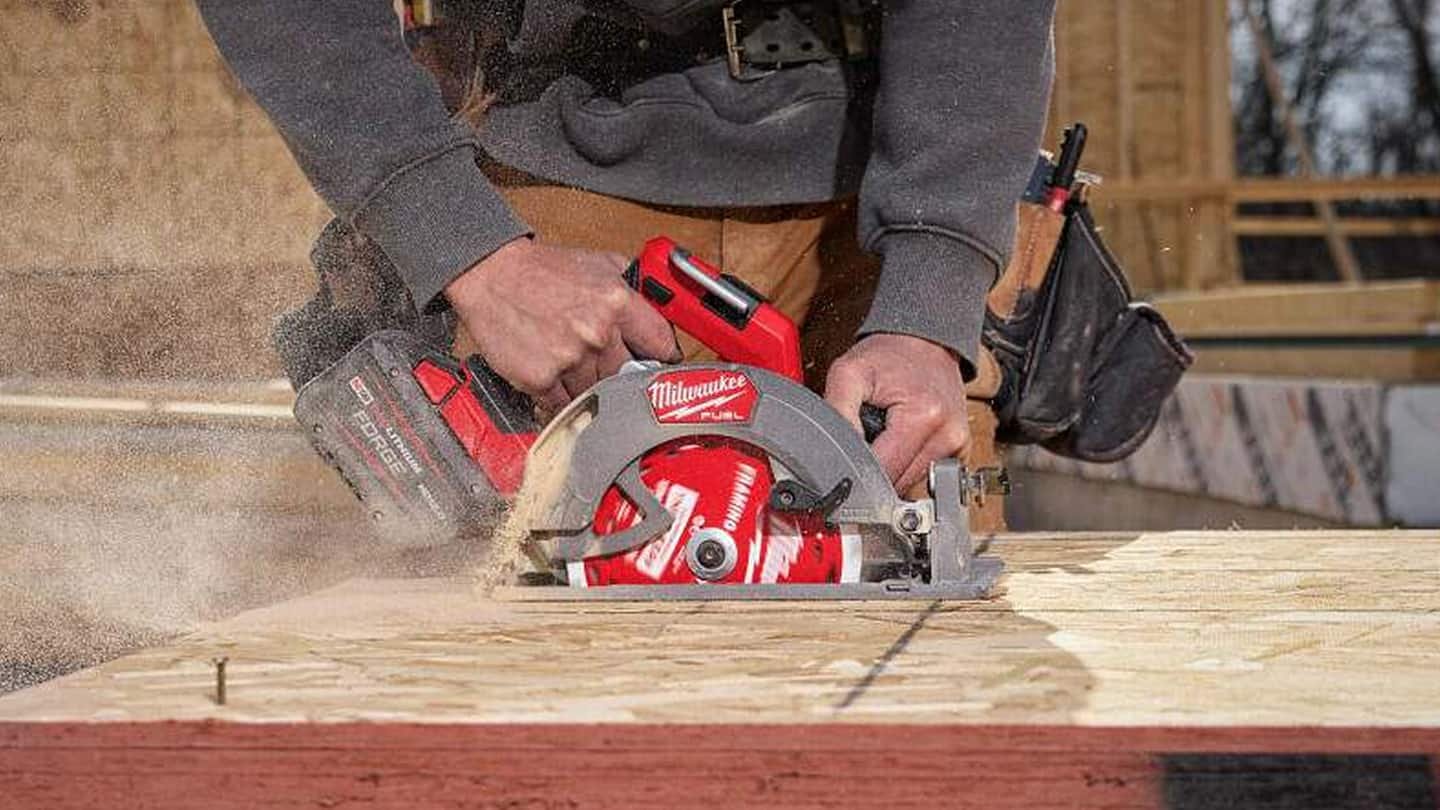
8. Milwaukee 2830-20 Circular Saw Rear Handle 7-1/4″

Best for: Professionals already invested in the Milwaukee battery ecosystem.
This rear-handle circular saw is built for those who need the power and ergonomics of a traditional worm drive saw without the cord. It offers the familiar rear-handle orientation that many framers prefer for sight lines and control. Because it’s a bare tool, it’s best suited for someone who already owns the necessary batteries.
If you don’t already own the brand’s battery system, you will need to acquire compatible batteries and a charger. Check your current battery capacity before purchasing; using anything less than a high-output battery will significantly limit the tool’s torque and run time.
You should ensure it meets your performance expectations by comparing it to your specific framing requirements. If you primarily tackle heavy-duty framing, verify that your existing batteries are compatible with the high-draw demands of this motor.
Good if:
- You already own Milwaukee cordless batteries.
- You prefer the rear-handle design for framing.
Skip it if:
- You don’t own compatible batteries.
- You need a corded saw for all-day, non-stop power.
Choosing Worm-Drive Circular Saws for Framing and Heavy-Duty Cuts
Most of these saws are designed for the same primary task: framing lumber. The SKILSAW SPT77WML-01, BOSCH CSW41, and Makita 5377MG all aim to provide a lightweight, accurate experience for the professional framer. If your work is primarily standard 2x lumber, the choice between these often comes down to personal brand preference or specific ergonomic features like grip texture and wrench storage.
However, a clear divide exists between standard circular saws and specialized timber models like the SKILSAW SPT70WM-01 and SPT70V-11. These larger tools aren’t interchangeable with standard models; they’re built for specific, heavy-duty applications. If you need to cut 4x or 6x lumber in a single pass, you must move to these larger magnesium-constructed saws. Using a standard circular saw for these tasks is a common mistake that forces multiple passes, which ruins accuracy and wastes time.
Meanwhile, cordless models like the DEWALT DCS577B represent a different category of convenience, offering high performance for those who prioritize mobility. When choosing, look for positive bevel stops at 22.5 and 45 degrees if your work requires frequent angle adjustments. If you prioritize speed, choose a corded model for relentless power. If you prioritize site agility, choose a brushless cordless model with an electronic brake.
Still Not Sure?
How often will I really use it?
If you’re framing a full house or working on a professional crew every day, a corded worm drive like the Metabo HPT C7WDM is a reliable choice that will never run out of power. If you’re an occasional user, a lighter, more maneuverable saw like the SKILSAW SPT77WML-01 will be easier to handle and store. Choose based on your actual daily workload, not your future goals.
What do I already own?
If you have a collection of batteries for a specific brand, that should be the biggest factor in your decision. Investing in a cordless saw like the DEWALT FLEXVOLT DCS577B or the Milwaukee 2830-20 makes sense if you can share power packs between your other tools. If you have no battery system, stay with a corded model like the BOSCH CSW41 to avoid the extra expense of batteries and chargers.
What am I most likely to regret choosing?
The most common regret is buying a saw that’s either too heavy or too limited in capacity. If you buy a standard circular saw but find yourself needing to cut 6x beams, you’ll regret not getting the SKILSAW SPT70V-11. Conversely, if you buy a massive timber saw for light framing, you’ll regret the extra weight and size every time you pick it up. Match the tool to your most frequent material.
Related guides
- 10 Best Cordless Circular Saw Picks for Every Project Type
- 10 Best Circular Saws: Our Expert Picks for Every Project
- 10 Best Circular Saw for Beginners Picks and Expert Verdicts
Frequently Asked Questions
Which worm drive saw is the lightest to carry?
The BOSCH CSW41 weighs 13.2 lbs. Magnesium construction is the key feature here, as it reduces the overall weight of the saw without sacrificing the durability required for heavy-duty framing. If you’re worried about arm fatigue after a long shift, this model is a starting point for your search.
Can I use a corded worm drive saw for all-day framing?
Yes, corded worm drive saws like the Metabo HPT C7WDM are specifically designed for all-day professional use. Their high-output motors provide consistent, high-torque power. As long as you have a reliable power source on your job site, these saws are built to handle the constant, repetitive demands of building a home.
Are hypoid and worm drive saws the same thing?
While they’re often used for the same tasks, they have different internal gear designs. The Makita 5377MG uses hypoid oil-bath technology, which is designed for less maintenance and long-term gear durability compared to traditional worm drive setups. Both offer high torque for heavy cuts, but the hypoid design is a specific choice for users looking for a different approach to gear cooling and long-term wear resistance.
What is the advantage of a left-side blade?
A left-side blade design, found on models like the DEWALT FLEXVOLT DCS577B and the BOSCH CSW41, provides a much clearer line of sight for the user. Because the motor is on the right, you can see exactly where the blade is cutting without leaning over the saw. This is a significant advantage for accuracy, especially when you’re making long, precise cuts along a marked line during framing.
Conclusion
Ultimately, the right saw will make your toughest framing days feel much smoother. Don’t just rely on online reviews; head to your local hardware store and hold a few models yourself. You’ll quickly see which handle feels natural in your grip, so you can get back to building with total confidence.