5 Best Die Grinders for Auto Body Work and Tight Spaces
Choosing the best die grinders for auto body work depends on whether you value cordless mobility, pencil-style precision, or the raw power of a corded unit. If you need to navigate tight engine bays or wheel wells, the Milwaukee M12 Fuel Right Angle or the compact Chicago Pneumatic CP875 are the best places to start.
As an Amazon Associate, we earn from qualifying purchases. This post contains affiliate links – if you buy through them, we may earn a commission at no extra cost to you.
1. Milwaukee M12 Fuel Right Angle

Best for: Daily users needing a cordless tool for tight engine spaces.
This tool is built for those who find themselves constantly reaching into cramped spots. The right-angle head design helps you maneuver around obstacles, while the barrel grip is shaped for a steady hold. Because it uses a brushless motor, it manages power output efficiently for your surface prep and cleaning tasks.
The spindle lock is a major benefit for anyone who hates fumbling with multiple tools to swap accessories. You can change your bits with just one wrench, which keeps the job moving. The integrated LED light is also a thoughtful addition, as it illuminates your workspace without casting shadows, even when you’re deep inside a vehicle’s frame.
If you’re choosing between this and a pneumatic grinder, prioritize this cordless option when you need to move freely without dragging an air hose through a delicate engine bay. You save time on setup, but you must monitor your battery levels during long jobs. If the tool begins to lose torque, swap the pack immediately to avoid stalling the motor under load.
Good if:
- You already own other M12 tools and batteries.
- You need a tool that’s easy to change bits on the fly.
- You work in dark, tight areas where visibility is a struggle.
Skip it if:
- You’re looking for a tool that can handle continuous, heavy-duty industrial grinding all day.
- You don’t have a collection of compatible battery packs.
2. DEWALT DCG426B 20V Max Variable Speed Die Grinder

Best for: Professionals who need high-torque cordless power for heavy grinding.
When your work involves heavy material removal, this tool offers the power you need without the tether of a cord. The brushless motor is designed to maintain performance, and the variable speed trigger gives you control over the 25,000 RPM output. This flexibility lets you move from delicate deburring to aggressive grinding with a simple pull of the trigger.
Use the lower end of the speed range when you need to prevent heat buildup on sensitive materials. If you’re stripping thick rust or heavy welds, pull the trigger fully to utilize the maximum 25,000 RPM. This prevents the motor from stalling under load.
The dual-position rocker switch is a standout feature for comfort. It allows you to shift your grip depending on the angle of your work, which reduces fatigue during long sessions. If you’re grinding overhead, use the rear grip position to maintain leverage. For horizontal surfaces, move to the forward position for better downward pressure.
The nose-mounted LEDs also ensure that your target area is always clear, which is essential for precision work in deep body panels.
Good if:
- You require a high-speed tool that offers multiple grip positions.
- You need the freedom of a cordless tool for outdoor or mobile work.
- You want a tool with a variable speed trigger for better control.
Skip it if:
- You’re working in extremely narrow spaces where a bulkier tool might struggle.
- You prefer the consistent weight of a corded or pneumatic machine.
3. Chicago Pneumatic CP875
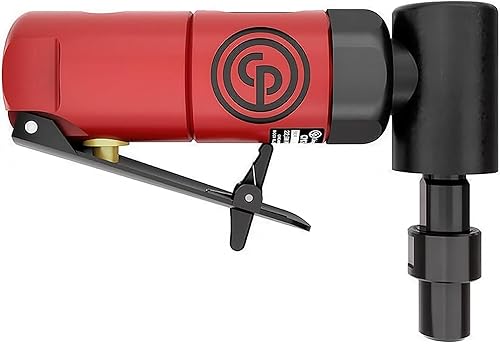
Best for: Someone needing a tiny, lightweight tool for confined spaces.
Pneumatic tools outperform battery-powered alternatives in tight spots because they lack bulky cells. This model is only 4.88 inches long and weighs just 0.99 pounds, making it effortless to handle during long polishing or deburring sessions. Its 22,500 RPM speed provides enough punch for demanding maintenance while remaining easy to control.
The safety throttle lever is a vital feature for preventing accidental start-ups when you set the tool down. If you’re working in a cramped engine bay, use the built-in air regulator to adjust the power for delicate die contouring. The rear exhaust design keeps air away from your work surface, ensuring you can see exactly where to chamfer.
It’s built with an aluminum housing and a composite over-sleeve, which helps it withstand the rough environment of an auto shop. Many users make the mistake of ignoring the air supply requirements; if your compressor can’t support the 0.3 HP output, the tool will stall under load.
Good if:
- You have a reliable air compressor in your shop.
- You need the smallest, lightest tool possible for hard-to-reach areas.
- You prioritize durability with a tough, metal-housed design.
Skip it if:
- You don’t have access to an air compressor or air lines.
- You want the latest high-tech features like LED lighting.
4. Astro Pneumatic Tool 218 1/8″ Pencil Type Die Grinder
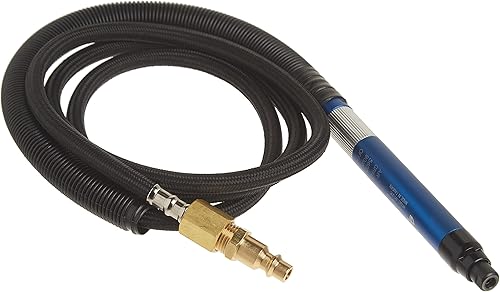
Best for: Precision work on small parts like rotors and brake pads.
A pencil-style grinder is a specialized tool for when you need to be very precise. With a free speed of 56,000 RPM, this tool is designed for high-speed finishing and porting where a larger, slower tool would be too clumsy. It’s incredibly lightweight, which is ideal if you’re spending hours cleaning up small, intricate metal parts.
The twist throttle allows for variable speed control, giving you a tactile way to ramp up the intensity. Because it’s so slim, it fits into spots that even a right-angle grinder might find too crowded. If you’re struggling with access, the pencil profile is the primary solution. It’s a niche tool, but for brake work or cleaning up small mounts, it’s highly effective.
Use this grinder when the surface area is small enough to require a steady, controlled touch. If you’re removing heavy material from a large casting, switch to a more robust rotary tool to avoid stalling the motor. The 56,000 RPM rating is meant for fine finishing, not aggressive stock removal.
Good if:
- You perform detailed work on rotors, brake pads, or engine ports.
- You need a tool that can fit into the smallest openings.
- You prefer a simple, twist-style speed control.
Skip it if:
- You need a general-purpose tool for heavy grinding or cutting.
- You have larger hands and find thin, pencil-style grips uncomfortable.
- You require high torque for removing thick rust or deep metal burrs.
5. DEWALT DWE4887 Die Grinder

Best for: Shop environments where you have constant access to power.
If you hate worrying about battery life or air pressure, a corded tool is the most reliable choice. This 4.2-amp motor provides a consistent 25,000 RPM, which is plenty for 1-1/2-inch grinding tasks. The AC/DC capacity is a unique benefit, as it allows you to run the tool off a welding machine or a generator. This versatility is vital for remote or field work where standard wall outlets are unavailable.
The paddle switch with a lock-on button is designed for ease of use. It allows you to keep the tool running without holding the trigger down, which significantly reduces hand strain over long periods. The precision 1/4-inch collet holds accessories securely. If your specific task requires a smaller shank, you can use an optional 1/8-inch reducing sleeve. While it’s a corded unit, it remains a standard choice for those who need high power that never fades.
Use this tool if you need continuous, high-speed performance for extended grinding sessions. If you’re working in a shop, the cord is rarely an issue. However, if you’re constantly moving around a vehicle, the cord may become a hindrance. You must have a power source or a generator nearby to operate it. If you lack these, you’ll be unable to use the tool.
Good if:
- You want a tool that’s always ready.
- You work near a power source or generator.
- You prefer a paddle switch for long-duration grinding.
Skip it if:
- The cord restricts your movement.
- You lack a reliable power source.
Choosing the Best Die Grinders for Auto Body Work in Tight Spaces
Most of these tools are designed for the same basic job: grinding, polishing, or deburring metal. The Milwaukee M12 and DEWALT 20V models overlap significantly for a user who wants cordless convenience, with the main difference being the battery system and the grip ergonomics. For the pneumatic options, the Chicago Pneumatic CP875 and Astro Pneumatic 218 are both excellent for tight spaces, but they serve different precision needs. The CP875 is a general-purpose right-angle tool, while the Astro is a specialized pencil grinder for high-speed, fine-detail work. If you have an air system, either will work well, but the size and the specific shape of your workspace will be the deciding factors.
Still Not Sure?
Do I really need a cordless tool or is air better?
If you have a professional shop with a high-capacity air compressor, air tools like the Chicago Pneumatic CP875 are often lighter and more compact. However, if you work in a driveway or move between different locations, a cordless tool like the Milwaukee M12 Fuel Right Angle gives you much more freedom. Always follow OSHA safety guidelines when using compressed air equipment to ensure your shop remains a secure environment.
Will this tool fit my existing bits and accessories?
If you have a large collection of 1/4-inch bits, the Milwaukee M12 Fuel Right Angle or the DEWALT DWE4887 will accept them immediately. If you need to use smaller 1/8-inch bits, check if your specific model includes a reducing sleeve or if you need to purchase one separately.
What is the most common mistake when buying a grinder?
The biggest mistake is choosing a tool that’s too large for the specific space you need to enter. Many beginners buy a powerful, bulky model only to find it can’t fit into a tight wheel well or behind an engine block. If your primary goal is reaching hidden spots, look at the compact Chicago Pneumatic CP875 or the slim Astro Pneumatic 218 Pencil instead of a standard-sized model.
Related guides
Frequently Asked Questions
How do I maintain the collet on my die grinder?
Regular maintenance involves keeping the collet clean of debris and ensuring it isn’t overtightened, which can damage the threads. For the DEWALT DWE4887, ensure the 1/4-inch collet is free of metal dust before inserting a new accessory. If you notice vibration, the collet might be loose or the bit might be improperly seated. Always check the manufacturer’s manual for specific lubrication requirements for your model.
Can I use my cordless die grinder for heavy-duty metal cutting?
While tools like the DEWALT 20V Max Variable Speed are powerful, they’re primarily designed for grinding and surface preparation. Cutting through thick metal puts significant stress on any tool and can drain batteries quickly. If you plan to do a lot of cutting, ensure you’re using the correct high-speed cutting discs and allow the motor to work without forcing it, which prevents overheating.
Is a high RPM always better for auto body work?
Not necessarily. Higher RPMs like those found on the Astro Pneumatic 218 Pencil at 56,000 RPM are perfect for fine finishing and precision work on small parts. However, for aggressive material removal, a lower, more controlled speed is often better to prevent the metal from burning or warping. The DEWALT 20V Max Variable Speed is a great choice here, as it lets you adjust the speed to match the task.
Why does my air grinder lose power during use?
If your Chicago Pneumatic CP875 seems to lose power, it’s usually due to an inadequate air supply or a kinked air hose. Ensure your compressor is set to the correct PSI as specified in the product guide and that your hose diameter is sufficient for the tool’s air consumption. A tool that is “starved” for air will feel weak, so check your connections and hose length if performance drops.
Conclusion
The choice between these tools comes down to your shop’s power setup and the size of your workspace. If you have a compressor, the Chicago Pneumatic CP875 is a reliable, compact choice for tight areas. If you prefer the ease of cordless power, the Milwaukee M12 Fuel Right Angle is a versatile, well-designed option. Choose the one that matches your current battery ecosystem or air supply to get started.