
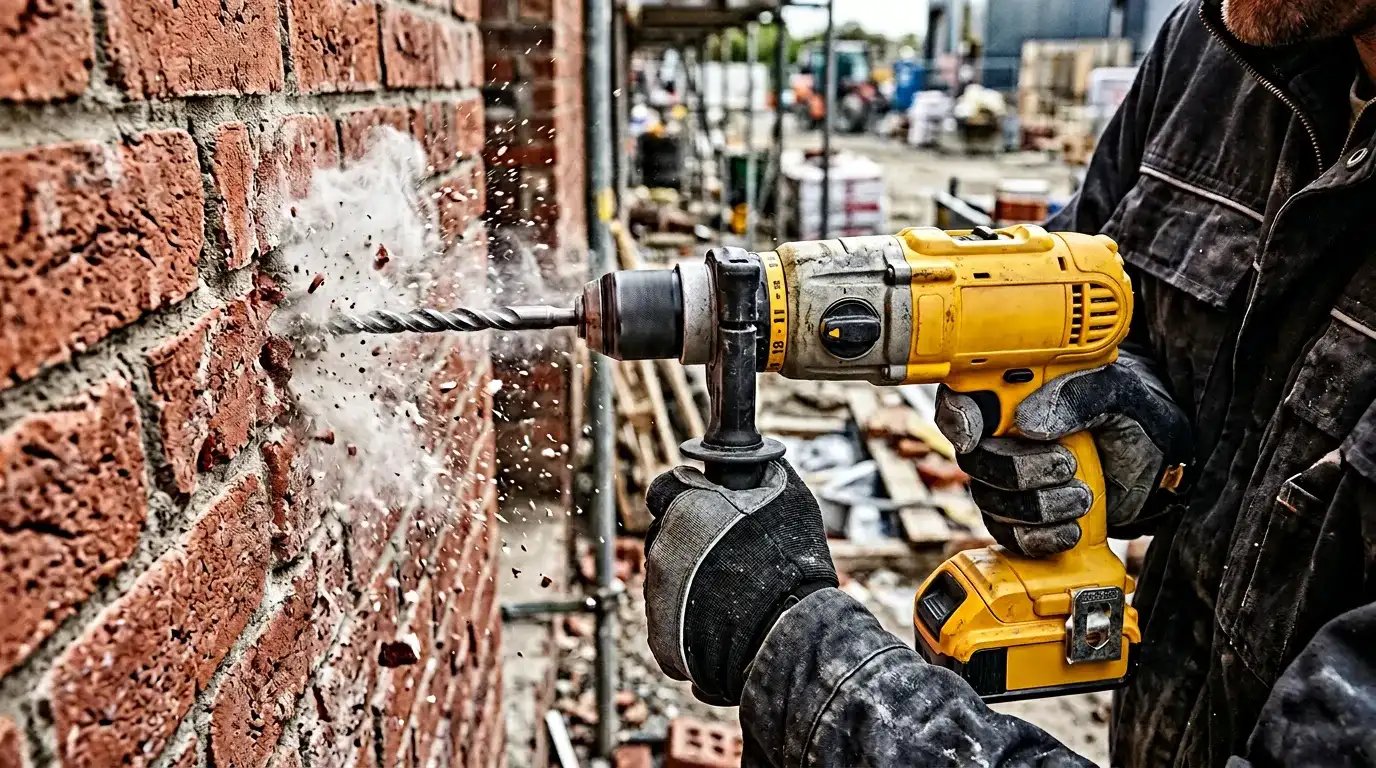
10 Best Hammer Drill Picks for Power and Concrete Drilling
Choosing a hammer drill means balancing power against the weight you’re comfortable holding for long jobs. Some models focus on compact reach, while others prioritize the raw force needed for thick concrete. The main difference lies in whether you need a versatile tool for driving screws or a dedicated machine for heavy demolition.
As an Amazon Associate, we earn from qualifying purchases. This post contains affiliate links – if you buy through them, we may earn a commission at no extra cost to you.
Best overall: DEWALT 20V MAX XR DCD996B. This model features a high-efficiency brushless motor that improves runtime significantly, paired with a heavy-duty metal chuck that handles tough bits securely. It’s the most reliable choice for a wide range of daily tasks.
Best for heavy masonry: ENEACRO 1-1/4 Inch Rotary. This unit provides massive impact energy for serious concrete work, and its anti-vibration system is designed to keep the user comfortable during long sessions. It’s the clear choice for those tackling large renovation projects.
Best compact design: DEWALT ATOMIC DCD799B. This drill is specifically engineered with a short head length to fit into tight corners where standard drills can’t go. It’s perfect for professionals who work in cramped, narrow spaces.
This guide is for anyone looking to match their specific drilling needs to the right tool specs.
How We Picked
We evaluated 48 hammer drill listings to identify the most capable options for various user needs. A product was selected only if its listing provided clear motor specifications, chuck types, and operational modes. We prioritized models that detailed their impact energy or drilling capacity to ensure users understand the tool’s capabilities.
1. DEWALT 20V MAX XR Cordless Hammer Drill Driver Brushless

Best for: General construction and heavy-duty assembly work.
This hammer drill stands out because of its high-efficiency brushless motor, which is designed to provide significantly longer runtime compared to older brushed models. The 1/2-inch ratcheting metal chuck includes carbide inserts, ensuring that your bits stay locked in place even when applying high torque to stubborn materials.
The integrated 3-mode LED is a major advantage for anyone working in dim closets or under cabinets. One mode even acts as a spotlight with a 20-minute shutoff, meaning you can finish your task without the light cutting out on you. This tool is designed with a larger motor housing for increased power.
Pros
- Brushless motor improves overall runtime.
- Metal chuck grips bits securely.
- Bright LED light for visibility.
Cons
- Larger size than subcompact models.
2. Milwaukee M18 Fuel

Best for: Professionals needing maximum torque consistency.
This model is built for users who need to drive a high volume of fasteners without variation. The mechanical clutch provides a consistent feel that helps prevent over-driving, while the all-metal chuck uses carbide teeth to keep a tight grip on bits during intense work.
If you’re driving small screws into soft wood, the mechanical clutch may feel overkill; switch to a lower torque setting or a smaller driver to avoid stripping heads. However, when you’re anchoring into dense materials, the clutch ensures every fastener seats at the exact same depth.
The performance is tied to the 5.0Ah battery system, which provides the most runtime in its class. This makes it a primary workhorse for all-day drilling into brick, block, or concrete using the dedicated hammer mode.
If you prioritize portability, use the all-metal belt clip to secure the tool between tasks. This model is engineered for high power and durability rather than minimal weight.
Pros
- Consistent mechanical clutch performance.
- Durable all-metal chuck design.
- Strong performance under load.
Cons
- Not designed for lightweight, subcompact use.
3. ENEACRO 1-1/4 Inch SDS-Plus 13 Amp Heavy Duty Rotary Hammer

Best for: Heavy demolition and concrete drilling.
This rotary hammer is a dedicated machine for heavy-duty tasks like removing tiles or breaking apart brickwork. It uses a 13-amp motor to produce 5.5 feet/lbs of impact energy. The heat-resistant copper wire motor allows for long working periods without overheating, while the anti-dust structure protects the internal components.
The four-function design allows you to switch between drill only, hammer only, hammer drill, and chisel adjustment. Use the drill-only mode for steel or wood, and reserve the hammer-only mode for concrete or brick. You can easily adapt to different scenarios by using the two-switch system, which doubles the service life compared to single-switch designs.
However, this is a heavy tool at 12.58 pounds for the bare machine. If you’re drilling into metal, keep the diameter under 0.5 inches; for concrete, you can go up to 1.25 inches. Because of the high torque, the safety clutch is vital to protect your wrists. Don’t attempt to use this for light, everyday household tasks where a standard drill suffices.
Pros
- High impact energy for demolition.
- Includes useful accessory kit.
- Effective vibration reduction system.
Cons
- Heavy weight for extended use.
- Not for light household drilling.
4. DEWALT DCD799B 20V MAX* ATOMIC COMPACT SERIES Brushless Lithium-Ion 1/2

Best for: Working in tight, cramped spaces.
If you struggle to fit your drill between studs or into small cabinetry, this model is the solution. Its head length is only 6.49 inches, which allows it to reach spots where standard drills are simply too long to maneuver.
Despite the small size, it still delivers 552 UWO of power, so you don’t have to sacrifice too much performance to gain that compact frame. You gain up to 14% more power compared to previous models, ensuring you can complete fastening tasks without needing a full-sized tool. It includes an on-tool LED to help you see what you’re doing in those dark, narrow gaps.
Use this tool when you need to reach tight corners, but avoid it for heavy-duty concrete demolition. That work requires a dedicated rotary-style machine. If you’re drilling into masonry, the 28,050 BPMs provide the necessary impact for light tasks, but pushing the tool beyond its physical limits will only lead to premature motor strain.
The 1/2-inch ratcheting chuck ensures high bit retention, preventing slips during high-torque applications. If your bit keeps loosening while drilling, check that you have fully engaged the ratcheting mechanism.
Pros
- Very short head for tight spots.
- Good power for its size.
- Compact and easy to handle.
- High bit retention.
Cons
- Not for heavy concrete demolition.
- Limited by its compact form factor for extreme applications.
5. Milwaukee M12 Fuel

Best for: Users prioritizing tool belt portability.
At just 2.6 lbs, this subcompact hammer drill is designed to be carried on your belt all day without causing fatigue. The brushless motor is surprisingly capable, allowing you to complete a wide range of tasks that usually require a larger, heavier machine.
The all-metal chuck provides the same durability you expect from larger tools, ensuring your bits don’t slip. If you’re a technician or electrician who needs a versatile tool that stays out of the way, this is your primary choice. You can rely on the mechanical clutch for consistency when driving a wide range of fasteners, preventing stripped heads or over-driven screws.
If your work requires drilling large-diameter holes into thick, cured concrete, you’ll find this tool struggling under the load. This drill is built for speed and portability, not heavy-duty masonry demolition. When you need to clear a high volume of driving applications, the brushless motor maintains its pace under load better than brushed alternatives.
Pros
- Extremely lightweight and portable.
- Durable all-metal chuck.
- Brushless motor for efficiency.
- Consistent fastener driving via mechanical clutch.
Cons
- Limited for large concrete holes.
- Not intended for heavy-duty masonry.
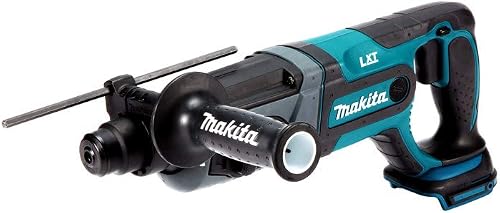
6. Makita XRH04Z 18V LXT® Lithium-Ion Cordless 7/8″ Rotary Hammer
Best for: Professional masonry and concrete installers.
This rotary hammer is engineered for speed. Its motor synchronizes RPM and BPM to penetrate concrete faster than standard tools. You can reach up to 1,200 RPM and 4,000 BPM, ensuring high-output performance for demanding tasks.
The torque-limiting clutch is a vital safety feature. It automatically disengages the gears if your bit binds during operation. This mechanism prevents internal gear damage and protects the user from sudden tool kickback. If you feel the bit snag, stop immediately to allow the clutch to reset.
It offers three distinct operation modes. Use “Rotation Only” for wood or steel, “Hammering with Rotation” for masonry, or “Hammering Only” for light chipping. This versatility makes it a flexible asset for diverse site work.
The shock-absorbent handle is specifically designed to protect the battery housing from impact. This adds a critical layer of durability against the rough conditions of a job site.
This tool is designed for professionals who require a rugged build and specialized power for demanding tasks. Casual DIY users performing light repairs may find these advanced features unnecessary for their needs.
Pros
- Fast drilling in concrete.
- Safety clutch prevents gear damage.
- Versatile three-mode operation.
Cons
- Professional-focused, not for casual DIY.
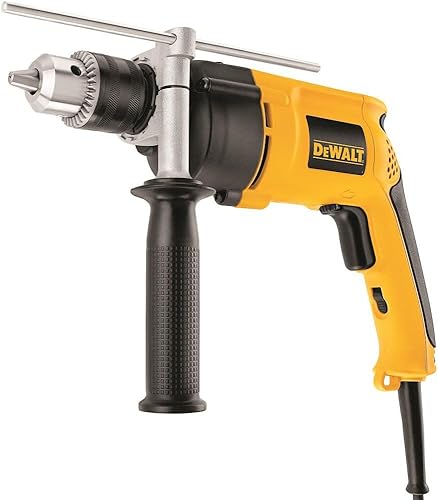
7. DEWALT Hammer Drill
Best for: Users who prefer a corded power source.
If you hate worrying about battery levels, this corded drill is a reliable choice. The 7.8-amp motor provides consistent power without the need to stop for charging. Because it draws power directly from the wall, you never face the performance drop-off common in aging battery cells. The 360-degree side handle gives you the extra control needed when drilling deep holes in masonry. Always use the included depth rod to ensure your holes remain uniform across an entire project.
The tool is relatively light at 4.3 lbs, making it manageable for longer tasks. You can easily switch between drill and hammer modes to handle various materials like wood, steel, or brick. Use the drill mode for clean, precise holes in wood or metal. Switch to hammer mode only when you encounter masonry, as the percussive action will damage softer materials.
This tool is not the right choice for someone who needs to work far away from an electrical outlet. If your job site lacks reliable power, managing extension cords becomes a significant challenge. Evaluate your workspace before choosing; if you are working on a ladder or in a crawlspace, the cord may become a snag hazard.
Pros
- Consistent power with corded design.
- Lightweight and easy to control.
- Versatile dual-mode operation.
Cons
- Requires proximity to power outlet.
- Cord management can hinder mobility in tight spaces.
8. CRAFTSMAN V20 Cordless Hammer Drill Kit

Best for: A complete starter kit for home projects.
This kit is great because it comes with everything you need to get started, including two batteries and a charger. The 2-speed gearbox allows you to switch between high speed for drilling and lower speeds for better control when driving screws.
The ratcheting chuck helps keep bits secure, and the V20 battery system is compatible with other tools in the same line. It’s a solid, all-around performer for home renovations. It isn’t for a professional contractor who needs the highest possible torque or specialized rotary hammer features.
Pros
- Includes batteries and charger.
- Two-speed gearbox for control.
- Good for home renovations.
Cons
- Not for high-torque professional work.
9. Bosch 1191VSRK 120-Volt 1/2-Inch Single-Speed Hammer Drill

Best for: Small diameter drilling in masonry.
This single-speed hammer drill is designed for precision. It features a 7-amp motor that offers a high performance-to-weight ratio, making it easy to maneuver when you’re performing delicate drilling tasks.
The quick-release depth gauge is a helpful addition for ensuring your holes are exactly as deep as you need them to be. Its compact design makes it comfortable to use for extended periods.
This prevents the bit from walking across the surface.
Avoid using this tool for large-diameter masonry anchors. Because it lacks a variable speed trigger, you can’t slow the bit down to prevent overheating in dense materials. If your project requires holes larger than 1/2-inch, this drill will struggle to maintain the necessary torque.
Pros
- Lightweight and precise.
- Helpful depth gauge included.
- Strong performance-to-weight ratio.
- 360-degree auxiliary handle for better control.
Cons
- Not for heavy-duty drilling.
- Single-speed motor limits control in dense materials.
10. Berserker 1-9/16″ SDS-Max Heavy Duty Rotary Hammer Drill

Best for: Heavy-duty renovation and demolition.
This is a powerful 13-amp tool designed for serious work like breaking up rock or masonry. It features a 6-speed transmission, which allows you to match the speed precisely to the material you’re working on, improving your overall control. If you’re drilling into softer materials, dial the speed down to prevent cracking; for heavy concrete demolition, shift to the highest setting to maximize the 7.38 ft.lbs. of impact energy.
The SDS-Max system is built for heavy impact energy transfer, making it much more effective at demolition than a standard hammer drill. It also includes an overload clutch to protect your wrists if the bit snags. If the tool suddenly jerks, the clutch disengages to prevent injury. Because it weighs 16 lbs and lacks a drill-only mode, it’s strictly for heavy demo work and not for general drilling or driving fasteners. Attempting to use this for standard screw driving will likely result in stripped heads or damaged surfaces due to the lack of a rotation-only setting.
Pros
- Massive impact energy for demo.
- Six-speed transmission for control.
- Includes 24-month warranty service.
- Anti-Vibration Technology reduces user fatigue.
Cons
- Very heavy at 16 lbs.
- No drill-only mode.
- Not suitable for light-duty fastener installation.
How to Choose in Sixty Seconds
Which type of drill do I actually need?
You must decide between a standard hammer drill and a rotary hammer. A standard hammer drill is best for drilling holes in brick or block while also serving as a regular drill for wood and metal. If you’re doing general home improvement, a standard cordless model like the DEWALT 20V MAX XR DCD996B is usually enough. However, if you’re breaking up concrete or drilling large-diameter holes, you need a rotary hammer. Rotary hammers use a different mechanism to deliver much higher impact energy, which is essential for heavy masonry work. Always check if the tool has a “drill-only” mode if you plan to use it for tasks other than masonry, as some heavy-duty rotary units lack this feature entirely.
Does the chuck type matter for my work?
The chuck is the part of the drill that holds the bit, and its quality dictates how much power is transferred to your work. A ratcheting metal chuck is the standard for serious drills because it provides the grip necessary to prevent bits from slipping under high torque. Some premium models, like those from Milwaukee or DEWALT, use carbide inserts or teeth to bite into the bit shank for even better retention. If you’re doing light, occasional work, a standard chuck is fine, but for heavy-duty applications where you’re applying a lot of force, a high-quality metal chuck is a must. Proper maintenance and following Occupational Safety and Health Administration guidelines for tool usage will help ensure your drill stays in good working condition.
Should I choose corded or cordless?
Corded drills are ideal for stationary work where you have constant access to an outlet and want to avoid the weight of batteries. They provide consistent, uninterrupted power for long periods. Cordless drills offer the freedom to work anywhere, which is vital for professional contractors or those working on large sites.
Choosing the right tool depends on your specific workload. For most users, the DEWALT 20V MAX XR DCD996B provides the best balance of power and versatility for a wide range of household and professional tasks. If your work involves heavy-duty concrete demolition, the ENEACRO 1-1/4 Inch Rotary is a better choice due to its higher impact energy and specialized design. Before ordering, verify the weight of the tool and ensure it includes the modes you need, such as drill-only or hammer-only settings. Once you have your drill, keep your bits clean and sharp to ensure the tool performs at its best.
Frequently Asked Questions
What goes wrong first on these tools?
Chucks and batteries are the components most prone to wear over time. Friction from bit changes and standard charge cycles naturally degrade these parts after extensive use. To prevent premature failure, avoid using the tool for tasks that exceed the power rating specified by the manufacturer.
Is the simplest one on the list enough for me?
Simple models are sufficient for light household tasks like mounting shelves or hanging pictures in brick. Tools like the Bosch 1191VSRK provide high performance in a compact package without unnecessary complexity. You do not need a heavy-duty rotary hammer unless you are performing structural masonry work.
What has to work with my new drill to make it useful?
Always select the correct bit type for your specific material to ensure effective drilling. Carbide-tipped bits are required for masonry, while rotary hammers require specific shank types like SDS-Plus or SDS-Max. Using high-quality, compatible accessories prevents tool damage and ensures the best possible results for your project.
Conclusion
Before you head to the store, think about the toughest project you’ll tackle this year. If you’re just hanging shelves, a lighter model won’t tire your arms out. But if you’re breaking through stone, you’ll want that extra muscle. Grab the one that feels right in your hand, and you’re set.

One Comment