
Pneumatic vs. Electric Die Grinder: Which Is Right for Your Shop?
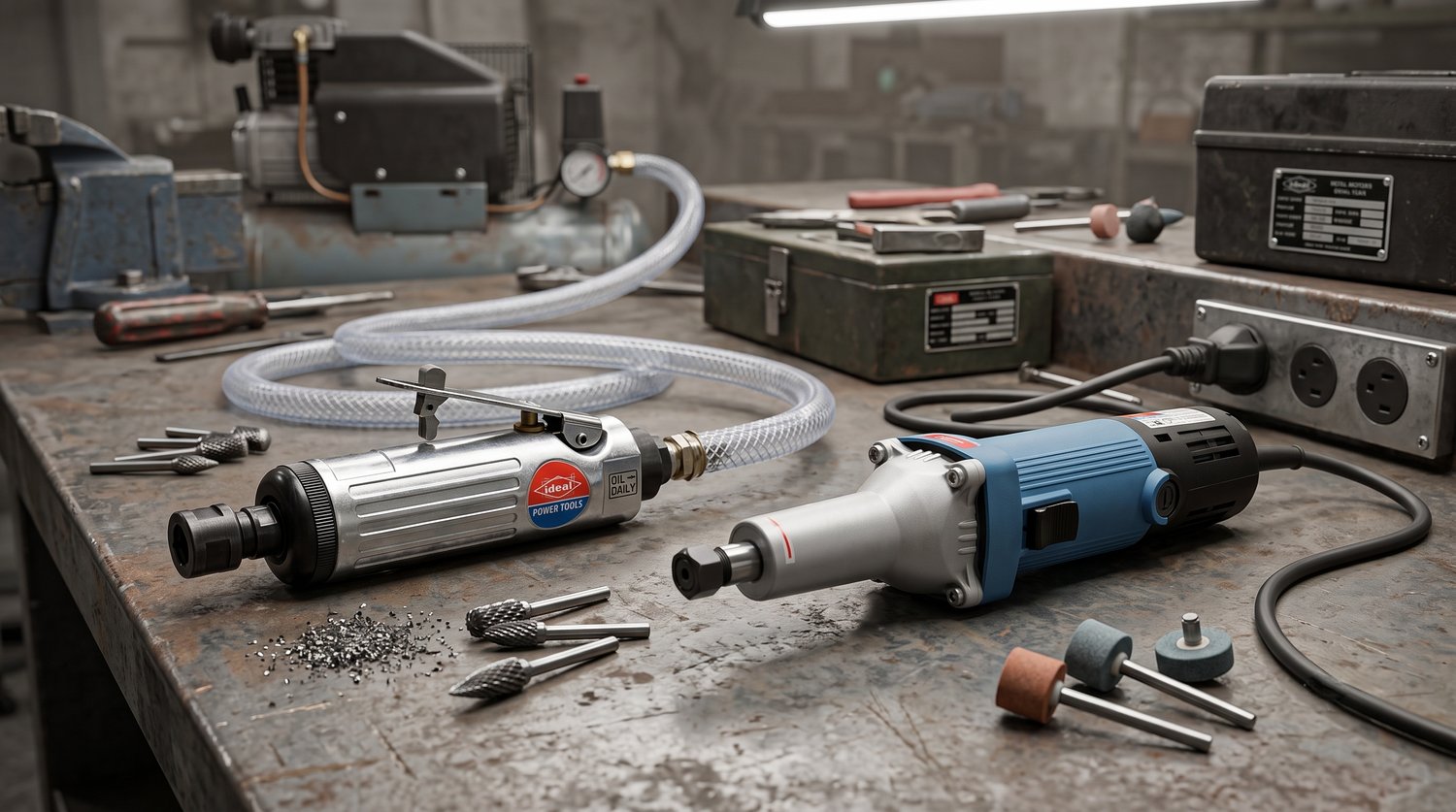
Selecting the right power tool for your metalworking or fabrication tasks often comes down to a choice between a pneumatic vs. electric die grinder: which is right for your shop? To make an informed decision, you must consider your available power sources, the duration of your projects, and the specific environment in which you work. Pneumatic models typically cost between $40 and $350, while electric corded versions range from $60 to $450 and cordless variants from $120 to $600. Balancing these costs against your workflow requirements ensures you invest in equipment that enhances rather than hinders your daily production.
Key Takeaways
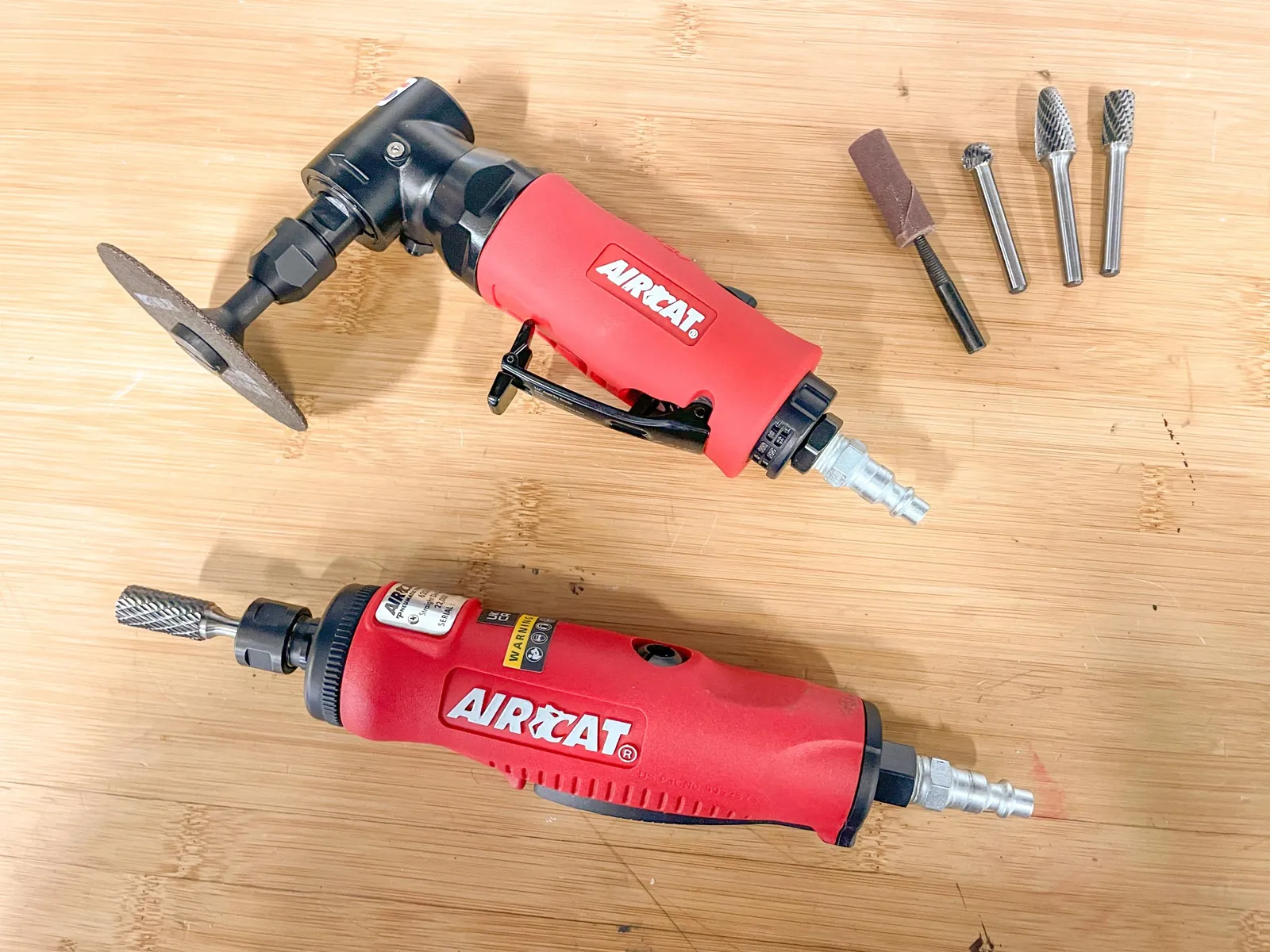
- Pneumatic grinders are significantly lighter and more compact, making them ideal for tight spaces and overhead work.
- Electric corded grinders provide consistent, non-stop power for heavy-duty grinding tasks without battery life concerns.
- Cordless die grinders offer unmatched portability, allowing you to move freely around large workpieces without trailing air hoses or power cables.
- Air-powered tools require a robust air compressor system, which is an additional long-term infrastructure investment.
- Maintenance for air tools involves regular lubrication, while electric tools require monitoring for motor heat and dust accumulation.
Comparing Pneumatic and Electric Die Grinders for Your Shop
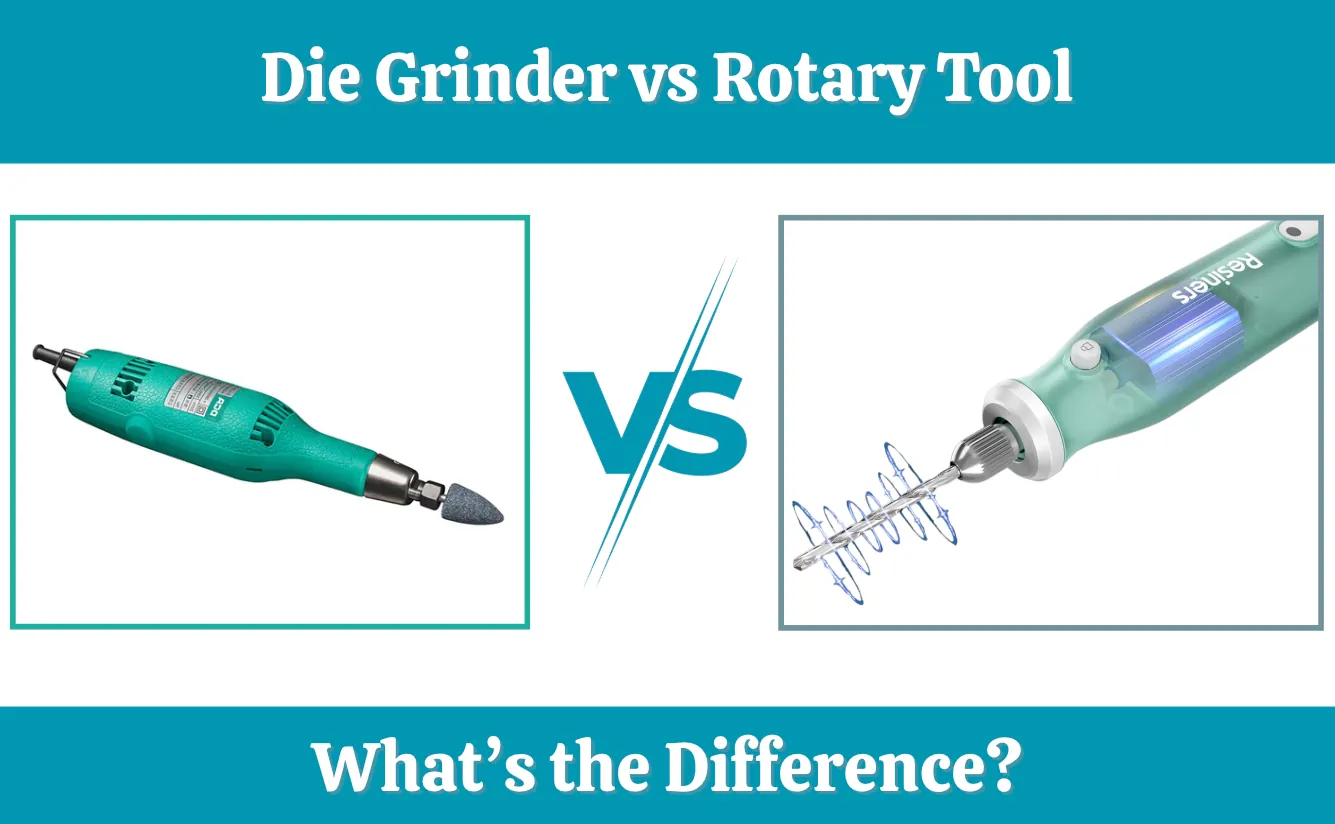
Choosing the correct tool requires understanding the fundamental differences in how these machines deliver power. Pneumatic tools rely on a steady flow of compressed air to spin the turbine, whereas electric tools use an internal motor powered by a grid or a battery pack.
| Feature | Pneumatic Die Grinder | Electric Die Grinder |
|---|---|---|
| Weight | Very light, compact | Heavier, bulkier |
| Power Source | Air compressor required | Outlet or battery pack |
| Maintenance | Oiling the air motor | Cleaning motor vents |
| Portability | Limited by air hose | High (if cordless) |
The Mechanics of Pneumatic Grinders
Pneumatic grinders are the industry standard for production environments where high-speed material removal is necessary. Because they lack heavy copper windings and magnetic components, they’re remarkably small, allowing operators to reach into narrow engine ports or cramped fabrication jigs.
Pro Tip: Always install a moisture separator in your air line. Water in the air supply can quickly corrode the internal vanes of an air motor, leading to a significant loss of power and eventual mechanical failure.
Pros of Air Power
- High Power-to-Weight Ratio: These tools provide immense torque and RPMs relative to their size.
- Continuous Duty Cycle: They don’t generate significant heat during prolonged use, unlike electric motors.
- Safety in Wet Conditions: Since they lack electricity, they’re safer to use in damp environments.
Cons of Air Power
- Infrastructure Requirements: You must own a high-capacity compressor to maintain the necessary cubic feet per minute (CFM) for consistent performance.
- Hose Drag: The thick rubber supply line can be cumbersome and may mar delicate surfaces.
Understanding Electric Die Grinders
Electric versions have evolved significantly in recent years. Modern brushless motors provide high efficiency and torque that rivals traditional air-powered models. These are often the preferred choice for mobile welders or shops that lack the space for a large air compressor setup.
The Corded Advantage
Corded grinders provide an endless supply of power. If you’re performing long, continuous grinding sessions, a corded tool ensures you never have to stop to recharge or swap out a battery. These models are generally more affordable than their high-end battery-powered counterparts.
The Cordless Revolution
Cordless die grinders are perfect for field work. When you’re performing repairs on a job site where power is unavailable, these tools become indispensable. Brands like Milwaukee, DeWalt, and Makita have developed high-voltage platforms that offer enough runtime for most standard fabrication tasks.
Maintenance and Safety Protocols
Regardless of the power source, proper maintenance is vital for longevity.
Air Tool Care
- Daily Lubrication: Add 2-3 drops of air tool oil into the inlet before every shift.
- Filter Checks: Regularly drain your compressor tank to prevent water buildup.
- Seal Inspection: Check the trigger assembly for air leaks that waste energy.
Electric Tool Care
- Vent Cleaning: Use compressed air to blow out dust from the cooling vents after every use.
- Battery Storage: Keep lithium-ion batteries at room temperature to prevent internal chemical degradation.
- Cord Inspection: Check the power lead for nicks or exposed copper wires before plugging in.
Where Does Each Tool Excel?
Different shop environments dictate different needs. If you’re running a high-volume production line, the pneumatic grinder is likely your best friend due to its reliability and low cost per unit. If you’re an automotive enthusiast working in a home garage, an electric model might be more practical since you may not have a commercial-grade compressor.
Shop Scenarios
- Fabrication Shops: Rely on pneumatic tools for heavy grinding and blending welds.
- Field Repair: Use cordless tools for maximum versatility when working on heavy machinery.
- Tight Spaces: Choose small pneumatic pencil grinders to reach inside complex geometries.
Factors Affecting Your Performance
Your output is only as good as your setup. A pneumatic grinder will fail to reach its rated speed if the air hose is too long or the diameter is too small, creating pressure drop. Similarly, an electric grinder will suffer if you use an undersized extension cord that causes a voltage drop. Always ensure your power delivery system matches the tool’s specifications for voltage or PSI.
Evaluating Long-Term Costs
While the initial purchase price is a primary concern, the total cost of ownership is what really matters. Pneumatic systems require the purchase and maintenance of a compressor, which includes replacing filters and oil. Electric systems require periodic replacement of battery packs, which can be expensive after three to five years of heavy use.
| Component | Pneumatic Cost Driver | Electric Cost Driver |
|---|---|---|
| Consumables | Air tool oil | Replacement batteries |
| Infrastructure | Compressor maintenance | Electricity consumption |
| Tool Longevity | High (simple design) | Moderate (electronic failure) |
Related guides
- 10 Best Die Grinders for Metalworking, Auto Repair, and Shop Use
- 10 Best Pneumatic Die Grinders for Auto Repair and Metalworking
Frequently Asked Questions
Can I run a pneumatic grinder on a small pancake compressor?
A small pancake compressor usually lacks the CFM output required for a die grinder. You might get a few seconds of use before the motor stalls, as the tool quickly depletes the tank’s pressure. These tools typically demand 4-6 CFM at 90 PSI. Unless your compressor is rated for such high continuous air delivery, you’ll experience extreme frustration and frequent pauses.
Are cordless die grinders powerful enough for heavy metal removal?
Modern cordless die grinders equipped with brushless motors are surprisingly powerful. They can handle most heavy grinding and deburring tasks that were previously reserved for pneumatic or corded tools. However, for continuous, all-day industrial grinding, a pneumatic or corded tool remains superior because it doesn’t suffer from battery discharge or thermal throttling during extreme, sustained loads.
How do I choose the right RPM for my project?
The required RPM depends on the size and type of the abrasive accessory. Larger grinding stones require lower speeds to prevent them from shattering, while smaller carbide burrs require very high speeds to cut effectively. Many modern electric die grinders feature variable speed dials, which are essential if you switch between different types of grinding media, polishing wheels, or sanding discs.
Is it cheaper to maintain an air or electric setup?
For a single tool, an electric grinder is usually cheaper to maintain because it requires no infrastructure. However, if your shop already has a large air system for other tools like impacts or spray guns, adding a pneumatic die grinder is very inexpensive. If you have no existing air infrastructure, the cost of a quality compressor makes the electric option significantly more cost-effective for a small shop.
What safety gear is mandatory for die grinding?
Regardless of the tool, you must wear ANSI-rated safety glasses or a full face shield to protect against metal shards. Hearing protection is also mandatory, as the high-pitched whine of a die grinder can easily exceed safe decibel levels. Additionally, wear leather gloves and a long-sleeved apron to protect your skin from the intense heat and sharp metal burrs generated during the grinding process.
Conclusion
Deciding between these two technologies requires an honest assessment of your existing infrastructure and the nature of your typical projects. If you already have a high-capacity compressor, the low cost and compact size of pneumatic tools are hard to beat for long-term shop use. If you need mobility or lack a compressor, invest in a high-quality brushless cordless grinder. Research specific models from reputable manufacturers to compare torque specifications before making your final purchase.
One Comment