Rotary Tool vs Die Grinder: Power, Size, and Best Uses Compared
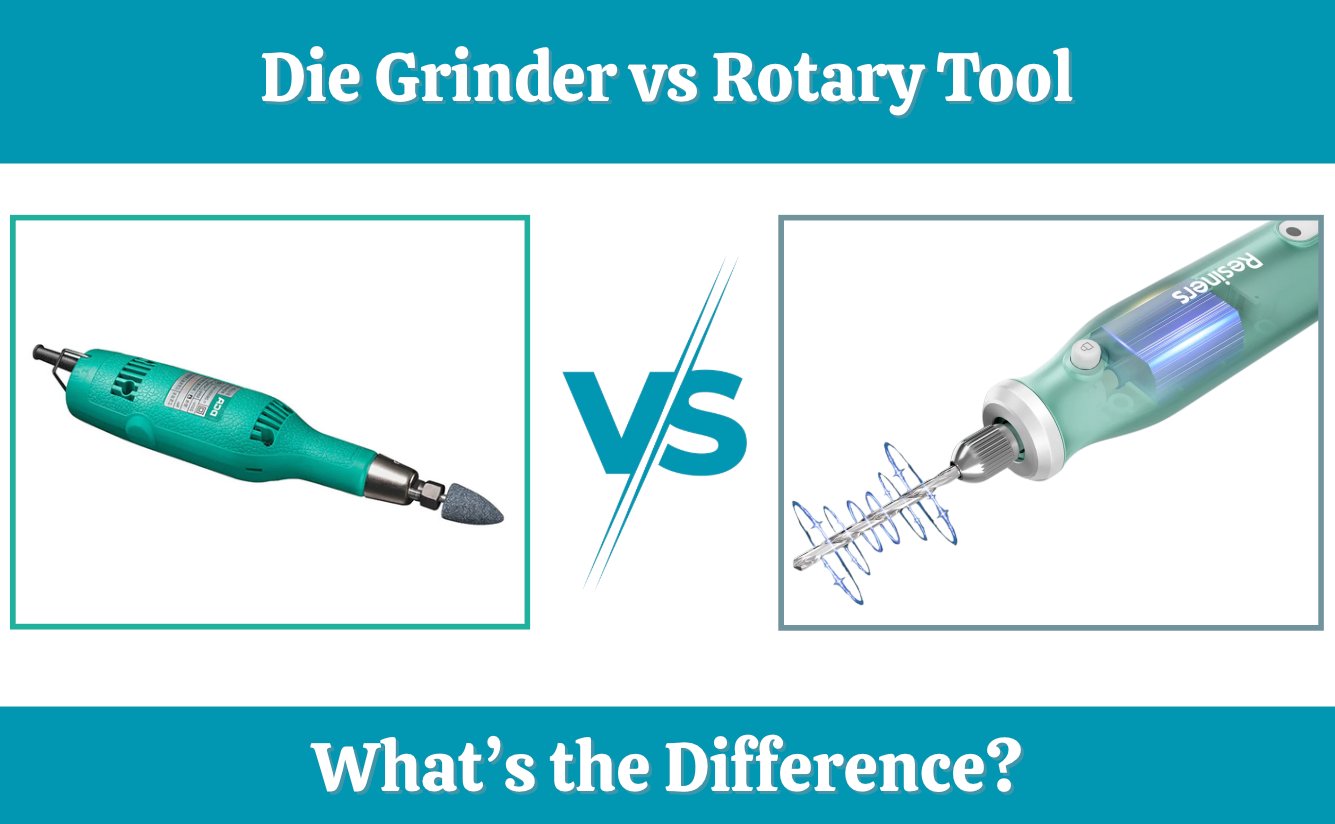
Rotary tools and die grinders both spin shafts at high speeds to drive abrasive bits, but they are designed for different tasks based on their power and size. Rotary tools generally cost between $30 and $180, while professional pneumatic die grinders range from $40 to $350 based on torque and build quality. Selecting the right tool for your project scale and material density is necessary for safety and efficiency.
Key Takeaways
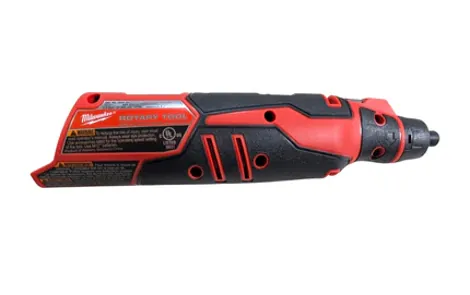
- Rotary tools are best for intricate detail work and light hobbyist tasks.
- Die grinders are industrial machines designed for heavy metal removal and welding prep.
- Pneumatic die grinders require a constant air supply, while rotary tools use standard electrical outlets.
- Always match the accessory speed rating to the tool’s maximum revolutions per minute.
- Use Personal Protective Equipment to prevent injury from flying metal shards or dust.
Comparing Rotary Tool and Die Grinder Power and Size
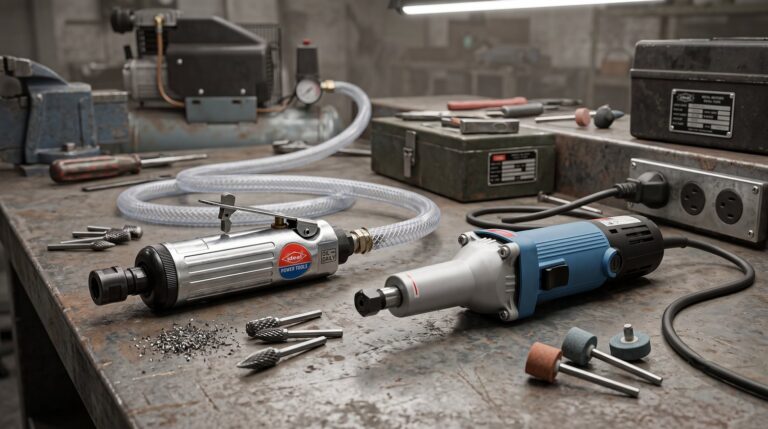
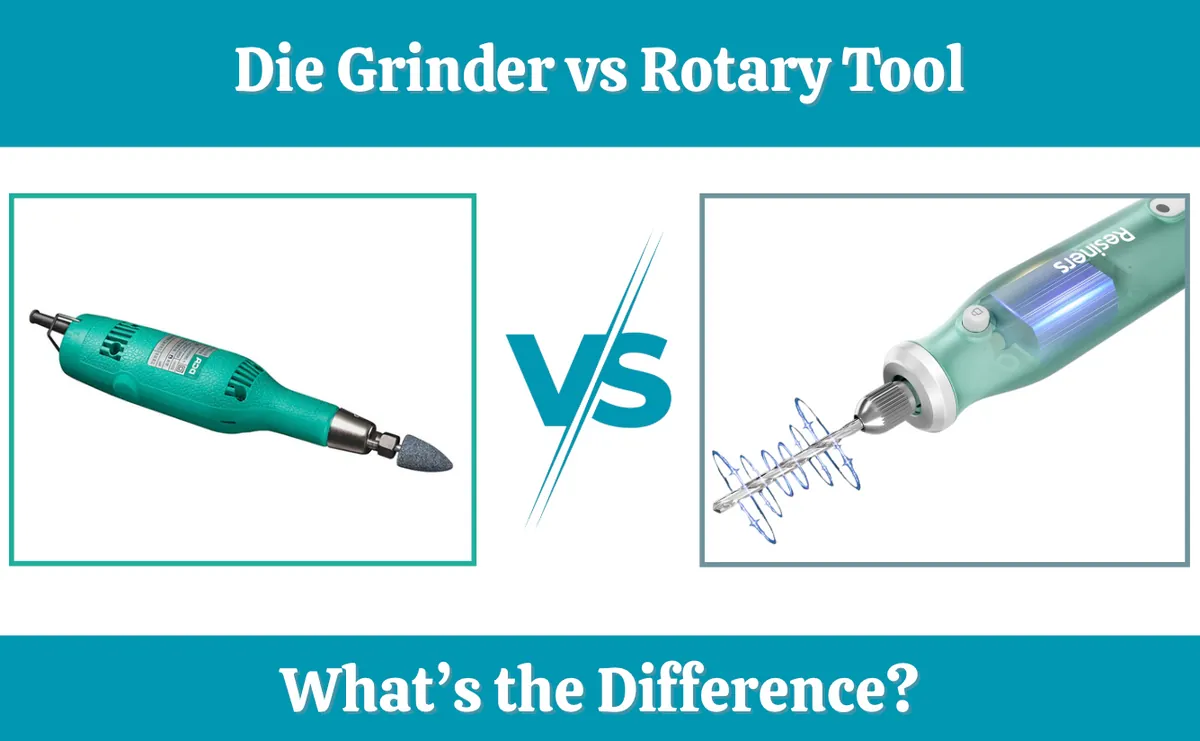
The primary distinction lies in the motor architecture. Rotary tools use small, high-speed electric motors that excel at precision but lack the torque to handle heavy material resistance. If you push a rotary tool too hard against thick steel, the motor will stall or burn out. Conversely, die grinders are built for high torque and consistent power. Many die grinders are pneumatic, powered by compressed air, which allows them to maintain high speed even under significant load.
| Feature | Rotary Tool | Die Grinder |
|---|---|---|
| Primary Power | Electric (Corded/Battery) | Pneumatic (Air Compressor) |
| Speed Range | 5,000–35,000 RPM | 10,000–25,000 RPM |
| Torque Output | Low | High |
| Typical Use | Hobby, Detail, Craft | Fabrication, Welding, Auto |
Size and Ergonomics for Tasks
Rotary tools are designed to be held like a pen, allowing for fine control. They’re lightweight and slim, making them ideal for carving wood, engraving glass, or cleaning small jewelry components. A die grinder is significantly bulkier, often requiring a two-handed grip to manage the vibration and torque. Because of their size, die grinders are meant for heavy-duty tasks like cleaning rust off a car frame or smoothing out weld beads on a structural beam.
Which Tool for Your Project?
Choosing the right device depends on the material you’re working with. For delicate materials like plastics, soft woods, or thin metals, the fine control of a rotary tool is superior. If you’re working with thick steel, cast iron, or hardened alloys, the raw power of a die grinder is necessary to make progress.
Rotary Tool Applications
- Engraving intricate designs on metal or wood.
- Polishing small, recessed areas on jewelry.
- Cutting thin plastic or light-gauge wire.
- Sanding edges of small 3D-printed parts.
Die Grinder Applications
- Smoothing weld beads on structural joints.
- Removing heavy rust or paint from steel.
- Porting cylinder heads in automotive engines.
- Deburring thick metal edges after plasma cutting.
Proper Safety and Maintenance
Operating high-speed tools requires strict adherence to safety protocols. High-speed rotation can cause accessories to shatter if they’re rated for lower speeds than the tool provides. Always consult the Occupational Safety and Health Administration guidelines regarding machine guarding and personal protective equipment.
Warning: Never use an accessory that isn’t rated for the maximum speed of your tool, as centrifugal force can cause it to disintegrate during operation.
How Much Power Do You Need?
If your work involves removing large amounts of material, you need the high torque provided by a die grinder. Rotary tools simply don’t have the internal mass or motor capacity to sustain heavy grinding sessions. However, if your work requires high RPM for light finishing, a rotary tool is often more comfortable to use for extended periods.
Are Pneumatic Tools Better?
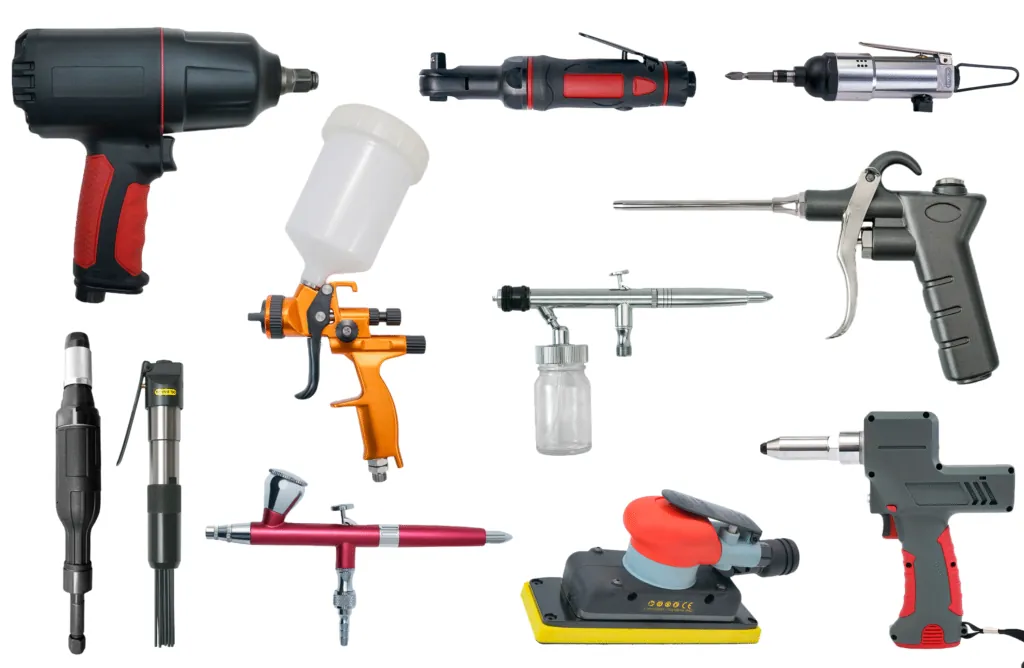
For professional workshops, pneumatic die grinders are the industry standard. They’re generally lighter because they lack heavy copper windings and magnets found in electric motors. They also run cooler, as the exhaust air helps dissipate heat. The downside is the requirement for a high-capacity air compressor, which adds significant cost and limits mobility compared to battery-powered rotary tools.
Troubleshooting Common Issues
- Tool Stalling: Usually caused by applying too much pressure. Let the tool’s speed do the work.
- Excessive Vibration: Often indicates a bent accessory shaft or an unbalanced grinding bit.
- Overheating: Ensure ventilation ports aren’t blocked by debris or dust.
- Bit Slippage: Check if the collet size matches the accessory shank diameter perfectly.
Pro Tip: Use a light touch when grinding; forcing the bit into the material can cause the tool to kick back or the bit to snap.
Frequently Asked Questions
Can I use die grinder bits in a rotary tool?
Generally, no. Most die grinders use a 1/4-inch collet, while rotary tools use smaller 1/8-inch collets. Even if an adapter fits, the rotary tool lacks the torque to drive large die grinder bits safely, and the added weight can destroy the rotary tool’s bearings.
Are all rotary tools variable speed?
Most modern models include a dial to adjust speed. This is crucial because different materials require different speeds to avoid melting or burning. Plastics typically require lower speeds, while metal polishing and grinding benefit from higher RPM settings to achieve a clean finish.
How do I choose the right collet size?
Check your tool’s manual for compatible shank sizes. Never force a bit into a collet. If the bit shank is loose, the collet is too large, which is dangerous because the bit may fly out during use. Always use the collet size specifically designed for your tool’s manufacturer.
Do I need a compressor for a die grinder?
Yes, if you’re using a standard pneumatic die grinder. You must ensure your compressor can deliver the required Cubic Feet per Minute (CFM) at the recommended Pressure (PSI) listed on the tool. If your compressor is too small, the tool will lose power constantly.
Is a rotary tool enough for auto body work?
A rotary tool is useful for light sanding or small detail rust removal, but it’s insufficient for major bodywork. For grinding down welds, shaping body filler, or removing large sections of rust, you need the power and durability of a die grinder or an angle grinder.
Conclusion
Select the tool that matches the scale of your current task. If you’re performing fine detail work, start with a high-quality rotary tool kit. If your projects involve heavy metal fabrication or welding, invest in a reliable pneumatic die grinder and a compatible air compressor. Always wear impact-resistant safety glasses and hearing protection while operating any high-speed power tool.