Miter Saw Not Cutting Straight: Simple Calibration Fixes
If your miter saw isn’t cutting straight, the most common causes and fixes usually involve adjusting the bevel scale or the fence alignment. A small shift in the metal fence or a loose pivot pin is often to blame for inaccurate cuts. You can calibrate these settings easily.
Why your miter saw produces inaccurate cuts
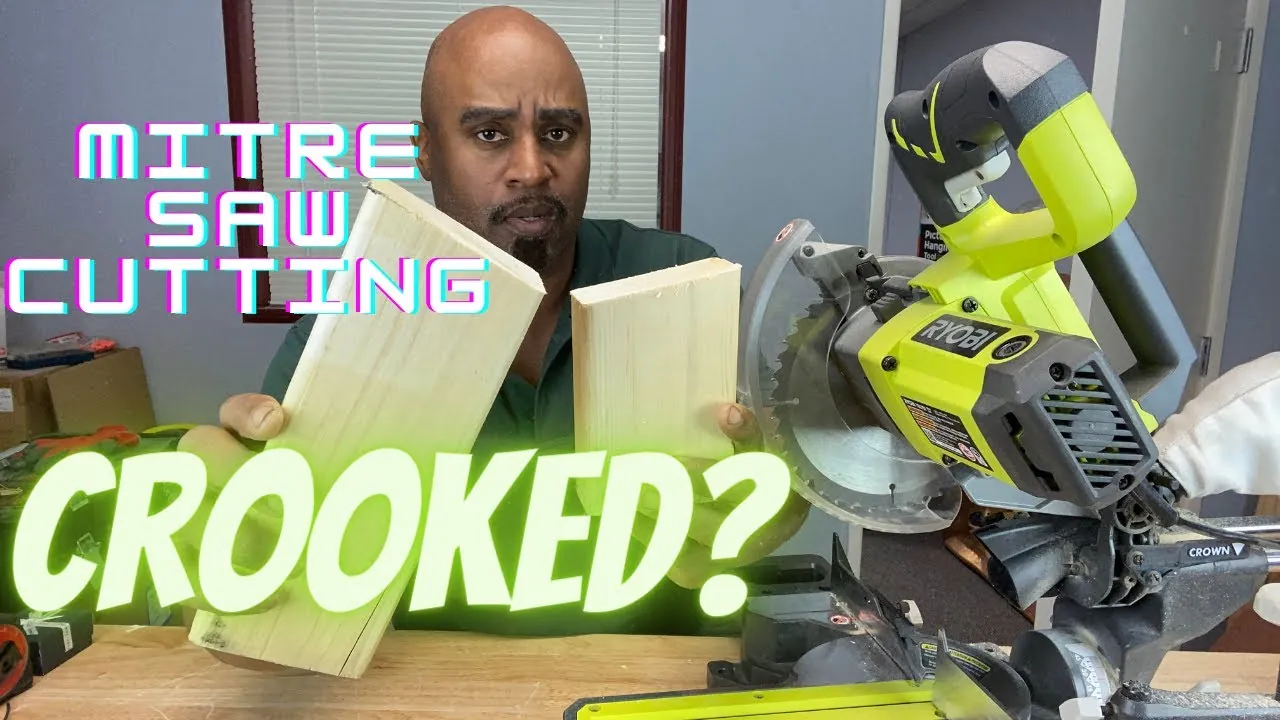
Most accuracy issues start with the physical alignment of the blade to the fence or the table. If you move your saw frequently or it experiences vibrations during heavy use, the factory settings often shift. Another common cause is a dull blade; when a blade loses its sharpness, it tends to “wander” through the wood, especially when cutting thick or dense boards.
Temperature changes in your workspace can also cause the metal components to expand or contract slightly. This affects the precision of your angle stops.
Adjust the miter saw fence alignment
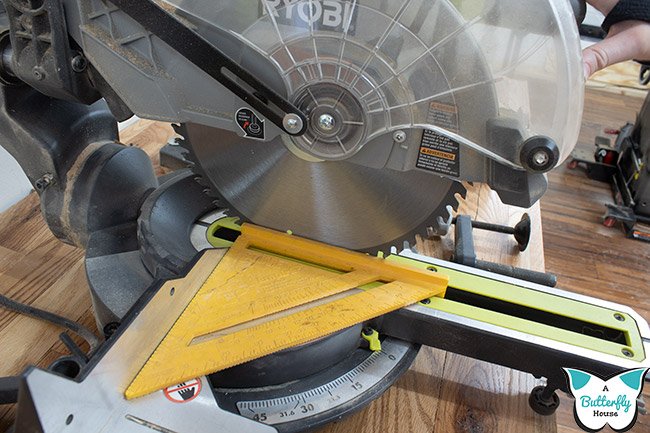
You need to ensure your fence is perfectly square to the blade. Take a reliable machinist’s square and place it against the fence and the blade body. If you see a gap, loosen the fence bolts on the back of the saw. Shift the fence until it’s perfectly flush against the square, then tighten the bolts firmly.
This fix is for those who notice that their 90-degree cuts are consistently off by a small, fixed amount. If your fence is bent, tightening the bolts won’t help; you’ll need to replace the metal fence piece. Always unplug the saw before you reach behind the fence to adjust any bolts.
Calibrate the bevel angle stops
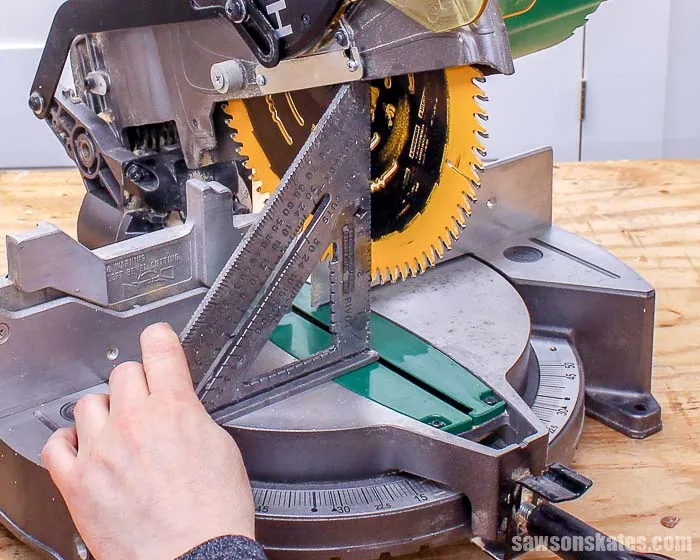
If your saw isn’t cutting straight on beveled cuts, your bevel stops likely need calibration. Most saws have a small bolt or screw that acts as a stop for the 0-degree or 45-degree position. Use your square to check the blade against the table while the saw is set to 0 degrees. If it isn’t square, turn the adjustment screw until the blade is perfectly vertical.
This process is for users who notice that their angled cuts don’t match the markings on the scale. If your saw has a digital display, you might need to reset the electronic zero point after adjusting the physical stop.
Replace or sharpen the blade
Sometimes the saw itself is perfectly aligned, but the blade is the problem. A blade with missing teeth or heavy resin buildup will pull to one side during a cut. Check the teeth for damage and clean the blade with a dedicated resin remover. If the steel is warped or the carbide teeth are dull, replace the blade with one designed for your specific material type.
This is the right move when you have already checked your fence and bevel stops but the cut still wanders. Don’t attempt to sharpen carbide teeth yourself; it requires professional equipment to maintain the correct geometry.
Mistakes that ruin your cut quality
- Forcing the blade through wood: Pushing too hard causes the blade to flex, which creates a curved or wavy cut line.
- Ignoring the kerf: Failing to account for the width of the blade means your pieces will be slightly short.
- Cutting unsupported material: Letting the end of a long board hang off the table causes the wood to bind the blade.
- Using the wrong blade type: Trying to rip wood with a high-tooth-count crosscut blade leads to burning and blade deflection.
Preventing future alignment issues
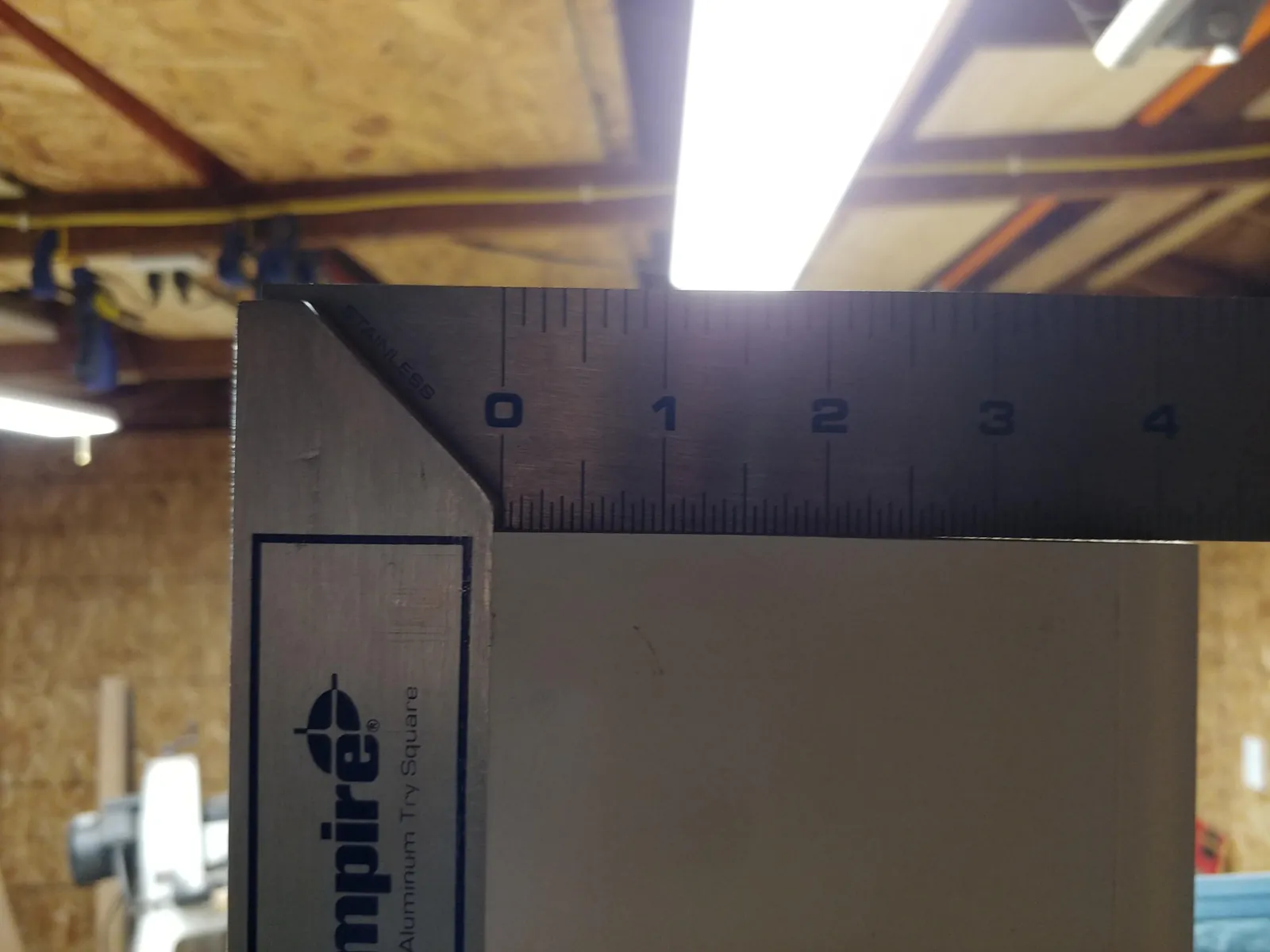
You can keep your cuts precise by checking your saw’s calibration whenever you notice a change in performance. The following table shows how to handle common usage errors that affect your results.
| If you’re doing this | Do this instead | Why |
|---|---|---|
| Pushing the saw fast | Use a slow, steady feed rate | Reduces blade flex |
| Cutting without support | Use a roller stand or table | Prevents board shifting |
| Adjusting by eye | Use a machinist’s square | Ensures true 90-degree angles |
| Using one blade for all | Match blade to material | Prevents burning and wandering |
Frequently asked questions
How do I know if my miter saw blade is warped?
You can detect a warped blade by unplugging the saw and slowly rotating the blade by hand while watching the gap between a tooth and a fixed point on the fence. If the gap changes significantly as the blade rotates, the blade body is likely bent.
How often should I calibrate my miter saw?
You should check your saw’s calibration every 3 to 6 months if you use the tool daily in a workshop. If you move your saw to different job sites, you should perform a quick check of the fence and bevel squareness before starting every new project.
Can a loose pivot pin cause inaccurate cuts?
Yes, a loose pivot pin allows the entire saw head to wobble, which makes it impossible to achieve a straight cut. If you feel any side-to-side play in the arm of the saw, the pivot pin or the bearings may need to be tightened or replaced by a professional.
Is it safe to adjust the miter saw myself?
Yes, it’s safe to perform standard alignment adjustments as long as the saw is completely disconnected from the power source. Never attempt to adjust internal motor components or electrical wiring yourself, as these repairs require specialized training to avoid shocks or mechanical failure.
What happens if I keep using a dull blade?
Continued use of a dull blade increases the heat generated during the cut, which can burn the wood and permanently damage the blade’s temper. This also puts unnecessary strain on the saw’s motor, which may lead to premature overheating or mechanical failure over time.
How long does a miter saw blade last?
A high-quality carbide-tipped blade typically lasts for 100 to 200 hours of cutting time, depending on the wood’s hardness. You can monitor the lifespan by watching for signs of increased resistance or burning, which indicate that the teeth have lost their edge.
Conclusion
Taking a moment to tune your equipment makes every future project go much smoother. Once your blade is perfectly square, grab a piece of scrap wood and run a test cut to confirm the accuracy. You’ll feel a lot more confident knowing your saw won’t let you down on your next build.