Hammer Drill vs Rotary Hammer: How to Choose the Right Tool
A hammer drill is designed for light masonry work using a ratcheting mechanism, while a rotary hammer uses a piston-driven system to deliver much higher impact energy for heavy-duty concrete demolition. You should choose a hammer drill for occasional holes in brick or block, but you’ll need a rotary hammer for drilling deep, wide holes in reinforced concrete or removing tile.
Choosing between a hammer drill and rotary hammer
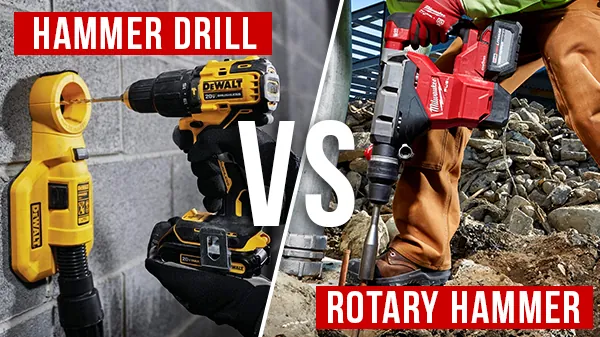
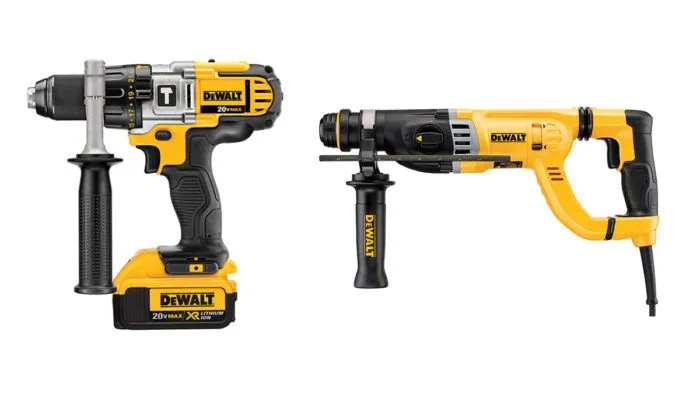
The main difference lies in the mechanical action and the force delivered to the bit. A standard tool with a hammering function relies on two sets of serrated metal plates that slide over each other to create a vibrating motion. This is effective for soft masonry but struggles with dense, cured concrete.
In contrast, a professional-grade rotary hammer uses a pneumatic piston to strike the back of the drill bit directly. This design creates significantly more force per blow, allowing the tool to do the work instead of relying on the user to push hard against the surface.
If you’re drilling into poured concrete foundations or reinforced slabs, use a rotary hammer. A hammer drill will likely burn out its motor or overheat the bit before you reach an inch of depth. For brick or cinder block, the hammer drill is faster and easier to handle.
Most users make the mistake of applying heavy body weight to a hammer drill to force progress. This only strips the internal plastic gears and ruins the chuck. If the bit stops biting, stop pushing and switch to the rotary tool.
| Feature | Hammer Drill | Rotary Hammer |
|---|---|---|
| Primary Action | Mechanical ratcheting | Pneumatic piston |
| Best Material | Brick, cinder block | Cured, reinforced concrete |
| Max Hole Size | Under 0.5 inches | Over 0.5 inches |
| Weight | Light (3-5 lbs) | Heavy (8-15 lbs) |
Key Performance Differences
When you look at how these tools handle work, the distinction becomes clear. A hammer drill is typically a versatile, cordless tool that can also function as a standard driver. Because it uses a spinning chuck, it requires you to apply significant forward pressure to keep the bit moving through hard material.
If you try to drill large holes in structural concrete with this type of tool, you’ll likely overheat the motor or strip the gears before reaching your target depth.
Limit hammer drills to masonry bits under half an inch in diameter. If your hole requires a larger diameter or you’re working with cured, high-PSI concrete, the hammer drill will stall. You can tell which tool you need by the task: if you’re drilling into brick or mortar, the hammer drill is sufficient. If you’re setting wedge anchors into a foundation, you need a rotary hammer.
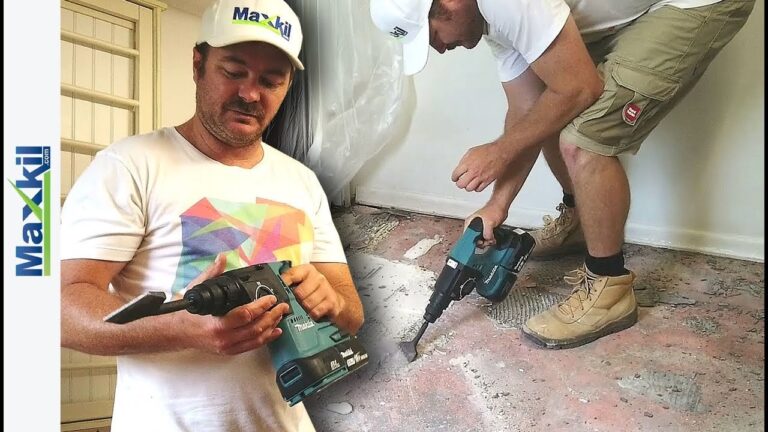
Rotary hammers are dedicated tools with a specialized SDS chuck system. This chuck holds the bit loosely so it can slide back and forth while spinning, which maximizes the energy transfer from the internal piston. This design is essential for tasks like anchor installation in slabs or breaking up concrete floors.
Using a rotary hammer saves roughly 60 percent of your physical effort compared to a hammer drill. Always use tools equipped with integrated dust collection systems during these tasks to control exposure to respirable crystalline silica.
Mistakes That Ruin Your Project
Choosing the wrong tool often leads to broken bits and wasted time. One common mistake is using a standard drill bit in a rotary hammer. These bits aren’t designed to withstand the high impact energy and will shatter, which creates a serious injury risk. Always use bits specifically rated for the chuck type on your tool, such as SDS-Plus or SDS-Max.
Another error involves how you apply force. With a hammer drill, you must push hard to make progress, but with a rotary hammer, you should let the tool’s weight do the work. If you force a rotary hammer into the concrete, you’ll cause the bit to bind or snap.
You’ll also find that rotary hammers are much heavier and harder to control for overhead work, so it’s often better to use a lighter tool for small tasks like installing curtain rods or mounting lightweight shelves.
If you’re drilling holes deeper than six inches, clear the dust frequently. Leaving debris in the hole causes the bit to overheat and lose its temper, which dulls the carbide tip instantly. If the hole starts smoking or turns blue, stop immediately. You have already ruined the bit’s heat treatment, and it will never cut efficiently again.
Frequently Asked Questions
Can I use a rotary hammer as a regular drill?
Most rotary hammers feature a “rotation only” mode, but they’re generally too heavy and bulky for standard drilling tasks. They also use specialized SDS bits rather than common smooth-shank bits, making them impractical for everyday household repairs or wood drilling.
Is it safe to drill into concrete without a depth stop?
It’s risky because you might hit hidden electrical conduit or plumbing buried within the wall or floor. Always use a depth gauge to control how far the bit travels, and scan the area with a wall scanner before you start to avoid damaging utilities.
Why does my drill bit get stuck in concrete?
This usually happens because the dust isn’t clearing out of the hole, causing the bit to jam. Pull the bit out frequently while the tool is running to clear the debris, or use a vacuum attachment to keep the hole clean as you work.
Conclusion
Before you buy or rent, check the diameter of the holes you need to drill and the hardness of the material. If you’re only tackling small home projects, a standard hammer drill is sufficient. If you’re planning a major renovation involving structural concrete, head to a local tool rental shop to secure a rotary hammer for the day.