Die Grinder vs. Angle Grinder: How to Choose the Right Tool
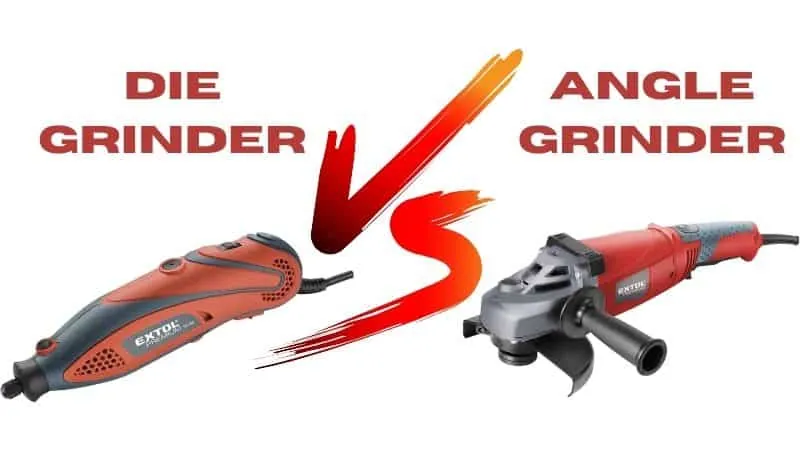
When you’re staring at a pile of metal or wood in your workshop, choosing the right tool is the difference between a clean finish and a ruined project. Navigating the choice between a die grinder vs. angle grinder depends entirely on the scale of your work, the precision required, and the physical constraints of the material you’re shaping. Both tools are rotary power devices that spin accessories at high speeds, but their internal design, ergonomics, and intended applications differ significantly. Understanding these nuances helps you select the right equipment for your specific task.
Key Takeaways
- Use an angle grinder for heavy material removal, large surface grinding, or cutting thick metal stock.
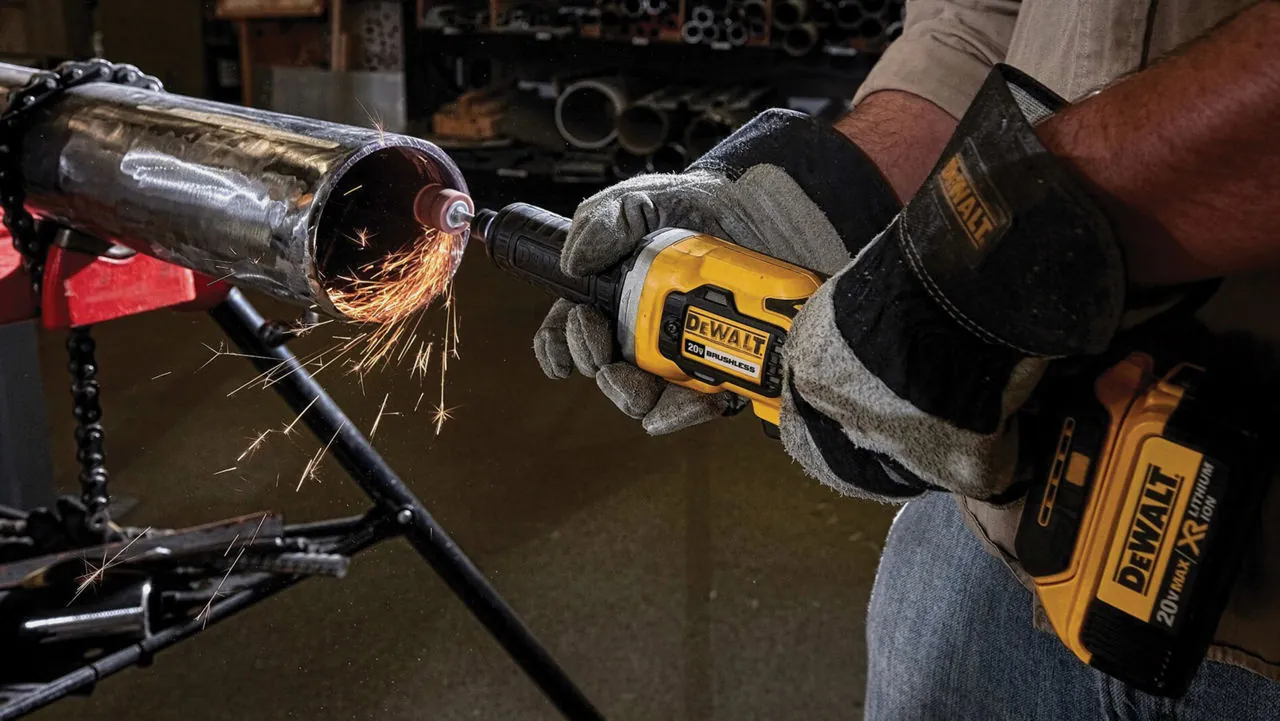
- Choose a die grinder for intricate detailing, porting, internal deburring, and tight-space polishing.
- Angle grinders typically operate at lower RPMs with higher torque, while die grinders reach much higher rotational speeds.
- Always prioritize personal safety equipment, including eye protection, hearing protection, and thick gloves, regardless of the tool.
- Check your collet size on a die grinder (usually 1/4 inch or 1/8 inch) before purchasing bits.
When to Choose an Angle Grinder
The angle grinder is the workhorse of the metalworking and masonry world. Because it’s designed to hold large discs—typically 4.5 inches to 7 inches in diameter—it excels at aggressive tasks.
If you need to strip thick rust off a trailer frame, cut through steel rebar, or grind down a heavy weld bead, the angle grinder is your primary candidate. Its design features a side handle that allows you to apply significant pressure, which is necessary when using flap discs or grinding wheels to remove large amounts of material quickly.
When to Choose a Die Grinder
A die grinder is a precision instrument designed for finesse. It’s compact and handheld, similar in shape to a large marker or a small drill. Instead of a large disc, it uses a collet to hold small burrs, mounted points, or sanding rolls.
Because the tool is so small, you can maneuver it inside engine ports, deep corners, or tight crevices where an angle grinder simply can’t fit. It’s the preferred tool for automotive hobbyists cleaning up cylinder heads or fabricators smoothing out interior welds on custom tubing.
Comparing Die Grinder and Angle Grinder Tool Capabilities
| Feature | Angle Grinder | Die Grinder |
|---|---|---|
| Primary Task | Heavy cutting/grinding | Precision shaping/polishing |
| Typical Disc Size | 4.5 to 9 inches | 1/8 to 1/4 inch shank |
| Ergonomics | Two-handed operation | One-handed precision |
| Rotational Speed | Lower (approx. 6k–11k RPM) | Higher (up to 25k+ RPM) |
| Best Material | Steel, stone, concrete | Aluminum, steel, composites |
Understanding Power and Speed
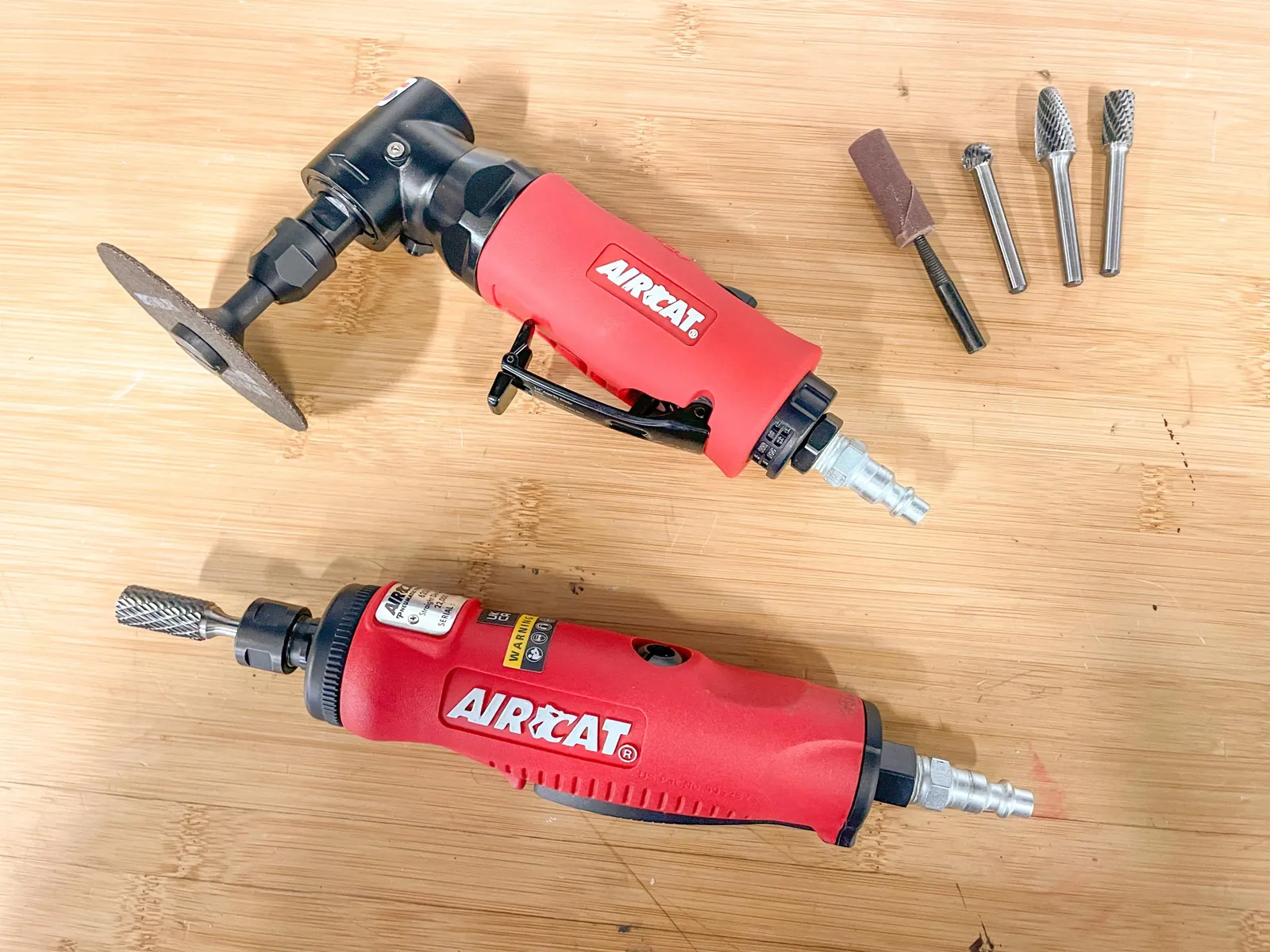
The physical performance of these tools is dictated by their motor design and gear ratios. An angle grinder uses a gearbox to translate the motor’s rotation to a perpendicular spindle, which provides the high torque needed to keep a large disc spinning even under heavy load.
In contrast, a die grinder is usually a direct-drive tool. Because it spins small accessories, it doesn’t need high torque, but it requires extreme RPMs to ensure the cutting edge of a tiny carbide burr moves fast enough to shave metal effectively.
Warning: Always ensure the rated speed of your grinding accessory matches or exceeds the maximum RPM of your power tool to prevent catastrophic disc failure during operation.
What Are the Safety Requirements?
Operating high-speed rotary tools carries inherent risks, including flying debris, sparks, and tool kickback. The Occupational Safety and Health Administration provides comprehensive guidelines on the safe use of abrasive wheels and grinders to prevent injury.
You must wear impact-rated safety glasses or a full-face shield at all times. Furthermore, because these tools create significant noise, hearing protection with a high noise reduction rating is essential. If you’re working with metal, wear flame-resistant clothing or a leather apron to protect yourself from hot sparks.
How to Select the Right Accessories
Your choice of accessory defines the tool’s function. For an angle grinder, you’ll look for grinding wheels, cut-off wheels, wire cup brushes, and flap discs. These are generally held in place by a locking nut. Die grinders use a collet system that grips a shank. You’ll select from solid carbide burrs, mounted abrasive points, or small sanding drums.
- Angle Grinder Brands: DeWalt, Milwaukee, Makita, Bosch.
- Die Grinder Brands: Ingersoll Rand, Chicago Pneumatic, Metabo, Porter-Cable.
Troubleshooting Common Tool Issues
If your tool is underperforming, the fix is often simple. For an angle grinder, check if the brushes are worn out or if the gear grease has dried up. If the tool vibrates excessively, your grinding disc may be unbalanced or improperly seated. For a die grinder, the most common issue is a loose collet or a bent shank on your burr, which causes chatter.
Pro Tip: If your die grinder feels like it is “grabbing” or jumping, you’re likely pushing too hard; let the high speed of the burr do the work rather than applying heavy manual force.
Comparing Costs and Maintenance
The cost of these tools varies by power source and build quality. You can expect to pay for a corded angle grinder between $45 and $180, while cordless models range from $90 to $350. Die grinders are generally cheaper, with pneumatic versions costing between $30 and $120, and electric versions ranging from $60 to $250. Maintenance for both involves keeping the air vents clear of dust and ensuring the bearings are lubricated according to the manufacturer’s manual.
Which Tool for Your Project?
| Project Type | Recommended Tool | Why? |
|---|---|---|
| Cutting Steel Pipe | Angle Grinder | High torque for deep cuts |
| Porting Engine Heads | Die Grinder | Fits in tight, curved spaces |
| Removing Rust from Frame | Angle Grinder | Large surface area coverage |
| Smoothing Sharp Edges | Die Grinder | Control for delicate deburring |
| Sharpening Lawnmower Blade | Angle Grinder | Fast material removal |
Frequently Asked Questions
Can I use a die grinder for cutting?
Yes, but only for very thin materials like sheet metal or small bolts. You would need to attach a small cut-off wheel mandrel to your die grinder. It isn’t suitable for thick steel, as the tool lacks the torque to prevent the wheel from binding, which can be dangerous. Use an angle grinder for any cutting task involving material thicker than 1/8 inch.
Why does my die grinder vibrate?
Excessive vibration in a die grinder is usually caused by a bent burr shank, a loose collet, or an accessory that isn’t centered. Always inspect your burrs for damage before use. If the vibration persists, the collet itself may be worn out and require replacement. Never attempt to run a tool with a damaged or bent accessory, as this can cause the burr to shatter.
Can an angle grinder do detail work?
It’s possible to do some detail work with an angle grinder using small flap discs, but it’s generally too bulky and powerful for fine precision. The weight of the tool makes it difficult to control for intricate shaping or delicate deburring. If your project requires steady, one-handed control to remove small amounts of material, a die grinder is the much better choice.
Do I need a pneumatic die grinder?
Pneumatic die grinders are preferred in professional shops because they’re lightweight, durable, and don’t have a motor that can burn out from dust ingestion. However, they require a high-CFM air compressor to run effectively. If you don’t have access to a large shop compressor, an electric or cordless die grinder is a perfectly capable alternative for home use.
Is an angle grinder dangerous?
Angle grinders are considered one of the most dangerous handheld power tools due to the potential for disc breakage and high-speed kickback. Always ensure the safety guard is properly positioned between the disc and your body. Never remove the guard, and ensure you have a firm two-handed grip on the tool at all times to maintain control if the disc catches on the workpiece.
Conclusion
To ensure you’re fully prepared for your next project, take a moment to inspect the collet or spindle of your existing tools for any signs of wear. If you find the parts are damaged, order replacements from the manufacturer’s website immediately, as using compromised equipment significantly increases the risk of injury.
Once your tools are verified to be in good working order, start your task by testing the motion on a piece of scrap material to get a feel for the speed and control.