
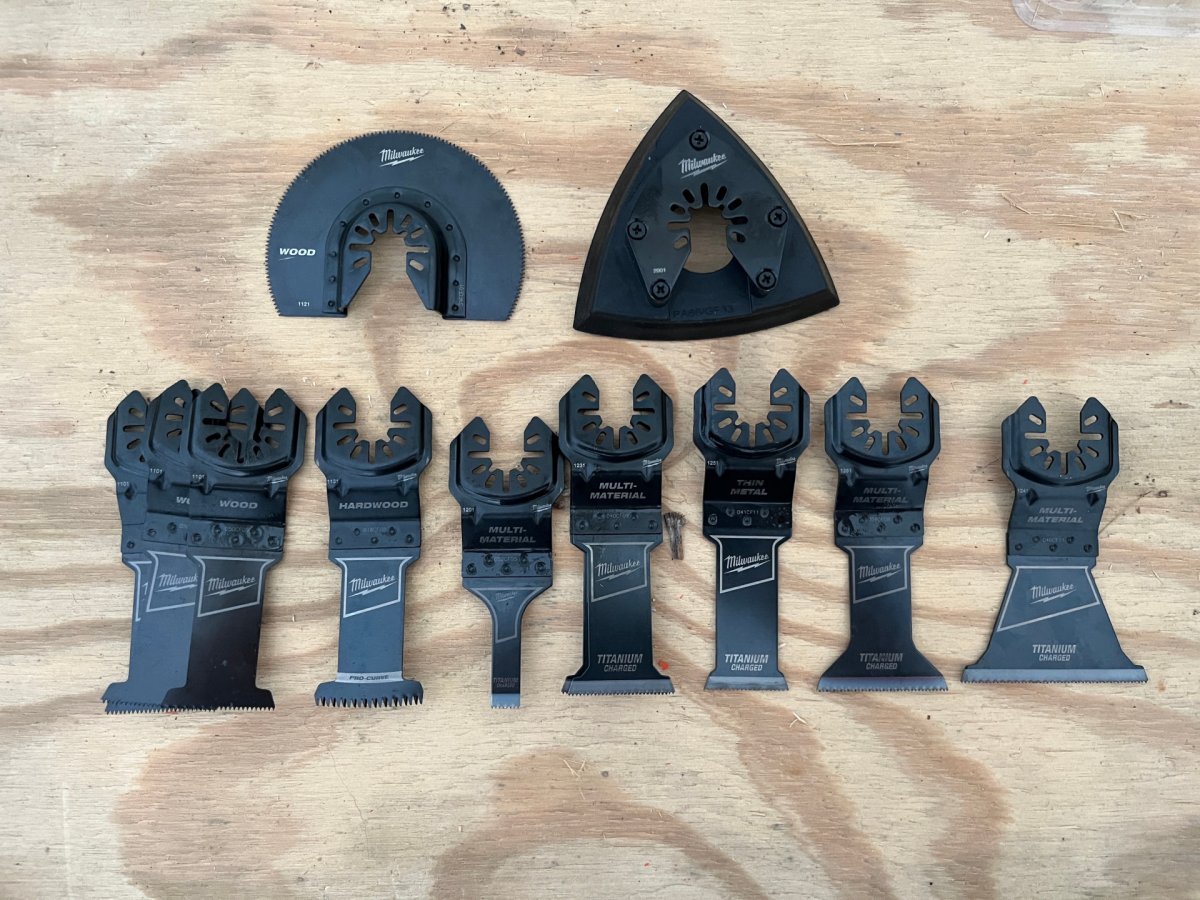
8 Best Oscillating Tool Blades for Cutting Metal, Nails, Screws
Selecting the right oscillating tool blades for cutting metal, nails, and screws depends on your material and connection system. Carbide-tipped options excel in heavy-duty demolition, while bi-metal blades offer versatility for mixed materials. Users with Starlock-compatible tools should look at the BOSCH OSL114C-3, while those with universal tools may prefer the Diablo Amped Steel Demon or EZARC Titanium Bi-Metal.
As an Amazon Associate, we earn from qualifying purchases. This post contains affiliate links – if you buy through them, we may earn a commission at no extra cost to you.
1. BOSCH OSL114C-3 3-Pack 1-1/4 In. Starlock Oscillating Multi Tool Metal

Best for: Professionals with Starlock-compatible oscillating tools needing reliable, high-torque cutting performance.
This blade is built specifically for the Starlock interface, which uses a 3D design to lock the blade into the tool. This connection helps reduce vibration during operation, making it easier to control your cuts when working through iron bars or metal-heavy materials. The carbide construction is designed to last significantly longer than standard bi-metal options, which is a major benefit for frequent users who want to avoid constant blade swaps.
The Starlock system is a specialized interface, so this blade won’t fit standard oscillating tools that use universal adapters. If you own a tool from a brand that doesn’t support the Starlock system, you should look at other options to ensure compatibility.
Good if:
- You use a Starlock-compatible oscillating multi-tool.
- You need to cut through iron, metal, or wood with nails.
- You want to reduce vibration for more precise, controlled cuts.
Skip it if:
- Your oscillating tool doesn’t support the Starlock system.
2. EZARC Carbide Oscillating Saw Blades

Best for: Someone tackling heavy-duty demolition of hardened materials like stainless steel screws.
These carbide-toothed blades are made for the toughest tasks where standard blades would fail. The laser-welded carbide teeth provide increased durability. This allows you to cut through hardened screws, nails, fiberglass, and plasterboard without the teeth stripping away. Because these blades are built for endurance, they’re a solid choice for renovation projects where you might encounter hidden metal fasteners behind walls.
Check your oscillating tool interface before purchasing. These blades aren’t compatible with Starlock, Starlock Plus, or Starlock Max systems. If your tool requires a Starlock connection, these blades won’t lock into place. However, the package includes two extra adapters to ensure a proper fit for most other conventional oscillating tools on the market.
Good if:
- You’re cutting hardened stainless steel or screws.
- You need a blade for heavy-duty demolition work.
- You prefer a slim body design for better access.
Skip it if:
- You have a tool that requires a Starlock interface.
3. Diablo Amped Steel Demon Universal Fit Carbide Oscillating Blade
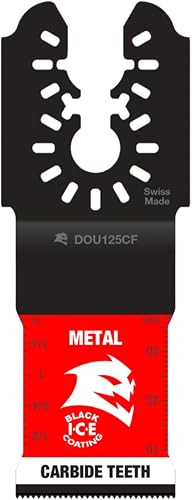
Best for: Heavy-duty demolition projects where you need to cut through metal and wood simultaneously.
This blade features a Black I.C.E. coating, which helps keep the blade cool during intense cutting. By reducing heat buildup, the blade can maintain its performance longer, which is essential for projects involving long sessions of cutting through metal-impregnated wood. The carbide teeth are engineered for speed, allowing for efficient progress through tough materials. Expect up to 50X longer cutting life than standard bi-metal blades when tackling these heavy-duty metal tasks.
The universal fit design means it works with most major oscillating tools without needing an extra adapter. It’s a compact 1-1/4 inch blade, which is great for tight spots, though it may not be the fastest choice for very large, flat surface cuts. If you’re performing detailed work in cramped quarters, this size provides the necessary maneuverability.
Good if:
- You’re working on long-running demolition tasks.
- You need to cut through wood that contains nails.
- You want a blade that stays cool under heavy use.
Skip it if:
- You need a wide blade for large-scale surface removal.
- You’re prioritizing speed over the precision required for tight, detailed access.
4. EZARC Titanium Bi-Metal Oscillating Saw Blades

Best for: Users who need a versatile blade for a mix of wood, soft metal, and plastic.
The titanium coating on these teeth provides extra heat resistance, which helps the blade last two times longer than standard, uncoated bi-metal alternatives. The wavy tooth design is an essential feature; it spreads the cutting pressure across multiple teeth rather than putting it all on one point. This makes the cutting action feel smoother and helps prevent the blade from binding up when you’re working on flooring or door frames.
Because these are bi-metal, they aren’t intended for the same hardened materials that carbide blades handle. They work best on wood, non-hardened nails, screws, and PVC pipe. If you encounter hardened steel or hardened screws, switch to a carbide-tipped blade to avoid stripping the teeth prematurely.
These blades feature a universal interface system compatible with most brands like Dewalt, Fein, Ryobi, Milwaukee, and Craftsman. If your tool uses a starlock interface system, these blades won’t fit.
Good if:
- You’re doing general home remodeling or flooring work.
- You want a blade that handles both wood and soft metal.
- You prefer a smoother cutting feel with less vibration.
Skip it if:
- You need to cut through hardened steel or hardened screws.
- Your oscillating tool uses a starlock interface system.
5. Diablo AMPED Demo Demon Universal Fit Carbide Oscillating Blade

Best for: Someone who specifically needs to cut through hardened steel and requires a universal fit.
This version of the Steel Demon uses the same carbide teeth and cooling coating as other Diablo blades, but it’s optimized for high-performance cutting in harder materials. The industrial cooling element reduces friction, which is a major advantage when you’re pushing the tool through dense, hard materials that generate high heat.
If you notice your blade smoking or dulling rapidly, you’re likely pushing a standard bi-metal blade beyond its thermal limit. Switching to this carbide-tipped option provides up to 50X longer cutting life, reducing the frequency of blade swaps during professional projects. The universal fit makes it easy to swap onto most tools without searching for missing adapters.
The blade is specifically designed for speed and durability in metal, so it may feel like overkill for simple wood cutting. If your project is mostly wood, you might find other blades with different tooth geometries more efficient. Use this blade when you encounter nails, screws, or hardened steel studs hidden within your work.
Good if:
- You need to cut through hardened metal frequently.
- Your oscillating tool uses a standard universal mount.
- You want to minimize time spent on blade changes.
Skip it if:
- You’re primarily cutting soft wood or drywall.
6. 22PCS Titanium Oscillating Tool Blade Cuts Metal and Wood

Best for: A DIYer or renovator who wants a variety of blades for different tasks in one purchase.
This kit stands out because it offers a large quantity of blades in one pack, making it a good choice if you’re starting a major renovation and don’t want to run out of supplies. The blades are coated in titanium, which helps them stay cooler during long jobs and improves their resistance to wear. The kit also includes adapters, so it should fit most standard oscillating tools on the market.
Because this is a multi-pack, the focus is on providing a wide range of options rather than a single specialized blade. If you have one very specific, difficult job to do, a single high-end carbide blade might outperform these, but this kit offers better overall utility for varied projects.
Good if:
- You’re doing a full home remodel with many different materials.
- You want a variety of blade sizes and types on hand.
- You need a solution that fits almost any standard tool.
Skip it if:
- Focus your selection on the specific type of material you intend to cut.
7. DEWALT Dwa4209 Oscillating Performance coating

Best for: General-purpose cutting when you want a reliable brand-name blade for everyday tasks.
The DWA4209 is designed with a tapered shape, which helps when you’re trying to maneuver the tool into tight corners or awkward angles. It features a universal connection that fits major tool brands without needing an adapter, which simplifies the swap process. It’s a solid, no-nonsense choice for someone who needs a blade that’s ready to go for general metal-cutting tasks.
If you’re working on standard nails, copper piping, or thin metal strips, this blade performs consistently. However, don’t mistake this for a demolition-grade tool. Because it lacks the specialized carbide teeth found on heavy-duty blades, it will dull rapidly when forced through hardened stainless steel or thick rebar.
Use this blade for quick, light-duty metal tasks where precision and speed in tight spaces matter more than brute force. If you’re preparing for a long day of heavy structural cutting, choose a carbide-tipped alternative instead.
Good if:
- You need a reliable blade for general metal cutting.
- You appreciate a tapered design for reaching tight spots.
- You want a universal fit that works immediately.
Skip it if:
- You’re cutting exclusively hardened, high-strength metal.
- You require a blade built for heavy-duty demolition.
8. TOPOARC 10Pcs Bi-Metal Oscillating Saw Blades

Best for: Homeowners or contractors who need a mix of blades for precision tasks in mixed materials.
This kit includes multiple types of blades and adapters, making it versatile for varied workshop or home repair needs. The titanium coating on the bi-metal teeth provides a balance between cutting speed and blade longevity. By reducing friction and heat, these blades are designed to make clean cuts in materials like PVC, wood, and soft metal.
You can expect up to 50 times longer life compared to standard blades, which saves time on frequent replacements. The tooth design is engineered to boost cutting efficiency by up to 60 percent. If you’re trimming door jambs or baseboards, this efficiency keeps your progress steady.
The variety is the main strength here, but the bi-metal construction means they aren’t meant for extreme hardened materials like carbide-tipped options. Use these for everyday maintenance and light metal sheets. If your project involves heavy demolition of hardened steel, choose a different blade type to avoid premature tooth failure.
Good if:
- You perform diverse tasks like cutting baseboards and PVC.
- You need a kit that includes several blade types and adapters.
- You want a universal fit compatible with 95 percent of oscillating tools.
Skip it if:
- Your work involves cutting mostly hardened, industrial-grade metal.
- Your tool requires a Starlock interface, as these blades aren’t compatible.
Choosing Oscillating Tool Blades for Cutting Metal, Nails, and Screws
The oscillating tool blade market is split between two main types of construction: bi-metal and carbide. The bi-metal blades, such as the EZARC Titanium Bi-Metal and the TOPOARC Bi-Metal Blades, are the standard choice for most home projects. They excel at cutting wood with nails, plastic, and soft metal. They offer great versatility, but they are not designed for cutting through hardened steel or hardened screws.
Conversely, the carbide-tipped blades like the BOSCH OSL114C-3, the EZARC Carbide Saw Blades, and both Diablo Amped Steel Demon models are built specifically for heavy-duty metal cutting. These blades use industrial-grade teeth that can handle materials that would destroy a standard bi-metal blade in seconds.
If you’re doing demolition work or cutting through hardened screws, the choice should be carbide. If you’re just doing general remodeling, bi-metal is usually enough. A critical mistake is using a bi-metal blade on hardened material, which results in immediate tooth failure and wasted time. Always check your tool’s interface before buying. If your tool uses the Starlock system, you must select Starlock-compatible carbide blades, as universal-fit carbide blades won’t mount to your machine.
Still Not Sure?
How often will I really use this?
The listing doesn’t mention pack sizes. However, if you’re a professional or a DIYer planning a major remodel, you’ll go through blades faster than you expect. In that case, buying a larger kit like the Titanium Oscillating Blade Kit ensures you won’t have to stop your work to buy more.
What do I already own that this has to work with?
This is the most important question. If you own a Starlock-equipped tool, your options are limited to Starlock-specific blades like the BOSCH OSL114C-3. If you have a standard oscillating tool, you have much more freedom. Most universal blades, like the Diablo Amped Steel Demon, will fit, but always check your tool’s manual to confirm the connection type. Never force a blade onto a tool if the interface doesn’t line up perfectly.
What am I most likely to regret choosing?
The most common regret is buying a bi-metal blade for a hardened steel job. If you try to cut through hardened screws with a bi-metal blade, you’ll ruin the teeth almost instantly, leaving you with a useless tool and a frustrating experience. If there’s even a chance you’ll hit hardened metal, it’s safer to go with a carbide option like the EZARC Carbide Saw Blades from the start.
Related guides
Frequently Asked Questions
How do I know if a blade will fit my oscillating tool?
Most oscillating tools use a universal interface, though some brands require proprietary systems like Starlock. Check your tool’s manual or head shape to confirm compatibility before purchasing. Using the correct accessory is essential for preventing tool damage and ensuring operator safety.
Can I cut hardened metal with any oscillating blade?
No, you cannot. Hardened metal requires carbide-tipped blades, such as the Diablo Amped Steel Demon or EZARC Carbide Saw Blades. Standard bi-metal blades are designed for softer metals, wood, and plastic; using them on hardened screws or stainless steel will cause the teeth to strip or burn out immediately. If your project involves cutting through old nails, screws, or metal studs, prioritize carbide-tipped options to ensure the blade lasts through the job.
Why do some blades have a titanium coating?
Titanium coatings improve heat resistance and reduce friction during cutting. When cutting dense materials, the blade generates heat that can soften metal and dull the edge. Blades with this coating stay cooler, helping maintain cutting speed and extending the overall life of the blade.
What is the difference between bi-metal and carbide teeth?
Bi-metal blades offer a balance of flexibility and toughness for everyday tasks like cutting wood with nails. Carbide teeth are harder and more heat-resistant, making them the superior choice for hardened metal applications. While carbide is more durable, it is also more brittle than bi-metal.
Conclusion
For the best results, always match the blade material to the hardness of your project. If you’re cutting through wood with embedded nails, a bi-metal blade is a reliable choice. However, when you encounter hardened screws or thick metal, switch to a carbide-tipped blade like the Diablo Amped Steel Demon or the BOSCH OSL114C-3 to keep your project moving forward without delay.


2 Comments