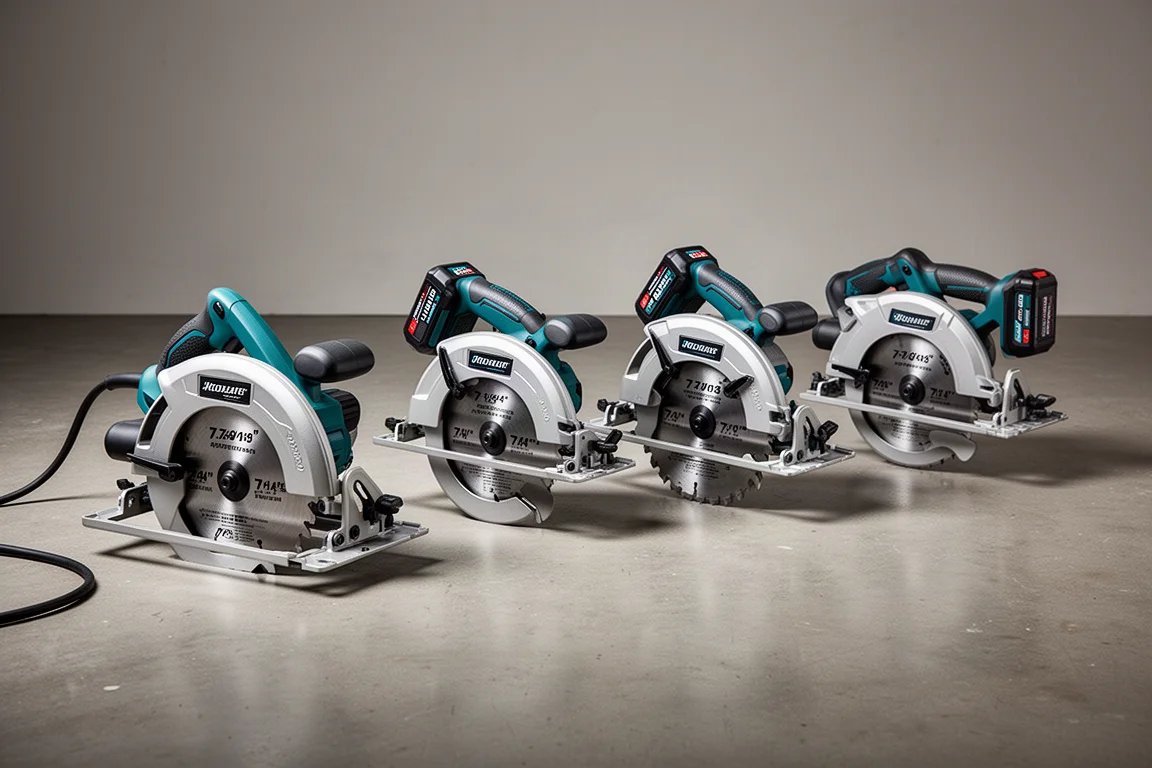
Corded vs Cordless Circular Saws: Which Makes More Sense?
Selecting a new saw for your workshop or job site requires balancing raw output with modern convenience. Many woodworkers find themselves debating whether corded vs cordless circular saws make more sense for their specific projects and budget constraints. While a corded circular saw typically costs between $60 and $250, a cordless model with batteries and a charger usually ranges from $150 to $500 depending on the voltage platform and motor technology. Understanding these differences ensures you invest in a tool that matches your workload and long-term shop goals.
Key Takeaways
- Choose corded if you prioritize consistent, unlimited power delivery for heavy-duty, repetitive shop tasks.
- Select cordless for superior portability and maneuverability when working on ladders, roofs, or remote job sites.
- Evaluate your existing battery ecosystem, as sticking to one brand saves significant money on future tool purchases.
- Consider the weight difference, as cordless models with high-capacity batteries are often heavier than their corded counterparts.
- Prioritize brushless motor technology for both types to ensure longer tool life and better energy efficiency.
Understanding Power and Performance
The primary distinction between these two tool types lies in how they draw energy. Corded saws provide a constant flow of electricity from a standard wall outlet, meaning the motor never fatigues or slows down as long as the blade remains sharp. This makes them the industry standard for dimensional lumber and heavy ripping tasks.
Cordless saws have evolved rapidly. Modern 18V, 20V, and 60V systems utilize high-discharge lithium-ion batteries that mimic the torque of corded units. However, they do have a finite runtime. Once the battery reaches a low state of charge, you must swap it out or pause to recharge.
| Feature | Corded Saw | Cordless Saw |
|---|---|---|
| Power Source | 120V Wall Outlet | Lithium-Ion Battery |
| Weight | Generally Lighter | Heavier with Battery |
| Runtime | Unlimited | Limited by Capacity |
| Maintenance | Simple Motor Care | Battery Management Needed |
Is Weight a Factor?
Weight significantly impacts control and user fatigue. Corded circular saws are often lighter because they lack the bulk of heavy battery packs. If you’re making overhead cuts or working in awkward positions for extended periods, a lighter corded tool can prevent muscle strain.
Conversely, cordless saws have improved their balance significantly in recent years. Manufacturers like Milwaukee Tool and Makita have engineered their battery-powered platforms to keep the center of gravity near the handle. While the tool itself might feel heavier, the absence of a trailing cord often results in a more natural, less restricted range of motion.
Comparing Operational Costs
When looking at the total cost of ownership, the initial purchase price is only one part of the equation. Corded saws are cheaper upfront, but they require heavy-duty extension cords to maintain voltage stability over long distances. According to the Occupational Safety and Health Administration, using incorrectly rated extension cords can cause voltage drops that lead to motor overheating and tool failure.
Cordless tools require an investment in a battery platform. If you already own drills or impacts from a specific brand, adding a cordless saw is cost-effective since you can share the batteries. However, if you have no existing gear, the initial cost of purchasing a “kit” that includes two batteries and a charger is substantially higher than buying a simple corded saw.
Which Saw Suits Your Projects?
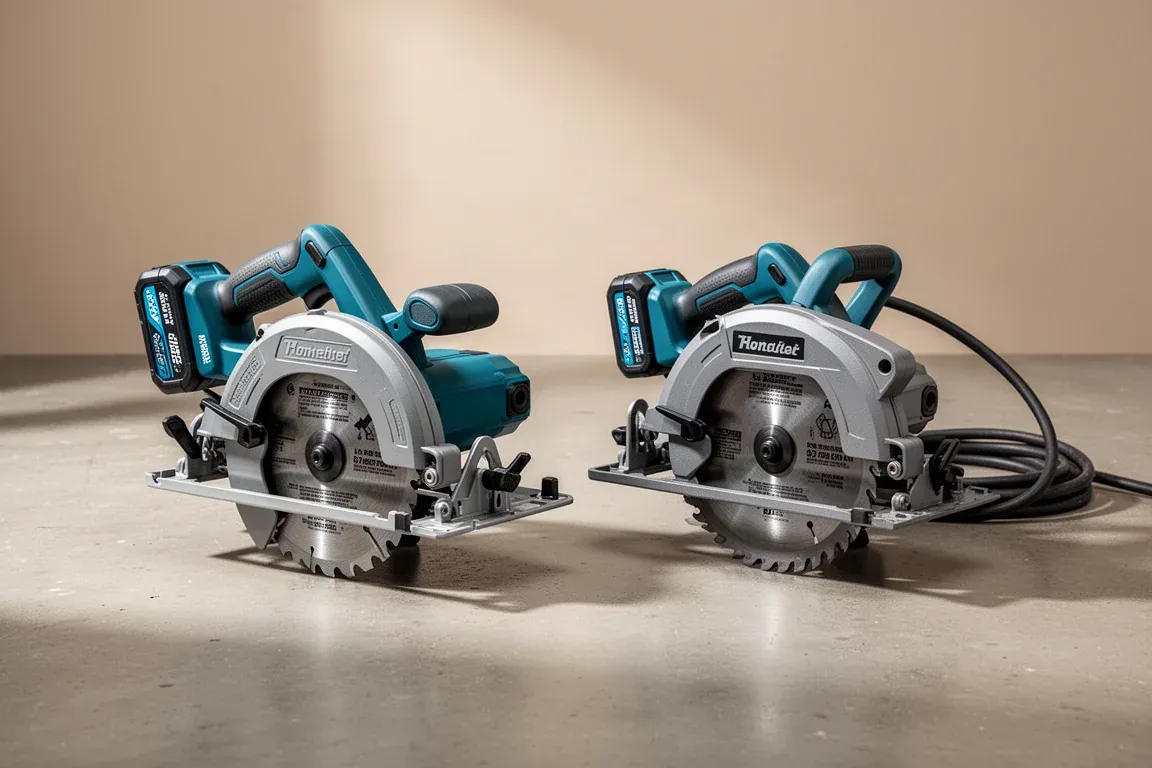
Your choice should depend on the location and frequency of your work. If you’re a hobbyist working primarily in a stationary shop with plenty of outlets, a corded saw is a reliable, one-time investment. You never have to worry about battery degradation or charging cycles.
For contractors, remodelers, or those who frequently work on projects away from a power source, cordless technology is a game-changer. The ability to move freely without dragging a cord across a finished floor or through a framing assembly increases productivity and safety.
Managing Battery Maintenance
If you decide on a cordless model, you must treat your batteries as consumable assets. Lithium-ion batteries have a limited number of charge cycles before they begin to lose capacity. To extend their lifespan:
- Store batteries in a climate-controlled environment.
- Avoid leaving batteries on a charger indefinitely after they reach full capacity.
- Allow batteries to cool down after heavy use before placing them on a charger.
Pro Tip: Always keep at least two batteries on rotation. This ensures that while one is powering your saw, the other is charging, preventing downtime during a long project.
Safety and Environmental Considerations
Safety remains the top priority regardless of the power source. Corded saws present a tripping hazard, and you must ensure your cord is positioned away from the blade’s path. Cordless saws eliminate the tripping hazard entirely, but you must remain aware of the battery’s charge level to avoid losing power mid-cut, which can lead to binding or kickback.
Warning: Never bypass the safety guard on any circular saw, as it’s your primary defense against accidental contact with the blade during operation.
Troubleshooting Common Issues
When your saw stops performing as expected, check these common variables before assuming the motor is dead:
- Corded Issues: Check the wall outlet for power, inspect the extension cord for breaks, and ensure the carbon brushes (on older models) aren’t worn down.
- Cordless Issues: Verify the battery connections are free of dust or debris, check the battery charge status, and ensure you’re using a battery with the correct amperage for the tool’s power demand.
Frequently Asked Questions
Do cordless saws have enough torque?
Modern brushless cordless saws deliver torque comparable to corded models. High-voltage platforms, such as those operating at 54V or 60V, are designed specifically to handle heavy-duty ripping and cross-cutting tasks that were previously reserved for corded tools. As long as you use a sharp, high-quality blade and a battery with sufficient discharge capacity, you won’t notice a lack of power during standard wood cutting.
How long do circular saw batteries last?
A standard 5.0Ah battery typically lasts for several hours of intermittent use or about 30 to 60 minutes of continuous heavy cutting. Runtime varies based on the hardness of the wood, the depth of the cut, and the sharpness of the blade. Using a higher capacity battery, such as an 8.0Ah or 12.0Ah pack, will significantly extend your runtime on the job site.
Can I use a cordless saw with a corded adapter?
While some manufacturers have experimented with corded adapters for their cordless platforms, they aren’t universally available or recommended for all models. Most professional cordless saws are optimized to run on the specific voltage of their battery packs. Using an unauthorized power adapter can potentially damage the motor or void your warranty, so it’s best to stick with the manufacturer’s intended power source.
Are brushless motors worth the extra cost?
Yes, brushless motors are significantly more efficient than brushed motors. They produce less heat, require less maintenance because there are no carbon brushes to replace, and provide better power-to-weight ratios. In a cordless saw, a brushless motor also consumes less battery power, which translates into longer runtimes and a longer overall lifespan for the tool, making the higher upfront cost a better long-term value.
What size saw should a beginner buy?
A 7-1/4 inch circular saw is the most versatile choice for a beginner. This size handles standard dimensional lumber, plywood sheets, and most DIY projects with ease. While smaller 6-1/2 inch models are more lightweight and compact, they may struggle with thicker stock. Starting with a standard 7-1/4 inch model ensures you have the capacity to grow into more complex woodworking projects without needing an immediate upgrade.
Conclusion
Choosing the right tool ultimately depends on your specific environment and budget. If you prioritize consistent, long-term shop use without the need for mobility, a corded saw remains the most reliable and cost-effective choice. However, if your work requires frequent movement and flexibility, the convenience of a modern cordless platform is worth the additional investment. Assess your current battery collection and project needs today to make your final decision.