Can You Use a Corded Drill to Mix Paint? (Paddle & Power Guide)
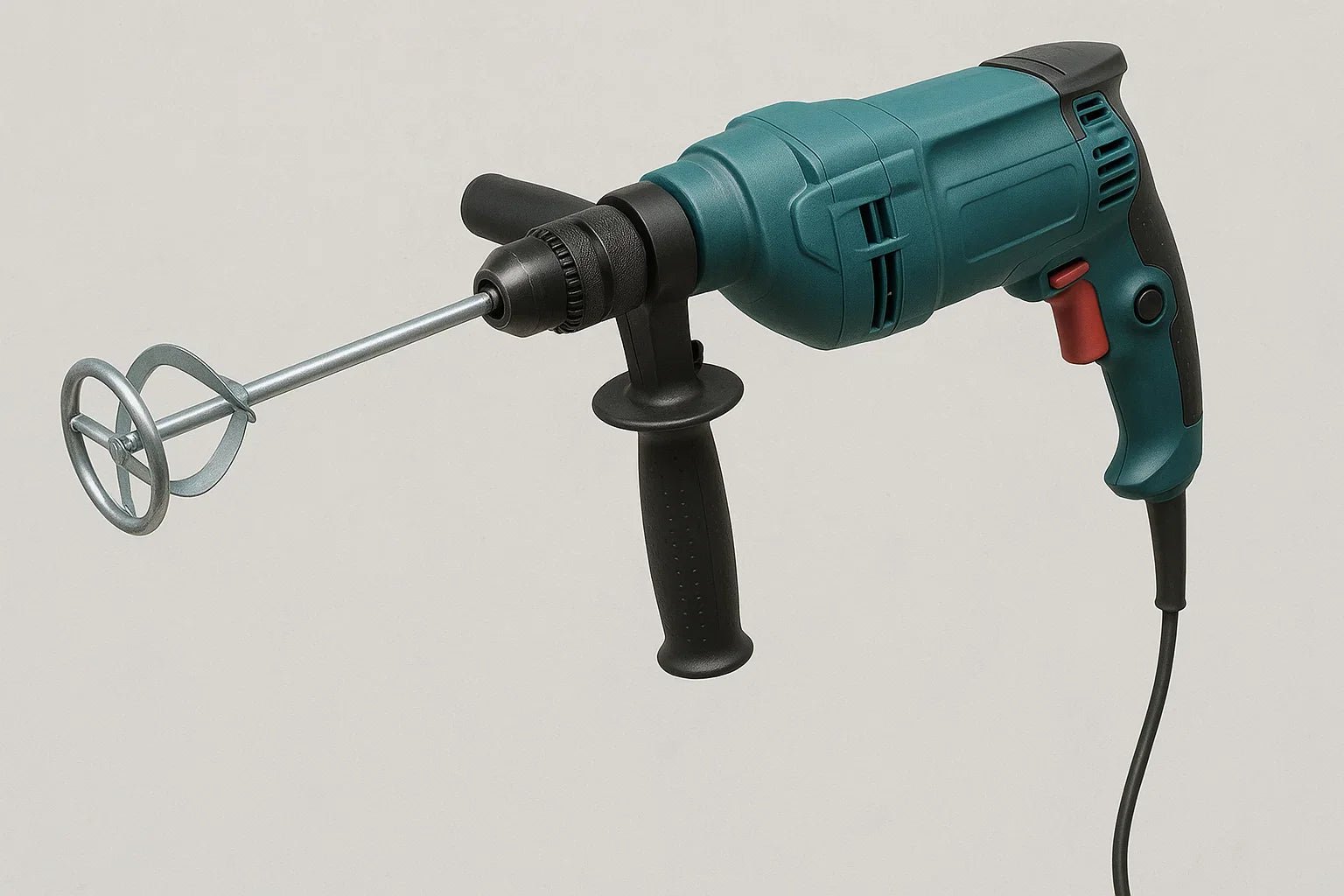
Yes, but only with care. A corded drill mixes paint when you use a paddle mixer attachment and keep the speed low so the paint doesn’t splash or foam. The drill’s power must match the paint thickness, and you should wear eye protection because thin paint flies off the paddle at speed.
Can you use a corded drill to mix paint in ordinary lower case, fitted to the grammar of the sentence — as its subject, or after “the”, “a” or a preposition.
Is your drill right for paint mixing
| Your situation | Answer | Why |
|---|---|---|
| Latex wall paint in a 1-gallon can | Yes | Low speed and a small paddle keep splashing down |
| Thick epoxy or floor coating | No | Most drills lack the torque and will stall or overheat |
| 5-gallon bucket of interior paint | Only if | A heavy-duty drill with a large paddle and a helper holding the bucket |
| Occasional touch-up job | Yes | A basic drill works fine for short mixing bursts |
| All-day professional mixing | No | A drill burns out; a dedicated mixer is built for it |
Every cell is plain text you can defend. Check your drill’s amps on the nameplate, and match the paddle size to the can so the blades stay below the surface.
What decides whether it works
The deciding factor is torque relative to paint thickness. A corded drill spins a shaft, but thick paint resists that spin. When resistance climbs, the motor draws more current and heats up. A small paddle in thin latex moves easily, while a wide paddle in heavy coating stalls the motor. Speed matters too: high speed whips air into the paint and sends droplets across the room.
Check the amps printed on your drill’s nameplate. Higher amps mean more turning force under load. If you’re unsure, read the manual or look at the maker’s official page for your model.
If the paint pours like heavy cream, then a standard drill on low speed works; if the paint holds a ridge when lifted with a stick, then use a dedicated mixer or a drill rated for mixing.
Most beginners make the mistake of using a variable-speed drill at its highest setting. This creates a vortex that sucks air into the mixture, causing bubbles that ruin your finish. Use a light, steady touch on the trigger to maintain a low speed.
If you smell burning or notice a significant drop in RPM, stop immediately. You’re pushing the motor past its thermal limit, which will burn out the internal windings. Let the tool cool for ten minutes before resuming.
If you go ahead
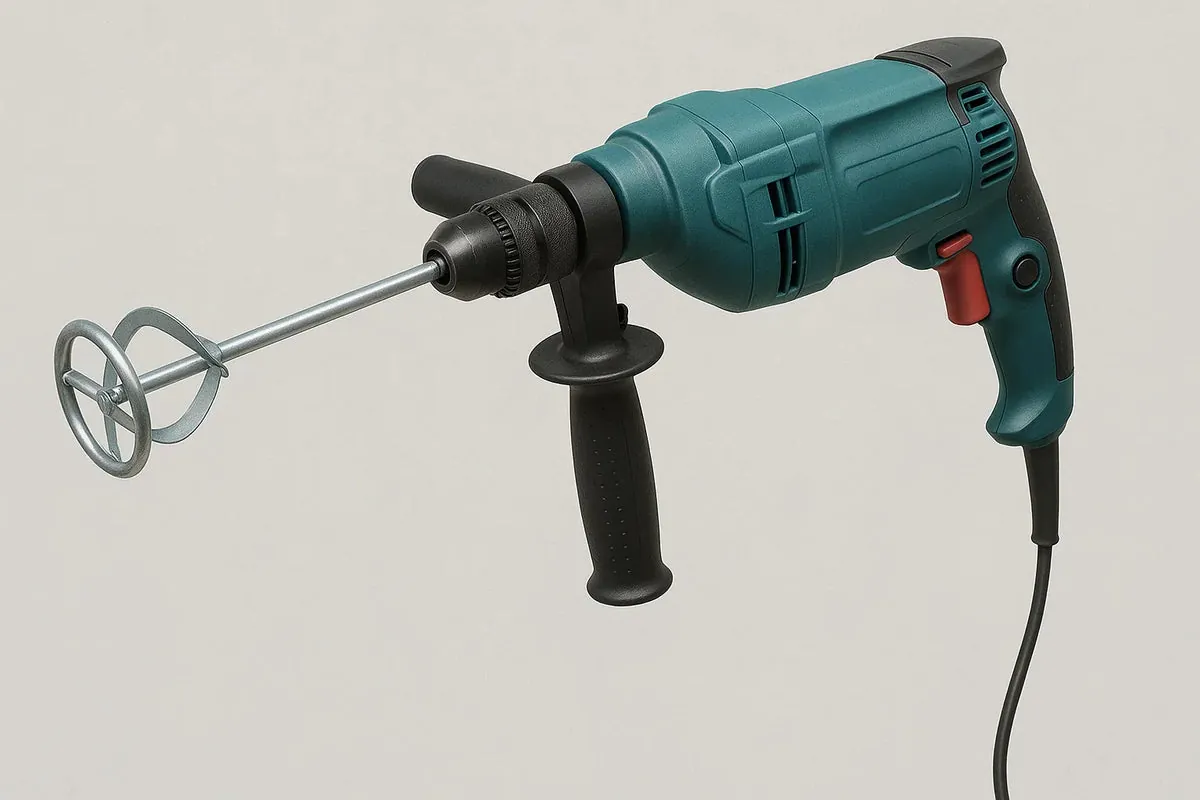
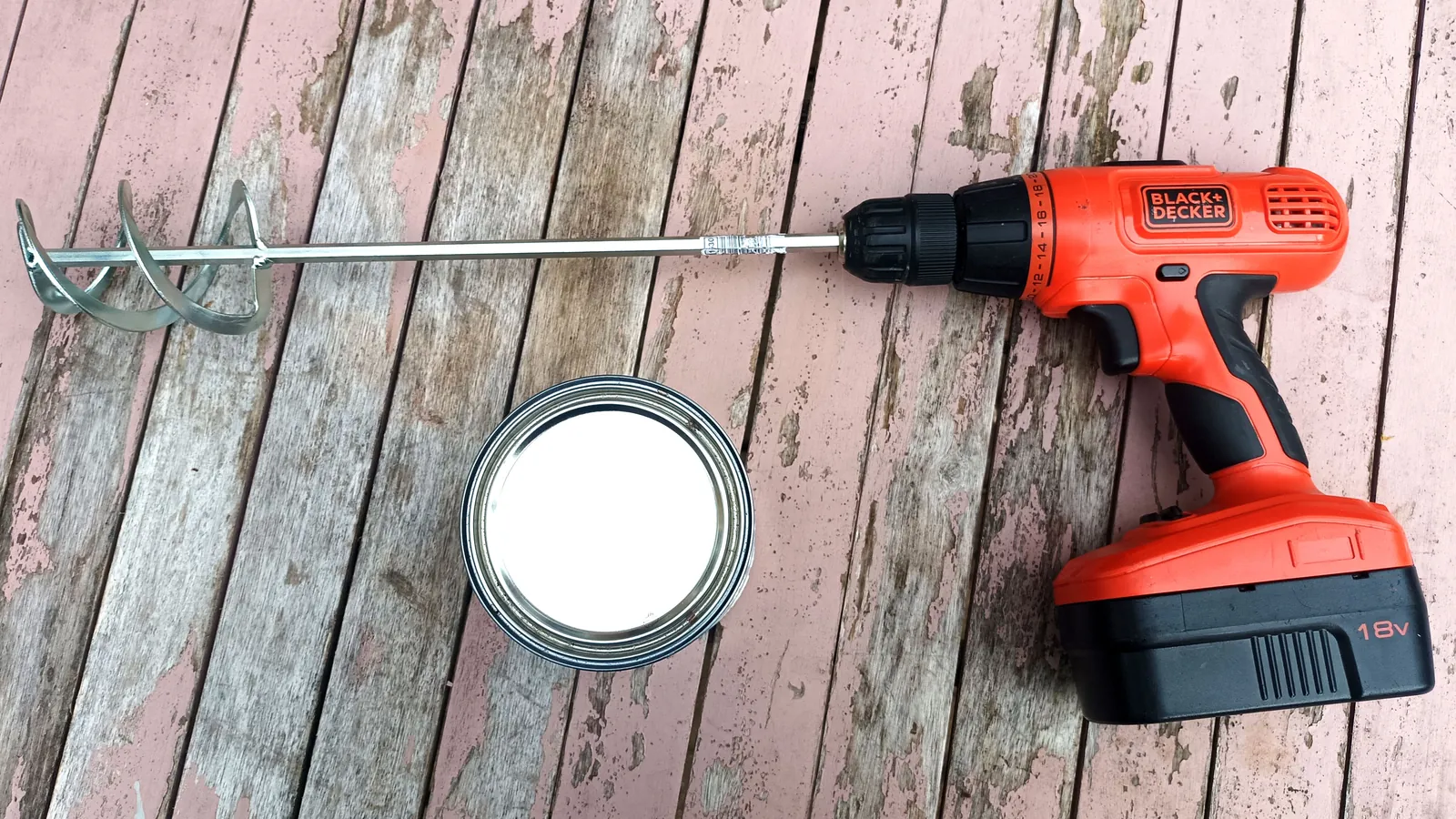
Fit a paddle mixer by chucking the shank deep into the drill chuck. Ensure the blades stay fully submerged below the paint line. If you start with the blades exposed, you’ll introduce air bubbles that ruin the finish. The sign it worked is smooth paint with no dry powder at the bottom.
Set the drill to low speed. Start slow so the paddle turns without throwing liquid against the walls. A quiet motor and a flat, undisturbed paint surface indicate you have the right pace. If the drill whines or the paint climbs the shaft, you’re moving too fast.
Hold the bucket steady by bracing it with your foot or asking a helper to grip the rim. If the bucket slides, you risk a spill that can stain your floor. The sign it worked is zero bucket movement while mixing.
Mix for two to three minutes. Stop halfway to lift the paddle and check for lumps against the side of the container. Even color and a consistent texture without streaks mean you’re finished.
Wear safety glasses at all times. Thin paint flies off the paddle at high speeds and can easily hit your eyes. If you wear contacts, take them out before starting.
The mistake people make
The most common error is running the drill at full speed with a wide paddle in a small can. Paint flies over the rim, dries on the floor, and leaves air bubbles in the mix that show up on the wall later. It can also stall the drill and overheat the motor.
Most beginners fail to account for the viscosity of the product. If you’re mixing a thick primer or a heavy-bodied exterior paint, the resistance is double that of a standard latex. In these cases, use a helical-style mixer rather than a flat paddle to pull the material upward without drawing air into the vortex.
The one check that avoids a mess: start on the lowest speed, keep the paddle fully under the surface, and only raise speed if the motor sounds easy and the paint stays in the bucket. If the paint climbs the shaft, stop immediately; you’re spinning too fast.
When to stop and get help
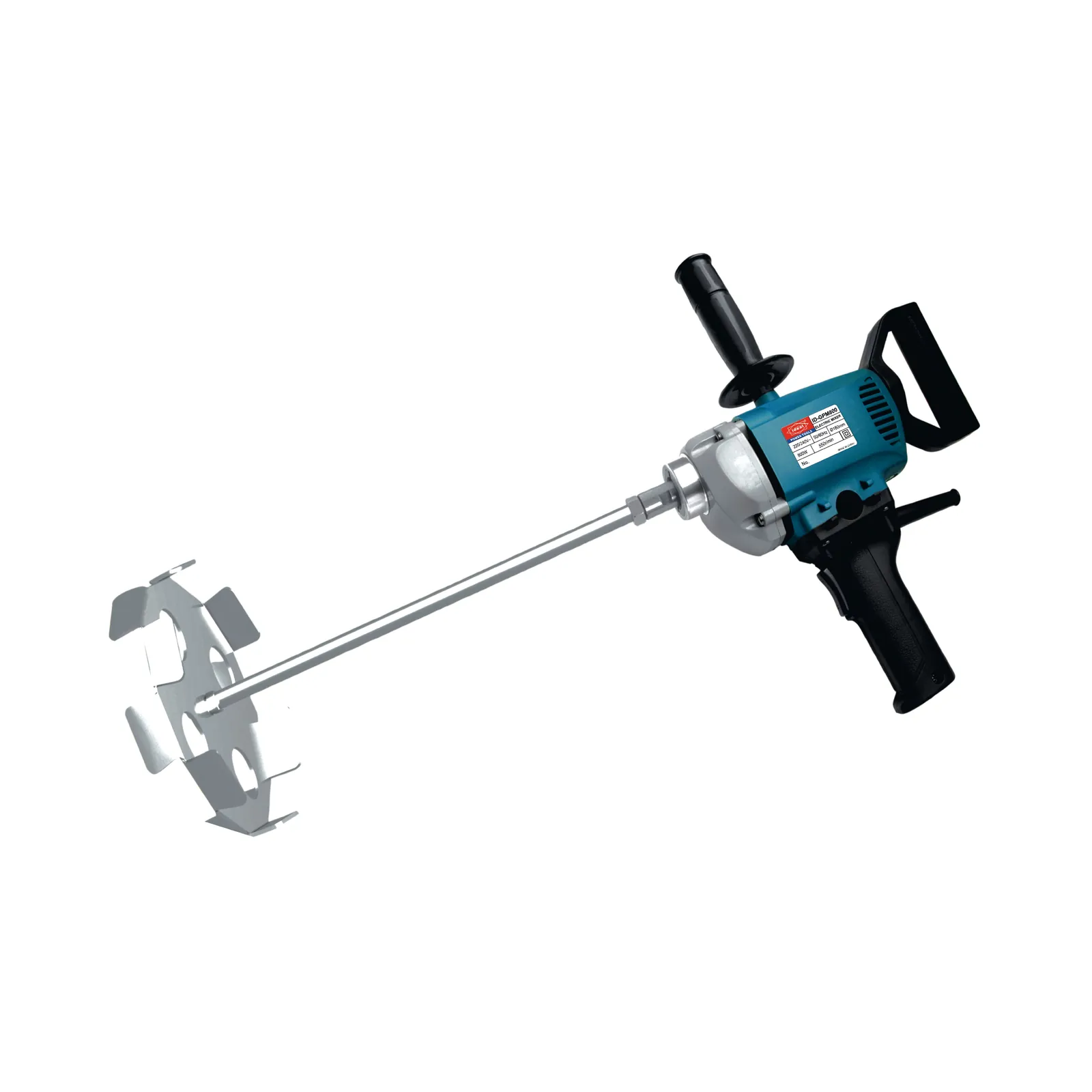
Smoke or a burning smell from the drill indicates the motor is overloaded and nearing catastrophic failure. If you smell ozone or plastic, stop immediately. Continuing for even ten seconds can fuse the internal windings, turning a simple project into a total loss of the tool.
If the drill stalls every time the paddle hits the paint, you’re exceeding the tool’s torque capacity. This repeated stalling strips the internal gears. If the drill stalls, stop immediately; you’re exceeding the tool’s torque capacity.
Never use a standard drill for flammable solvent-based paints. These motors aren’t spark-proof, and the brushes can easily ignite heavy vapors. If the label on your paint can warns of flammability, use a pneumatic mixer or a dedicated explosion-proof tool. Renting the right equipment is inexpensive, while a motor fire costs the entire project.
Related guides
- Choosing a Corded Drill for Metal: Speed, Bits & Setup
- 10 Best Corded Hammer Drills for Home Projects and Masonry
- 10 Best Corded Drills: Top Picks for Home and Workshop Use
Frequently asked questions
Can a corded drill mix a 5-gallon bucket of paint?
Yes, if the drill is heavy-duty and you use a large paddle on low speed. A standard drill will overheat or stall under that load, so check the amps on the nameplate first.
What paddle size should I use?
Match the paddle to the container: a small paddle for a 1-gallon can, a larger one for a 5-gallon bucket, keeping the blades fully below the paint surface so nothing splashes.
How long should I mix the paint?
Two to three minutes for a standard can, assuming the paint is at room temperature and you’re using low speed; stop when the colour and texture look even with no lumps.
Is it safe to mix solvent-based paint with a drill?
No. Solvent vapours can ignite from drill motor sparks, so mix solvent-based paint by hand with a stick or use air-powered equipment rated for flammable liquids.
Does mixing paint with a drill void the drill warranty?
It can, if the manual says the drill is for drilling only and not for mixing. Read your warranty terms before you start.
What happens if I mix too fast?
Air gets whipped into the paint and droplets fly over the rim, leaving bubbles in the finish and a mess on the floor.
Does paint type matter?
Yes. Thin latex mixes easily, but thick epoxy or floor coating needs more torque than most drills provide, so match the tool to the coating.
What to do next
Have a technician verify your drill’s power rating. A lower rating risks burning out the motor under the thick resistance of fresh paint. Fit a paddle mixer, then start on the lowest speed setting with the blades fully submerged before pulling the trigger. This prevents the initial torque from throwing paint over the rim.
Expect a smooth, consistent texture within three minutes. If the motor slows significantly or emits a metallic, burning smell, stop immediately. You’re overloading the drill. Switch to a dedicated, high-torque paint mixer if you’re working with more than two gallons at once.
Always use a non-sparking, pneumatic mixer for flammable coatings like oil-based stains or lacquers. A standard electric drill can create internal sparks that ignite volatile fumes in confined, poorly ventilated workspaces.