
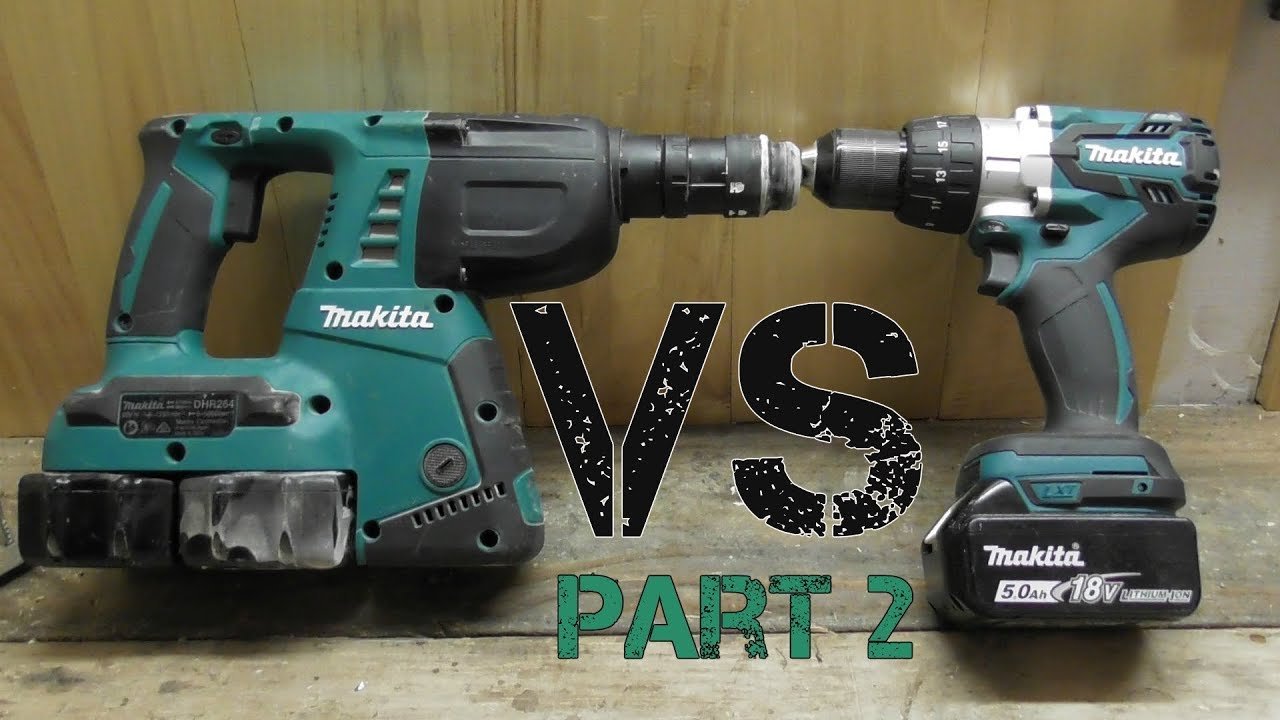
Hammer Drill vs. Rotary Hammer: What’s the Difference?
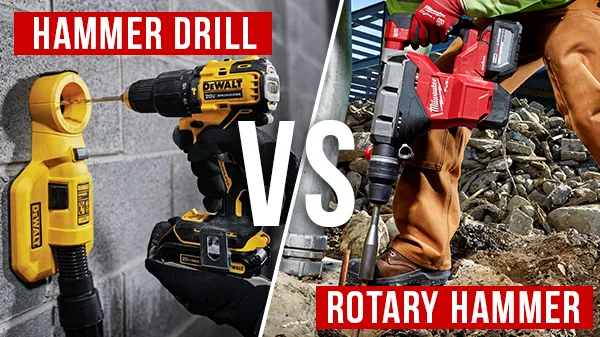
A hammer drill spins the bit while tapping it forward with small, fast impacts, so it drills holes in masonry and drives screws in wood and metal. A rotary hammer pounds the bit with a piston mechanism, so it breaks through concrete and stone far faster. For most home jobs, the hammer drill is the better choice because it’s smaller, cheaper, and handles brick and block well. A rotary hammer wins when you need to drill large holes in concrete or break up masonry.
Hammer drill vs rotary hammer
| Method | How long | Effort | Cost | Best for |
|---|---|---|---|---|
| Hammer drill | Slower in masonry | Low | Low | Brick, block, wood, metal, light concrete |
| Rotary hammer | Fast in concrete | Low | High | Large holes in concrete, demolition |
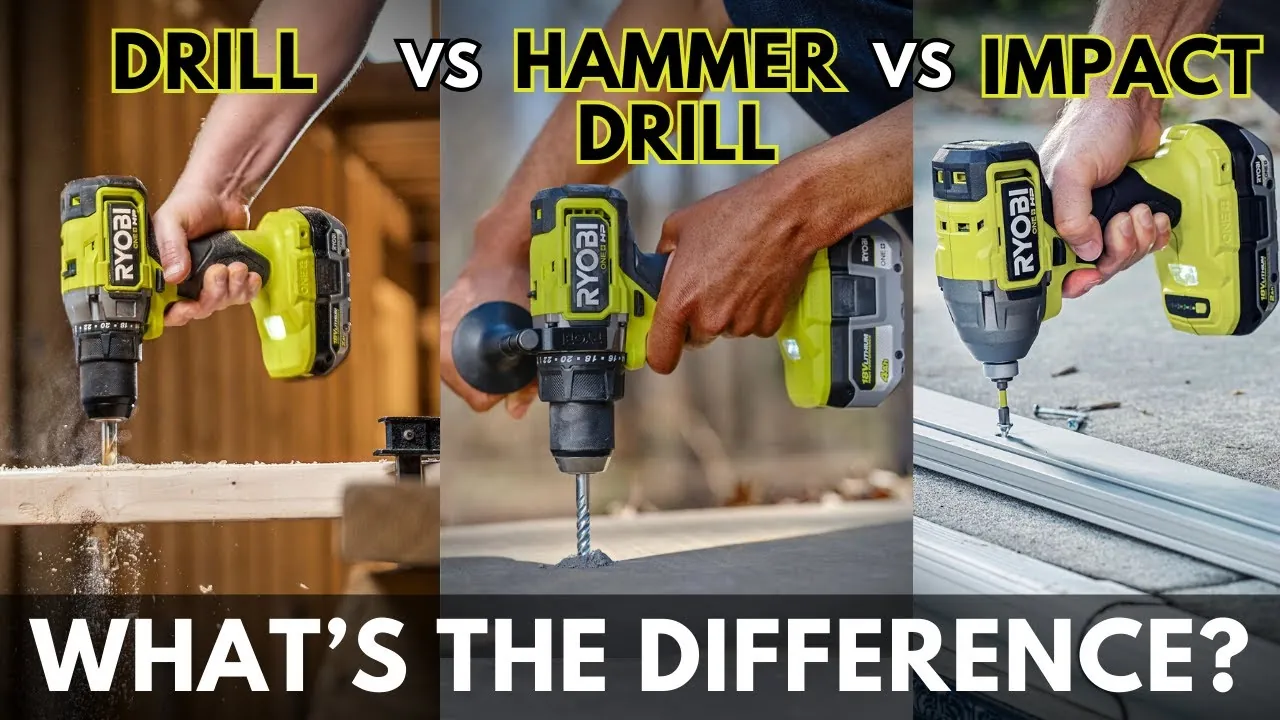
| Regular drill | Not suitable | Low | Low | Wood and metal only |
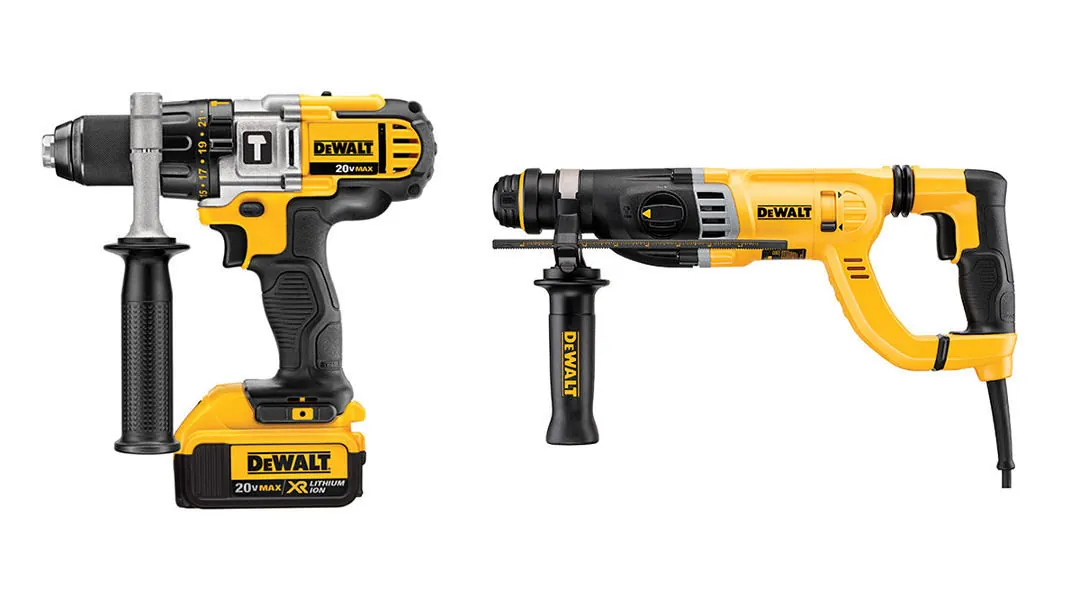
The hammer drill uses a clutch mechanism that makes the chuck spin and hammer at the same time. It works well in brick and lightweight block, but it struggles in hard concrete because the impact comes from the spinning parts themselves.
A rotary hammer uses a separate piston that drives the bit forward with real force, so it bores big holes in concrete quickly and can even chisel masonry. Neither tool replaces a regular drill for everyday wood and metal work, where the hammer action only gets in the way.
Using a hammer drill
Fit a masonry bit sized for the hole you need. Ensure the shank is fully seated in the chuck before tightening.
Switch the tool to hammer mode. You’ll feel a distinct mechanical vibration once the internal cam mechanism engages.
Mark the spot, start slowly, then apply steady pressure. If the bit wanders, use a center punch to create a small divot before you begin.
Pull the bit out now and then to clear dust. If you leave the debris in the hole, the friction will overheat the carbide tip and ruin its temper.
This method is good at drilling holes in brick, block, and light concrete, and most models also drive screws in wood and metal. Its weakness is hard concrete, where it works slowly and wears the bit out fast. If you need to drill holes wider than about half an inch in concrete, or break up masonry, use a rotary hammer instead.
For anything involving electrical or plumbing work inside walls, check where pipes and wires run first, or call an electrician or plumber. Striking a live line costs more in repairs than the tool is worth.
Using a rotary hammer
Fit an SDS bit into the chuck and lock it in place until you hear a distinct click. Pull on the bit to ensure it’s seated, as a loose bit will destroy the chuck under load.
Choose hammer-only mode for chiseling, or rotary hammer mode for drilling. If you’re drilling into hard-poured concrete, use the rotary hammer setting to engage the internal piston. If you’re merely chipping away tile or mortar, switch to hammer-only to avoid unnecessary rotation that can snap your bit.
Hold the tool with both hands and let the weight do the work. Pressing too hard causes the bit to overheat and dull prematurely. Instead, apply steady, firm pressure and let the pneumatic mechanism cycle at its own pace.
Withdraw the bit regularly to clear dust and keep the hole clean. If you leave the bit buried, the dust packs into the flutes, causing the tool to bind and the bit to seize.
This tool is built for concrete and stone. Its weakness is size, weight, and cost; it’s overkill for brick, block, and everyday jobs. If you’re breaking up concrete or drilling structural anchor holes, this is the tool to rent. Because it throws dust and vibration, wear eye and hearing protection. If you’re cutting into a wall, confirm there are no hidden pipes or cables first.
Other options
A regular drill with a masonry bit can drill small holes in soft brick, but without hammer action it works slowly and the bit overheats. Use this only for pilot holes under 1/4 inch in diameter. If you push too hard to compensate for the lack of impact, you’ll burn out the motor or snap the tip.
A demolition hammer breaks up concrete but can’t drill holes, so it only suits jobs where you’re taking masonry apart, not putting fixings in. Use a rotary hammer for any hole larger than 1/2 inch. It combines rotation with high-frequency impact, allowing you to bore through dense aggregate in seconds without applying heavy downward pressure. If the tool bounces, you’re using too much force.
Which tool for which job
When you’re in a hurry, choose the rotary hammer because its pneumatic piston mechanism pulverizes concrete in a fraction of the time. This tool excels when you must drill holes larger than half an inch in diameter.
When you’re doing this for the first time, choose the hammer drill because it’s significantly lighter and easier to control. A hammer drill uses a mechanical cam action that’s far more forgiving for beginners. If you feel the bit wandering or the tool vibrating violently, you’re likely using a rotary hammer on a task that requires the finesse of a standard hammer drill.
When you want the best possible result, choose the rotary hammer for its ability to handle the hardest masonry. The trade-off is simple: the hammer drill costs less and fits everyday household tasks, while the rotary hammer costs more and earns its keep on serious, deep-anchor concrete work. Use the hammer drill for brick; save the rotary hammer for poured concrete.
Staying safe with either tool
Wear eye protection and hearing protection every time you use either tool, and grip it with both hands so it can’t twist in your grip. Check the wall for hidden pipes and cables before you drill, and clear dust from the hole as you work so the bit doesn’t bind.
If you’re drilling into a load-bearing wall or cutting large openings, talk to a builder or structural engineer first. A simple rule is to tap the wall; if it sounds hollow, it’s likely a partition, but a solid, dull thud suggests a structural element that requires professional clearance.
Mistaking a load-bearing wall for a partition can cost you thousands in structural repairs or lead to ceiling sag. If you encounter resistance that feels like metal or plastic while drilling, stop immediately. These are often conduit pipes or supply lines. For electrical or plumbing concerns inside walls, call a licensed professional before you proceed further.
Related guides
- 10 Best Corded Hammer Drills for Home Projects and Masonry
- 10 Best Cordless Drill for Assembling Furniture Picks
- Choosing a Corded Drill for Metal: Speed, Bits & Setup
Frequently asked questions
Can I use a hammer drill in concrete?
Yes, but only in light concrete and for small holes. Hard concrete slows it down and wears the bit out quickly.
Why is a rotary hammer faster in concrete?
It uses a piston to drive the bit forward, while a hammer drill gets its impact from spinning parts that can’t match that force.
How long does each tool last?
There’s no fixed lifespan; how long it lasts depends on how hard you use it and how well you maintain it, so check the manufacturer’s guidance for your model.
Is it safe to drill into any wall?
No. Check for hidden pipes and cables first, and avoid load-bearing walls unless a builder or structural engineer says it’s safe.
What happens if I use the wrong bit?
The bit can slip, overheat, or break, and the hole won’t be the right size for your fixing.
Do I need special bits?
Yes. A hammer drill takes standard masonry bits, while a rotary hammer needs SDS bits that lock into its chuck.
Conclusion
A hammer drill suits most home jobs in brick, block, and light concrete, while a rotary hammer earns its place on serious concrete work. Pick the tool that matches the material and the hole size, wear protection, and check for hidden pipes and cables before you start.


One Comment