Miter Saw Laser vs Shadow Line: Which Cutline Guide Is Better
A shadow line is generally better than a miter saw laser for most users because it shows the exact width of the blade cut, though a laser is often cheaper and easier to add to older tools. If you work in very bright outdoor light, you’ll find that a laser is nearly impossible to see, making a shadow line the only reliable choice for your projects.
Comparing Miter Saw Laser and Shadow Line Cutline Guides
When you look at modern woodworking equipment, you’ll see two main ways to line up your boards. Each method helps you place the blade exactly where you want it. The right choice depends on how much you want to spend and how often you work in direct sunlight.
| Method | How long | Effort | Cost | Best for |
|---|---|---|---|---|
| Laser guide | Instant | Low | Low | Indoor hobbyists |
| Shadow line | Instant | Medium | High | Professional finish |
| Manual mark | 5-10 seconds | High | None | Simple cuts |
If you’re a hobbyist, a laser is fine for basic trim work. If you’re a professional, the precision of a shadow line is worth the extra cost.
Using a laser guide for basic cuts
A laser guide uses a small battery or power tap to project a red line onto your wood. It shows where the blade will hit, but it doesn’t account for the thickness of the blade itself.
- Turn on the laser switch located near the handle of the saw.
- Place your board against the fence and align the mark with the laser beam.
- Lower the saw blade slowly to verify the edge of the blade touches your mark.
- If the laser is off-center, use the adjustment screws to align it with the side of the blade teeth.
Lasers are great because they’re very inexpensive and simple to install on almost any saw. However, they’re fragile and the beam can drift if the saw vibrates too much during heavy use. They’re also notoriously difficult to see in bright sunlight, which can lead to mistakes if you’re working outside.
Installing a shadow line system
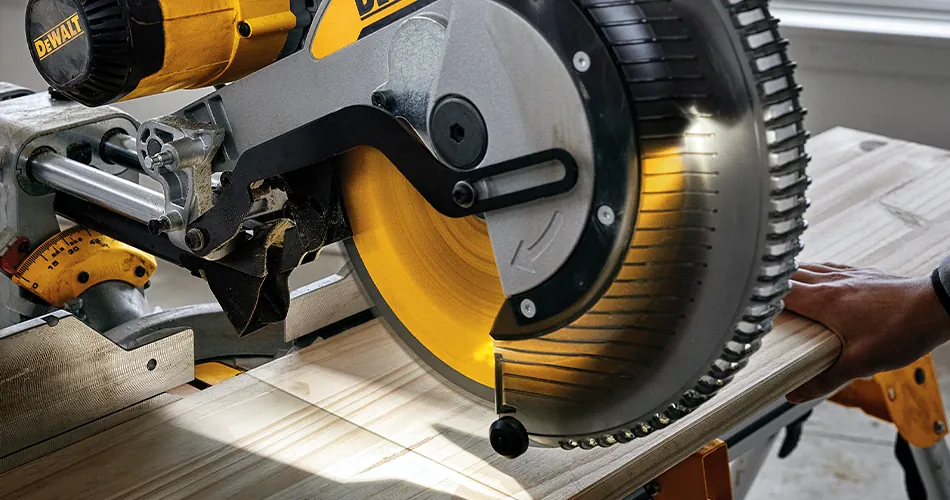
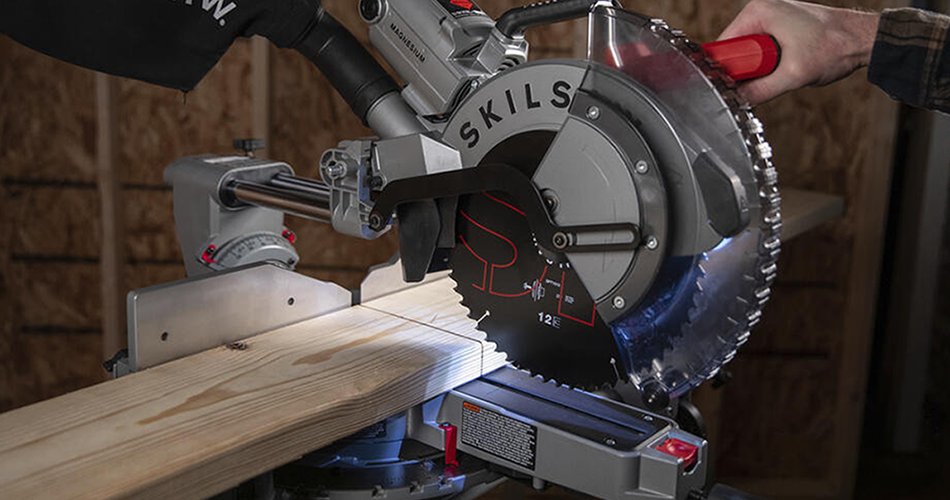
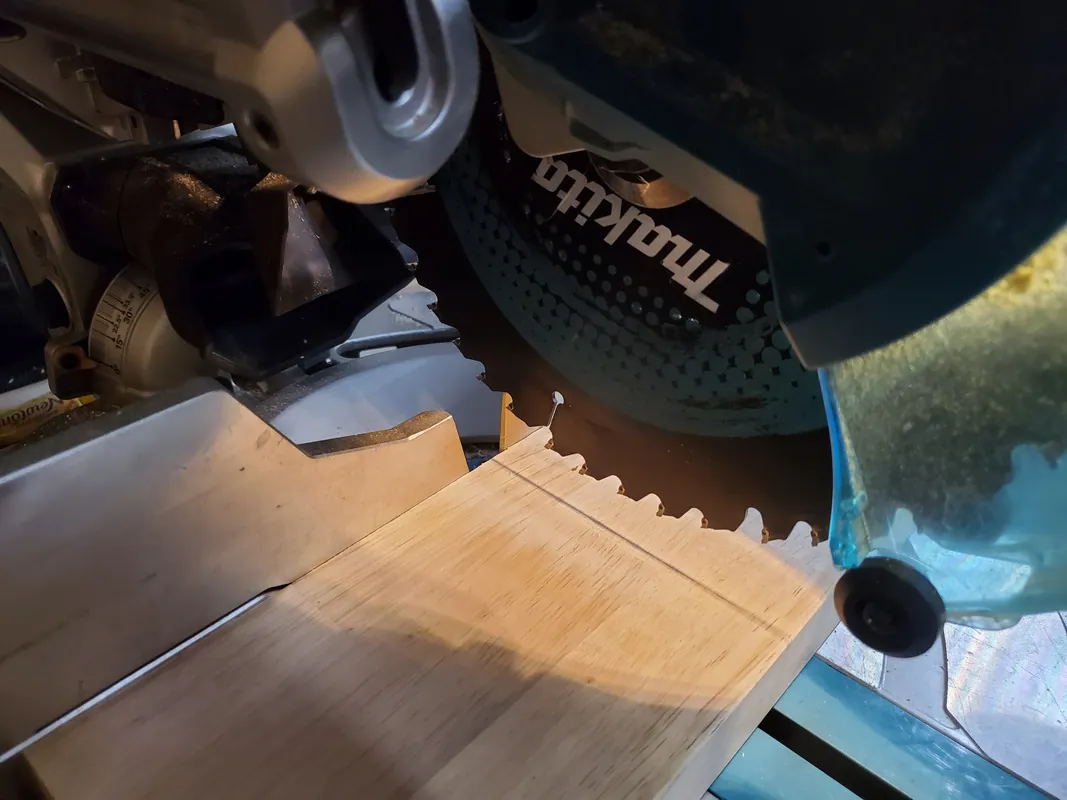
A shadow line system uses an LED light positioned behind the blade to cast a dark shadow directly onto the workpiece. Because the shadow is cast by the blade itself, it shows the exact width of the cut. This is the most accurate way to align a board because the shadow is always perfectly aligned with the blade teeth.
- Mount the LED light assembly onto the upper blade guard.
- Adjust the light angle until the shadow falls clearly across your cut mark.
- Test the shadow width against a scrap piece of wood to ensure it matches the blade kerf.
This method is highly reliable and doesn’t require constant recalibration. It works well in any lighting condition, even bright sunshine. The trade-off is that it’s much harder to retrofit onto older saws, and it usually requires a professional to install the electrical components safely to avoid fire risks, as noted by the Consumer Product Safety Commission on general electrical tool maintenance.
Manual marking for highest accuracy
If you don’t have a laser or a shadow line, you should use the manual marking method for every cut. This involves drawing a line with a sharp pencil or a marking knife and aligning the blade by hand before you start the motor.
- Mark your cut line clearly with a fine-point pencil or a marking knife.
- Lower the blade without turning the saw on to align the teeth with your mark.
- Pull the board back slightly so the teeth just touch the edge of your line.
- Hold the board firmly against the fence and make the cut.
This method is the most accurate because it relies on your eyes rather than a light beam. It costs nothing and works on every single saw. The weakness is that it’s slow, as you must stop to align the blade for every individual piece of wood you cut.
Which cutline guide should you use?
When you’re in a hurry, a laser is the best choice because it provides a fast, visual reference that works well for simple framing or rough carpentry. If you’re doing this for the first time, a laser is also easier to set up and adjust without needing special electrical skills. If you want the best possible result regardless of the effort required, you should choose a shadow line.
The main trade-off is between the speed of a laser and the absolute precision of a shadow line. If you’re working in a dimly lit shop, a laser is often enough for most tasks. If you frequently work with expensive hardwood or need to make furniture-grade joints, the shadow line provides the accuracy you need to avoid costly mistakes. Always remember that no guide replaces the need to measure twice and cut once.
Rules for safe operation
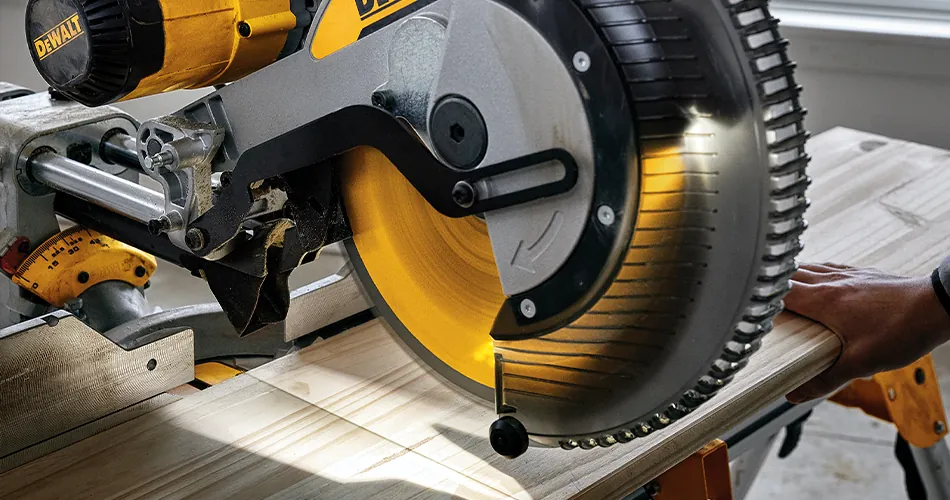
Regardless of the guide you choose, you must always prioritize safety when using a miter saw. The most important rule is to keep your hands at least six inches away from the blade path at all times. Before you start, check that the blade is sharp and that the guard moves freely without catching on the wood.
If you’re unsure about the electrical installation of a shadow line kit, don’t try to do it yourself. Improper wiring can lead to short circuits or motor damage. Consult a qualified electrician or the manufacturer’s support team if you aren’t comfortable handling the internal wiring of your tool. Always wear safety glasses, as small pieces of wood can be thrown at high speeds during the cut.
Frequently asked questions
Can I add a shadow line to an old saw?
Yes, you can add a shadow line to many older saws, but it often requires a specific aftermarket kit designed for your exact model. You must check the manufacturer’s website for compatibility before buying. If your saw lacks the internal space for the light assembly, you’ll be unable to install it.
Is a laser guide accurate enough for furniture?
No, a laser guide is usually not accurate enough for fine furniture because the beam has a thickness that can vary between 1/32 and 1/16 of an inch. For furniture, you should always use a marking knife to score your line and align the blade by hand for the best results.
How long does a laser battery last?
A laser battery typically lasts for about 20 to 40 hours of continuous use, though this varies based on the quality of the battery and the model of the laser. If your laser uses a power tap from the saw’s main cord, you’ll never have to worry about battery life.
What happens if the laser beam drifts?
If the laser beam drifts, you’ll make inaccurate cuts that can ruin your material. You should check the alignment of the laser before every project by making a test cut on a scrap piece of wood. If the laser is off, use the adjustment screws to move the beam back.
Is it safe to use a laser guide outside?
Yes, it’s safe to use a laser guide outside, but it’s often ineffective because direct sunlight washes out the beam. You’ll likely find it impossible to see the line clearly, making the tool useless for outdoor work. Use a manual mark instead when you’re working in bright daylight.
How much does a professional shadow line cost?
A professional shadow line kit typically costs between $50 and $150, depending on the brand and installation complexity. This price excludes professional installation fees if you choose to hire a technician. Always verify the manufacturer’s current price list for the most accurate cost estimate before purchasing your kit.
Conclusion
Choosing between these guides depends on your workspace and how often you cut. If you’re tired of squinting at faint lines, it’s time to upgrade your setup for better accuracy. Head to your local hardware store this weekend and test both systems in person; you’ll quickly see which one feels right for your hands.