
Angle Grinder Disc Types Explained: Choose the Right Wheel
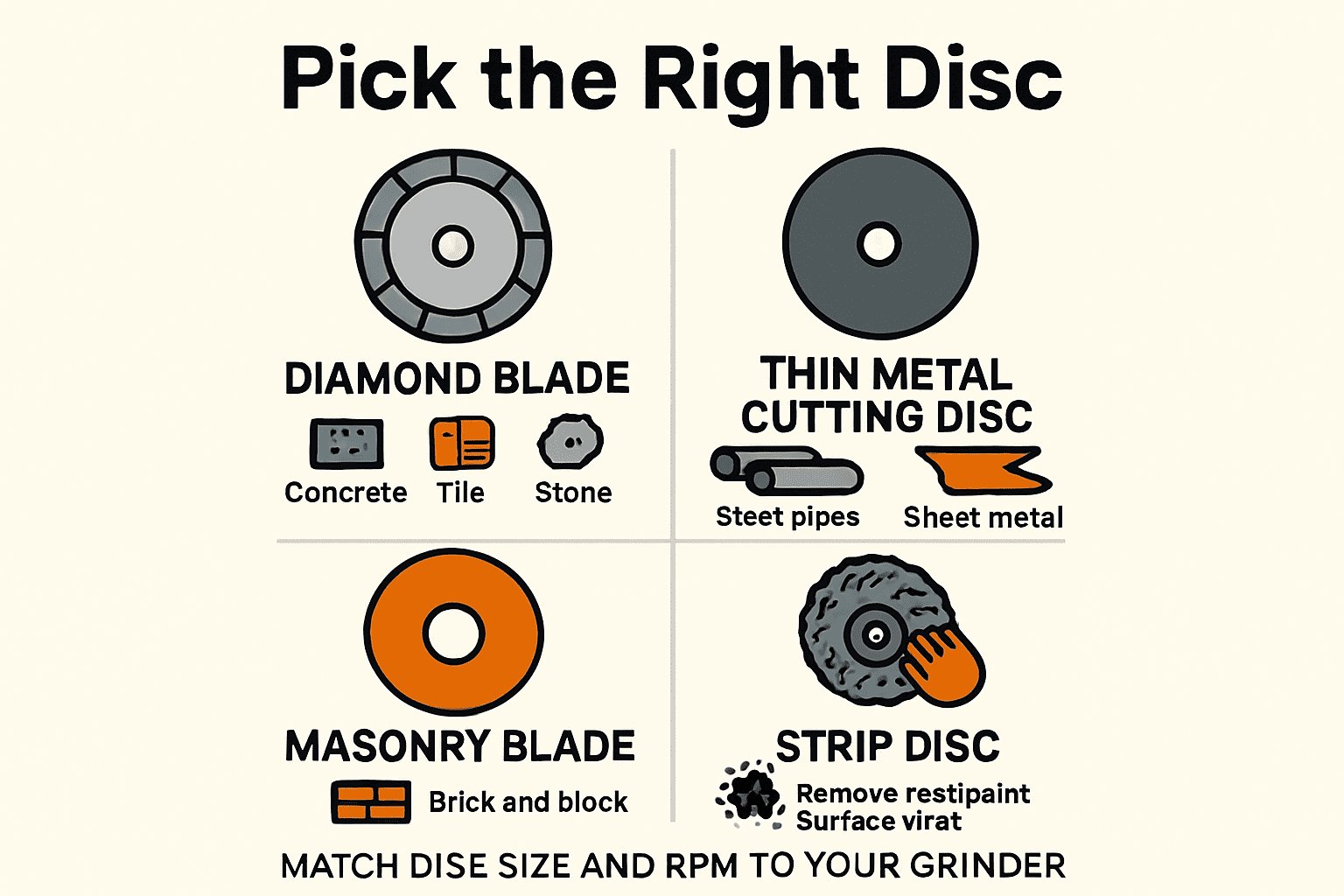
You should select a disc based on the material you’re cutting and your desired finish, as angle grinder disc types explained: which wheel should you use? Depends entirely on the hardness of the metal or stone. You must match the arbor size and the maximum rated RPM of the disc to your specific grinder model to ensure safe operation.
Understanding Grinder Disc Categories
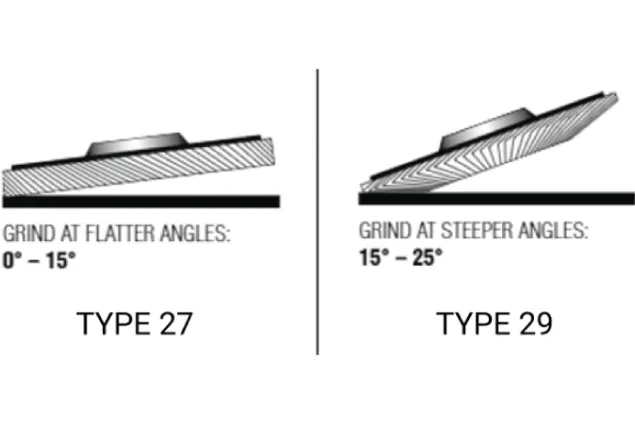
Angle grinder discs are thin, circular tools designed for cutting, grinding, or polishing various materials. Each wheel is built with specific abrasives or materials suited for either soft metals, hardened steel, or masonry. People often make the mistake of using a thick grinding wheel for cutting tasks, which is dangerous because the lateral stress can shatter the disc.
If you’re working with metal, always choose a thin, reinforced cut-off wheel. If you’re shaping or smoothing weld beads, use a thicker, reinforced grinding disc. You should check the Occupational Safety and Health Administration guidelines regarding portable power tools to ensure you’re using the correct protective guards for your chosen disc type.
Selecting the Right Angle Grinder Disc Types
- Unplug your grinder from the power source before touching the disc or the locking nut.
- Inspect the new disc for any cracks, chips, or signs of moisture damage, as damaged discs can explode during use.
- Place the disc onto the spindle, ensuring it sits flat against the inner flange.
- Thread the outer locking nut onto the spindle by hand, then tighten it with the provided pin wrench.
- Spin the disc by hand to verify it rotates without wobbling or hitting the safety guard. Plug the tool back in and run it for a few seconds while standing to the side, ensuring no one is in the path of potential debris.
The most important judgement call is the pressure you apply during the cut. If you force the disc, it will bind, overheat, and potentially break; let the speed of the motor do the work while you simply guide the tool.
Comparison of Common Grinding Wheels
| Situation | What to use | How long | What to watch for |
|---|---|---|---|
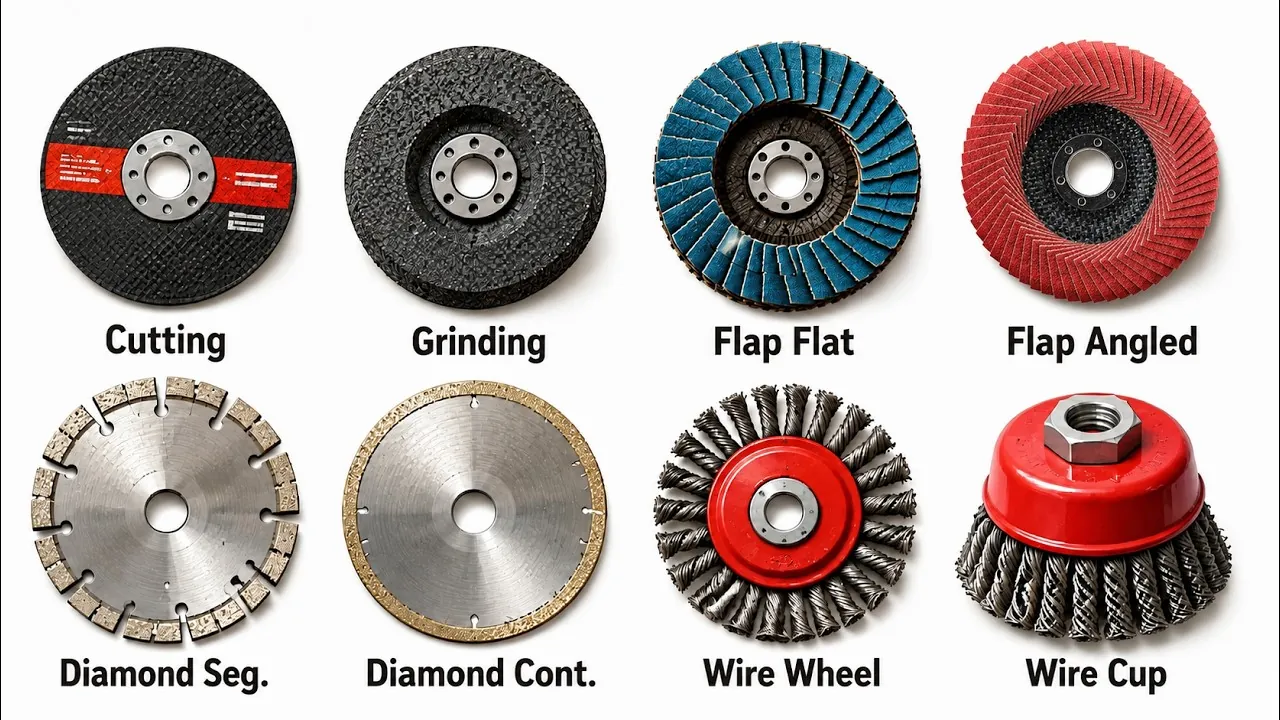
| Cutting thin steel | 1mm cut-off wheel | Until diameter shrinks | Sparks turning orange |
| Grinding heavy welds | 6mm grinding disc | Until bond wears down | Excessive heat buildup |
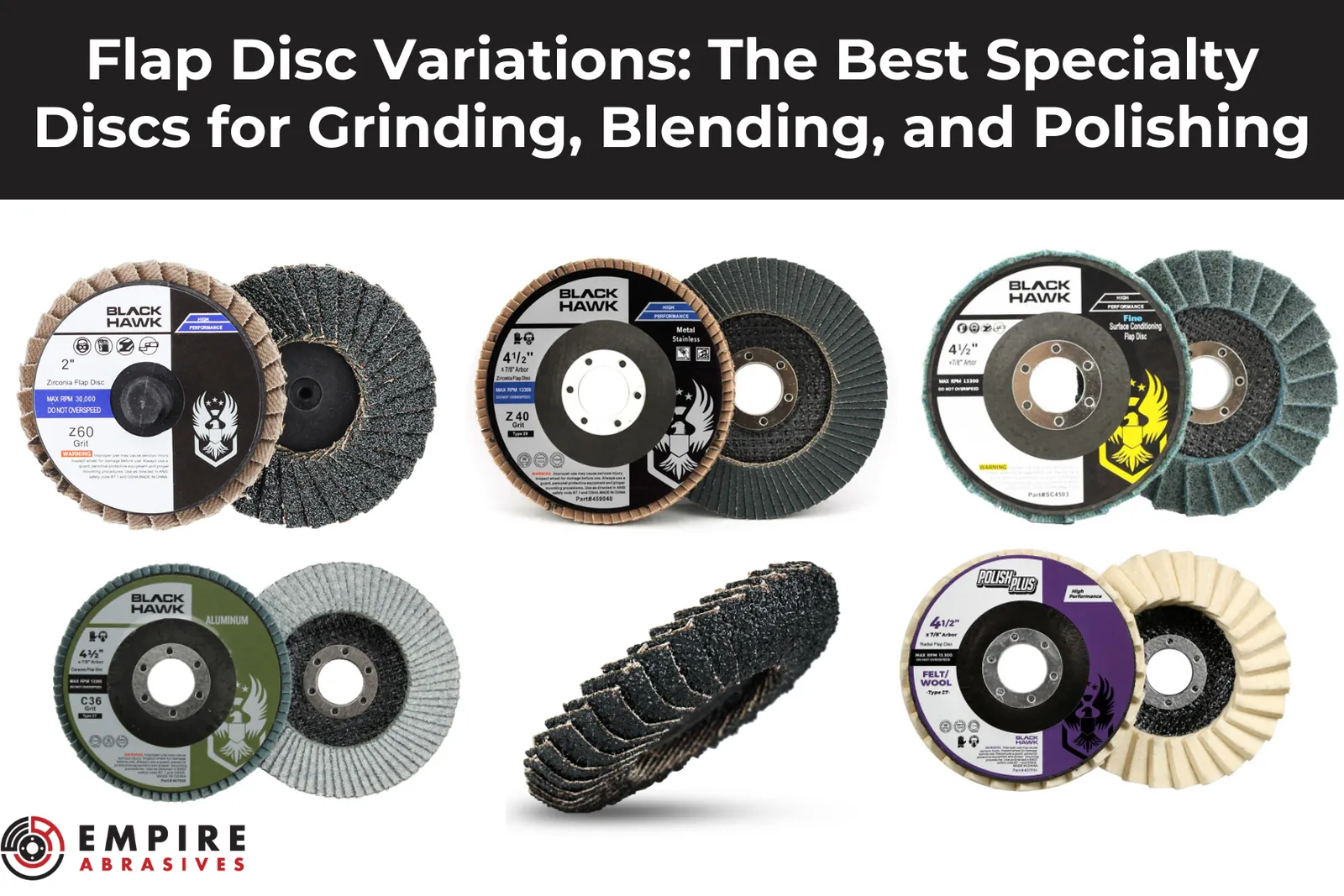
| Smoothing wood | Flap disc | Until abrasive wears | Clogging of the grit |
| Cutting concrete | Diamond blade | Until core is exposed | Dust accumulation |
| Polishing metal | Wire cup brush | Until wires fray | Loose wire projectiles |
Essential Tips for Better Results
Experienced users always prepare their workspace by clamping the workpiece securely to a heavy bench. If the material moves while you’re cutting, it will catch the disc and cause the grinder to kick back, which is a major cause of injury. Always ensure your workpiece is positioned so that the cut doesn’t pinch the disc as you finish.
Partway through a long cut, stop and inspect the disc for glazing. Glazing happens when the abrasive surface becomes smooth and loses its bite, causing the tool to vibrate and heat up. If you notice this, you can lightly dress the disc by making a few shallow cuts into a piece of scrap concrete or a dressing stone to expose fresh abrasive grains.
Troubleshooting Common Issues
| What you notice | What it usually means | What to do first |
|---|---|---|
| Excessive vibration | Disc is off-center | Loosen and reseat disc |
| Burning smell | Too much pressure | Lighten your touch |
| Disc stops spinning | Motor is struggling | Back out of the cut |
| Sparks are dying | Disc is worn out | Replace with new disc |
Regulatory Limits and Safety Rules
The American National Standards Institute (ANSI) specifies that every abrasive wheel must be marked with its maximum operating speed. You must never use a disc rated for a lower RPM than your grinder’s maximum speed, as this can cause the disc to disintegrate under centrifugal force. If you’re unsure of your grinder’s speed, check the tool’s nameplate or the manufacturer’s manual for the exact RPM rating.
Always wear impact-resistant eye protection and a face shield when operating these tools. Hearing protection is also necessary, as the noise levels of grinders often exceed 90 decibels. If you’re unsure about the structural integrity of a disc after a drop, throw it away; a hairline crack invisible to the eye can cause a catastrophic failure during high-speed rotation.
Maintenance and Storage Practices
Store your discs in a dry, climate-controlled area to prevent the binding agents—often resins—from breaking down due to moisture. Keep them in their original packaging or on a flat rack to prevent warping, as a warped disc will cause dangerous vibrations. If you find a disc has been exposed to water or oil, don’t use it, as the structural bond is likely compromised.
Check the expiration date if your discs have one printed on the blotter. While many metal-cutting discs don’t have a hard expiration date, they do degrade over time. If a disc feels soft, smells like chemicals, or shows signs of crumbling around the center hole, it’s time to replace it rather than risking an injury.
When to Switch Approaches
If you need to make extremely precise cuts in thick steel, an angle grinder is often too inaccurate. Use a metal-cutting bandsaw or a cold saw instead to get a square, burr-free edge. These tools keep the kerf narrow and prevent the heat discoloration that ruins structural integrity in high-carbon alloys.
If you’re working with delicate materials like thin plastic or glass, the high speed of an angle grinder will melt or shatter the material. Switch to a manual hacksaw or a rotary tool with a variable speed setting for these tasks.
If your cut requires a tolerance tighter than 1/16 of an inch, abandon the grinder immediately. Relying on a grinder for fine detail usually forces you to spend hours grinding away mistakes. If you find yourself filing for more than five minutes, you chose the wrong tool.
Related guides
- 10 Best Cordless Circular Saw Picks for Every Project Type
- Circular Saw Blades Explained: Types, Tooth Counts, and Uses
- 10 Best Die Grinders for Wood Carving: Professional Reviews & Expert Buying Guide 2025
Frequently asked questions
Can I use a masonry disc on metal?
No, never use a masonry disc on metal. These discs aren’t reinforced for the specific stresses of metal cutting and can fail catastrophically.
How long should a cut-off wheel last?
It depends on the thickness of the metal and your pressure. A standard 1mm disc will usually last for several meters of cutting thin sheet metal, but it will wear down in seconds if used to cut thick steel plate.
Is it safe to use a larger disc on a smaller grinder?
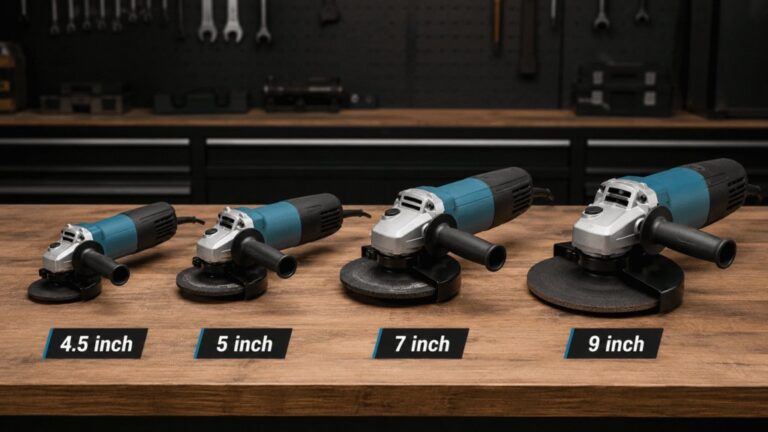
No, it’s never safe. A larger disc increases the torque and changes the balance of the tool, and it will often exceed the safety guard’s coverage, leaving you exposed to flying debris if the disc breaks.
What happens if I remove the guard?
Removing the guard exposes you to high-speed shrapnel if the disc fails. The guard is the only thing standing between your body and the metal fragments of a disintegrating wheel, so it must stay on during every operation.
How do I know if the disc is too worn?
The disc is too worn when the diameter has decreased to the point where the inner flange or the locking nut is close to hitting the workpiece. Most manufacturers specify a minimum diameter on the disc label itself.
How often should I replace the grinding wheel?
Replace the wheel when it shows visible signs of wear, such as chipping, cracking, or if it has become glazed and no longer cuts effectively. If you notice the disc wobbling while the tool is running, discard it immediately.
Conclusion
Always verify your specific tool’s compatibility with the disc manufacturer’s safety data sheet before starting any project. Proper usage ensures both the longevity of your equipment and your personal safety.
2 Comments