
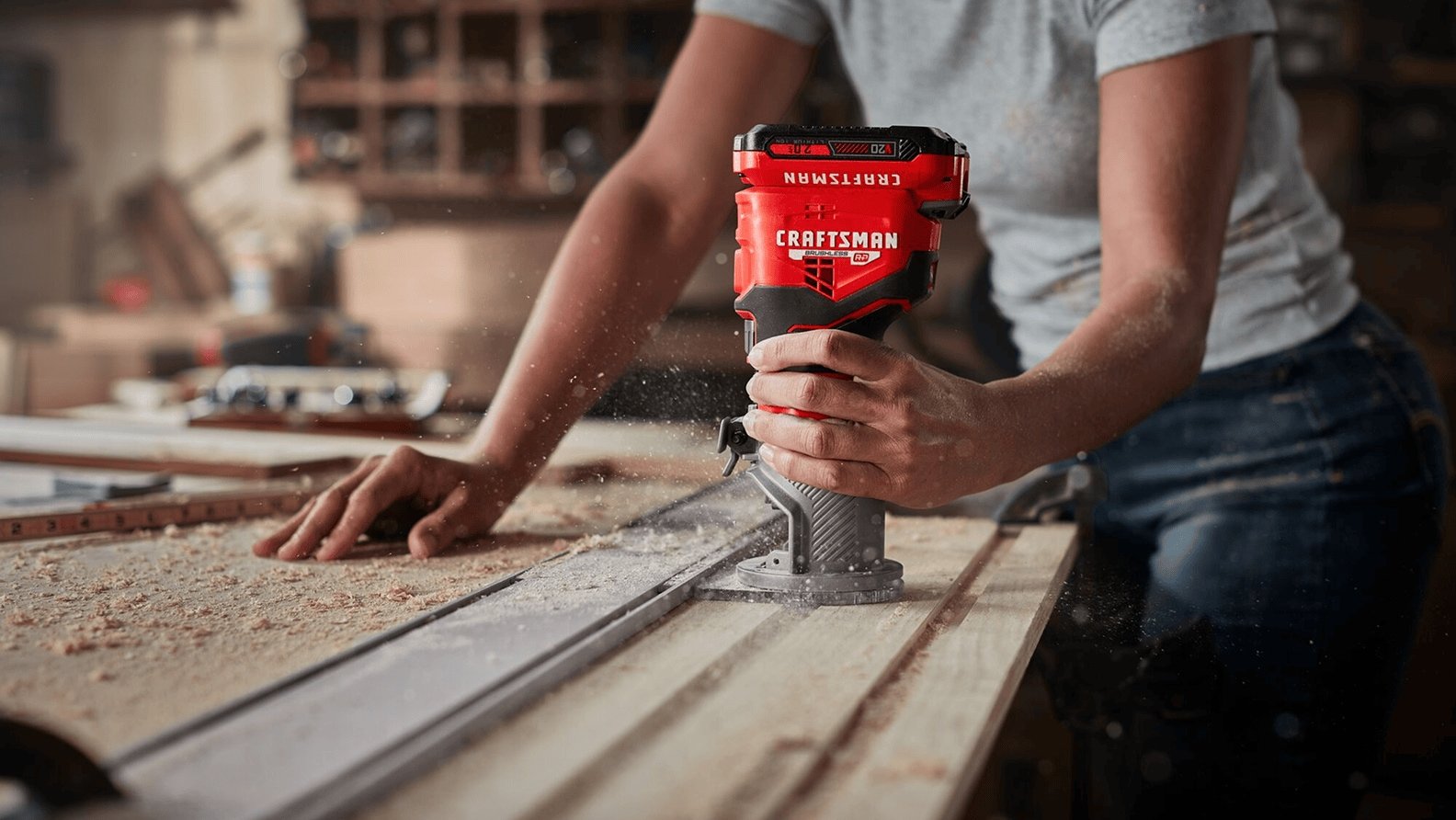
10 Best Wood Routers for Woodworking: Top Picks for Projects
Different wood routers serve various woodworking projects, ranging from the powerful Bosch 1617EVSPK Combination Router to the portable SEESII Cordless Brushless Router. These top picks balance power and portability to suit your specific needs, whether you are building furniture or trimming edges.
As an Amazon Associate, we earn from qualifying purchases. This post contains affiliate links – if you buy through them, we may earn a commission at no extra cost to you.
1. Bosch 1617EVSPK 2.25 HP Combination Plunge- and Fixed-Base Router

Best for: A woodworker building furniture who needs both fixed and plunge capabilities.
This model serves as a versatile workhorse for serious projects. The 12-amp motor provides significant power, and the inclusion of both fixed and plunge bases means you can tackle everything from edge profiling to deep mortise cuts. The microfine depth adjustment is essential for the precision required in cabinet making or detailed joinery.
The rounded hardwood handles improve comfort during extended use, reducing fatigue when you’re working on large panels. Its threaded three-hole base pattern makes it a straightforward choice for mounting to a router table.
Good if:
- You need to switch between fixed and plunge routing often.
- You plan to mount your router to a table.
- You prioritize consistent speed under heavy loads.
Skip it if:
- You need a tool that’s easy to use with only one hand.
- You’re looking for a compact, lightweight option for small trim jobs.
2. Bosch GKF125CEK Colt 1.25 HP (Max) Variable-Speed Palm Router Kit

Best for: Someone who needs a high-performance, compact router for detailed edge work.
The Colt is designed for precision in a small package. With a 1.25-HP motor and a wide speed range, it handles delicate trimming with ease. The 360-degree non-split aluminum base housing provides a solid foundation, which is vital for maintaining accuracy when guiding the tool along a workpiece.
The LED lighting improves visibility, helping you follow layout lines without straining your eyes. The soft-start circuitry prevents the tool from jerking when you turn it on, which helps maintain control. The listing doesn’t mention a plunge base.
Good if:
- You value a clear, unobstructed view of the cutting area.
- You need to handle bits up to 1-5/16 inches wide.
- You want a durable, aluminum-based tool for daily trimming.
Skip it if:
- You require plunge-cutting capabilities for heavy joinery.
- You need a tool that handles large-scale stock removal.
3. BOSCH PR20EVS Colt 1.0 HP Variable-Speed Palm Router

Best for: A craftsman who demands extreme precision for fine edge trimming.
The PR20EVS focuses on stability and control. The finger support pockets on the base provide added balance, which is a significant advantage when you’re trimming edges and need the tool to remain perfectly flat. It features a fast depth-adjustment system that allows for both macro and micro changes, ensuring you can dial in your settings exactly.
The angled cord exit is a thoughtful touch that keeps the power line away from your work, preventing snags during delicate operations. Its fixed aluminum base is robust and built for longevity. This router isn’t intended for heavy-duty material removal, as its 1.0 HP motor is optimized for lighter trim work.
Good if:
- You prioritize stability during edge-trimming tasks.
- You need a quick-clamp system for fast base changes.
- You want a tool designed to keep the power cord out of your way.
Skip it if:
- You need a high-horsepower router for cutting through thick hardwoods.
- You need a plunge base for cutting recesses or grooves.
4. AVID POWER 6.5 Amp 1.25 HP Compact Router Tools

Best for: A beginner looking for a complete, ready-to-use kit.
This router is an excellent starting point because it arrives with a variety of bits, guides, and collets. The rack-and-pinion depth adjustment is smooth, allowing you to set your depth and lock it down without worry. The dual LED lights are a major help for those working in workshops with limited overhead lighting.
The rubber-covered handle is designed to reduce fatigue, which is helpful if you’re still learning how to manage the tool’s vibration. While it includes many accessories, it isn’t designed for the extreme demands of industrial-scale production. It’s a solid, entry-level tool that covers the basics for most home DIY projects.
Good if:
- You want a complete kit that works straight out of the box.
- You need to cut both curves and straight lines.
- You’re new to woodworking and want an easy-to-adjust depth system.
Skip it if:
- You’re a professional needing a tool for heavy, all-day use.
- You require advanced features like constant speed under heavy load.
5. SEESII Cordless Brushless Router

Best for: Someone who works away from power outlets or dislikes managing cables.
Cordless freedom is the main draw here. The brushless motor is efficient, and the 6-speed adjustment allows you to match the RPM to the material you’re cutting. The aluminum base construction provides a stable, non-plastic foundation that feels secure when you’re routing along an edge.
The built-in LED display is a modern feature that makes checking your speed settings very simple. It’s a great choice for mobile projects, such as working in a backyard or on a job site without electricity. However, because it relies on battery power, you’ll need to keep your batteries charged, and it may not match the sustained power of a corded unit for very deep, continuous cuts.
Good if:
- You need to work in areas without easy access to power.
- You prefer a lightweight, highly maneuverable tool.
- You want a modern interface with an LED speed display.
Skip it if:
- You have long, non-stop routing sessions that would drain batteries quickly.
- You prefer the consistent, unlimited power of a corded tool.
6. VEVOR Compact Wood Router

Best for: A user who wants maximum versatility with multiple base options.
The VEVOR model stands out because it includes three different bases: fixed, plunge, and tilt. This makes it incredibly adaptable for someone who wants to do everything from simple edge trimming to bevel cuts and deep slotting. The soft-start feature is also included, which keeps the tool steady at the moment of ignition.
The parallel guide and trim base offer enough flexibility for most hobbyists to experiment with different techniques. Because it’s a compact unit, it’s easy to handle, though it may lack the sheer torque of larger routers when cutting very dense hardwoods.
Good if:
- You want one tool that can handle multiple types of cuts.
- You need a tilt base for specific beveling tasks.
- You want a soft-start feature for better accuracy.
Skip it if:
- You prefer a single, specialized tool over a multi-base system.
- You need a heavy-duty motor for thick timber.
7. TEENO Compact Wood Router

Best for: A DIY enthusiast who wants a simple, straightforward trimming tool.
This router is built for those who want to get straight to work. The 6-speed dial is easy to use, and the transparent base offers a clear view of the bit, which is vital for maintaining accuracy. It includes a 15-piece bit set, which provides excellent value for someone building their first collection of tools.
The vibration-absorbing grip is a nice addition for comfort during smaller tasks. This router accepts 1/4-inch and 6mm shank bits. This tool is best suited for light home repairs, edge profiling, and small-scale cabinetry.
Good if:
- You want a large starter set of bits included.
- You value a clear, impact-resistant base for visibility.
- You need a compact tool for one-handed operation.
Skip it if:
- You need to use 1/2-inch shank bits for large projects.
- You’re looking for a heavy-duty machine for professional workshop use.
8. Cordless Wood Router Compatible with DeWalt 20V Battery(No Battery)

Best for: Someone who already owns DeWalt 20V batteries.
This tool is a practical choice if you’re already invested in the DeWalt battery ecosystem. It features a brushless motor that offers good power efficiency and 6 speed settings. The aluminum base is a step up from typical plastic housings, providing better stability when you’re working on edges.
The micro depth adjustment is precise enough for beginners to learn without frustration. It comes with essential accessories like an edge guide and a dust hood. Since it doesn’t include a battery or charger, it’s only a sensible purchase if you already have the compatible power source at home.
Good if:
- You already own DeWalt 20V Max batteries.
- You want a cordless tool that still feels solid and stable.
- You need a tool for edge trimming and detailed carving.
Skip it if:
- You don’t own compatible batteries and chargers.
- You require a corded tool for continuous, long-term operation.
9. 800W Compact Wood Router Tool

Best for: A user who needs high-speed performance for light trimming.
With a motor capable of hitting 31,000 RPM, this router is well-suited for fine finishing and edging. The inclusion of a 6-piece carbide bit set means you have the essentials to start working immediately. Its transparent base ensures you can see exactly where you’re cutting, which helps prevent errors.
The design is simple and focuses on the most common tasks: grooving, trimming, and shaping. It isn’t an industrial machine, but for a hobbyist building furniture or working on DIY home projects, it provides the necessary power and speed.
Good if:
- You need a high-speed router for clean finishes.
- You want a simple, lightweight tool for general woodworking.
- You prefer a complete kit with a storage case.
Skip it if:
- You require specialized base options for complex joinery.
- You need a high-horsepower motor for heavy timber stock removal.
10. Bosch 1617EVS 2.25 HP Electronic Fixed-Base Router

Best for: Woodworkers who want a powerful fixed-base router for table mounting.
This is the fixed-base version of the Bosch 1617 system, offering the same 12-amp motor and constant response circuitry that keeps speed consistent under load. It’s a reliable choice for anyone who plans to keep their router in a table most of the time. The microfine depth adjustment is highly accurate, making it perfect for tasks where you need to make tiny, repeatable changes.
The switch can be positioned on either the right or left, which is a great ergonomic feature for different users. Because it’s a fixed-base model, it lacks the plunge functionality, making it less versatile for freehand work where you need to lower the bit into the wood.
Good if:
- You want a dedicated router for a table.
- You need reliable, constant power for large bits.
- You prefer a simple, robust fixed-base design.
Skip it if:
- You intend to use the router freehand for plunge cuts.
- You need a compact tool for fine, maneuverable edge work.
How we picked the best wood routers for woodworking projects
Most of these routers, particularly the compact palm models like the Bosch Colt series, the AVID POWER, and the TEENO, overlap significantly in terms of their intended use. They’re all designed for edge trimming, grooving, and light shaping. If you’re comparing these, the choice often comes down to the specific accessories included in the kit and the quality of the base housing. For instance, the Bosch PR20EVS and the Bosch GKF125CEK are both top-tier compact options; the decision between them is subtle, resting mostly on whether you prefer the finger support pockets of the PR20EVS or the specific LED lighting and base design of the GKF125CEK. When you move to the corded 12-amp models like the Bosch 1617 series, the difference is clear: these are for heavier work and table mounting, whereas the compact units are for handheld maneuverability.
Still Not Sure?
How much power do I really need for my projects?
If you’re mainly trimming edges on boards or cutting shallow grooves, a 1.0 to 1.25 HP compact router like the Bosch GKF125CEK is plenty. These tools are lightweight and easy to control. However, if you plan to build large tables or cut deep mortises, you need the extra torque of a heavy-duty, full-sized router. Always match the motor size to the depth and hardness of the wood you plan to cut most often.
Should I choose a cordless or corded model?
Cordless routers like the SEESII Cordless Brushless Router offer great convenience for working in spaces without many outlets, unlike corded models that require a fixed power source. They’re excellent for quick, simple tasks that require minimal setup. If you’re a professional or a serious hobbyist who works in a fixed workshop, a corded model is usually better. It provides unlimited runtime and consistent power. Safety standards for portable power tools are managed by organizations like the Consumer Product Safety Commission, which emphasizes the need for proper training and handling.
What is the most important feature to look for?
Look for a high-quality base housing and a precise depth-adjustment system. A wobbly base will ruin your cuts regardless of how powerful the motor is. If you want a tool that grows with you, a versatile combination kit is a smart investment. These allow you to change bases, which effectively gives you several tools in one. If you’re a first-time buyer, prioritize a model that includes a clear depth scale and a comfortable grip.
Related guides
- 10 Best Circular Saws: Our Expert Picks for Every Project
- 10 Best Budget Angle Grinders for Home Projects: Our Picks
- 10 Best Budget Miter Saws for Home Projects: Our Top Picks
Frequently Asked Questions
Which wood router is best for a beginner?
The AVID POWER Compact Router is an excellent choice for a beginner. It includes a complete kit with bits, guides, and collets, so you don’t have to guess what accessories to buy separately. The rack-and-pinion depth adjustment is easy to understand, and the dual LED lights make it much easier to see your work path. It provides enough power for most DIY tasks without the complexity of a larger, professional-grade plunge router.
Can I use a palm router for deep cuts?
Generally, no. Palm routers are designed for light-duty edge trimming, chamfering, and shallow grooving. For deep cuts, you need a plunge router capable of handling heavy material removal. A plunge base allows you to lower the bit into the wood safely and accurately. Trying to force a small, compact palm router to perform deep cuts can lead to overheating the motor and poor results on your workpiece.
How do I change the bits on these routers?
Most modern routers use a spindle lock button that allows you to change bits with a single wrench. Some smaller models, like the Bosch PR20EVS, also allow for bit changes using two wrenches. Always ensure the tool is unplugged or the battery is removed before attempting to change a bit. Consult your specific manual for the exact procedure, as the locking mechanisms vary slightly between brands.
Do I need a separate router table?
A router table is recommended for edge profiling or working with small pieces of wood because it keeps the tool stationary for safer handling. Handheld routing is better for large, heavy pieces that are difficult to move across a table.
Conclusion
The choice of a wood router ultimately comes down to whether you prioritize heavy-duty, versatile power for furniture building or compact, portable efficiency for quick DIY tasks. Evaluate your primary project type and your workspace requirements before deciding. If you’re still unsure, consider starting with a compact kit that includes essential bits and guides to help you master the basics of routing.

2 Comments