What Is a Rotary Hammer Used For? Common Jobs and Limitations
A rotary hammer is a powerful tool for common jobs like drilling large holes into concrete, stone, or masonry and performing light demolition. It combines a spinning motion with a piston-driven hammering action to break through hard materials, though it has limitations when compared to standard drills for lighter tasks.
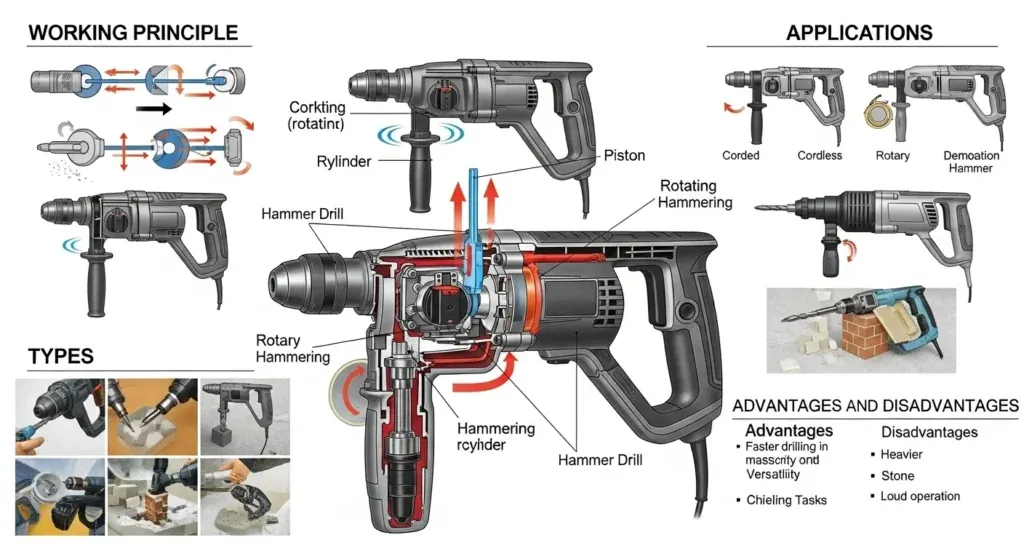
Essential components of a rotary hammer

These tools rely on internal mechanics to deliver high-impact force to the bit. You can check your tool’s manual or the Occupational Safety and Health Administration guidelines for details on safe operation and proper bit selection for specific materials.
| Part or input | What it does | What you notice when it goes wrong |
|---|---|---|
| SDS bit | Cuts the material | Slipping or slow progress |
| Piston mechanism | Generates impact force | Weak or no hammering sound |
| Depth gauge | Sets hole length | Holes drilled too deep |
| Side handle | Provides user control | Excessive vibration or fatigue |
| Mode selector | Switches drill/hammer | Bit rotation stops or jams |
How a rotary hammer works
- Select the correct SDS bit for your material size and insert it into the chuck until it clicks, which usually takes about 5 seconds.
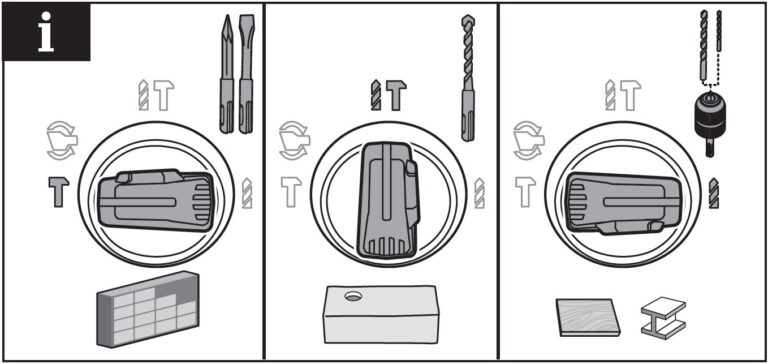
- Set the mode selector to the hammer-drill position if you’re creating holes, or to the hammer-only setting if you’re performing light chipping tasks.
- Place the tip of the bit against your marked spot on the concrete and apply steady, forward pressure to engage the internal piston mechanism for impact.
- Pull the bit out periodically while the tool is still running to clear dust from the hole, preventing the bit from getting stuck inside the concrete.
- Once you reach the desired depth, release the trigger and wait for the motor to come to a complete stop before removing the bit from the surface.
Why this matters for heavy masonry tasks
Using the right tool for the job prevents damage to both the hardware and the surface. A rotary hammer is designed specifically for high-impact force, which is necessary when working with cured concrete or dense stone. If you try to use a standard drill for these tasks, the motor will likely burn out because it lacks the internal piston mechanism required to pulverize the material.
The weight of the tool is also a factor. A rotary hammer is much heavier than a standard drill. This extra weight helps drive the bit into the material with less manual effort from you. If you attempt to force the tool by pushing too hard, you risk breaking the bit or causing the motor to overheat.
If the tool isn’t cutting into the surface, check that you’re using a carbide-tipped bit designed for masonry. Using a dull or incorrect bit is a common mistake that costs time and damages the tool’s chuck.
Control and design limitations
What you can control
- Bit diameter selection based on the anchor size.
- The mode setting for drilling or light chipping.
- The amount of pressure applied to the tool body.
- The frequency of clearing dust from the hole.
Limitations by design
- The maximum diameter the motor can safely turn.
- The internal piston force which is fixed by the model.
- The reach of the power cord or battery capacity.
If you’re unsure about the structural integrity of the wall you’re drilling, consult a professional contractor first. Striking a hidden utility line or metal rebar can cause serious injury or damage to your home.
Improving your drilling efficiency
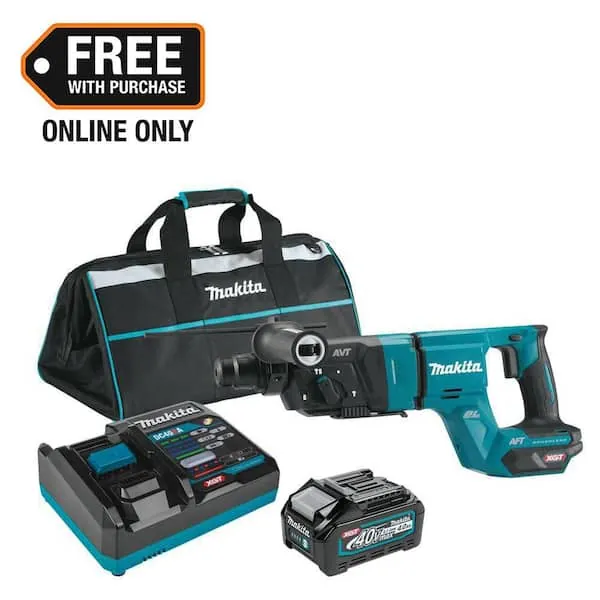
Regular maintenance of the tool’s mechanics ensures optimal performance and longevity. Always keep the bit shank lubricated with a small amount of specialized grease; this reduces friction and prevents the bit from seizing inside the chuck during long jobs. If you notice the motor sounds strained, stop immediately and check for debris buildup in the vents.
Monitor the heat of the bit during continuous use. If the metal turns blue, it’s overheating and losing its hardness, which means you should switch to a fresh bit. Always ensure your bit is sharp; a dull bit requires more force, which increases the risk of the tool kicking back. For holes deeper than 6 inches, use a longer bit to ensure you maintain a straight path through the masonry.
Frequently asked questions
Can I use a rotary hammer as a regular drill?
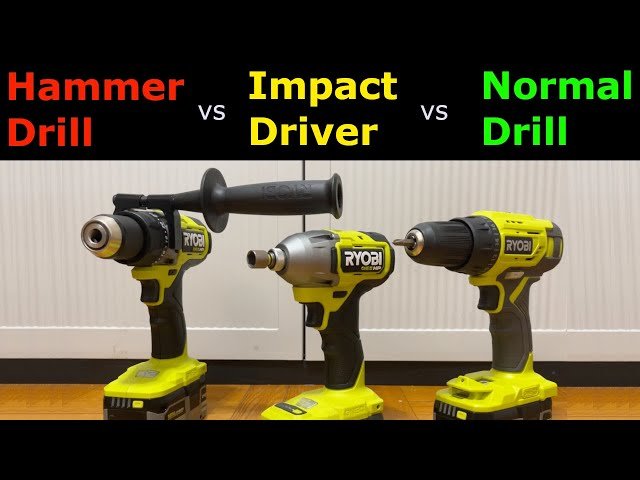
No, it isn’t recommended because the high-impact force will likely damage wood or metal materials. You should use a standard drill for softer materials to avoid cracking or splintering the surface you’re working on.
How long does a rotary hammer bit last?
A high-quality carbide-tipped bit typically lasts for several hundred holes, but the exact life depends on the hardness of the concrete and the amount of rebar you encounter. Check the tip of the bit for visible wear or flattening to know when it’s time to replace it.
Is it safe to drill into concrete walls?
It’s safe only if you’re certain there are no electrical wires or water pipes inside the wall. Always use a stud finder or a wall scanner to verify the path is clear before you begin drilling into any masonry surface.
What happens if I hit rebar?
The bit will likely stop spinning or start vibrating violently if you hit metal rebar inside the concrete. You must stop drilling immediately, remove the bit, and move your hole location a few inches away to avoid damaging the bit or the tool’s internal gears.
How do I stop the bit from getting stuck?
You prevent the bit from getting stuck by pulling it out every few seconds to clear the concrete dust from the hole. If it does get stuck, try switching the tool to reverse mode and gently pulling the bit out while applying very light pressure.
Does the brand of the tool matter?
The brand matters for reliability and the availability of replacement parts, but performance depends on the motor power and the quality of the bit. Professional-grade tools are designed to handle continuous daily use, while consumer models are better suited for occasional home projects.
Conclusion
The key to successful operation is letting the tool’s weight do the work rather than forcing it into the material. By keeping your bits clean, lubricated, and sharp, you’ll extend the life of your equipment and ensure every hole you drill is clean and accurate.