Fixed Base vs. Plunge Base for a Compact Router: Do You Need Both?
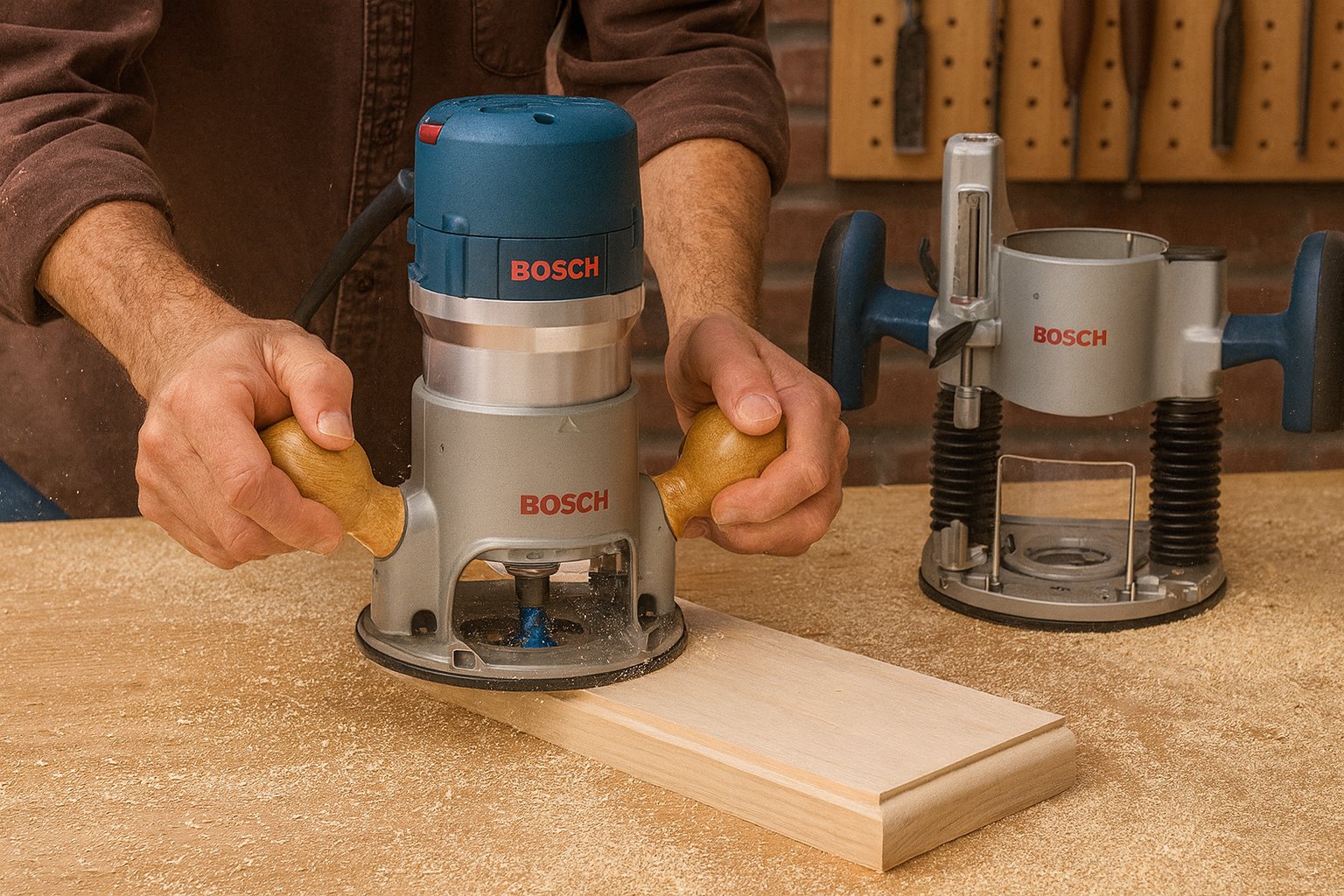
Most woodworkers find that owning a fixed base vs. plunge base for a compact router isn’t strictly necessary, as one base type handles most common tasks. You should choose a fixed base if you mostly perform edge work, but you’ll need a plunge base if you intend to start cuts in the middle of a board.
Comparing router base types

Selecting the right base depends on whether you value stability for long edges or control for internal cutouts. A fixed base keeps the bit at one constant depth, while a plunge base allows you to lower the bit into the wood while the tool is running.
| Method | How long | Effort | Cost | Best for |
|---|---|---|---|---|
| Fixed Base | Short | Low | Low | Edge profiling |
| Plunge Base | Medium | Medium | Medium | Inlays/Mortises |
| Combo Kit | Long | Low | High | Versatility |
Use a fixed base for any task where the bit enters from the edge of the board, such as rounding over corners or cutting rabbets. Because the motor is locked in a rigid housing, you gain superior stability that helps maintain a consistent cut.
If you must start a cut in the middle of a panel, choose the plunge base. Attempting to tip a fixed base into a board is dangerous and often ruins the workpiece. If you’re a beginner, buy a combo kit. It costs more upfront, but it prevents the common mistake of buying a fixed-base tool that can’t handle future joinery projects. You’ll save money by avoiding a redundant motor purchase later.
Using a fixed base for edges
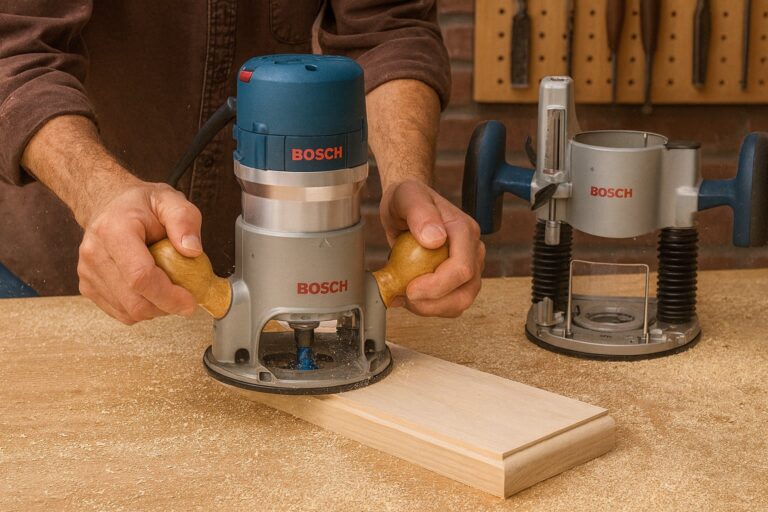
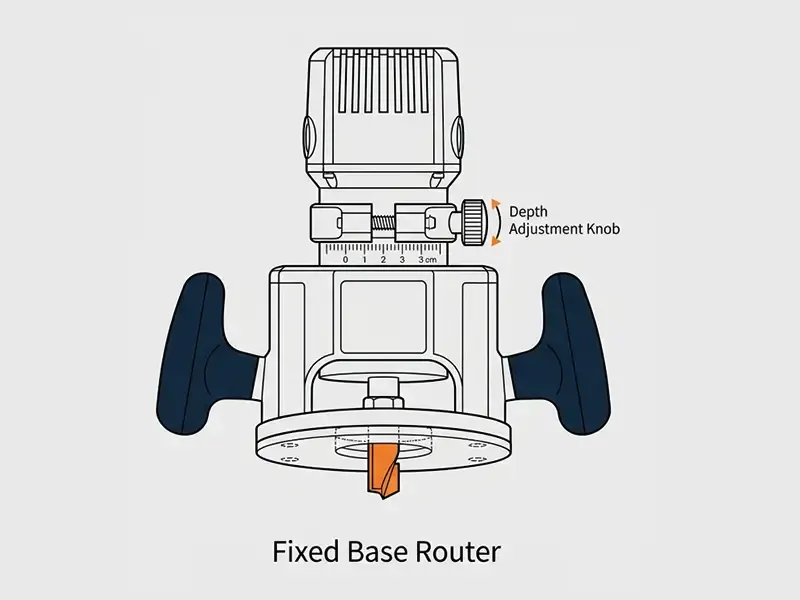
A fixed base is the standard for most trimming and edge-forming operations. You set the depth before you start and lock the motor in place, which keeps the bit at a consistent height throughout the entire cut.
Unplug the router and insert your bit into the collet. Adjust the depth ring to your desired height. Lock the motor housing into the base securely. Turn on the router and feed it along the edge of your workpiece.
This method is excellent for rounding over edges, cutting chamfers, or trimming laminate flush to a surface. Because the base is small and light, it’s easy to control with one hand. Its main weakness is that you can’t lower the bit into the wood; you must always start from the edge of the material.
If you’re working with a workpiece that lacks a clean starting point, use a plunge base instead. Trying to tilt a fixed-base router into the wood causes the bit to grab the grain, leaving deep, permanent gouges. If the bit vibrates during the cut, check that the locking lever is fully engaged. A loose housing ruins the edge profile in seconds.
Using a plunge base for depth control
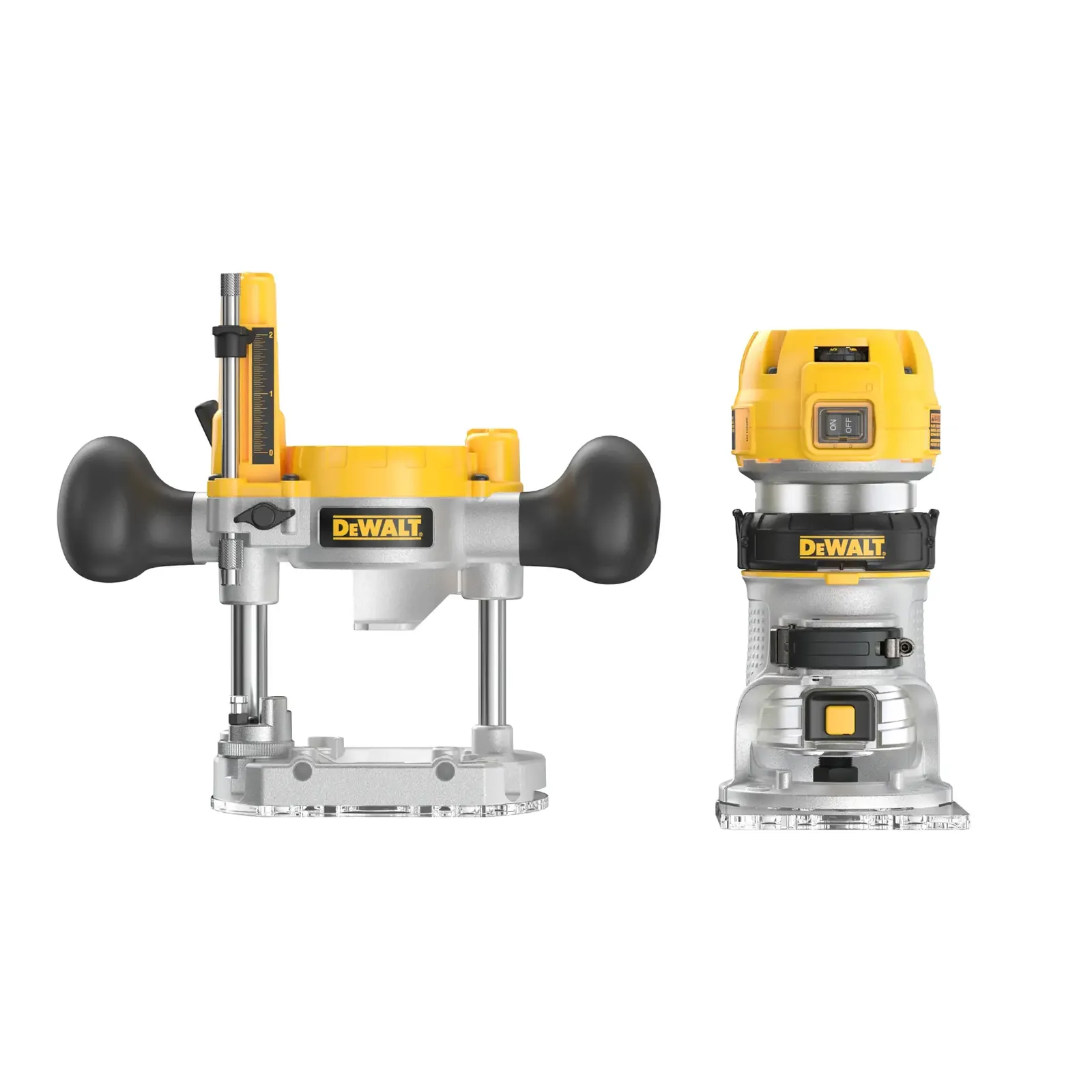
The plunge base allows you to lower a spinning bit into the wood, which is essential for tasks like decorative inlays or hinge mortises. It uses two spring-loaded columns that let you move the motor up and down smoothly.
- Set your desired depth using the adjustable depth stop rod.
- Position the router over your starting mark while keeping the bit above the surface.
- Turn the motor on and press down on the handles to enter the wood.
- Lock the plunge depth if you need to make a long, consistent cut.
This base provides superior control for tasks where you can’t start from an edge. It’s safer for beginners who need to start cuts gradually. However, the extra springs and columns make the tool heavier and slightly harder to maneuver for simple edge work.
When to use each base
If you’re in a hurry, use a fixed base because it’s faster to set up and lighter to handle for simple edge profiles. If you’re doing this for the first time, a plunge base is safer because it keeps the bit safely away from the wood until you’re ready to cut. If you want the best possible result whatever it takes, use a combination kit that allows you to swap bases based on the specific project needs.
You must always follow the safety guidelines provided by the manufacturer to prevent kickback or motor damage. If the wood is very hard, you should make multiple shallow passes instead of one deep cut to avoid burning the material or straining the motor.
Rules for safe operation
Regardless of which base you choose, you must ensure the bit is tightened correctly in the collet before every use. A loose bit can vibrate or fly out, which creates a significant safety risk. Always check your depth settings on a piece of scrap wood first to confirm the result matches your plan.
If your router vibrates excessively, stop the motor immediately and check that the bit is seated properly. A common mistake is failing to insert the shank fully; ensure the shank is inserted at least three-quarters of the way into the collet to ensure a secure grip. Changing bits requires a wrench, so always disconnect the power cord to prevent accidental starts.
If you’re routing hardwoods, move the tool at a slower, constant pace to avoid burning the material or stalling the motor. If the wood begins to smoke, you’re moving too slowly or the bit is dull. Replace the bit immediately if it shows signs of wear.
Frequently asked questions
Can I use a plunge base for edge work?
Yes, you can use a plunge base for edge work, though it’s often heavier and less comfortable than a fixed base. You must lock the plunge depth to keep the bit at a consistent height as you move along the edge of your workpiece.
How long does it take to swap bases?
It usually takes 1 to 2 minutes to swap a motor between bases, depending on the specific model of your router. Most compact routers use a simple quick-release lever to detach the motor housing from the base, allowing for a fast transition between different tasks.
Is it safe to use a router with one hand?
No, it isn’t recommended to use a router with one hand, as this makes it difficult to maintain control if the bit catches. Always use both hands to guide the tool across the surface to ensure stability and reduce the risk of the router jumping.
What happens if I set the depth too deep?
Setting the depth too deep often causes the motor to stall, which can burn the wood and damage the bit. If the cut feels difficult, you should reduce the depth and make two or three smaller passes until you reach your target measurement.
How do I know if the bit is sharp?
You can tell a bit is dull if it leaves burn marks on the wood or requires extra pressure to move forward. Dull bits create more friction and heat, which ruins the finish and shortens the life of your router motor.
Do I need a professional to calibrate my router?
No, you don’t need a professional to calibrate your router, as most adjustments are simple mechanical settings. You can verify your depth settings using a digital caliper or a dedicated setup gauge to ensure accuracy for your specific project requirements.
Conclusion
Choosing the right base is a simple matter of matching the tool to the task at hand. If you keep your bits sharp and use a steady hand, either base will provide excellent results for your woodworking projects. Always prioritize safety by wearing protective gear and disconnecting the power before making any adjustments to your equipment.