Straight vs. Right-Angle Die Grinder: Key Uses and Differences
Deciding between a straight vs. right-angle die grinder requires understanding how your specific workspace and task geometry dictate your tool choice. While both pneumatic or electric devices perform essential tasks like grinding, polishing, and deburring, they offer distinct mechanical advantages depending on whether you’re working on open surfaces or deep, confined cavities. A professional-grade straight die grinder typically retails between $80 and $350, while a right-angle model ranges from $90 to $400 depending on the power source and motor torque specifications.
Key Takeaways
- Use a straight grinder for extended reach tasks that require a linear, pencil-like grip.
- Select a right-angle grinder for tight corners or flat surface preparation where a low profile is necessary.
- Always match the collet size, usually 1/4 inch or 1/8 inch, to your chosen abrasive accessory.
- Prioritize ergonomic vibration-dampening handles to prevent hand fatigue during long-duration grinding sessions.
- Ensure your air compressor output exceeds the grinder’s average air consumption rating to prevent stalling.
Understanding Tool Geometry
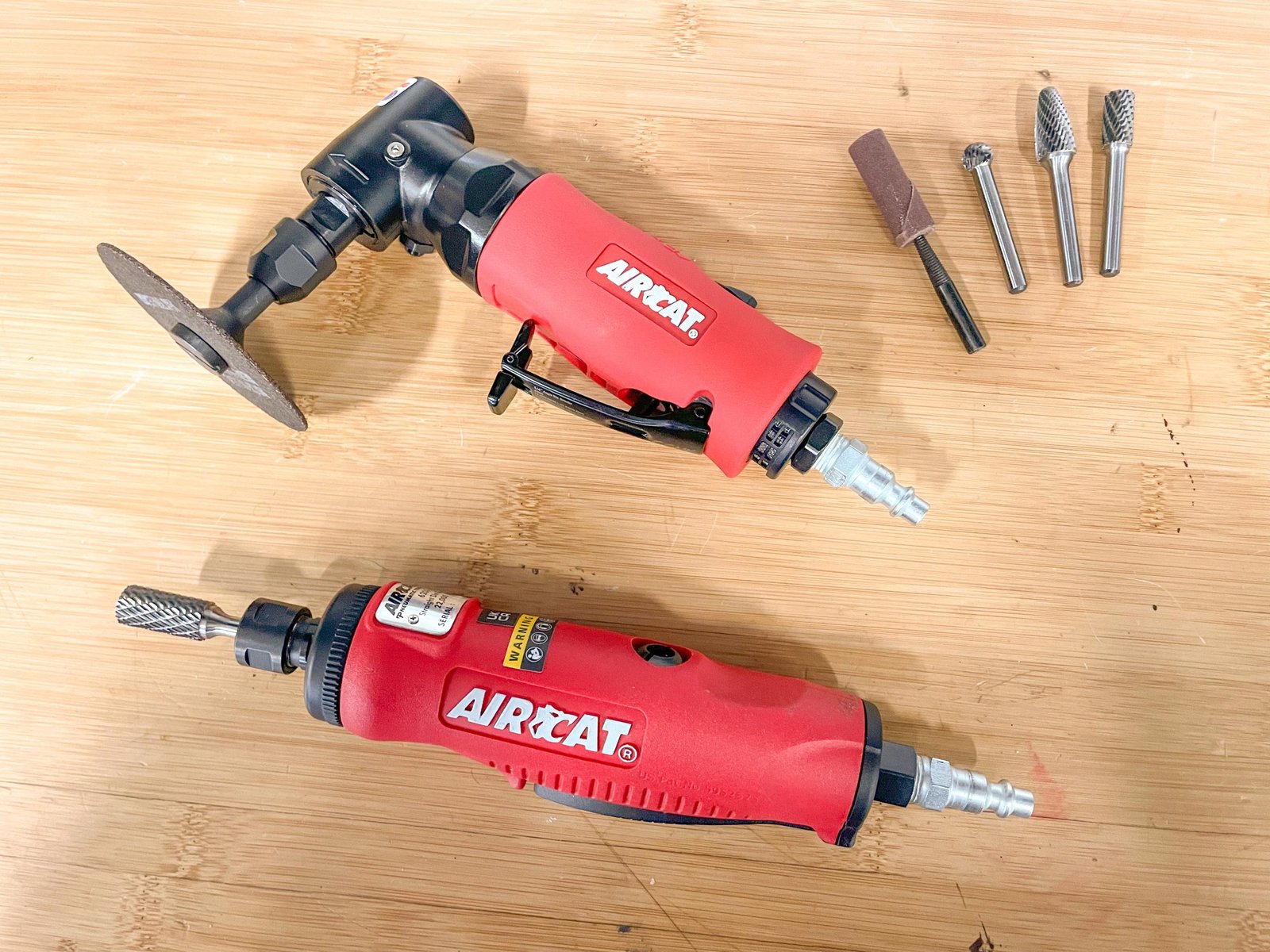
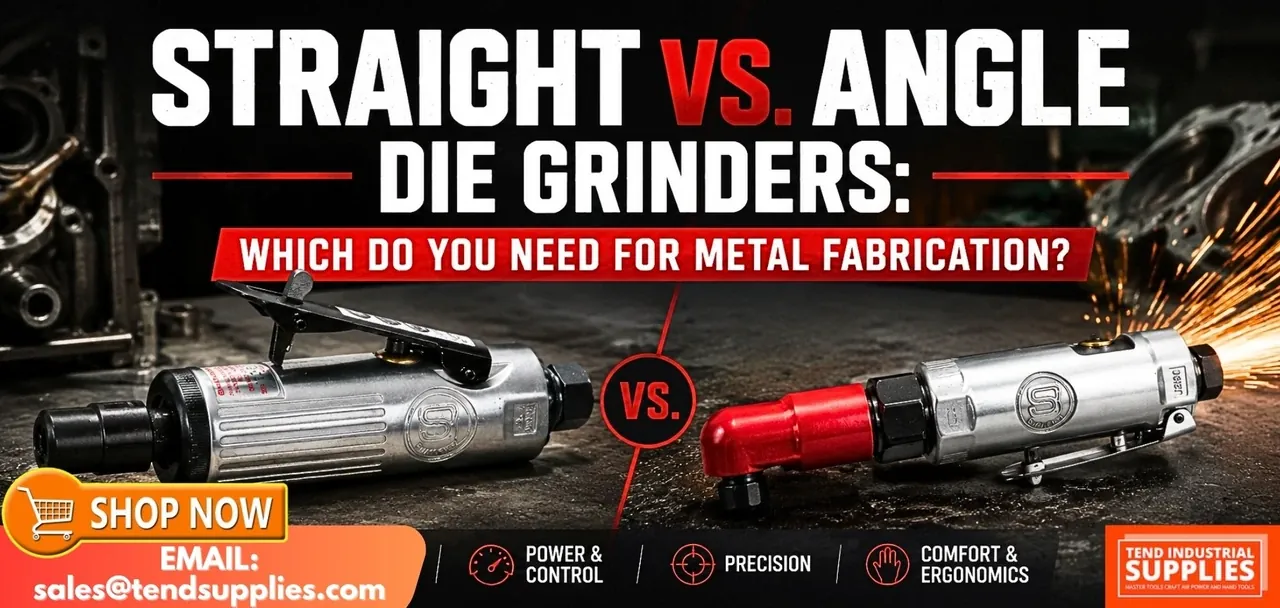
The fundamental difference lies in the orientation of the spindle relative to the handle. A straight grinder aligns the motor, the collet, and the accessory along a single axis. This design mimics the ergonomics of a stylus or a large pen, allowing for precise control when you need to reach deep into a pipe, a cylinder head, or a narrow channel.
In contrast, the right-angle grinder utilizes a bevel gear head to turn the spindle 90 degrees. This provides a compact, low-profile footprint that fits into corners or against flat surfaces where a straight tool would hit an obstruction.
When to Use a Straight Grinder
The straight configuration is your primary choice for heavy-duty material removal in accessible areas. Because the motor is directly behind the collet, these tools are often more powerful and can handle larger, more aggressive burrs or mounted points.
- Porting and polishing intake manifolds on automotive engines.
- Removing rust from inside deep, cylindrical tubing.
- Deburring internal edges of custom-fabricated metal frames.
- Using long-shank carbide burrs to reach inaccessible spots.
Straight Grinder Benefits and Drawbacks
| Feature | Advantage | Limitation |
|---|---|---|
| Reach | Deep cavity access | Bulky in tight corners |
| Torque | High motor efficiency | Harder to control on flat surfaces |
| Visibility | Clear line of sight | Requires steady hand for long grinds |
When to Use a Right-Angle Grinder
Right-angle grinders are the workhorses of the body shop and the metal fabrication floor. Their primary utility is surface finishing. By holding the tool at a 90-degree angle to the work, you can apply even pressure across a flat panel or a curved weld seam.
Pro Tip: Always keep the right-angle head oriented so that the sparks fly away from your body and any flammable materials in your immediate shop environment.
- Removing weld spatter from flat steel plates.
- Blending body filler or smoothing out fiberglass patches.
- Surface prep before painting or powder coating.
- Working in tight spaces like vehicle wheel wells.
Comparing Operational Ergonomics
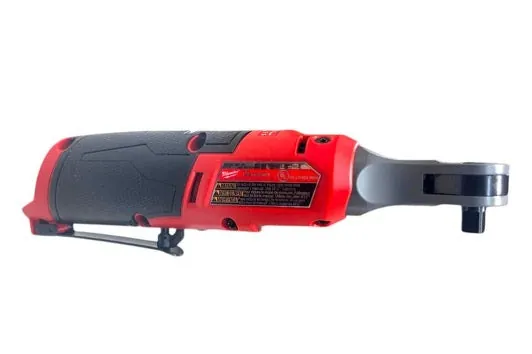
Ergonomics play a massive role in choosing your power tool. A straight grinder requires a different wrist angle, which can be taxing if you’re working overhead or horizontally for long periods. The right-angle version allows for a more natural, “pistol-grip” style hold, which many users find more comfortable for extended surface prep work.
Ergonomic Considerations for Operators
- Vibration levels: Look for tools with composite housings that absorb shock.
- Weight distribution: A balanced tool reduces strain on the forearm.
- Trigger style: Lever throttles are often easier to modulate than push-button designs.
- Exhaust path: Rear-facing exhaust keeps debris away from the workpiece.
Maintenance and Safety Protocols
Regardless of the model, maintaining your die grinder is vital for longevity. Pneumatic models require regular oiling through the air inlet. Electric models, particularly cordless lithium-ion versions, need clean ventilation ports to prevent motor burnout.
Warning: Never exceed the maximum rated RPM of your abrasive accessory. If your grinder spins at 20,000 RPM, ensure every mounted stone or flap wheel is rated for at least that speed to avoid catastrophic failure.
- Daily: Add 2-3 drops of pneumatic tool oil to the inlet of air-powered models.
- Weekly: Inspect the collet for cracks or excessive wear.
- Monthly: Check the bevel gear grease on right-angle models to ensure smooth operation.
Common Accessories for Both Models
Both tool types accept a variety of attachments, making them versatile additions to your workbench. Brands like Ingersoll Rand, Chicago Pneumatic, and Milwaukee offer wide arrays of compatible bits.
- Carbide Burrs: For aggressive metal removal and shaping.
- Flap Wheels: For blending and finishing surfaces.
- Cut-off Discs: For slicing through bolts or thin-gauge sheet metal.
- Mounted Points: For precision grinding in small radii.
Troubleshooting Performance Issues
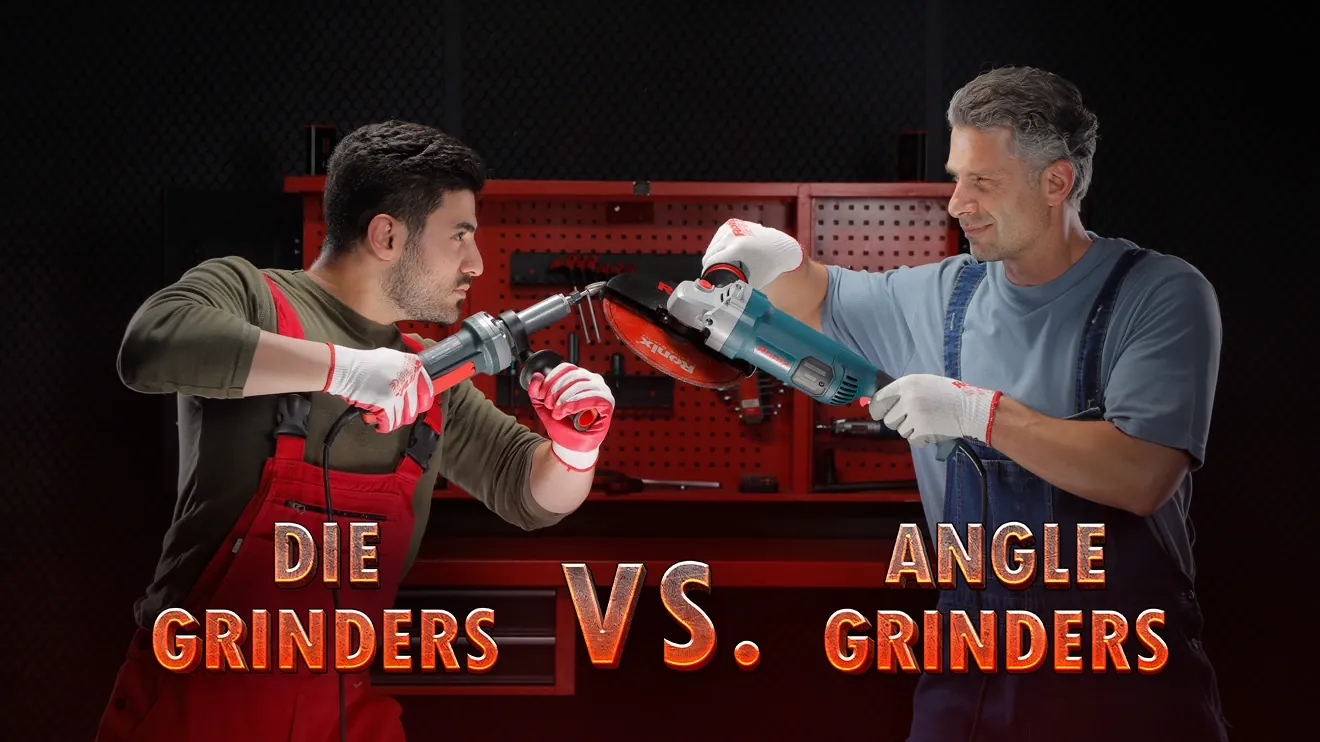
If your tool is underperforming, the issue is rarely the grinder itself. Most performance drops stem from air supply restrictions or accessory misuse.
| Symptom | Common Cause | Recommended Action |
|---|---|---|
| Tool stalls under load | Insufficient air pressure | Check compressor CFM output |
| Excessive vibration | Worn collet or bent bit | Replace collet or abrasive |
| Slow RPM | Clogged air filter | Clean or replace inlet screen |
| Overheating | Debris in motor housing | Blow out vents with compressed air |
Frequently Asked Questions
Can I use a straight die grinder for cutting metal?
Yes, you can use a straight die grinder for cutting metal if you equip it with a reinforced cut-off wheel. However, you must ensure the wheel is properly rated for the RPM of your tool. Always use a guard, as cut-off wheels are prone to shattering if they bind in the workpiece. Maintain a straight cutting line to prevent side-loading the disc.
Which grinder is better for beginner metalworkers?
A right-angle die grinder is generally more intuitive for beginners. The geometry allows you to see the contact point between the abrasive and the metal more easily, providing better control during surface finishing. Straight grinders require more experience to keep the tool steady and avoid gouging the material, especially when using aggressive carbide burrs or long-shank accessories.
Do I need a specific air compressor for these tools?
Yes, die grinders are high-consumption tools. A standard pancake compressor may struggle to keep up with the continuous air demand of a die grinder. You typically need a compressor with at least a 20-gallon tank and a high CFM delivery rating. If your air pressure drops during use, your grinder will lose torque, leading to inconsistent results and potential stalling.
How do I choose the right collet size?
Check the shank diameter of the accessories you plan to use most often. Most professional grinders come with a 1/4-inch collet, which is the industry standard for industrial-grade burrs and discs. If you work with smaller, high-precision mounted points, you may need a 1/8-inch collet. Many manufacturers sell universal collet kits that allow you to swap between these two common sizes easily.
Is it safe to use these tools without eye protection?
No, it’s never safe to operate a die grinder without ANSI-rated safety glasses or a face shield. Grinders spin at very high speeds, turning metal chips and abrasive dust into dangerous projectiles. Even if you’re only performing a light deburring task, the risk of a small metal shard entering your eye is high. Always wear full facial protection during every use.
Conclusion
Selecting the right tool for your specific project is the first step toward achieving professional-level results in your metalworking shop. Whether you prioritize the deep-reach capabilities of the straight model or the surface-prep versatility of the right-angle version, ensure your equipment is maintained and your safety gear is worn at all times. Visit your local professional tool supplier to test the grip and weight of both styles before making your final purchase.