What Is a Trim Router Used For? 10 Practical Woodworking Jobs
A trim router is a lightweight, high-speed tool used for 10 practical woodworking jobs like shaping edges, cleaning laminates, and performing small-scale joinery. These tools provide the precision needed for delicate finishing work rather than heavy material removal. While full-sized routers handle large stock, trim routers excel at the fine details that define the final appearance of a project.
Woodworking tasks for trim routers

| Task name | Best for | Common example |
|---|---|---|
| Edge profiling | Decorative edges | Rounding over a tabletop |
| Laminate trimming | Flush cutting | Trimming plastic edge banding |
| Hinge mortising | Recessed hardware | Cutting door hinge pockets |
| Pattern routing | Duplicating shapes | Copying a template design |
| Small dadoes | Joinery slots | Cutting small shelf grooves |
Edge profiling
Edge profiling involves using a specialized bit to change the shape of a board’s corner. You use this for softening sharp edges or adding decorative details like ogees or chamfers to furniture parts. Because these tools are lightweight, you can easily control the router with one hand while keeping the base flat against the wood surface.
- Rounding over corners to create a smooth, comfortable finish.
- Adding a chamfer to reduce the chance of wood splintering.
- Cutting decorative profiles to improve the aesthetic of a project.
If you’re working on a long edge, move the router in a continuous motion to prevent burn marks from friction. For instance, you might use a 1/4-inch round-over bit to soften the edges of a pine shelf that measures 3/4-inch thick.
Laminate trimming
Laminate trimming focuses on cutting excess material from the edges of synthetic surfaces. You use this for projects involving countertops or plywood panels where a thin layer of decorative laminate must sit perfectly flush with the underlying substrate. The tool’s compact size allows you to reach tight corners where larger routers would be too bulky to maneuver.
- Cutting off the overhanging edge of plastic laminate sheets.
- Creating a perfectly flush surface between the edge and the top.
- Beveling edges to hide the dark seam of the laminate core.
If the laminate is thick, perform the cut in two passes to avoid chipping the surface. An example is using a flush-trim bit with a ball-bearing guide to remove the 1/8-inch excess material from the edge of a kitchen cabinet door.
Hinge mortising
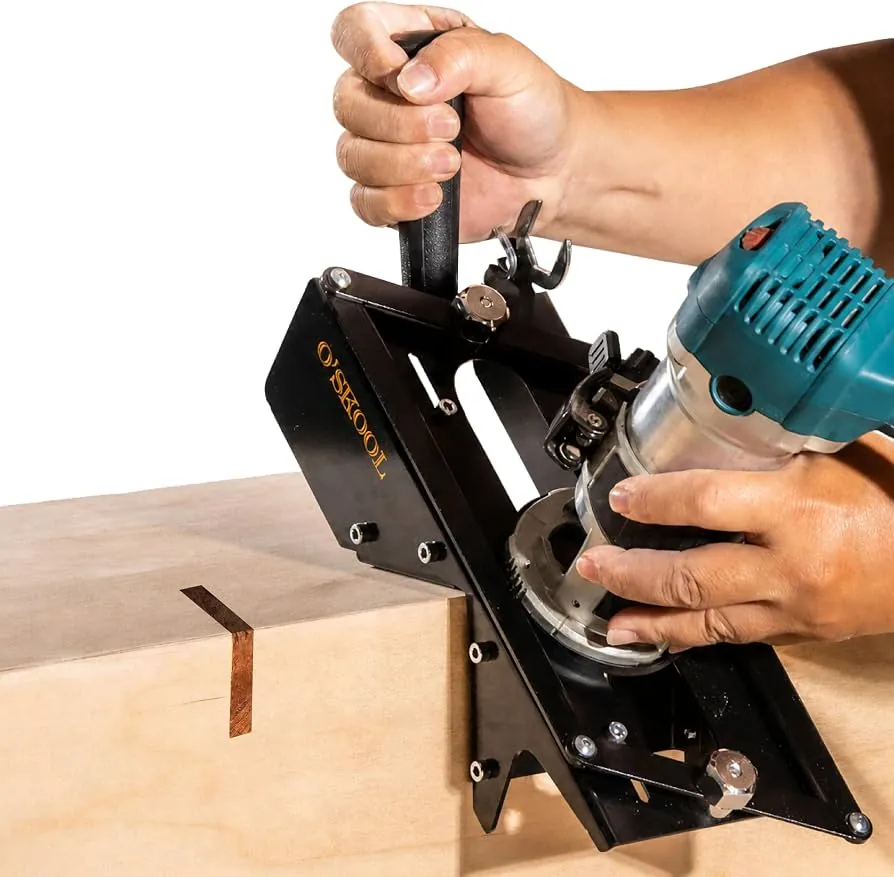
Hinge mortising creates precise, shallow recesses for mounting hardware into doors or frames. You use this for installing hinges where the depth must be exact to ensure the door closes without binding. A trim router allows for high-speed rotation, which creates a clean cut that requires very little sanding or cleanup afterward.
- Cutting clean pockets for butt hinges on cabinet doors.
- Removing wood for strike plates on door frames.
- Ensuring flat bottoms in recesses for consistent hardware seating.
The Occupational Safety and Health Administration warns that you must always keep your hands away from the spinning bit and ensure the workpiece is clamped securely before starting. If you’re cutting a 3/16-inch deep mortise, use a template to guide the router and take two light passes to reach your final depth.
Pattern routing
Pattern routing uses a template to duplicate a specific shape onto multiple pieces of wood. You use this for making identical parts like chair legs or curved drawer fronts where consistency is vital. The guide bearing on the bit follows the edge of your template, ensuring every piece matches the original perfectly.
- Duplicating complex curves for custom furniture components.
- Creating identical openings in multiple pieces of stock.
- Trimming workpieces to match a master template precisely.
If your template is thin, attach it firmly to the workpiece using double-sided tape or clamps. For example, use a pattern bit with a top-mounted bearing to cut the curved handle shape into 10 identical drawer fronts made from 1/2-inch birch plywood.
Remaining woodworking applications
- V-grooving: This task involves using a V-shaped bit to create decorative lines or text in a wood surface, which is useful for signs or inlay work.
- Slot cutting: You use a slot cutter bit to create grooves for splines or T-molding, which helps in joining thin boards or finishing the edges of game tables.
- Flush cutting: This technique removes protruding dowels or plugs so they sit level with the surrounding wood, ensuring a smooth surface before applying a finish.
Choosing the right router for your job
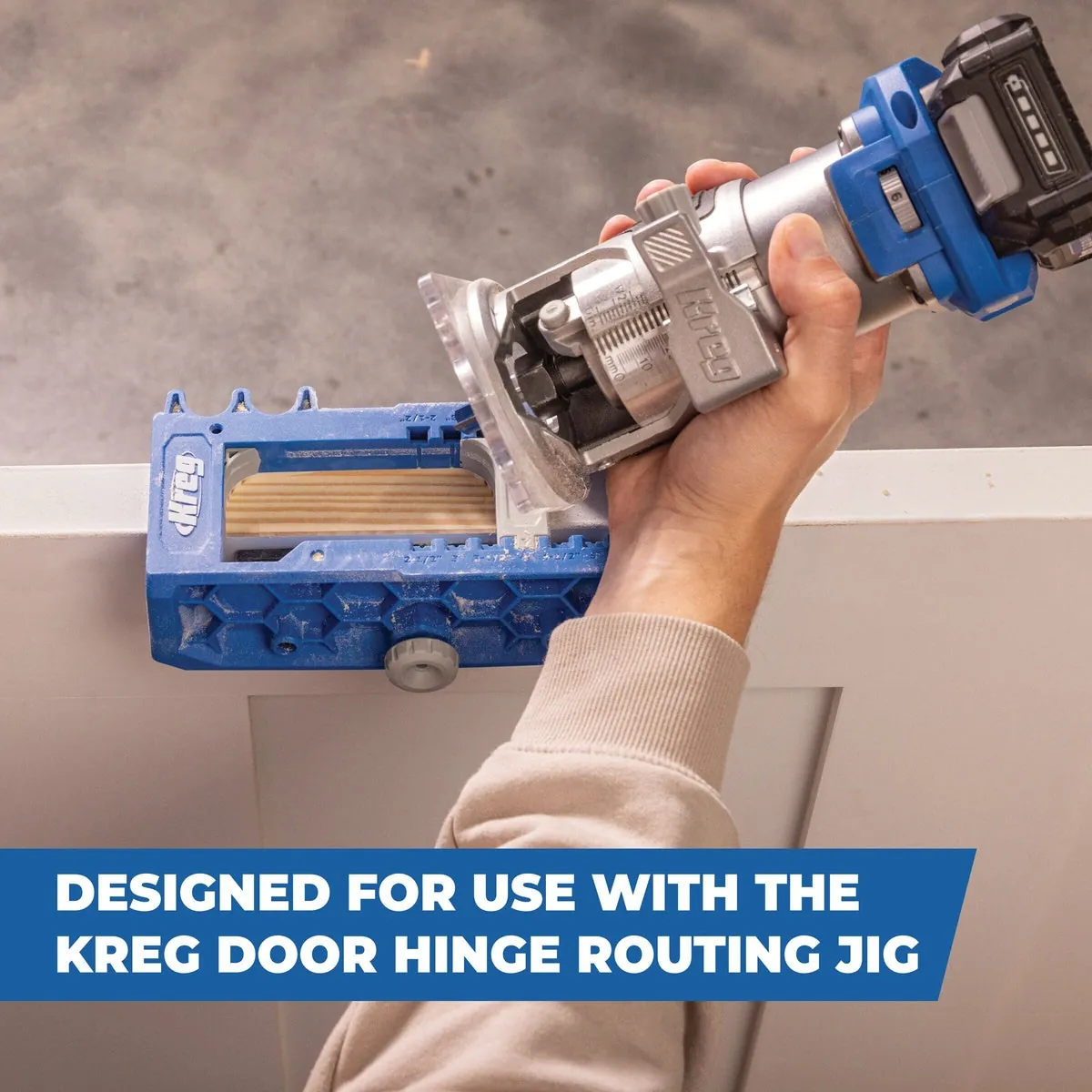
Decide which tool to use by looking at your material size and the depth of the cut. If you’re working on small parts or finishing work that requires one-handed control, a trim router is your best choice. If you need to remove large amounts of wood or use large-diameter bits, you must choose a full-sized router instead.
The size of the collet is the primary limit for these tools. Most trim routers only accept 1/4-inch shank bits, so check your bit collection before starting. If your project requires 1/2-inch shank bits for stability on deep cuts, you’ll need a larger router. These tools are designed for specific tasks and can’t replace each other; you can use them together by performing the heavy work with a large router and the finish work with a trim router.
Related guides
- Cordless vs. Corded Trim Routers: Which Makes More Sense?
- 10 Best Trim Routers for Woodworking: Our Top Shop Picks
- Best Cordless Trim Routers for Woodworking: Expert Guide
Frequently asked questions
Can I use a trim router for heavy stock removal?
No, you shouldn’t use a trim router for heavy stock removal because the motor lacks the power and the collet is too small for large bits. Use a full-sized router for deep cuts, as trim routers are designed specifically for light finishing and edge work.
How long does a trim router bit last?
A trim router bit typically lasts for several hundred linear feet of hardwood before it begins to dull. You can tell a bit is dull when it starts leaving burn marks on the wood or when you feel more resistance while pushing the tool.
Is it safe to use a trim router with one hand?
Yes, it’s safe to operate a trim router with one hand if you have a firm grip and the workpiece is securely clamped. Keep your other hand away from the path of the router, as the bit rotates at speeds up to 30,000 RPM.
How deep can a trim router cut in one pass?
A trim router can safely cut about 1/8-inch to 1/4-inch deep in a single pass depending on the wood density. Always perform deeper cuts in multiple passes to avoid burning the wood or damaging the router motor.
Does it matter which direction I move the router?
Yes, you should always move the router against the direction of the bit’s rotation to maintain control. Moving it in the wrong direction, known as climb cutting, can cause the tool to pull away from you or grab the workpiece.
What happens if I use a dull router bit?
Using a dull bit causes the router to vibrate excessively and creates burn marks on your project. Replace the bit immediately if you notice the wood darkening or if the tool feels like it’s struggling to move through the material.
Conclusion
Start by checking your router’s collet size to ensure it matches your bit shank. Once you have a sharp bit installed, make a test cut on a scrap piece of the same wood to verify the depth and profile. Stop immediately if you hear a change in motor sound or feel unusual vibration in your hands.