How to Cut Metal With an Angle Grinder Safely: Expert Guide
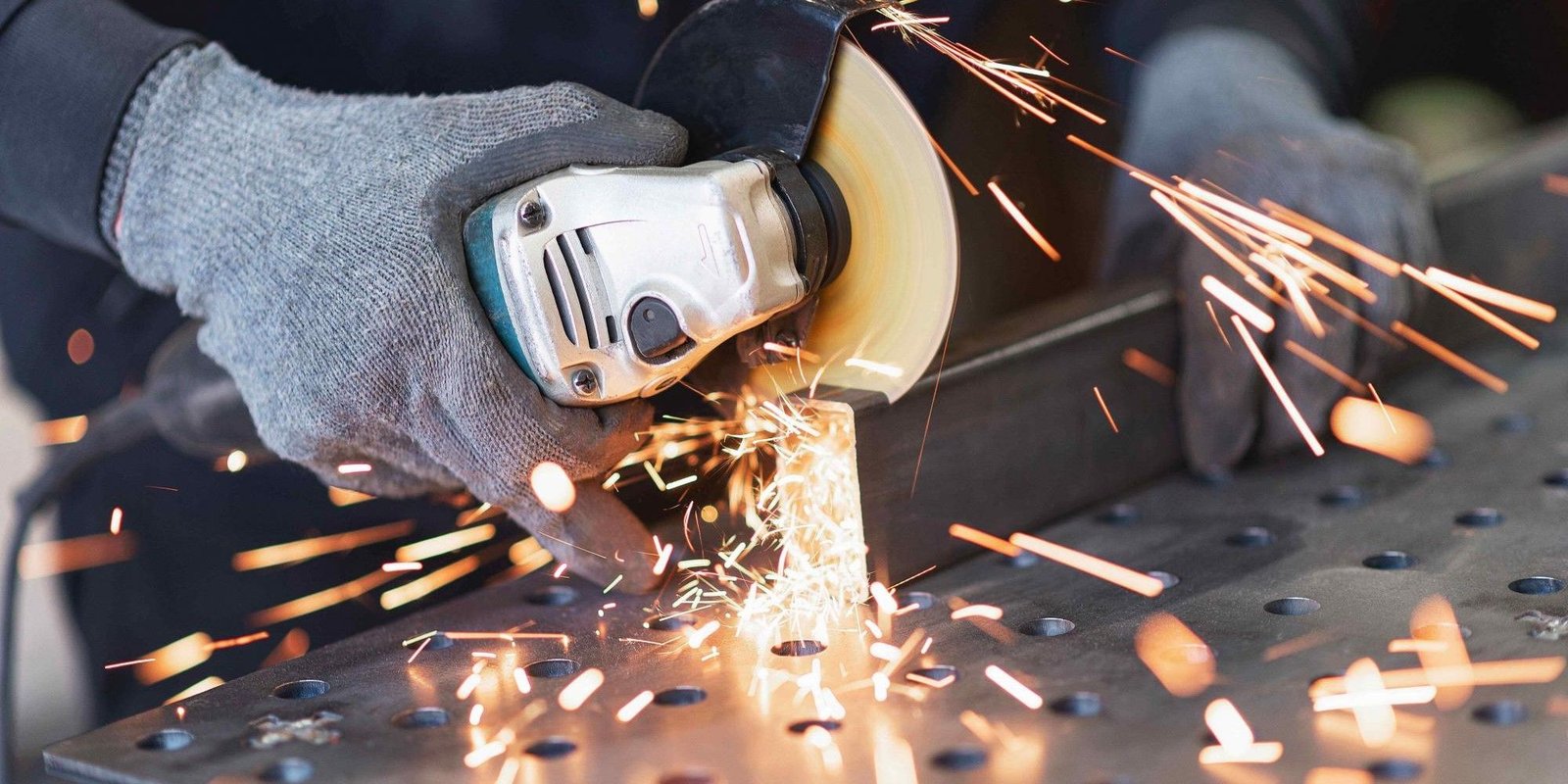
You can perform the task of how to cut metal with an angle grinder safely by using a cutoff wheel rated for the specific metal type, wearing full personal protective equipment, and securing your workpiece firmly. If the disc diameter is too large for your grinder, it will shatter at high speeds; if the sparks hit flammable material, they will start a fire. Always verify the maximum revolutions per minute (RPM) rating on your disc matches or exceeds the tool’s speed.
Metal cutting safety levels
| Situation | Safe? | Why |
|---|---|---|
| Using eye protection | Yes | Prevents debris from damaging eyes |
| Cutting thin sheet metal | With care | Material can flex and bind blades |
| Cutting near fuel tanks | No | Sparks ignite vapors instantly |
| Using a guard | Yes | Blocks flying debris and sparks |
| Cutting with one hand | No | Grinder kickback requires two hands |
| Wearing loose clothing | No | Fabric catches in rotating discs |
Always wear ANSI Z87.1-rated safety glasses. Standard sunglasses offer zero protection against high-velocity metal shards that can penetrate soft tissue.
When cutting sheet metal, secure the material on both sides of the cut line. If the metal sags, the blade will pinch, causing the tool to climb or kick back toward your body.
A single spark travels further than you expect and ignites fumes lingering near floor level.
Never remove the factory guard to increase visibility. If the disc shatters, the guard is the only barrier between your face and jagged shrapnel.
Use two hands at all times. If you operate a grinder with one hand, you lose the leverage needed to fight torque. A momentary slip costs you a deep laceration or a severed finger. Keep all sleeves buttoned tight to avoid entanglement.
Understanding the risks of metal cutting
The primary danger when using an angle grinder is the risk of the disc shattering, which sends metal fragments flying at high speeds. A shattered disc can cause severe lacerations or puncture wounds, making it essential to never remove the safety guard from your tool.
Another significant risk is kickback, which occurs when the disc binds or pinches in the metal cut. If the disc gets stuck, the energy suddenly transfers to the tool, causing it to jump out of the cut toward the user. This happens most often when the workpiece isn’t fully supported or when the pressure applied is too heavy. You can prevent this by using clamps to hold the metal steady and letting the tool’s weight do the work.
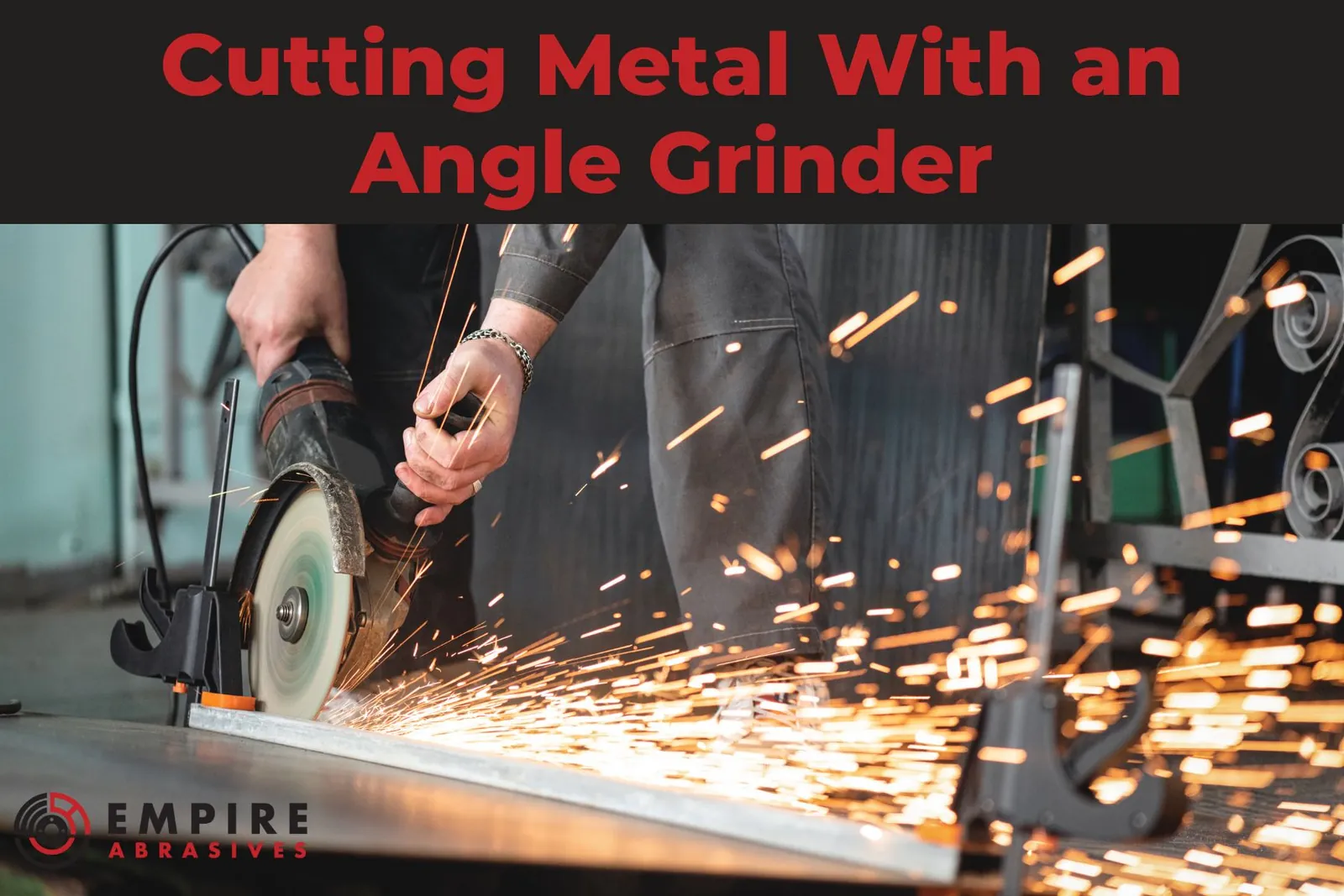
Fire hazards also present a major concern, as the grinding process creates a spray of molten metal sparks. These sparks can travel several feet and smolder in sawdust, fabric, or other debris long after you finish cutting. Always clear your workspace of all combustible materials before you begin. If you’re working in a shop, check the area for hidden fire risks behind walls or under benches.
Warning signs to stop immediately
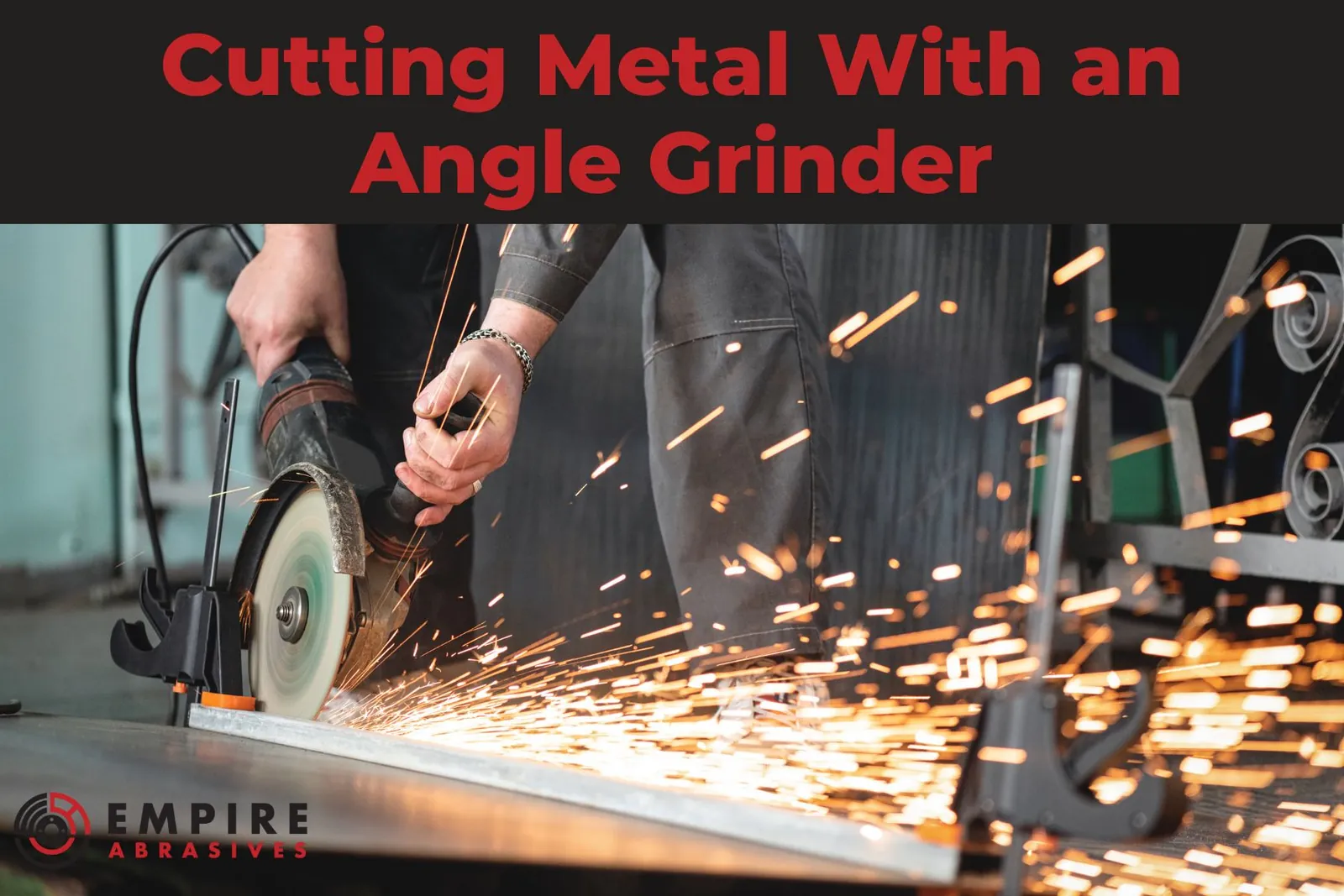
If the tool begins to vibrate, stop immediately. A loose disc creates a rhythmic thumping that can shatter the abrasive wheel at high speeds.
Check the disc for hairline fractures or missing edge segments. If you see even a single radial crack, discard the wheel entirely. A compromised disc will disintegrate under centrifugal force, turning small fragments into dangerous projectiles.
An electrical burning smell points to internal motor failure. If the cord feels warm to the touch, the internal wiring is likely fraying. Stop using it to prevent a short circuit or fire.
Watch the sparks closely. A shift from dull orange to bright, erratic white sparks signals that the disc has thinned past its safety limit. If the grinder stalls during a cut, you’re forcing the motor. Back off to let the tool reach full RPM again.
If the tool body feels hot or emits smoke, unplug it and seek professional repair. Don’t attempt to bypass these warnings.
How to cut metal safely
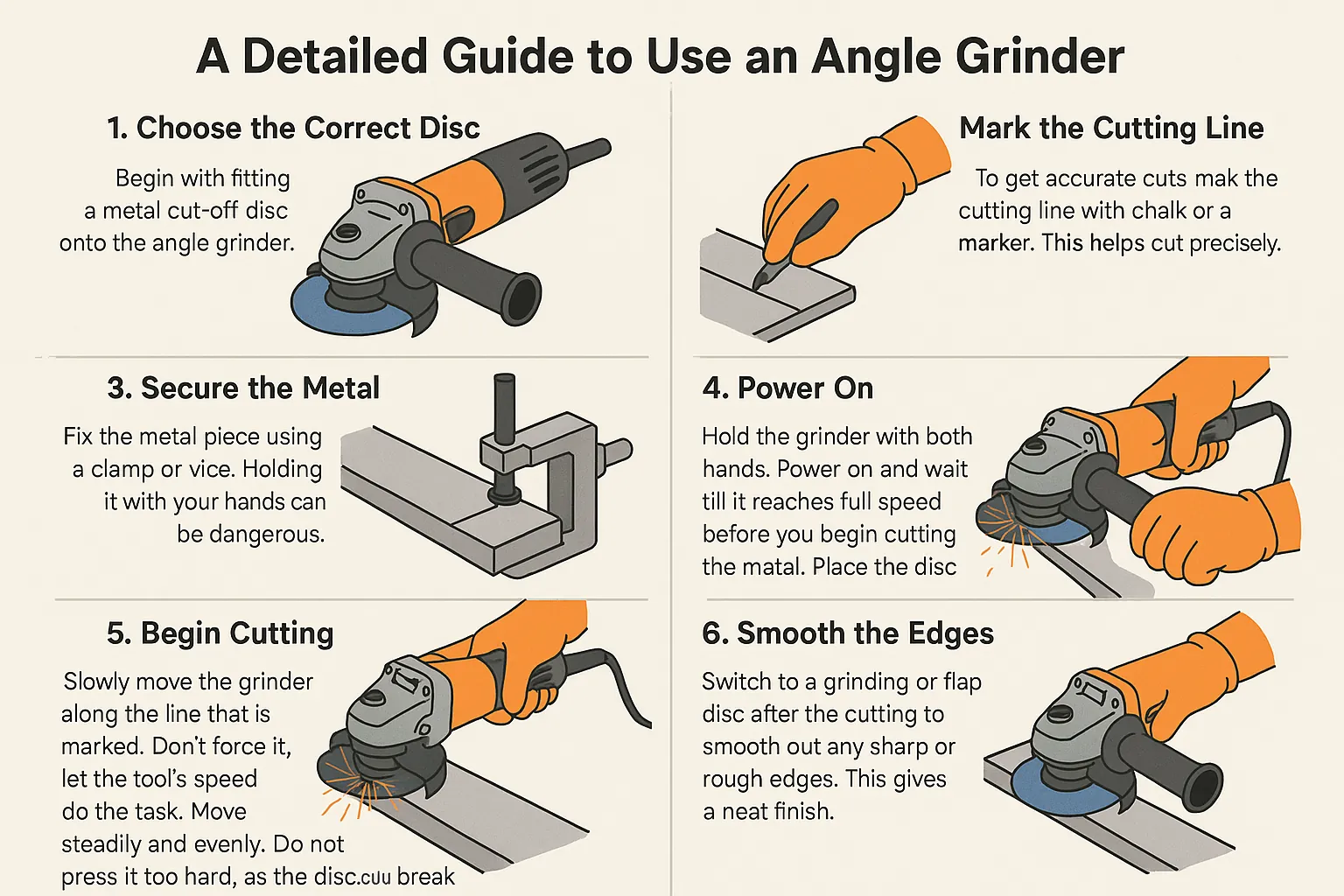
- Put on safety goggles, a face shield, and thick leather gloves. Never wear synthetic clothing that can melt.
- Secure your metal piece to a heavy workbench using two steel C-clamps. Ensure the cut line is close to the support to prevent the metal from bending.
- Check that your cutoff wheel is rated for the type of metal you’re cutting. Ensure the disc RPM matches the grinder’s speed printed on its label.
- Attach the safety guard so it faces away from your body. Hold the grinder with both hands, keeping your feet shoulder-width apart for a stable, balanced stance.
- Start the grinder and let it reach full speed before touching the metal. Touch the disc to the metal lightly and maintain a steady, straight line.
- Apply light pressure, allowing the disc to cut through the material. If the disc binds, stop immediately and restart the cut from a slightly different angle.
Dealing with cutting accidents
If you suffer a minor cut, apply pressure with a clean cloth and clean the wound once bleeding stops. For deep cuts, severe burns, or eye injuries caused by metal dust, seek emergency medical care immediately. Don’t attempt to remove embedded metal objects yourself, as this can cause further damage to nerves or blood vessels.
If you accidentally cut a power cable or strike a hidden pipe, stop immediately and turn off the power at the main breaker. Never touch the area if you suspect an electrical short. If you’re unsure about the safety of your environment or the integrity of your tools, stop all work and consult a professional technician before proceeding.
Related guides
- Angle Grinder Safety: Guards, Kickback, Discs, and PPE Guide
- 10 Best Angle Grinders for DIY, Metalworking, and Workshop Use
- How to Use an Angle Grinder: A Beginner’s Guide
Frequently asked questions
How long does a cutoff wheel last?
The lifespan of a wheel depends on the metal hardness and thickness, but most standard discs last for about 30 to 60 minutes of continuous cutting. You can tell it’s time to change the disc when the diameter shrinks significantly or the cutting speed drops noticeably.
Is it safe to cut metal without a guard?
No, it’s never safe to operate an angle grinder without the manufacturer’s guard in place. The guard is your only protection against a shattering disc, which can cause life-changing injuries. If your guard is missing or broken, don’t use the tool until you replace it.
Why does my grinder kick back?
Kickback happens because the disc is being pinched or bound inside the cut, usually caused by moving the tool too fast or not supporting the workpiece. To avoid this, always support the metal on both sides of the cut line and keep the grinder perfectly straight.
How do I know if my disc is too fast?
You can verify compatibility by checking the maximum RPM rating printed on the face of the disc against the RPM rating found on the grinder’s nameplate. The disc rating must always be higher than the tool rating, or the disc may disintegrate during use.
Can I use a wood blade on metal?
No, you must never use a wood blade on metal because the teeth will catch, causing the tool to kick back violently. Only use abrasive cutoff wheels specifically designed for the type of metal you’re cutting, such as steel, stainless steel, or aluminum.
What happens if I use the wrong disc?
Using the wrong disc can cause the blade to shatter, melt, or bind, which often leads to severe injury or tool failure. Always check the disc label to ensure it’s intended for the specific material and speed of your grinder before you start.
Conclusion
Maintaining your gear is just as important as your technique. Always inspect the power cord for frays and ensure the disc is tightened securely before you plug the tool in. If you feel any unusual heat or hear grinding noises from the tool’s head, stop and check the internal gears for signs of wear.