How to Make Accurate Bevel Cuts With a Circular Saw Guide
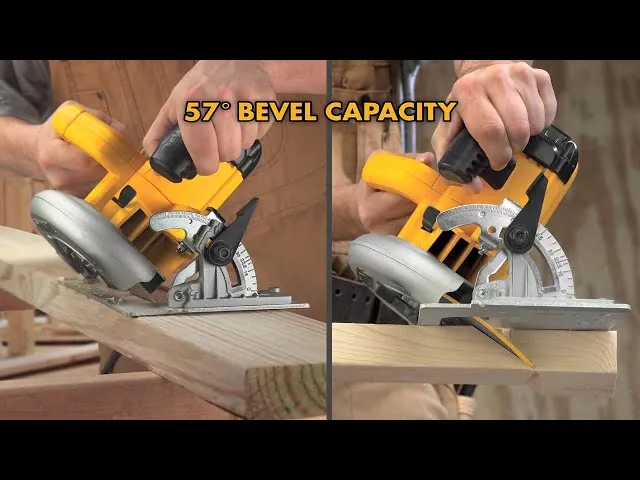
To make accurate bevel cuts with a circular saw, you should set the saw’s base plate angle to the desired degree using the built-in bevel scale, secure your workpiece firmly, and maintain a steady, slow forward pressure along your marked line. Most standard models allow for adjustable angles between 0 and 45 degrees, though some saws can reach 50 or 56 degrees for steeper cuts.
How to make accurate bevel cuts
-
Disconnect the power: Unplug your saw or remove the battery before making any adjustments to the blade or base plate. This prevents accidental engagement while your hands are near the teeth.
-
Loosen the bevel lock: Locate the lever or knob at the front of the saw’s base plate. Loosen it just enough to tilt the plate until the indicator aligns with your target angle on the scale. If the scale is obscured by dust, wipe it clean with a dry cloth first; guessing the angle by eye usually leads to a two-degree deviation that ruins miter joints.
-
Tighten the lock: Firmly secure the bevel lock to prevent the base plate from shifting. Even a millimeter of movement during the cut will cause the blade to wander, resulting in a gap that wood filler can’t hide.
-
Align the blade: Place the saw on your workpiece and align the edge of the blade with your pencil line. Because the blade has a specific kerf, or thickness, you must always cut on the waste side of the line. If you cut directly on the line, your finished piece will be undersized by the width of the blade teeth.
-
Start the cut: Hold the saw base flat against the surface. Push the saw forward at a consistent speed without forcing it. If the motor bogs down, you’re moving too fast; if the wood smokes, you’re moving too slow.
Always perform a test cut on a scrap piece of the same thickness to verify your angle. If the test piece rocks on a flat surface, your bevel is off. Adjust the base plate by half a degree and repeat until the joint closes perfectly.
Essential Setup and Cutting Data
The following table provides the typical time and effort requirements for common beveling tasks. These estimates assume you have already measured and marked your lumber correctly.
| Task Complexity | Estimated Setup Time | Cutting Speed |
|---|---|---|
| Simple 45-degree bevel | 2 minutes | Medium |
| Compound miter cut | 5 minutes | Slow |
| Repetitive identical cuts | 8 minutes | Steady |
Calibrate your fence angle using a digital protractor rather than the saw’s factory scale. Factory markings often deviate by up to half a degree, which ruins tight joinery.
Novices often rush the initial setup, costing them double the time in sanding later. If your blade leaves burn marks, your feed rate is too slow. If the cut edge is jagged, increase your feed speed or check for dull teeth.
Common Mistakes and How to Avoid Them
Why is my cut drifting away from the line?
Drifting often happens when you apply too much side pressure to the saw handle instead of pushing straight forward. Keep your focus on the blade’s path rather than the saw body, and ensure the base plate stays fully supported by the wood throughout the entire length of the cut.
How do I stop the wood from splintering?
Splintering occurs when the blade teeth tear the wood fibers as they exit the material, which is more common during steep bevel cuts. You can minimize this by applying a strip of painter’s tape over your cut line or using a zero-clearance guide to support the wood fibers right up to the blade edge.
Is it safe to do this yourself?
You can safely perform these cuts if you follow the power tool safety guidelines provided by the Consumer Product Safety Commission. Always wear eye protection, avoid loose clothing that could get caught, and ensure your workpiece is clamped so it can’t move or vibrate while you’re operating the saw.
Related guides
- 8 Best Circular Saws for Cutting Plywood and Sheet Goods
- Best Saw for Cutting Small Pieces of Wood: Top Precision Hand Saws Reviewed
- 10 Best Cordless Circular Saw Picks for Every Project Type
Frequently Asked Questions
Do I need a special blade for bevel cuts?
No, you can use a standard carbide-tipped blade for most wood beveling tasks. The angle of the cut is determined by the saw’s base plate, not the blade itself, so a sharp, clean blade is more important than the specific type of blade you choose.
How do I know if my saw’s scale is accurate?
You can check the accuracy by setting the saw to 0 degrees, cutting a scrap piece of wood, and holding a precision square against the cut edge. If the cut isn’t perfectly square, adjust the saw’s calibration screw until the base plate sits exactly 90 degrees to the blade.
Can I bevel cut metal with a circular saw?
Standard circular saws are designed for wood and shouldn’t be used to cut metal because the high heat and debris can damage the motor. If you need to bevel metal, use an angle grinder or a metal-cutting saw designed for that specific purpose.
Conclusion
Before starting your project, double-check that your saw’s base plate is clean and free of resin buildup, as even a small amount of debris can prevent the plate from sitting flat against your lumber. Practice your technique on scrap material until you feel comfortable controlling the saw’s path consistently.