How to Choose the Right Track Saw Blade for Plywood and Hardwood
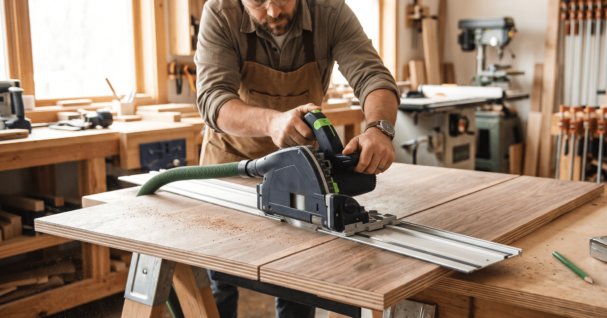
Selecting the right track saw blade for plywood and hardwood requires balancing tooth count, grind geometry, and material thickness to achieve a splinter-free finish. While general-purpose blades exist, dedicated blades for specific wood types will significantly reduce the time you spend on post-cut sanding and edge cleanup. Whether you’re building cabinetry or fine furniture, your blade choice determines the quality of your glue-ready edges.
Key Takeaways
- Higher tooth counts create cleaner cuts in thin materials like plywood but can burn harder woods.
- The Alternate Top Bevel (ATB) grind is the gold standard for cross-cutting both plywood and hardwood.
- Thin-kerf blades reduce motor strain, but full-kerf blades provide superior stability during deep, heavy-duty ripping.
- Always match the blade’s tooth count to your specific material thickness to prevent vibration and tear-out.
- Regular blade cleaning removes resin buildup, which is the primary cause of friction-related burn marks.
Choosing the Right Track Saw Blade
The primary factor in selecting a blade is the number of teeth, often referred to as the TPI (Teeth Per Inch). For a track saw, you generally want a higher tooth count than you would use on a standard table saw because you’re usually performing finish cuts rather than heavy stock removal. A 48-tooth blade on a 6-inch or 6.5-inch saw is the industry standard for general finish work.
Plywood vs. Hardwood Requirements
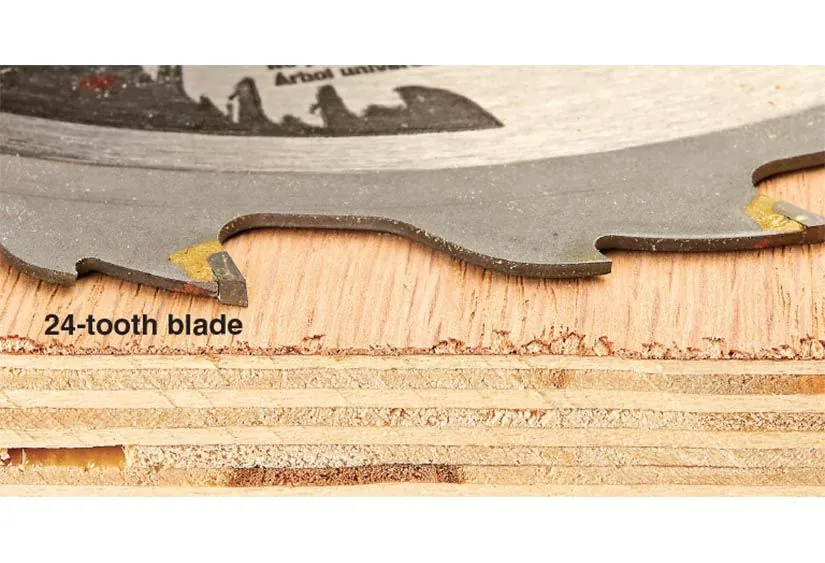
Plywood consists of thin veneers layered with glue, which is notorious for splintering. To combat this, you need a blade with a high tooth count and a specific tooth geometry, typically an Hi-ATB (High Alternate Top Bevel). This grind acts like a knife, slicing through the wood fibers cleanly rather than tearing them. Hardwood, conversely, is dense and prone to burning if the feed rate is too slow or the blade has too much friction.
| Material Type | Recommended Tooth Count | Primary Grind |
|---|---|---|
| Veneered Plywood | 48–60 Teeth | Hi-ATB |
| Hardwood (Oak/Maple) | 40–48 Teeth | ATB |
| Laminates/Melamine | 52–60 Teeth | TCG |
How to Read Blade Geometry
Blade geometry refers to the shape of the carbide tips. Understanding these shapes is vital for long-term project success. The Alternate Top Bevel (ATB) features teeth that alternate between a left-hand and right-hand slope, making it ideal for cross-cutting. The Triple Chip Grind (TCG) features a flat tooth followed by a trapezoidal tooth; this is essential for cutting brittle materials like melamine or dense plastics without chipping the surface.
Why Does Kerf Width Matter?
The kerf is the width of the cut made by the blade. Most track saw blades are “thin-kerf,” meaning they remove less material. This puts less strain on the saw’s motor and allows for a faster feed rate. However, if you’re cutting thick hardwood, a full-kerf blade offers more rigidity.
A stiffer blade is less likely to wander or deflect when you hit a dense grain pattern, ensuring your track saw cut remains perfectly square throughout the entire length of the board.
Are Higher Tooth Counts Always Better?
It’s a common misconception that more teeth always equal a better finish. While 60 teeth will provide a glass-like finish on birch plywood, that same blade will struggle in 8/4 walnut or white oak. The gullets—the spaces between the teeth—on a high-tooth-count blade are very small. When cutting thick hardwood, these small gullets fill up with sawdust quickly, leading to heat buildup and scorching. For thick stock, drop your tooth count to 40 to allow for better chip evacuation.
How to Properly Maintain Blades
Even the most expensive blade will perform poorly if it’s coated in pitch and resin. Hardwoods, especially resinous species like pine or exotic woods with high oil content, leave a sticky residue on the carbide tips. Warning: Always disconnect the power supply from your track saw before attempting to clean or inspect the blade teeth to prevent accidental engagement.
- Use a dedicated resin remover or a mild citrus-based cleaner.
- Use a soft nylon brush to scrub the carbide tips gently.
- Avoid wire brushes, which can damage the sharp edge of the carbide.
Tips for Preventing Splintering
Even with a perfect blade, you may experience tear-out if your track saw’s splinter guard isn’t set correctly. The splinter guard is the replaceable rubber strip on the edge of your track. It must be perfectly aligned with the blade’s path. When you first install a new blade or a new track, you should perform a “zero-clearance” cut to trim the rubber strip to the exact width of your current blade.
Is My Blade Too Dull?
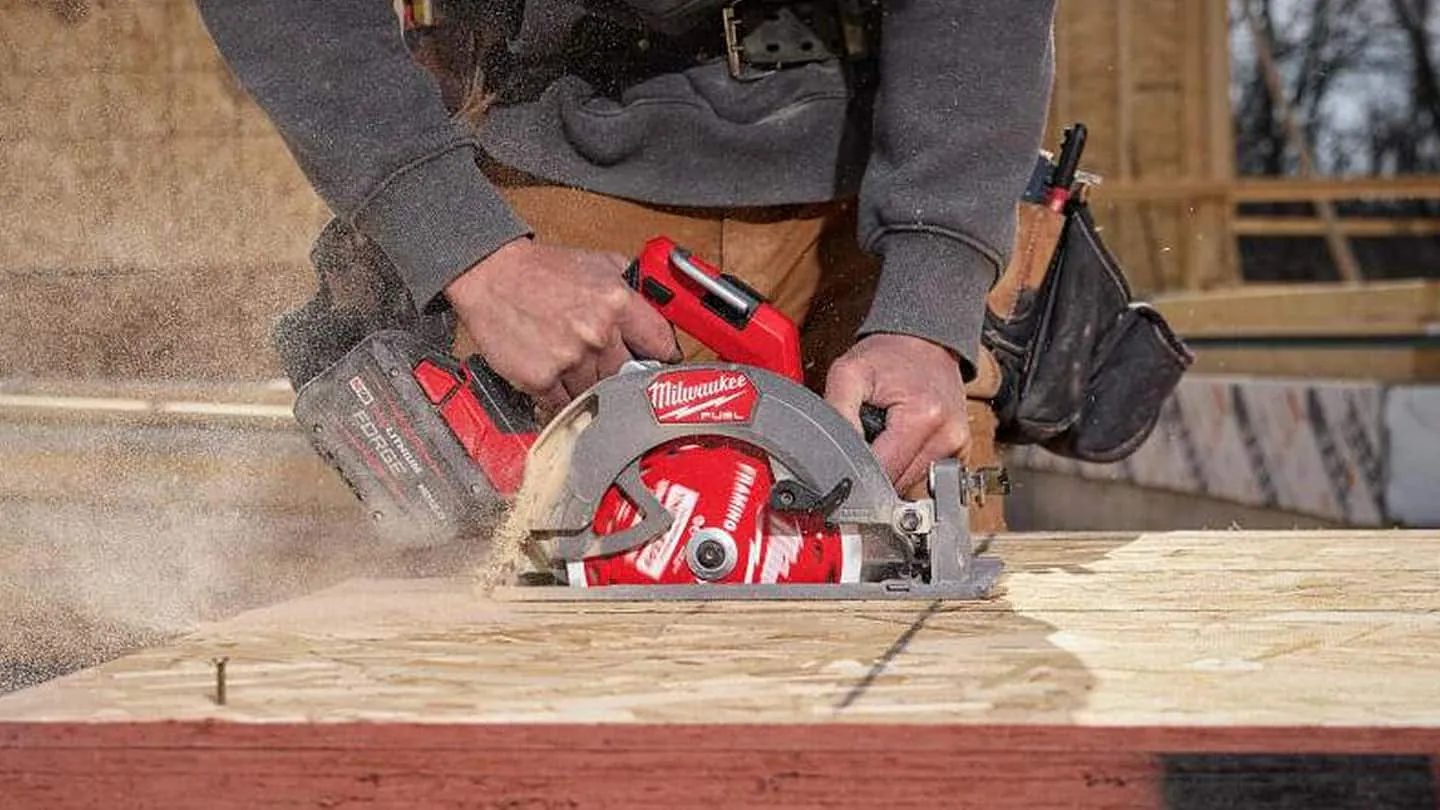
You can often tell a blade is dull by the sound of the motor or the appearance of the cut. If you find yourself having to push harder than usual to move the saw along the track, your blade is likely dull or gummed up.
A dull blade creates excessive friction, which creates heat. This heat can ruin the temper of the steel and cause the wood fibers to burn, requiring significantly more sanding time. If you see black streaks on the edge of your hardwood, it’s time to sharpen or replace the blade.
Frequently Asked Questions
Should I use a dedicated plywood blade?
Yes, if you work primarily with expensive veneered plywood. These blades feature a high tooth count and a steep bevel angle, which slices through fragile surface veneers without lifting them. Using a general-purpose blade on high-end plywood often results in “blowout” on the bottom side of the cut, which is difficult to repair without significant material loss or complex sanding techniques.
Can I sharpen my track saw blades?
Yes, most carbide-tipped blades can be sharpened several times by a professional shop. However, because track saw blades are precision-engineered with specific geometries, they require a professional service that uses CNC grinding equipment. Don’t attempt to sharpen these blades with manual files or standard bench grinders, as you’ll ruin the precise bevel angles required for high-quality, splinter-free cuts.
What is the difference between ATB and TCG?
The ATB (Alternate Top Bevel) grind is designed for cross-cutting wood, where the alternating tooth angles shear the fibers cleanly. The TCG (Triple Chip Grind) is designed for tougher, brittle materials like melamine, laminate, or plastics. The flat-top tooth in a TCG grind scores the material, while the trapezoidal tooth clears the waste, preventing the brittle surface from shattering or chipping during the cut.
Why does my blade burn the wood?
Burning is almost always caused by excessive heat. This happens if the feed rate is too slow, the blade is dull, or the blade is dirty with resin buildup. If the saw teeth can’t clear the sawdust out of the cut, friction increases rapidly. To stop burning, ensure your blade is clean, sharp, and that you’re moving the saw at a consistent, steady pace.
How often should I replace my blade?
Replacement frequency depends on the hardness of the wood and the number of cuts made. A hobbyist may go a year on one blade, while a professional might need a new one every few months. If you notice a significant increase in the effort required to push the saw, or if you see consistent burning despite a clean blade, the carbide is likely worn out.
Conclusion
Achieving professional results with a track saw is a matter of matching your tooling to the specific demands of the wood species you’re cutting. By keeping your blades clean, respecting the limits of your tooth geometry, and maintaining your track’s splinter guard, you ensure that every cut is accurate and ready for assembly. Start by inspecting your current blade for resin buildup and cleaning it today.