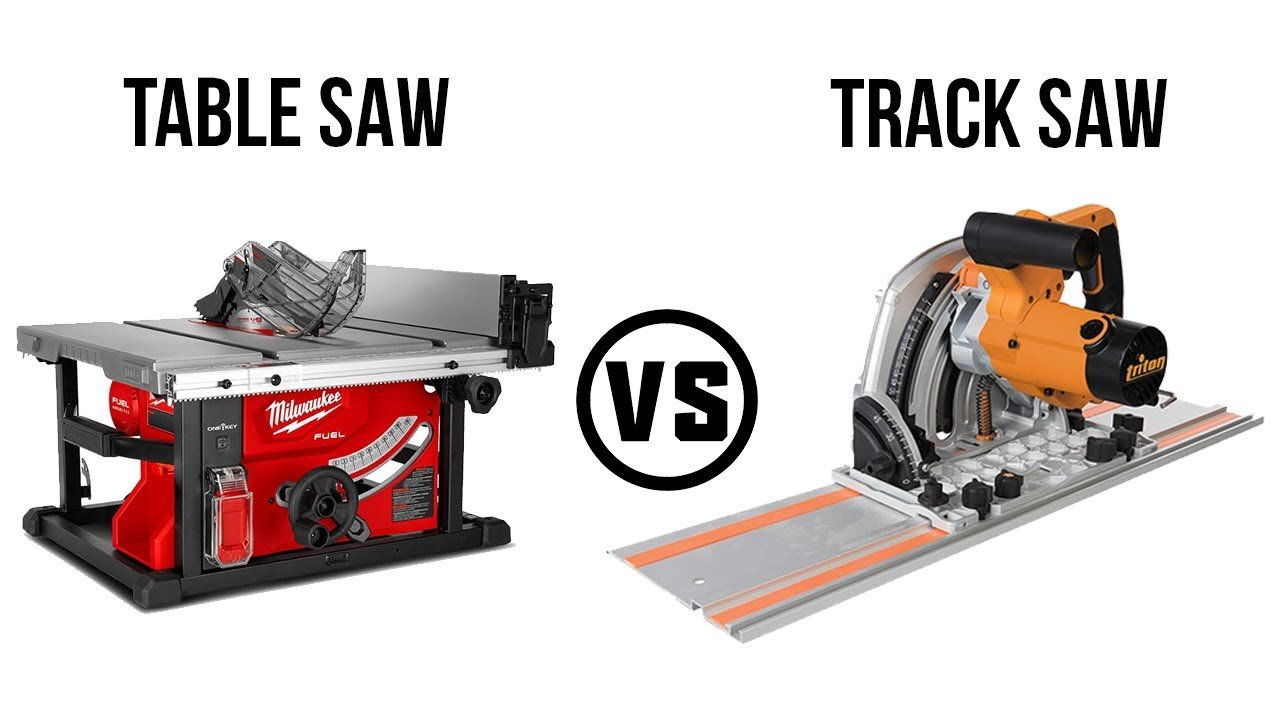
Track Saw vs. Table Saw: Which One Do You Need?
Deciding between a track saw vs. table saw: which one do you need? Involves evaluating your available workspace, the types of projects you build, and your budget. While a table saw typically ranges from $300 to $3,500, a track saw system usually costs between $400 and $1,200 depending on the rail length and brand. Choosing the right tool depends on whether you value high-volume production efficiency or the portability and precision required for breaking down large sheet goods in a cramped shop.
Key Takeaways
- Table saws are superior for repetitive, high-volume ripping and complex joinery like dados.
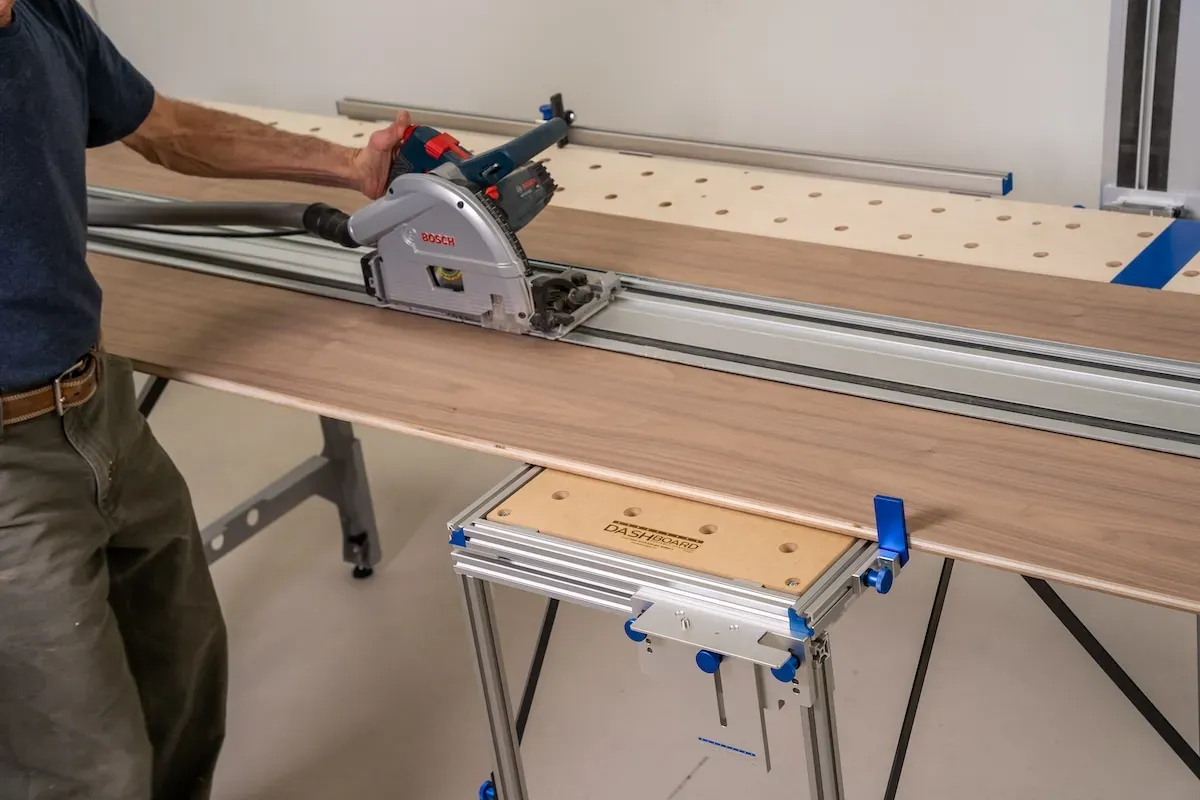
- Track saws excel at breaking down heavy plywood sheets safely on a small workbench.
- Dust collection is generally more efficient on track saws due to the enclosed blade shroud.
- Safety depends on your technique, but table saws require strict adherence to OSHA woodworking safety guidelines to prevent injury.
- Assess your shop size before purchasing, as table saws require significant outfeed clearance.
Understanding the Table Saw
The table saw is the centerpiece of most professional workshops. It uses a circular blade protruding through a flat table surface. This configuration makes it the gold standard for ripping lumber with high accuracy. Because the workpiece moves past a stationary blade, you can repeat identical cuts with ease using a fence.
| Feature | Table Saw | Track Saw |
|---|---|---|
| Primary Use | Ripping & Joinery | Sheet Goods & Cross-cutting |
| Portability | Low (Heavy/Stationary) | High (Portable) |
| Space Needed | Large (Infeed/Outfeed) | Small (Workspace footprint) |
| Precision | Excellent (Fence-based) | Excellent (Guide-rail based) |
The Versatility of Track Saws
A track saw is essentially a circular saw that rides on a dedicated aluminum track. This system allows you to make perfectly straight, splinter-free cuts across full sheets of plywood without needing a massive table. The plunge action enables you to start cuts in the middle of a panel, which is nearly impossible on a standard table saw.
Comparing Workspace Requirements
When you’re tight on space, the footprint of your tools matters significantly. A table saw requires a “runway” in front and behind the unit to handle long boards. If your shop is a one-car garage, this can consume your entire floor area. In contrast, a track saw works on top of a sacrificial foam board or a simple workbench, meaning the effective footprint is only the size of the material you’re currently cutting.
Which Tool for Sheet Goods?

If your projects mostly involve building cabinetry or furniture from 4×8 plywood sheets, the track saw is the clear winner. Wrestling a heavy sheet of 3/4-inch plywood across a table saw is physically demanding and often requires a second person. With a track saw, you lay the board flat on your workbench, place the track on your layout lines, and make the cut. The splinter guard on the underside of the track ensures the veneer remains crisp and clean.
Safety and Operational Differences of Track and Table Saws
Warning: Always ensure the material is fully supported across its entire length before cutting, as pinching the blade can cause dangerous kickback.
Table saws have a higher risk of kickback if the fence is misaligned or the blade guard is removed. Modern saws often feature flesh-sensing technology to stop the blade on contact, though this is a premium feature. Track saws are inherently safer for beginners because the blade is enclosed, and the tool moves along a fixed path, reducing the chance of the material wandering away from the blade.
When Should You Choose a Table Saw?
If you’re manufacturing dozens of identical parts, a table saw is unbeatable. The rip fence allows you to push board after board through without measuring each time. Furthermore, if you need to cut complex angles or perform dado joinery—where you cut a groove into the wood to hold a shelf—the table saw is the only machine capable of handling these tasks efficiently.
Essential Brands and Models
When shopping, focus on reliability and the availability of accessories like extra tracks or miter gauges.
- Table Saws: SawStop (Jobsite or Cabinet models), DeWalt (DWE7491RS), Bosch (4100-10).
- Track Saws: Festool (TS 55), Makita (XPS01), Triton (TTS1400), Milwaukee (M18 FUEL).
Managing Your Shop Budget
Your budget should account for more than just the tool itself. A table saw may require a dedicated outfeed table, a mobile base, and a high-quality miter gauge. A track saw requires the purchase of tracks, which can get expensive if you need long lengths for cross-cutting full sheets. Always set aside 15% of your total budget for high-quality blades, as these are the primary factor in cut quality.
Is Dust Collection a Priority?
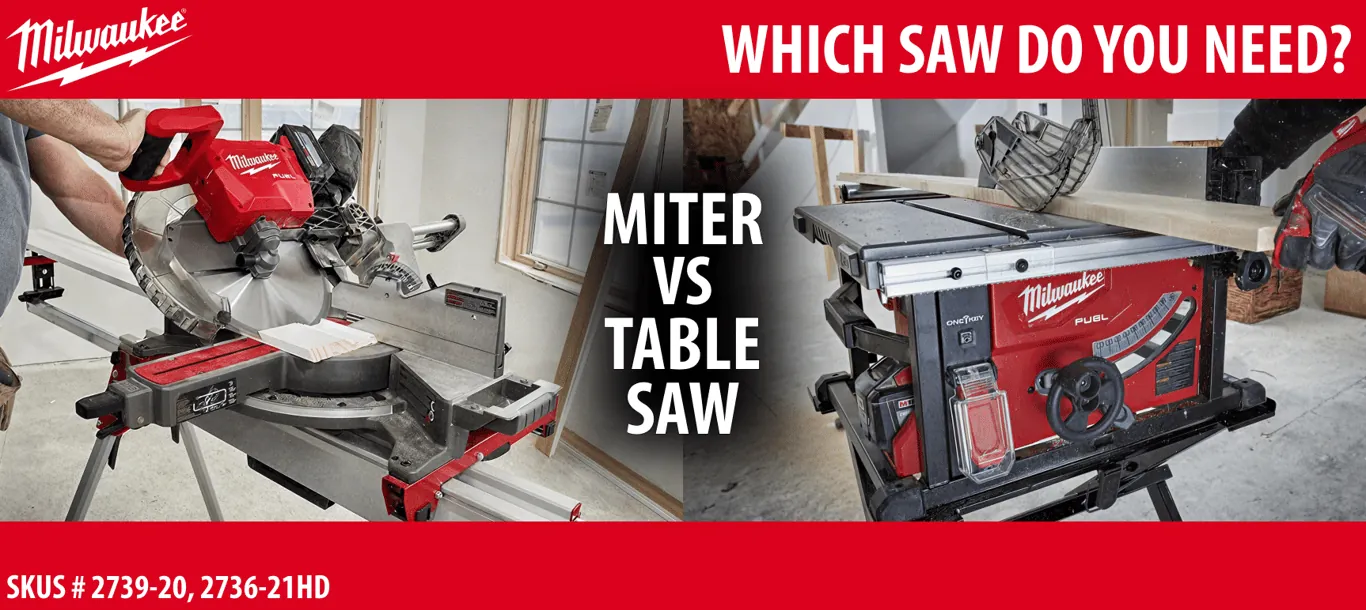
If you work in a shared space or a basement, dust management is critical. Track saws typically feature a vacuum port located directly on the blade housing, which captures most of the dust at the source. Table saws often have dust collection under the cabinet, but they still throw a significant amount of airborne debris into the air from the top of the blade, necessitating an overhead guard system for total control.
Frequently Asked Questions
Can a track saw replace a table saw?
For many DIYers and furniture makers, yes. A track saw handles the primary task of breaking down large sheets perfectly. However, if you plan to do complex joinery, build dozens of drawers, or rip large quantities of hardwood lumber, a table saw remains more efficient. Most professional shops eventually end up with both tools to balance speed and versatility.
How do I maintain track saw accuracy?
Keep your tracks clean and free of sawdust, as debris can cause the saw to bind or deviate from the line. Regularly check that the rubber splinter strip is intact and replace it if it becomes frayed. Ensure the saw’s base has no play on the rail. Periodically calibrate the squareness of the blade to the track using a high-quality machinist square.
Do I need a table saw for dados?
Yes, a table saw is the standard tool for cutting dados. By using a dado stack—a special set of blades that creates a wide cut—you can create slots for shelves or drawer bottoms in one pass. While you can technically cut a dado with a track saw by making multiple passes, it’s time-consuming and rarely as clean or precise as a dedicated table saw setup.
Which tool is easier for a beginner?
A track saw is generally considered easier and safer for a beginner to master. It allows you to visualize the cut clearly, the blade is shielded, and you don’t have to maneuver heavy pieces of wood across a spinning blade. Table saws have a steeper learning curve regarding kickback prevention, blade alignment, and the safe use of push sticks and featherboards.
How often should I replace blades?
You should replace or sharpen your saw blade whenever you notice burning on the wood, excessive resistance during the cut, or frayed edges. For a table saw, a high-quality 40-tooth combination blade is standard. For a track saw, use a specialized fine-tooth blade designed for plywood to minimize tear-out. Inspect your blades for missing teeth or gum buildup every few months.
Conclusion
Start your woodworking journey by assessing your specific project goals for the next year. If you find yourself mostly struggling to break down large boards in a small garage, invest in a reliable track saw system first. If your plans involve building complex furniture and cabinetry, prioritize a table saw with a robust fence system. Once you have chosen your primary tool, spend your remaining budget on a high-quality vacuum for dust collection.