Track Saw Dust Collection: Best Vacuums and Setup Tips
Keeping a workshop clean requires managing dust when using precision cutting tools. Properly setting up your vacuum, hoses, and connections is essential for maintaining air quality and visibility during cuts. A quality shop vacuum costs between $120 and $450, while adapters and anti-static accessories add $25 to $90. By optimizing your dust collection setup, you can capture up to 95% of fine particles to protect your lungs and keep your workspace clear.
Key Takeaways
- Always prioritize a vacuum with a HEPA-rated filter to capture microscopic wood dust effectively.
- Use anti-static hoses to prevent dust clumping and minimize electrical discharge during operation.
- Ensure your hose diameter matches the tool port to maintain maximum cubic feet per minute suction.
- Regularly inspect your vacuum bags and filters, as clogged systems drastically reduce cutting performance.
- Position your vacuum on the side of the track saw that minimizes hose drag and prevents kinking.
Choosing Vacuums for Track Saw Dust Collection
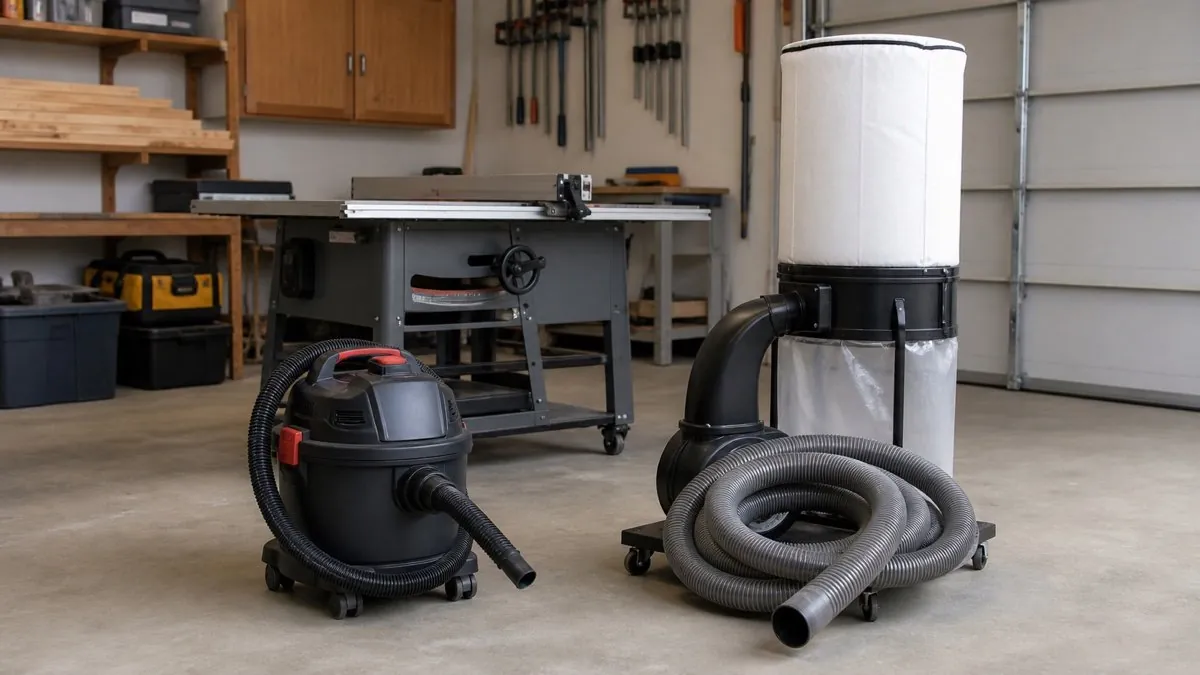
Not all shop vacuums are created equal when it comes to fine wood dust. You need a unit that offers high suction power combined with effective filtration. A standard wet-dry shop vac often exhausts fine dust back into the room through its primary filter. Look for models specifically marketed as “dust extractors” or those compatible with high-efficiency bags.
| Feature | Standard Shop Vac | Professional Dust Extractor |
|---|---|---|
| Filter Rating | Low (Standard) | High (HEPA) |
| Suction Control | None | Variable Speed |
| Noise Level | High (85-95 dB) | Low (65-75 dB) |
| Tool Activation | Manual | Automatic Sync |
HEPA filtration is the gold standard, as it ensures that the particles escaping the exhaust are kept to a minimum. Brands like Festool, Nilfisk, and Bosch offer extractors designed specifically for the high-volume, fine-dust requirements of track saws.
Essential Hose Considerations
The hose is the lifeline between your tool and the machine. Standard corrugated plastic hoses are prone to kinking and can build up static electricity, which attracts dust to the outside of the hose. Upgrading to an anti-static hose improves maneuverability and reduces the risk of dust buildup inside the tube.
Matching Diameter to Suction
Most track saws feature a 27mm or 35mm port. Matching your hose diameter to the tool port is critical to maintain the velocity required to pull heavy sawdust away from the blade. If the hose is too wide, the air speed drops, allowing debris to settle in the hose rather than reaching the canister.
Managing Hose Interference
One of the most frustrating aspects of track sawing is the hose snagging on the end of the track or the edge of your workpiece. To solve this, consider using a vacuum boom arm or a simple overhead support system. Keeping the hose suspended allows the saw to glide smoothly across the entire length of the track without resistance.
Warning: Always ensure your hose is long enough to reach the furthest end of your longest cut without putting tension on the saw, as tension can pull the saw away from the track, ruining your precision.
Optimizing the Setup Process
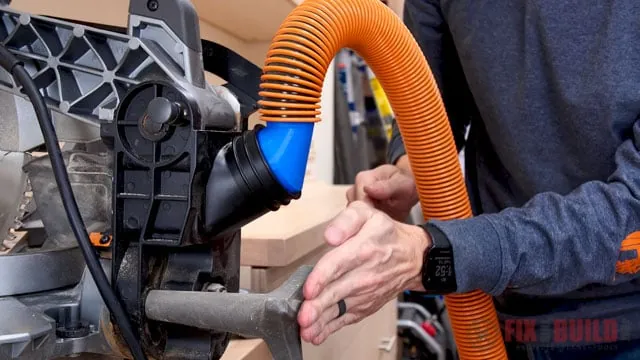
Setting up your system efficiently involves more than just plugging it in. Begin by ensuring the vacuum is positioned close to the starting point of your cut. Use a swivel adapter at the tool port to allow the hose to rotate freely as you advance the saw. This simple addition prevents the hose from twisting and fighting against your hand movements.
Proper Bag Maintenance
Never wait until the bag is completely full to replace it. As a bag fills, the surface area available for air to pass through decreases, which creates a back-pressure that chokes the motor and reduces suction. According to the Occupational Safety and Health Administration, consistent control of wood dust is necessary to prevent respiratory hazards, making regular maintenance a safety requirement rather than just a convenience.
Why Use Automatic Activation?
Most modern dust extractors feature an automatic tool-triggered outlet. When you pull the trigger on your track saw, the vacuum starts automatically. When you release the trigger, the vacuum runs for a few extra seconds to clear the remaining dust from the hose. This feature saves time and prevents you from forgetting to turn on the vacuum before making a cut, ensuring that every pass is clean.
Troubleshooting Common Issues
If you find that your track saw is still leaving a trail of dust, the problem is likely an obstruction or a poor seal. Check these common culprits to restore performance:
- Clogged Ports: Small splinters or large chips can bridge the narrow opening of the saw port.
- Worn Seals: Inspect the rubber shroud around the blade; if it’s torn or missing, suction is lost.
- Filter Blinding: A fine layer of dust on the filter surface blocks airflow. Shake the filter or use the pulse-cleaning function if your unit has one.
- Loose Connections: Ensure your friction-fit adapters are pushed in firmly to prevent air leaks at the joints.
Handling Static Electricity
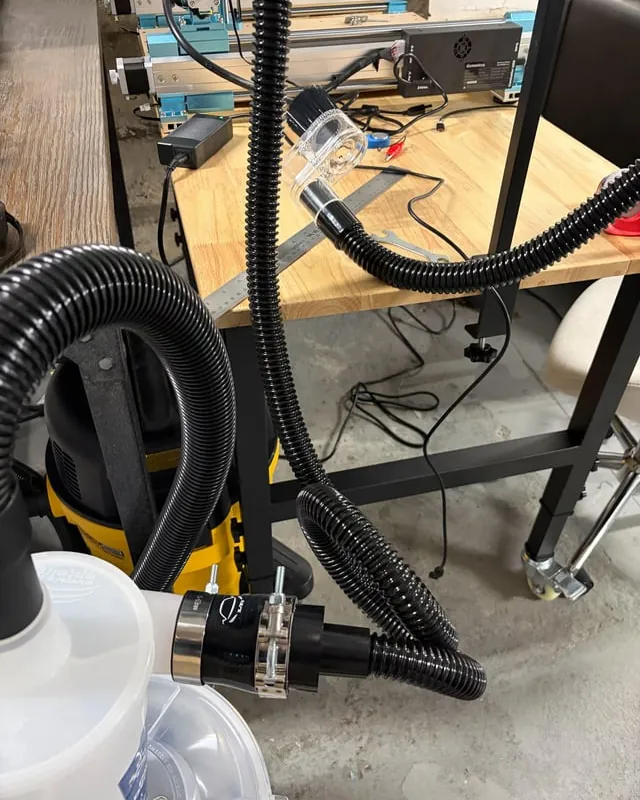
Static buildup is a common annoyance when working with plastic hoses and dry wood. If you feel a mild shock or notice dust clinging to the exterior of the hose, you’re dealing with a static charge.
Using an anti-static hose is the primary solution, but you can also ground your system by running a thin copper wire along the length of the hose, secured with electrical tape, and connecting it to a metal part of your vacuum or a grounded source.
Related guides
Frequently Asked Questions
Can I use a household vacuum?
It isn’t recommended. Household vacuums are designed for larger debris and lack the fine-filtration capabilities required for wood dust. Using one will likely clog the filter almost instantly and could cause the motor to overheat, potentially leading to a fire hazard. Always use a tool-rated shop vacuum or a professional-grade dust extractor with the appropriate filter bags.
How often should I clean the filter?
You should check your filter every time you empty the canister or replace a bag. If your vacuum has a physical filter-shaking mechanism, use it at the end of every cutting session. If the filter looks grey or clogged with caked-on dust, use compressed air to blow it out from the inside, or replace it entirely to restore original suction levels.
Does hose length affect suction power?
Yes, longer hoses create more friction and resistance, which reduces the effective suction at the saw end. Try to keep your hose as short as possible for the task at hand. If you must use a very long hose, ensure your vacuum has a higher CFM rating to compensate for the distance, or use a wider diameter hose to reduce flow resistance.
Why is dust escaping from the front?
Dust escaping the front of the saw usually indicates that the blade guard or the rubber shroud isn’t making full contact with the material. Ensure you’re using the correct blade depth—the blade should only extend about 1/8 inch below the workpiece. If the shroud is damaged, replace it immediately to maintain the vacuum seal around the blade.
Can I use one vacuum for two tools?
Yes, you can use a “Y” adapter to connect two tools to one vacuum, but only one tool should be operated at a time. If you try to run both simultaneously, the air volume will be split, and neither tool will receive enough suction to effectively clear dust. Always use blast gates to shut off airflow to the tool you aren’t currently using.
Conclusion
Maintaining a clean, dust-free shop is a journey of small, incremental improvements to your workspace. Start by auditing your current hose connections and replacing any damaged gaskets or clogged filters that are hindering your system’s performance. Investing just an hour this weekend to organize your vacuum setup will yield immediate results in the precision and safety of your future woodworking projects.